Share
The Invading Tribe
·
Published 8/3/2024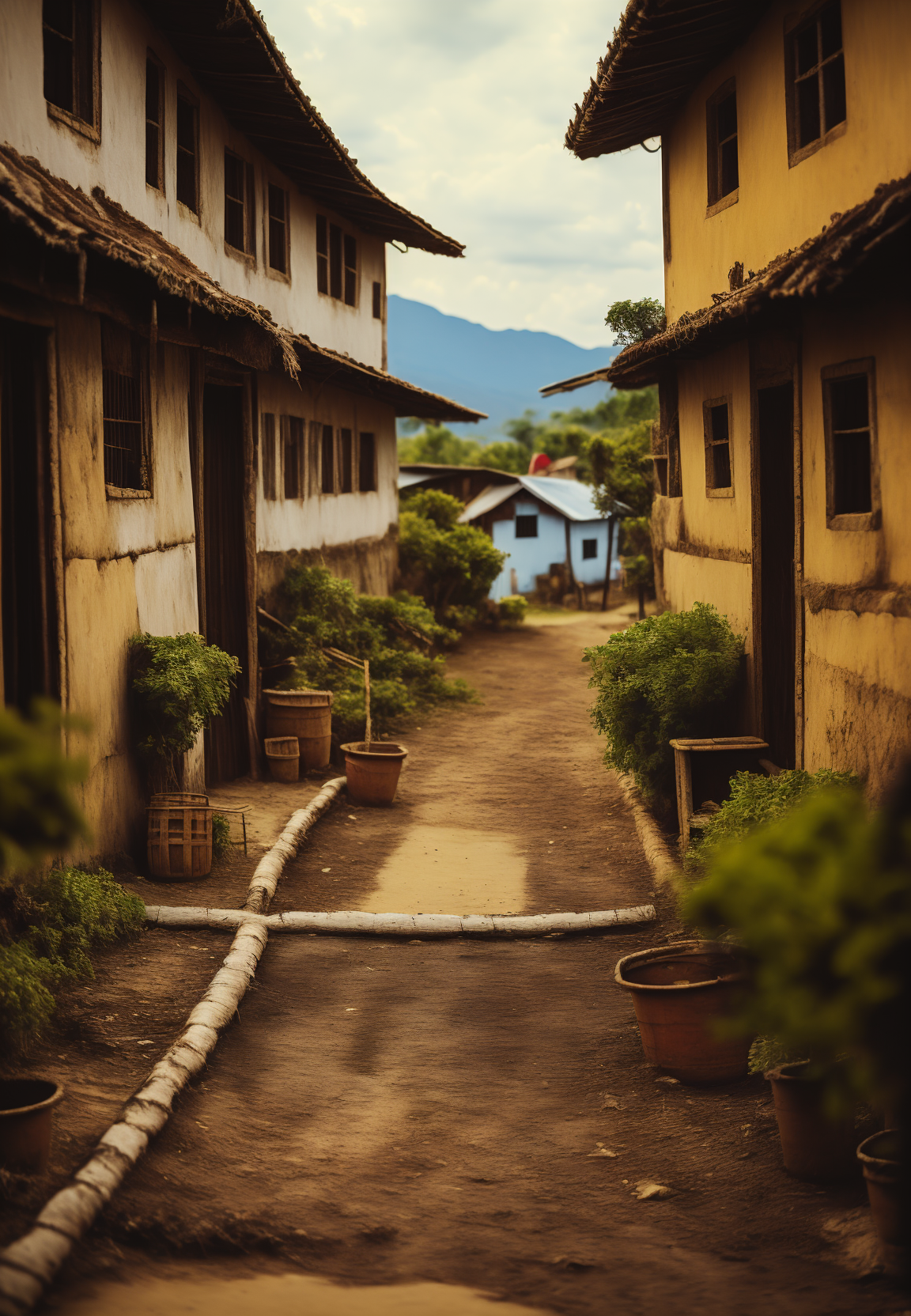
The sun rose over the peaceful village of Mayonkomba, casting a golden glow on the thatched-roof huts and lush green fields that surrounded it. The village was nestled in the heart of the tonkolili District of Sierra Leone, a place untouched by the troubles of the world. It was a place where time seemed to stand still, where tradition and community reigned supreme.
At the center of the village stood the grand hut of Chief Pa Yonkomba, a wise and benevolent elder who was respected by all. With his flowing white beard and sturdy build, he embodied strength and wisdom. Beside him stood his wife, Mammy Yambu, a strong and influential woman who stood tall with a no-nonsense demeanor.
As the village began to stir with life, Chief Pa Yonkomba emerged from his hut to greet the day. He took a deep breath, inhaling the scent of dew-drenched grass and blooming flowers. A smile formed on his weathered face as he looked out at his beloved village.
"Another beautiful day in Mayonkomba," he said to Mammy Yambu. "I am truly blessed."
Mammy Yambu nodded in agreement. "Yes, my love. Our village is a haven of peace and harmony."
Just then, two figures emerged from the outskirts of the village. They were tall and imposing, their faces obscured by shadows.
"Who are these strangers?" Chief Pa Yonkomba wondered aloud.
The villagers gathered around as curiosity got the better of them. The strangers approached with caution, their eyes darting around nervously.
"We mean no harm," one of them said in broken Krio.
Chief Pa Yonkomba stepped forward, extending a hand in friendship. "Welcome to Mayonkomba," he said warmly. "I am Chief Pa Yonkomba, ruler of this village. How may we assist you?"
The strangers introduced themselves as Pa Amadu Kanu and Pa Brama Kanu, brothers who had traveled from a distant village in search of a new home. They explained that they had lost their families to illness and were in need of shelter and sustenance.
Chief Pa Yonkomba's kind heart went out to the brothers. "You are welcome here," he said. "Mayonkomba is a village of hospitality, where all are cared for. I will provide you with land to farm so that you may sustain yourselves."
The villagers looked on in surprise at the chief's generosity. It was not often that strangers were welcomed so readily into their close-knit community.
As the day wore on, the strangers settled into their new home, building huts and clearing land for planting. The villagers watched with curiosity, wondering what fate had brought these outsiders to their peaceful village.
Days turned into weeks, and weeks turned into months. The strangers became an integral part of the community, sharing in its joys and sorrows. They married local women and started families of their own, further deepening their ties to Mayonkomba.
Chief Pa Yonkomba took great pride in his decision to welcome the strangers into the village. He saw how they had embraced its customs and traditions, how they had become one with their surroundings.
"These men have truly found their place among us," he said to Mammy Yambu one evening as they sat outside their hut, watching the sunset.
Mammy Yambu nodded in agreement. "Yes, my love. But I cannot help but wonder what the future holds for Mayonkomba with these newcomers among us."
A sense of unease began to creep over the older villagers as they watched the strangers' families grow at a rapid pace. Their numerous offspring now outnumbered those born to original villagers.
"We are being overtaken," one villager whispered to another. "What will become of our way of life?"
Pa Amadu Kanu and Pa Brama Kanu, sensing the unease in the village, began to assert their dominance. They argued that the land now belonged to them and their families, as they were the ones who worked it tirelessly day after day.
"We have earned the right to claim this land," Pa Amadu declared boldly at a village gathering. "Our numbers have surpassed yours, and we are the ones who toil in these fields."
The original villagers looked on in astonishment. They could not believe what they were hearing. How had these strangers become so entitled, so brazen?
Kadiatu, Chief Pa Yonkomba's daughter, felt a surge of anger rise within her. She had grown up in Mayonkomba, cherishing its traditions and values. She could not stand by and watch as everything her father had built crumbled before her eyes.
"Enough is enough!" she shouted, her voice cutting through the tense silence. "This land belongs to all who call Mayonkomba home."
Her brother Mustapha stood beside her, his face filled with determination. As the chief's son, he felt a deep responsibility to honor his father's legacy.
"We will not let our village be torn apart by greed and entitlement," he declared.
Beneath the surface, tensions simmered as the once-harmonious village became divided between those who supported Kadiatu and Mustapha and those who sided with the strangers.
A pivotal incident occurred when one of the strangers' children accidentally damaged the sacred shrine of the village ancestors during a game of tag. The news spread like wildfire through Mayonkomba, igniting an uproar unlike anything it had ever seen.
The villagers gathered around the damaged shrine, their voices raised in anger and frustration. How could these outsiders show such blatant disrespect for their customs and beliefs?
Kadiatu and Mustapha knew that they had to act quickly if they were to prevent the situation from spiraling out of control.
"Listen, my fellow villagers," Kadiatu called out, her voice filled with authority. "We are all children of Mayonkomba, bound by a shared history and a sense of community. Let us not allow this incident to tear us apart."
Mustapha stepped forward, his calm demeanor providing a sense of reassurance. "We must find a way to resolve this conflict peacefully," he said. "Only then can we ensure the future harmony of our village."
The villagers looked at Kadiatu and Mustapha, their young faces filled with wisdom beyond their years. They saw in them the embodiment of their beloved chief, Chief Pa Yonkomba, who had always led with compassion and fairness.
A hush fell over the crowd as an elder stepped forward, recognizing the siblings' leadership.
"These young ones speak the truth," the elder said in a voice that carried through the air. "Let us come together as a village and find a solution that honors our past while embracing our future."
And so it was decided that a village council meeting would be held to address the conflict. The entire village gathered under the shade of a massive baobab tree as Kadiatu and Mustapha stood before them, ready to present their case.
"The land belongs to all who call Mayonkomba home," Kadiatu declared boldly. "But in order for us to move forward as one united village, we must find common ground."
Mustapha nodded in agreement. "Our strength lies in our diversity," he said. "Let us embrace what each family brings to Mayonkomba and forge a new path forward together."
The strangers looked on with surprise as they listened to the siblings' words. They had not expected such wisdom and diplomacy from their chief's children.
A tense silence hung in the air as the villagers considered Kadiatu and Mustapha's proposal. Slowly, one by one, they began to nod in agreement.
"We will coexist," a villager said, breaking the silence. "But under the leadership of Kadiatu and Mustapha. They represent a new era of unity and harmony."
The village erupted in cheers and applause as the tension that had gripped Mayonkomba for so long began to dissipate. In that moment, a new beginning was embraced, and the healing from past conflicts began.
As days turned into months and months turned into years, Mayonkomba flourished under its new leaders. The villagers worked together to tend to the land, sharing in its bountiful harvests. The strangers became fully integrated into the community, their families intertwined with those who had lived in Mayonkomba for generations.
And so it was that Mayonkomba became a shining example of what could be achieved when people set aside their differences and come together with a shared purpose. The village served as a reminder that true strength lies in unity and that harmony can be found amidst diversity.
As the sun set on yet another
Disclaimer
This is a work of fiction, assisted by artificial intelligence. Any names or characters, businesses or places, events or incidents, are fictitious. Any resemblance to actual persons, living or dead, or actual events is purely coincidental.
Content Removal Policy
- Users may report content that may be illegal or violates our Standards.
- All reported complaints will be reviewed and resolved within seven business days.
- Review Process: Our team will assess the reported content against our guidelines.
- Appeals: If you disagree with a decision, you may appeal within 14 days of notification.
- Potential outcomes include: content removal, account warning, or no action if no violation is found.
To report content, email us at [email protected]