Share
Go Live
The Theft of Hermes' Wings
·
Published 7/15/2024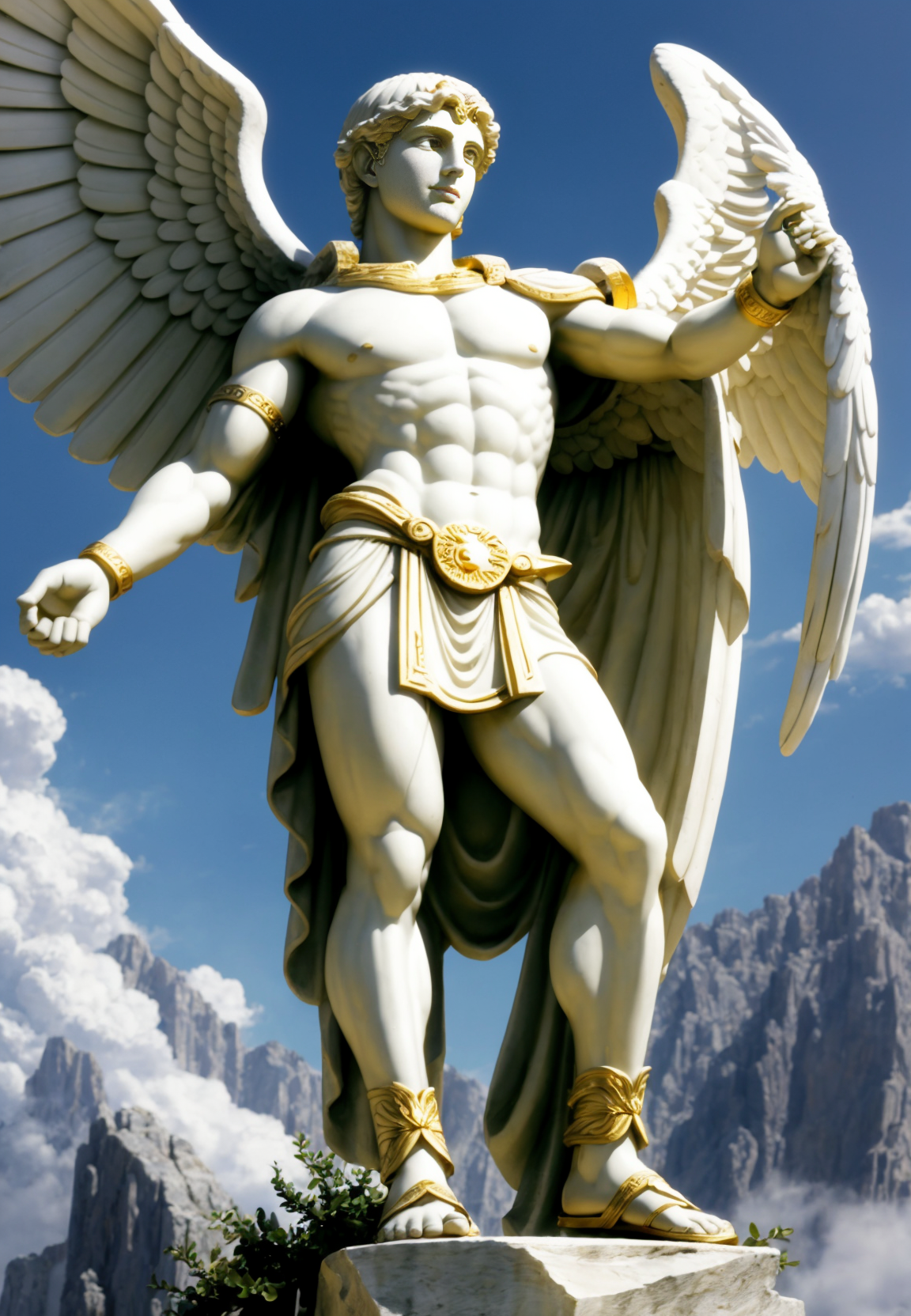
High upon Mount Olympus, where the gods of ancient Greece resided, there was an air of panic and confusion. Hermes, the messenger god known for his speed and cunning, had lost his most prized possession—his winged sandals.
The sandals were a divine creation, gifted to Hermes by the great god Zeus himself. They allowed Hermes to travel at incredible speeds, carrying messages from one end of the earth to the other in the blink of an eye.
But now, they were nowhere to be found. Hermes tore through his chamber on Olympus, tossing aside scrolls and tablets in a desperate search for his missing sandals.
"Where could they be?" he muttered to himself. "I always keep them right here..."
Hearing the commotion, Hermes's fellow gods gathered around him in concern.
"What's wrong, Hermes?" asked Athena, goddess of wisdom. "You look like you've seen a gorgon."
"My sandals!" cried Hermes. "They're gone! I can't find them anywhere!"
The other gods exchanged worried glances. Without his winged sandals, Hermes was powerless to carry out his duties as messenger of the gods.
"This is terrible!" exclaimed Apollo, god of music and prophecy. "What are we going to do?"
"What if someone stole them?" suggested Ares, god of war. "We should send warriors out into the mortal realm to find them."
"No," said Zeus firmly, stepping forward with a thunderous expression on his face. "I will not have my domain dragged into a mortal war over stolen footwear."
"But Father," protested Apollo, "without those sandals—"
"I am well aware of the consequences," interrupted Zeus sternly. "We need a better plan."
Suddenly, a soft voice spoke up from among the gathered gods.
"Perhaps I can help," said Demeter, goddess of agriculture and fertility.
All eyes turned toward Demeter in surprise.
"You?" asked Ares skeptically. "What can you do to help?"
Demeter smiled gently in response.
"I may not be known for my strength or speed," she said, "but I have a talent for finding things that are lost."
The other gods looked at each other uncertainly. While Demeter was indeed wise and kind-hearted, her talents were not often called upon.
"Very well," said Zeus after a moment's consideration. "You shall have your chance to assist Hermes in finding his sandals."
Demeter nodded gratefully.
"Thank you, Zeus," she said.
Hermes and Demeter set off together, descending from the heights of Mount Olympus down to the mortal realm below. As they traveled across the earth, Demeter used her powers to search for any trace of Hermes's missing sandals.
It was difficult work—Hermes had traveled all over the world during his time as messenger of the gods—but Demeter was determined. She searched every corner of every cave and temple, calling upon the spirits of the earth to aid her in her quest.
Finally, after what seemed like an eternity, Demeter found a clue. The faintest scent of ambrosia hung in the air—the food of the gods, consumed only on Mount Olympus.
"The thief must have come this way," said Hermes with a scowl. "But who would dare steal from me?"
"I do not know," admitted Demeter. "But we will find them."
With renewed determination, Hermes and Demeter followed the scent of ambrosia to its source—a small village on the edge of civilization.
"There!" whispered Hermes excitedly as he peered through a crack in one of the village huts. "There are my sandals!"
Sure enough, there they were—sitting on a shelf next to a bowl full of ambrosia fruit. But before they could retrieve them, they heard voices approaching from outside.
"The gods have surely blessed us!" said one voice. "We must thank them for this divine gift."
Hermes and Demeter exchanged panicked glances. The villagers were planning to eat the ambrosia—the food of the gods—and then put on the sandals. They had no idea of the power they were about to unleash.
"We have to stop them," whispered Hermes urgently.
Demeter nodded in agreement, and together they burst through the door of the hut just as the villagers were about to take their first bites.
"Stop!" cried Hermes, his voice echoing through the room like thunder. "You must not eat that fruit!"
The villagers turned in surprise, dropping the ambrosia from their hands.
"But why?" asked one villager in confusion. "Is it not a gift from the gods?"
"It is," answered Demeter gently, "but it is meant for us alone."
Hermes stepped forward, picking up his sandals from where they lay on the shelf.
"These sandals are my rightful possession," he said, "and I thank you for keeping them safe. But you cannot wear them—they are meant only for a god's feet."
The villagers looked at each other uncertainly, then nodded in understanding.
"Very well," said one villager with a sigh. "If that is what the gods command, then so be it."
As Hermes slipped his sandals back onto his feet, he felt a surge of power flow through him—his speed and agility returning in an instant.
"I am whole again," he said with a smile. "Thank you all for your help."
The villagers bowed respectfully as Hermes and Demeter prepared to leave.
"You are welcome among us anytime," said one villager with gratitude in his eyes. "We are honored to have been touched by the gods today."
With a final nod of thanks, Hermes and Demeter departed from the village hut, taking to the skies and returning once more to the realm of the gods.
When they arrived back on Mount Olympus, the other gods were waiting anxiously for them.
"Well?" asked Zeus impatiently. "Did you find the sandals?"
Hermes held up his feet, wiggling his toes in response. The other gods let out a cheer of relief.
"Thank the heavens," said Athena with a smile. "Now we can get back to business."
With Hermes's winged sandals returned to their rightful owner, order was restored on Mount Olympus. The gods could once again send messages and carry out their duties with the help of their faithful messenger.
And as for Hermes, he learned a valuable lesson that day—that sometimes, even a god needs a little help from his friends. And that is something worth cherishing.
Watch this moment
Turn the current scene into a cinematic Live Chapter — what you watch becomes the story's next part.
Disclaimer
This is a work of fiction, assisted by artificial intelligence. Any names or characters, businesses or places, events or incidents, are fictitious. Any resemblance to actual persons, living or dead, or actual events is purely coincidental.
Content Removal Policy
- Users may report content that may be illegal or violates our Standards.
- All reported complaints will be reviewed and resolved within seven business days.
- Review Process: Our team will assess the reported content against our guidelines.
- Appeals: If you disagree with a decision, you may appeal within 14 days of notification.
- Potential outcomes include: content removal, account warning, or no action if no violation is found.
To report content, email us at [email protected]