Share
Go Live
Money Talks
·
Published 9/27/2024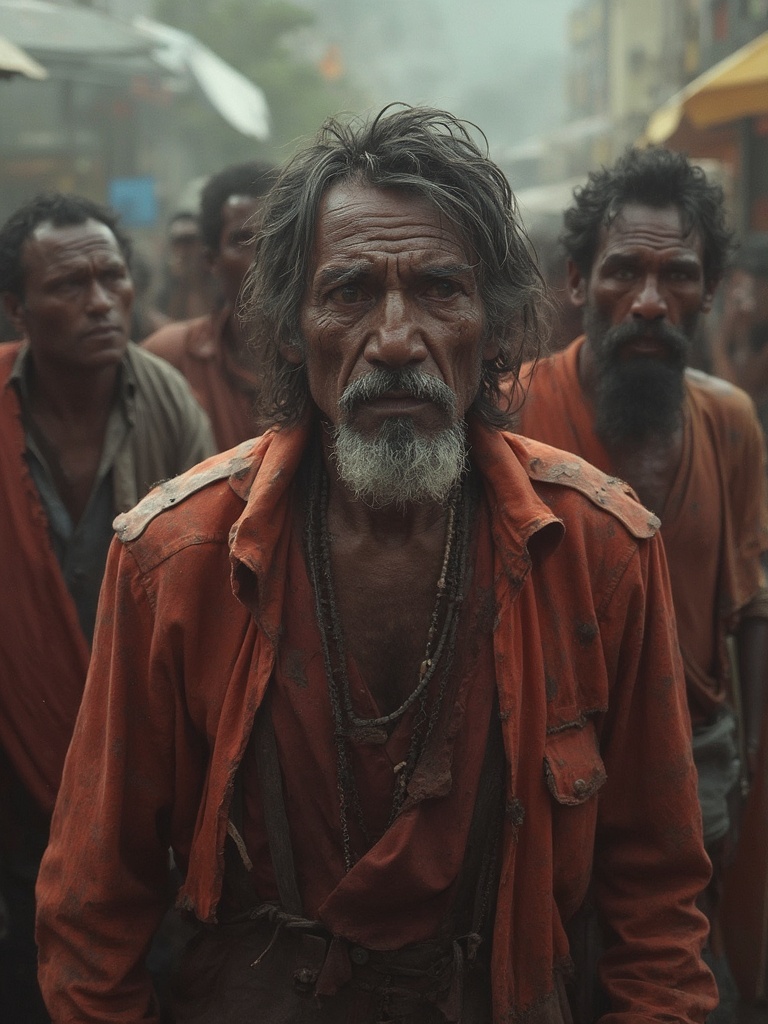
The sun blazed overhead as Olu surveyed the bustling marketplace. The air was thick with the scent of spices and the shouts of vendors vying for customers' attention. It was the perfect setting for his campaign.
Olu, a tall, broad-shouldered man in his fifties, grinned as he noticed a group of women giving him interested glances. He adjusted his agbada, a flowing robe made from vibrant Ankara fabric, and strode over to them.
"Good afternoon, beautiful ladies," he said, flashing them his best smile. "I hope you're all registered to vote."
The women giggled and nodded their heads.
"Of course, Chief Olu," one of them replied. "We wouldn't miss it for anything."
Olu's smile widened at being addressed by his honorific title. "That's what I like to hear. And remember, a vote for me is a vote for progress and prosperity."
He reached into the pocket of his agbada and pulled out a pack of cigarettes.
"Now," he continued, "who wants to join me for a smoke?"
The women exchanged excited glances before one of them stepped forward.
"I'll smoke with you, Chief Olu," she said with a mischievous grin.
Olu chuckled and offered her a cigarette before taking one for himself.
As they lit their cigarettes and took their first puffs, Olu looked around at the crowd that had gathered to watch him.
"Remember everyone," he called out between exhales of smoke. "A vote for me is a vote for progress!"
The crowd erupted in cheers and applause as Olu handed out more cigarettes to eager supporters. The scene played out time and time again as Olu made his way through the marketplace, smoking cigarettes and delivering passionate speeches about change and development.
Eventually, Olu's pack of cigarettes ran out, but that didn't stop him. He reached into the pocket of his agbada and pulled out another pack, then another, and another. Each pack was filled not only with cigarettes but also with crisp Naira notes.
Olu discreetly slipped a few bills into the hands of his loyal supporters as he handed them their cigarettes.
"For your loyalty," he would say with a wink.
The recipients would thank him profusely, their eyes shining with gratitude.
As Olu continued to campaign, smoke billowing around him like a protective cloud, he couldn't help but feel confident. The people loved him, and why wouldn't they? He was charismatic, charming, and full of promises for a better future.
But as Olu made his way back to his campaign car at the end of the day, his confidence wavered. He reached into the pocket of his agbada for his keys, only to find it empty.
Panic surged through him as he quickly searched all of his pockets. The truth sank in: his entire stash of campaign funds was gone.
Olu's heart pounded in his chest as he retraced his steps through the marketplace. His mind raced with questions. Who could have taken the money? How had they known where he kept it?
His frantic search turned up nothing. The money was gone.
Defeated and deflated, Olu slumped against a wall and buried his face in his hands. All of his plans for progress and prosperity seemed to crumble before him.
A shadow fell over him as someone approached. Olu looked up to see one of the women from earlier standing before him. Her face was etched with concern.
"Chief Olu," she said softly. "Are you alright?"
Olu sighed heavily and shook his head.
"No," he admitted. "I'm not."
He explained what had happened, feeling a strange mix of embarrassment and desperation as he spoke.
The woman listened attentively, her expression thoughtful.
"I'm sorry that happened to you," she said sincerely. "But maybe it's a sign. Maybe it's time for a different kind of campaign."
Olu frowned, unsure of what she meant.
"What do you mean?" he asked.
The woman smiled and held out her hand.
"Come with me," she said. "There's someone I think you should meet."
Curiosity piqued, Olu took her hand and allowed her to lead him through the marketplace. They wound their way through the narrow alleyways until they reached a small stall tucked away in a corner.
Behind the stall sat an elderly man with a lined face and wise eyes. He looked up as Olu and the woman approached, his gaze shrewd.
"This is Chief Olu," the woman said, gesturing to Olu. "He needs your help."
The old man studied Olu for a moment before nodding slowly.
"I see," he said. "Well then, let's get started."
And so began a new chapter in Olu's campaign for progress and prosperity—a chapter that didn't rely on cigarettes or bags of money but instead on genuine connections and grassroots support.
As word spread about Olu's encounters in the marketplace, people began flocking to his campaign rallies by the hundreds. They came not only to hear his promises but also to share their own hopes and dreams for a better Nigeria.
Olu listened intently, his heart swelling with compassion as person after person poured out their stories of struggle and resilience. He realized that his campaign had never been about him; it had always been about those he hoped to serve.
With each speech he delivered from that point forward, Olu spoke not as a politician making empty promises but as a leader who truly understood the challenges his people faced. And even though he no longer smoked cigarettes or carried bags of money, the people still cheered and clapped, their voices raised in support of a man who had taken the time to listen.
On Election Day, Olu stood at the podium with his heart full and his head held high. He didn't know if he would win, but it no longer mattered. What mattered was that he had fought for what he believed in and had done so with integrity and passion.
The results came in that evening: Olu had won by a landslide. The people had spoken, and they had chosen him as their leader.
As fireworks exploded overhead and cheers echoed through the streets, Olu couldn't help but feel a sense of awe. He looked out at the sea of faces before him—faces filled with hope and trust—and knew that his real work was just beginning.
He was no longer just Chief Olu; he was now Governor Olu—the man tasked with turning promises into reality, one step at a time.
And as he stepped down from the podium to greet the people who had put their faith in him, Olu realized something: he may have lost his cigarettes and his bags of money, but what he had gained was far more valuable—the opportunity to make a difference in the lives of those who needed it most.
Watch this moment
Turn the current scene into a cinematic Live Chapter — what you watch becomes the story's next part.
Disclaimer
This is a work of fiction, assisted by artificial intelligence. Any names or characters, businesses or places, events or incidents, are fictitious. Any resemblance to actual persons, living or dead, or actual events is purely coincidental.
Content Removal Policy
- Users may report content that may be illegal or violates our Standards.
- All reported complaints will be reviewed and resolved within seven business days.
- Review Process: Our team will assess the reported content against our guidelines.
- Appeals: If you disagree with a decision, you may appeal within 14 days of notification.
- Potential outcomes include: content removal, account warning, or no action if no violation is found.
To report content, email us at [email protected]