Share
Go Live
The Glitch
·
Published 10/17/2026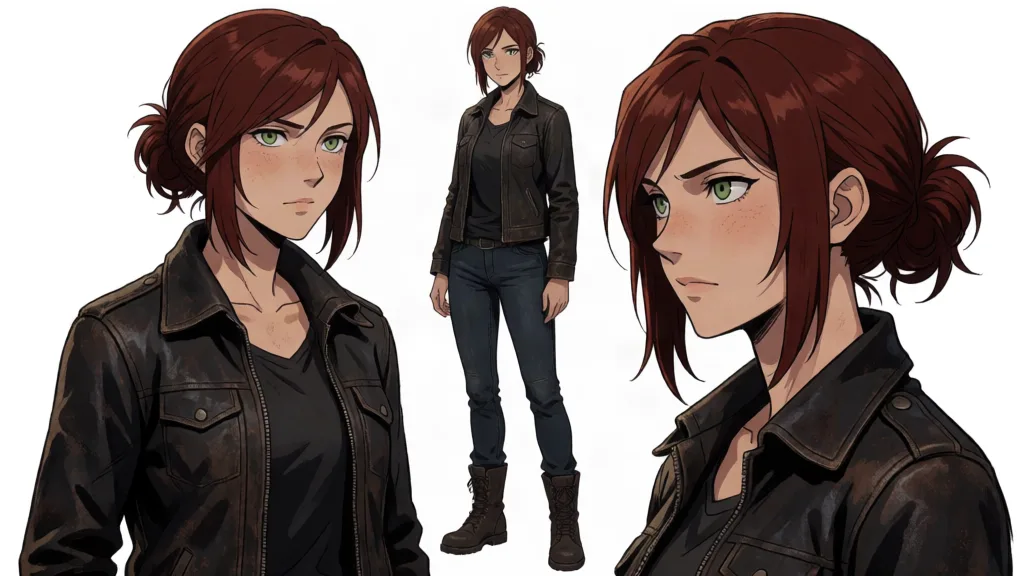
The blood on Mara's knuckles wasn't hers.
That was the first thing she noticed, before the pain, before the wet heat spreading through her left side, before the distant sound of a car door slamming somewhere down the alley. The blood was dark, almost black under the sodium streetlights, and it was already drying in the creases of her fingers. Not hers. Good.
She pressed her palm harder against her ribs and felt the slick pulse of something wrong. The man who'd done it was gone, had melted into the warren of back streets off Delancey like he'd been born there, and maybe he had. He'd known exactly where to hit. Exactly how hard. He'd been waiting for her, which meant someone had told him she was coming, which meant she had a bigger problem than the hole in her side.
"Hey. Hey, you okay?"
The voice came from the mouth of the alley, young and uncertain. Mara turned her head, and the motion sent a spike of white through her vision. A kid. Maybe nineteen, twenty. He had a skateboard tucked under one arm and a phone in the other hand, screen glowing. His face was all concern and bad skin and the particular innocence of someone who'd never been stabbed.
"Fine," Mara said. Her voice came out steady. That surprised her.
"You don't look fine."
"Looks are deceiving."
She pushed off the brick wall and her legs held, which was a minor miracle. The kid took a step back, uncertain, the phone still raised like a talisman. He was probably deciding whether to call 911 or run. Mara made the decision for him by walking past, keeping her stride even, her hand pressed casual against her jacket like she was just cold.
"Hey, you're bleeding," he called after her.
But she was already around the corner, already dialing, already calculating. Three blocks to the subway. Two if she cut through the construction site. The phone rang twice before a voice answered, low and rough with sleep.
"Okafor."
"It's Mara. I need a favor."
A pause. "It's three in the morning."
"I know. I'll make it worth your time."
Another pause, longer this time. She could hear him sitting up, could picture the cramped studio apartment in Bed-Stuy, the books stacked on every surface, the single window that looked out on a brick wall. Dr. Emeka Okafor had been a trauma surgeon at Mount Sinai until six months ago, when he'd lost his license for prescribing painkillers to a patient who'd turned out to be an undercover DEA agent. He hadn't known. That was the thing about Okafor. He never knew, because he never asked, because he believed people when they told him they were hurting.
"What kind of favor?" he said.
"The kind where you don't ask questions and I don't tell you anything that could get you in trouble."
"That ship has sailed, Mara."
"Then the kind where you get to feel noble about helping someone who doesn't deserve it."
He sighed. She heard the creak of bedsprings, the shuffle of feet on hardwood. "Where are you?"
"Delancey and Clinton. I'll be at your place in twenty minutes."
"You're walking?"
"I'm not walking."
She hung up before he could argue. The phone went into her pocket. The blood was starting to seep through her jacket now, darkening the leather, and she could feel it running down her side in a thin, warm line. She'd been hurt worse. She'd been hurt better, too, by people who knew what they were doing. This guy had known what he was doing. He'd aimed for the soft spot just below her ribs, the one that didn't kill you fast but made you slow, made you easy. He'd wanted her alive. He'd wanted her to suffer.
That was interesting.
The subway station was a bright wound in the dark street, fluorescent light spilling up the stairs. Mara took them two at a time, ignoring the burn in her side, ignoring the way her vision kept trying to tunnel. The platform was empty except for a homeless man sleeping under a pile of coats and a woman in scrubs staring at her phone. Mara bought a ticket from the machine with fingers that left red smears on the buttons. She'd have to clean that up. Later.
The train came. She got on. She sat down. She closed her eyes.
And for a moment, just a moment, she let herself feel it. The fear. The exhaustion. The particular loneliness of bleeding on public transit at three in the morning while the woman in scrubs glanced at her and then quickly away. She'd chosen this life. She'd chosen it after the accident, after the hospital, after the long months of physical therapy and the longer months of wondering what the point was. She'd chosen it because it was the only thing that made her feel awake.
But sometimes, in the quiet moments, she wondered if she'd chosen it or if it had chosen her.
The train rattled through the tunnel. Mara opened her eyes and looked at her reflection in the dark window. A woman with sharp features and auburn hair escaping from its bun. Green eyes that looked tired. A scar along her jaw that caught the light. She looked like someone who'd been through something. She looked like someone who was still going through it.
She looked like a stranger.
---
Okafor's apartment was on the fourth floor of a walk-up that smelled like curry and old carpet. Mara climbed the stairs slowly, one hand on the railing, the other pressed to her side. The blood had stopped flowing, which was either a good sign or a very bad one. She'd learned not to trust her body's signals. It lied to her. It told her she was fine when she was dying and dying when she was fine.
She knocked on the door with her elbow. Three quick raps, then two slow. Okafor opened it before the second knock faded.
"You look like hell," he said.
"I feel like it."
He stepped aside. She walked in.
The apartment was exactly as she remembered it. Books everywhere. Medical journals stacked on the coffee table. A single chair by the window, positioned to catch the morning light. Okafor had been a surgeon for fifteen years. He'd saved hundreds of lives. And now he lived in a one-bedroom in Bed-Stuy and patched up people like Mara because he didn't know how to stop being who he was.
"Sit," he said, gesturing to the chair.
"I'll ruin it."
"It's already ruined. Sit."
She sat. The chair was hard and unforgiving, and the position sent a fresh wave of pain through her side. Okafor knelt in front of her, his hands already moving, already assessing. He was a big man with careful fingers and eyes that missed nothing. He unzipped her jacket, eased it off her shoulders, and hissed through his teeth when he saw the wound.
"This is deep," he said. "You need stitches. Maybe a hospital."
"No hospital."
"Mara."
"No hospital."
He looked at her for a long moment. She looked back. She'd learned a long time ago that the only way to win an argument with someone who cared about you was to refuse to blink.
"Fine," he said. "But you're going to hate me by the time I'm done."
"I already hate you."
"That's the spirit."
He worked in silence. The antiseptic burned. The needle bit. Mara watched his hands, watched the way they moved with a precision that belied his size. He'd been good at his job. He'd been the best. And now he was stitching up a woman he barely knew in an apartment that smelled like failure because he'd made one mistake, one human mistake, and the world had decided he didn't deserve to be a doctor anymore.
"You're thinking too loud," he said.
"Sorry."
"Don't be. I'm just saying. Whatever you're chewing on, spit it out."
She considered lying. She was good at lying. She'd spent ten years in corporate America learning how to say one thing while meaning another, how to smile while sharpening the knife. But Okafor had seen her at her worst. He'd seen her bleeding on this chair, seen her shaking with fever, seen her cry once, just once, when the pain was too much and she'd forgotten to be strong.
"Someone set me up," she said.
Okafor's hands didn't pause. That was one of the things she liked about him. He didn't flinch.
"Who?"
"I don't know yet. I was supposed to meet a client. A woman. She said her husband was being blackmailed. Said she needed someone to find the evidence and make it go away."
"Classic."
"Yeah. Except when I got to the meeting spot, there was no woman. Just a man with a knife and a very specific idea of where to put it."
Okafor tied off the last stitch and sat back on his heels. "You think the woman was a setup?"
"I think the woman was a ghost. I think someone wanted me at that address at that time. I think they wanted me hurt, not dead."
"Why not dead?"
"That's the question, isn't it?"
He stood up, crossed to the sink, and washed his hands. The water ran pink for a long time. Mara watched the muscles in his back, the way his shoulders hunched, the way he held himself like a man who was always bracing for impact.
"You need to be more careful," he said.
"I'm always careful."
"No. You're smart. There's a difference."
She didn't have an answer for that. He was right. She was smart. She was good at seeing patterns, at reading people, at figuring out the angles. But careful was different. Careful meant not going to meetings alone. Careful meant carrying a weapon. Careful meant not trusting anyone, not even the people who'd earned it.
She'd been careful once. Before the accident. Before she'd realized that careful didn't save you. Careful just meant you saw the truck coming before it hit you.
"What do I owe you?" she said.
Okafor dried his hands on a dish towel. "Nothing."
"Emeka."
"I'm serious. You don't owe me anything."
"I'll pay you."
"You'll pay me by not getting stabbed again. That's the deal."
She stood up. The wound pulled, but the stitches held. She'd have a scar. Another one. Her body was a map of bad decisions and worse luck, and she was running out of blank space.
"I need to go," she said.
"Where?"
"Home. I need to think."
"You need to sleep."
"I'll sleep when I'm dead."
"That's not funny."
"It's a little funny."
He walked her to the door. He always did that. Walked her to the door, watched her go down the stairs, waited until he heard the front door of the building close behind her. She didn't know why he did it. Maybe it was the doctor in him. Maybe it was the friend.
"Hey," he said, as she started down the stairs.
She turned.
"Whoever did this," he said. "They knew where you'd be. They knew when. That means they know you."
"I know."
"That means it's someone close."
"I know."
"So what are you going to do?"
She smiled. It wasn't a nice smile. It was the smile of a woman who'd been pushed and was about to push back.
"I'm going to find out who wants me dead," she said. "And then I'm going to disappoint them."
---
The walk home was a blur of dark streets and closed storefronts. Mara lived in a one-bedroom in Hell's Kitchen, above a bodega that never closed, in a building that had been condemned twice and somehow kept standing out of spite. The apartment was small and sparse. A bed. A desk. A bookshelf filled with books she'd read a dozen times. A kitchen that she used mostly for making coffee. The only decoration was a photograph on the windowsill, faded and creased, of a woman with Mara's green eyes and a smile that didn't reach them.
Her mother. Dead ten years now. Cancer. Mara had been in a meeting when she died. A big meeting, an important meeting, the kind of meeting that had felt like the center of the universe until she'd gotten the call and realized that the center of the universe was actually a hospital room in Ohio where a woman was dying alone because her daughter was too busy climbing a ladder that led nowhere.
She'd quit the next day. Walked out of the office in her thousand-dollar heels and never looked back.
The bodega was still open. Mr. Alvarez was behind the counter, watching a telenovela on a small television. He nodded when she came in. She nodded back. She bought a bottle of water and a bag of pretzels, because she hadn't eaten since noon and her body was starting to remind her that it needed things.
"You look tired," Mr. Alvarez said.
"Long day."
"You work too hard."
"I know."
"You should find a nice man. Settle down."
"I'll get right on that."
He laughed. She smiled. It was a familiar exchange, a ritual, a small kindness in a world that didn't offer many. She liked Mr. Alvarez. He'd been robbed twice in the ten years he'd owned the bodega, and both times he'd refused to press charges. "They were hungry," he'd said. "What am I going to do, ruin their lives over a few dollars?"
That was the thing about people. They surprised you. They showed you kindness when you least expected it, and cruelty when you'd convinced yourself you were safe. Mara had learned to expect both. She'd learned to hold the kindness loosely and the cruelty even looser, because neither one lasted.
She climbed the stairs to her apartment. The lock was tricky, as always, requiring a specific combination of jiggles and curses. She'd been meaning to fix it for six months. She'd get around to it eventually.
Inside, she locked the door, checked the windows, and turned on every light. It was a habit she'd picked up after the accident. The accident that had almost killed her. The accident that had changed everything.
She'd been driving home from a party, late, tired, a little drunk. She shouldn't have been driving. She knew that. But she'd been young and invincible and convinced that the rules didn't apply to her. The truck had come out of nowhere. She'd woken up in a hospital bed three days later with a broken jaw and a shattered pelvis and a nurse telling her she was lucky to be alive.
Lucky. That was the word they'd used. Lucky.
She hadn't felt lucky. She'd felt like she'd been given a second chance she didn't deserve. She'd felt like she needed to do something with it. Something that mattered.
So she'd quit her job. She'd sold her apartment. She'd moved to Hell's Kitchen and started taking on clients who couldn't go to the police. People with problems that were too messy, too dangerous, too complicated for the system to handle. She'd become a fixer. A ghost. A woman who solved problems and then disappeared.
It wasn't a noble profession. She knew that. She wasn't a hero. She was just someone who'd realized that the world was broken and had decided to spend her second chance trying to fix a few pieces of it.
The water was still running in the bathroom. She'd turned it on before she left, a trick she'd learned to make it sound like someone was home. She turned it off, stripped off her bloody clothes, and stood in front of the mirror.
The wound was ugly. A jagged line of black stitches against pale skin, surrounded by a bruise that was already spreading in shades of purple and yellow. She'd have to take it easy for a few days. No lifting, no running, no getting into fights with mysterious men in alleys.
She touched the scar along her jaw. The one from the accident. The one that reminded her every day that she was mortal, that she could be broken, that the universe didn't care about her plans.
Someone wanted her dead. Or hurt. Or scared. Someone who knew her well enough to predict her movements, to know which clients she'd take, to know that she'd show up at that address at that time without backup.
That meant someone in her network. Someone she trusted.
She thought about the people she knew. Okafor, who'd just stitched her up and asked for nothing in return. Her landlord, who was ninety years old and mostly deaf. The handful of clients she'd worked for over the past year, none of whom knew her real name or where she lived. The other fixers in the city, a loose network of people who did what she did, who traded information and favors and sometimes disappeared without warning.
Any one of them could be the traitor. Any one of them could be working for someone else.
She pulled on a clean shirt, poured herself a glass of whiskey, and sat down at her desk. The photograph of her mother caught the light, and she looked at it for a long moment.
"What would you do?" she said.
Her mother didn't answer. She never did. But Mara could imagine the response. Her mother had been a practical woman, a nurse, a person who believed in doing the right thing even when it was hard. She would have said something like, "You can't control what other people do. You can only control what you do next."
So what did Mara do next?
She opened her laptop and started digging.
---
The client had called herself Eleanor Vance. The name was fake, obviously. The phone number was a burner, the email was encrypted, and the payment had come through a series of shell companies that led nowhere. Mara had known it was a setup from the beginning, but she'd taken the job anyway, because the money was good and because she was curious.
Curiosity. That was her fatal flaw. That was the thing that had gotten her into this mess.
She'd been curious about who Eleanor Vance really was. She'd been curious about the husband, the blackmail, the evidence that needed to be found. She'd been curious about why someone would go to such lengths to hire a fixer when they could have just gone to the police.
And now she was paying for her curiosity with a hole in her side and a mystery that was getting more complicated by the minute.
She spent the next three hours tracing the payment. The shell companies led to a bank in the Cayman Islands, which led to a trust fund, which led to a name. Harold P. Whitmore. Age sixty-seven. CEO of Whitmore Industries, a defense contractor with government contracts and a reputation for doing whatever it took to win.
Harold P. Whitmore. Mara had heard the name. Everyone had heard the name. He was the kind of man who appeared on magazine covers and gave speeches about American values and donated millions to charity while his company sold weapons to regimes that used them on their own people.
What did Harold P. Whitmore want with a fixer in Hell's Kitchen?
She dug deeper. The trust fund had been established five years ago, the same year Whitmore's wife had died in a car accident. The accident had been ruled a suicide, but the details were murky. No note. No history of depression. Just a woman who'd driven off a bridge in the middle of the night and left behind a husband and a daughter.
The daughter. Elizabeth Whitmore. Age twenty-four. Last known address in Manhattan. No social media presence, no public records, no trace of her anywhere.
Mara leaned back in her chair and stared at the screen.
Elizabeth Whitmore. A woman who'd disappeared. A woman whose mother had died under mysterious circumstances. A woman who might have a reason to want revenge on her father.
Was Elizabeth the one who'd set her up? Was she the woman who'd called herself Eleanor Vance?
It didn't make sense. If Elizabeth wanted her father dead, she wouldn't hire a fixer. She'd hire a hitman. If she wanted him exposed, she'd go to the press. There was no reason to involve Mara unless...
Unless she wanted something else. Something that required a fixer. Something that required someone who could operate in the shadows.
Mara closed her laptop and finished her whiskey. The sun was coming up, painting the sky in shades of pink and gold. She should sleep. She should rest. She should give her body time to heal.
Instead, she grabbed her jacket and headed for the door.
---
The Whitmore building was a glass tower in Midtown, all sharp angles and reflective surfaces, the kind of building that said "we have nothing to hide" while hiding everything. Mara stood across the street, sipping coffee from a paper cup, watching the employees stream in.
She'd changed into something more appropriate for the neighborhood. A tailored blazer, dark jeans, heels that made her legs look longer than they were. She looked like a consultant, a lawyer, a woman who belonged in a building like this. She looked like the person she used to be.
The person she'd left behind.
She waited until nine-thirty, when the morning rush had slowed to a trickle, and then she walked across the street and through the revolving doors. The lobby was marble and chrome, a cathedral to capitalism, and the security guard at the desk looked up with the particular boredom of a man who'd seen everything and been impressed by none of it.
"Can I help you?" he said.
"I'm here to see Elizabeth Whitmore."
The guard's expression didn't change. "There's no Elizabeth Whitmore here."
"She might be using a different name. She might be listed as a consultant, an assistant, something like that."
"There's no Elizabeth Whitmore here."
Mara smiled. It was a warm smile, a friendly smile, the kind of smile that had opened doors for her for fifteen years. "I understand. But I think you might be mistaken. Could you check again?"
The guard looked at her for a long moment. Then he picked up the phone.
"I need someone from HR," he said. "There's a woman here asking about Elizabeth Whitmore."
Mara's smile didn't waver. But something cold settled in her stomach.
The guard hung up the phone. "Someone will be down in a minute."
"Thank you."
She waited. The lobby was bustling now, filled with people in expensive suits carrying expensive coffee. They moved with purpose, with direction, with the certainty of people who knew exactly where they were going and why. Mara had been one of them once. She'd walked through lobbies like this every day, her heels clicking on the marble, her phone pressed to her ear, her mind already three meetings ahead.
She'd been good at it. She'd been the best. And she'd hated every minute.
A woman appeared at the elevators, young, blonde, wearing a suit that cost more than Mara's rent. She walked across the lobby with a smile that didn't reach her eyes.
"Ms...?" she said.
"Marlowe," Mara said. "Sarah Marlowe."
"Ms. Marlowe. I'm Cynthia, from HR. I understand you're looking for Elizabeth Whitmore?"
"I am."
Cynthia's smile tightened. "I'm afraid I can't help you. There's no one by that name employed at Whitmore Industries."
"Maybe she's not an employee. Maybe she's a contractor. Or a family member."
"Ms. Whitmore is not affiliated with the company in any capacity."
"So you know who she is."
Cynthia's smile disappeared. "I think you should leave."
"I think you should tell me where I can find her."
"I think you should leave before I call security."
Mara looked at Cynthia. Really looked at her. The woman was scared. Not of Mara, but of something else. Something that had been drilled into her, that had made her careful, that had made her refuse to even acknowledge the existence of a woman who shared her boss's last name.
"Okay," Mara said. "I'll go. But tell Mr. Whitmore that someone was asking. Tell him that someone knows about the trust fund. Tell him that someone is going to keep asking until she gets answers."
Cynthia's face went pale.
Mara turned and walked out of the lobby, through the revolving doors, into the bright morning light. Her heart was pounding. Her side was throbbing. But she felt alive. More alive than she'd felt in months.
She'd found the thread. Now she just had to pull.
---
The call came that night.
Mara was sitting on her fire escape, watching the city, thinking about Elizabeth Whitmore and Harold P. Whitmore and the particular cruelty of fathers who thought they owned their daughters. The phone buzzed in her pocket. Unknown number.
She answered.
"Ms. Marlowe." The voice was male, old, cultured. "Or should I say Ms. Vance? Or Ms. Okafor? You have so many names."
Mara's grip tightened on the phone. "Who is this?"
"You know who this is. You came to my building this morning. You asked about my daughter."
Harold Whitmore. The man himself.
"What do you want?" she said.
"I want to offer you a job."
"I already have a job."
"Yes. You fix problems for people who can't go to the authorities. That's a useful skill. I have a problem that needs fixing."
"I'm not interested."
"You haven't heard the offer yet."
"I don't need to. You tried to have me killed."
A pause. Then a laugh. A dry, humorless laugh. "If I wanted you killed, Ms. Marlowe, you'd be dead. The man in the alley was a message. A warning. I wanted to see how you'd respond."
"And how did I respond?"
"You went to my building. You asked questions. You made a scene. You're exactly as resourceful as I was told."
"Told by who?"
"By the person who recommended you. The person who's been watching you for months. The person who thinks you're the only one who can find my daughter."
Mara's mind raced. Someone had been watching her. Someone had recommended her. Someone who knew her well enough to predict her movements, to know which jobs she'd take, to know that she'd show up at that address without backup.
"Who?" she said.
"My daughter has been missing for six months. She disappeared after her mother died. I've hired investigators, private detectives, the best people money can buy. None of them have found her. But you... you're different. You understand people who don't want to be found."
"Because I am one."
"Exactly."
Mara stared out at the city. The lights were coming on, one by one, a constellation of strangers living their lives in ignorance of the darkness that lurked beneath. She thought about Elizabeth Whitmore. A woman who'd lost her mother, who'd disappeared, who'd left no trace. A woman who might be dead. A woman who might be hiding. A woman who might be waiting for someone to find her.
"Why me?" she said.
"Because I'm dying. Cancer. Six months, maybe less. And before I go, I need to know what happened to my daughter."
"You could have just asked."
"I did ask. You refused to meet with my representative."
"Your representative stabbed me."
Another pause. "That was a mistake. He was... overzealous. He's been dealt with."
Dealt with. Mara didn't want to know what that meant.
"I'm not going to help you," she said.
"You will."
"Why would I?"
"Because you're curious. Because you want to know what happened to Elizabeth. Because you want to know who recommended you. Because you want to know why someone would go to such lengths to bring us together."
Mara closed her eyes. He was right. He was absolutely right. She was curious. She was always curious. It was the thing that kept her going, the thing that made her get up in the morning, the thing that had led her to this life in the first place.
"What's the job?" she said.
"Find my daughter. Bring her home. And I'll give you something you want."
"What's that?"
"The name of the person who recommended you. The person who's been watching you. The person who knows all your secrets."
Mara opened her eyes. The city was dark now, the sky a deep purple, the stars invisible behind the glow of a million lights. She thought about the scar on her jaw. The blood on her knuckles. The hole in her side. She thought about her mother, dying alone in a hospital room while Mara climbed a ladder that led nowhere.
She thought about second chances.
"I'll find your daughter," she said. "But I'm not doing it for you."
"Then who are you doing it for?"
"Myself."
She hung up before he could respond.
---
The next morning, Mara woke to the smell of coffee and the sound of someone moving in her kitchen.
She was on her feet before she was fully awake, her hand reaching for the knife she kept under her pillow, her body already shifting into a defensive stance. But when she rounded the corner, she found Okafor standing at her stove, pouring coffee into two mugs.
"You have a terrible lock," he said.
"I know."
"You should fix it."
"I know."
He handed her a mug. She took it. The coffee was strong and black, exactly how she liked it. He'd remembered.
"What are you doing here?" she said.
"You didn't call. I got worried."
"I was busy."
"You were investigating. I can tell. You have that look."
"What look?"
"The look you get when you're about to do something stupid."
Mara took a sip of coffee. "I'm not going to do anything stupid."
"You're going to work for Harold Whitmore."
She froze. "How do you know about Harold Whitmore?"
"Because I'm not an idiot. I saw the news. I saw the name. And I know you. You can't resist a mystery."
"It's not a mystery. It's a job."
"It's a trap."
"Maybe. But it's a trap I can use."
Okafor set down his mug and crossed his arms. He looked at her the way he always looked at her, with a mixture of exasperation and affection, like she was a patient who kept pulling out her IV.
"Tell me," he said.
So she told him. About the setup, the alley, the man with the knife. About Eleanor Vance and the shell companies and the trust fund. About Elizabeth Whitmore and her missing mother and her dying father. About the offer and the promise and the thing she wanted more than anything else.
The name of the person who'd been watching her.
Okafor listened without interrupting. When she was done, he was quiet for a long moment.
"You know it could be me," he said.
Mara looked at him. "What?"
"The person who recommended you. The person who's been watching you. It could be me."
"It's not you."
"How do you know?"
"Because you're here. Because you stitched me up. Because you're the only person in this city who gives a damn whether I live or die."
Okafor's expression softened. "That's not true."
"It's true enough."
He shook his head. "You need to be careful. Whoever this person is, they know you. They know how you think. They know what you'll do before you do it."
"I know."
"So what are you going to do?"
Mara finished her coffee and set the mug down on the counter. The sun was coming up, painting the kitchen in shades of gold. She thought about Elizabeth Whitmore, out there somewhere, hiding or running or waiting. She thought about Harold Whitmore, dying in his glass tower, desperate to find his daughter before it was too late. She thought about the person who'd been watching her, the person who knew her secrets, the person who'd set this whole thing in motion.
She thought about what her mother would say.
"You can't control what other people do. You can only control what you do next."
"I'm going to find Elizabeth Whitmore," she said. "And then I'm going to find out who's been playing me."
"And then?"
"And then I'm going to make them regret it."
Okafor nodded slowly. "I was afraid you'd say that."
"Are you going to try to stop me?"
"No."
"Good."
"I'm going to help you."
Mara blinked. "What?"
"I'm going to help you. I don't know anything about finding missing people or investigating corporations or whatever it is you do. But I know how to patch you up when you get hurt. And I know how to watch your back. And I know that you're going to do this with or without me, so I might as well make sure you don't die."
Mara stared at him. She didn't know what to say. She wasn't used to people offering to help. She wasn't used to people staying.
"Why?" she said.
"Because you saved my life."
"I didn't save your life."
"You did. When I lost my license, when I lost everything, you were the only person who didn't treat me like a criminal. You treated me like a human being. You gave me a reason to keep going."
"I gave you a job."
"You gave me a purpose."
Mara looked away. Her eyes were stinging, and she didn't want him to see. She didn't cry. She never cried. But something about the way he said it, the way he looked at her, made her want to.
"Okay," she said. "You can help."
"Good."
"But if you get hurt, I'm not going to forgive myself."
"Then don't let me get hurt."
She laughed. It was a real laugh, the first one in days. "Deal."
---
They spent the next week investigating. Okafor was better at it than Mara expected. He had a doctor's eye for detail, a surgeon's patience, and a network of former colleagues who owed him favors. He found medical records, financial records, phone records. He found that Elizabeth Whitmore had been treated for depression after her mother's death. He found that she'd withdrawn from NYU six months ago. He found that she'd sold her apartment and moved out of the city.
But he couldn't find where she'd gone.
Mara focused on the other angle. The person who'd recommended her. The person who'd been watching her. She went through her client list, her contacts, her enemies. She thought about everyone she'd ever worked with, everyone she'd ever trusted, everyone who might have a reason to betray her.
The list was short. She didn't trust many people.
There was Okafor, who was helping her. There was Mr. Alvarez, who was ninety and mostly deaf. There was a woman named Jade, who ran a pawn shop in Queens and occasionally passed her information. There was a man named Marcus, who she'd worked with on a job last year, who'd disappeared afterward and never resurfaced.
And there was David.
David Chen. The man she'd almost married. The man she'd left behind when she'd quit her job and moved to Hell's Kitchen. The man who'd called her crazy, who'd called her selfish, who'd said she was throwing away everything they'd built together.
She hadn't talked to him in two years. She didn't even know if he was still in the city. But he knew her. He knew how she thought. He knew what she'd do before she did it.
She pulled up his name on her laptop. A LinkedIn profile. A current employer. An address in Tribeca.
He was still here. He was still living the life she'd left behind.
She stared at the screen for a long time. Then she closed her laptop and went to find him.
---
The restaurant was exactly the kind of place David had always loved. Sleek, modern, expensive. The kind of place where the waiters knew your name and the wine list was longer than most novels. Mara stood outside for a moment, watching through the window. He was at a table in the corner, laughing at something on his phone, looking exactly the same as he had two years ago.
She pushed open the door and walked in.
He looked up. His face went through a series of expressions, surprise, confusion, something that might have been pain. Then it settled into a smile that didn't reach his eyes.
"Mara," he said. "This is a surprise."
"Is it?"
"You look... different."
"I look the same. You just haven't seen me in a while."
He gestured to the chair across from him. She sat.
"Can I get you something?" he said. "Coffee? Wine?"
"I'm not here for coffee."
"Then why are you here?"
She looked at him. Really looked at him. He was handsome, in the way that men who spent too much money on haircuts and too much time in the gym were handsome. He was successful, in the way that men who worked eighty-hour weeks and never questioned the system were successful. He was everything she'd once wanted.
And she felt nothing.
"I need to ask you something," she said.
"Okay."
"Have you been watching me?"
His expression flickered. Just for a second. But she saw it.
"What are you talking about?"
"Someone's been watching me. Someone who knows me. Someone who recommended me to a client. I need to know if it was you."
David leaned back in his chair. He picked up his wine glass and took a long sip. When he set it down, his hand was steady.
"I don't know what you're talking about," he said. "I haven't seen you in two years. I don't know anything about your life. I don't want to know anything about your life."
"You're lying."
"I'm not lying."
"I can see it in your face."
"You always thought you could see everything in my face. You were wrong then. You're wrong now."
Mara leaned forward. "David. If you're involved in this, if you're working for someone, if you're trying to hurt me, I need you to tell me now. Because if I find out later, I won't be this nice."
He met her eyes. For a moment, something passed between them. Something old and complicated and unresolved.
"I'm not trying to hurt you," he said. "I never wanted to hurt you."
"Then who is?"
"I don't know."
"David."
"I don't know. I swear."
She looked at him for a long moment. She wanted to believe him. She wanted to believe that the man she'd once loved wasn't capable of this. But she'd learned a long time ago that wanting to believe something didn't make it true.
"If you hear anything," she said, standing up. "If you learn anything. Call me."
She slid a business card across the table. He picked it up, looked at it, and laughed.
"A fixer," he said. "That's what you are now. A fixer."
"That's what I am."
"You could have had everything. You could have had the corner office, the penthouse, the life you always talked about."
"I didn't want that life."
"You did. You just didn't know it."
Mara looked at him. At his expensive suit and his expensive watch and his expensive life. She thought about the woman she'd been two years ago, the woman who'd wanted all of this, who'd thought that success was the same thing as happiness.
"I knew it," she said. "That's why I left."
She walked out of the restaurant without looking back.
---
The call came three days later.
Mara was in her apartment, poring over the files Okafor had gathered, when her phone buzzed. Unknown number. She answered.
"Ms. Marlowe." The voice was female, young, scared. "I need your help."
"Who is this?"
"My name is Elizabeth Whitmore. My father hired you to find me. But I'm not the one who's missing. He is."
Mara's heart stopped. "What do you mean?"
"My father died six months ago. The man who hired you, the man who called you, that's not my father."
Mara stood up. Her hand was shaking. "Then who is it?"
"I don't know. But he's been impersonating my father for months. He's been running the company. He's been looking for me. And if he finds me..."
"He won't."
"You don't understand. He's not just looking for me. He's looking for something I have. Something my mother gave me before she died. Something that could destroy him."
"What is it?"
"I can't tell you over the phone. I need you to meet me."
"Where?"
"There's a diner in Queens. The Silver Star. I'll be there tomorrow at noon. Come alone."
"I always come alone."
"Good. And Ms. Marlowe?"
"Yeah?"
"Don't trust anyone. Not even the people closest to you."
The line went dead.
Mara stood in her apartment, the phone in her hand, the city humming outside her window. She thought about Harold Whitmore, dying of cancer, desperate to find his daughter. She thought about the man who'd stabbed her, the man who'd been "dealt with." She thought about David, who'd lied to her face. She thought about Okafor, who'd offered to help her.
Don't trust anyone.
She looked at the photograph of her mother. The green eyes. The smile that didn't reach them.
"What would you do?" she said.
But this time, she already knew the answer.
She grabbed her jacket and headed for the door.
---
The Silver Star was exactly the kind of diner that Mara loved. Old, greasy, open twenty-four hours. The kind of place where no one asked questions and everyone minded their own business. She arrived an hour early, ordered coffee, and sat in a booth with a view of both entrances.
She watched the door. She watched the windows. She watched the people who came and went, the truckers and the night shift workers and the teenagers who had nowhere else to be. She watched for anyone who looked out of place, anyone who seemed too interested in her, anyone who might be a threat.
No one came.
Noon passed. Then twelve-thirty. Then one.
Elizabeth Whitmore didn't show.
Mara ordered another coffee. She checked her phone. No messages. No missed calls. She thought about leaving, about calling it a waste of time, about going back to her apartment and starting over.
But something kept her in the booth. Something made her wait.
At one-fifteen, a woman walked in.
She was young, maybe twenty-five, with dark hair and dark circles under her eyes. She was wearing a hoodie that was too big for her and jeans that were too worn. She looked like someone who'd been running for a long time.
She looked at Mara. Mara looked at her.
The woman walked over and sat down across from her.
"You're not Elizabeth," Mara said.
"No."
"Then who are you?"
The woman glanced around the diner. Then she leaned forward and spoke in a low voice.
"My name is Sarah. I'm Elizabeth's roommate. Her friend. She sent me to find you."
"Where is she?"
"She's dead."
Mara felt the words hit her like a physical blow. "What?"
"She died three days ago. The same day she called you. Someone found her. Someone killed her."
Mara's mind raced. The call had been three days ago. The same day Elizabeth had supposedly died. Which meant...
"She knew she was going to die," Mara said. "She knew someone was coming for her."
Sarah nodded. Her eyes were wet. "She said you were the only one who could help. She said you were the only one who could finish what she started."
"Finish what?"
Sarah reached into her pocket and pulled out a small flash drive. She slid it across the table.
"This is what she wanted you to have. Everything she knew about her father. Everything she knew about the man who's been impersonating him. Everything she knew about the people who killed her mother."
Mara picked up the flash drive. It was small and black and unremarkable. It looked like nothing. It felt like everything.
"Why me?" she said.
"Because you're a ghost. Because you don't exist. Because you're the only person who can take this and not be found."
"And what am I supposed to do with it?"
Sarah looked at her. There was something in her eyes. Something desperate. Something determined.
"You're supposed to burn it all down."
---
Mara walked out of the diner with the flash drive in her pocket and a new purpose in her heart. The city was bright and loud and indifferent, the way it always was. The people on the street didn't know what she knew. They didn't know about the dead woman, the stolen identity, the conspiracy that went all the way to the top.
But they would.
She pulled out her phone and called Okafor.
"I need you to meet me," she said. "And bring everything you have on Harold Whitmore."
"What happened?"
"Elizabeth Whitmore is dead. And I'm going to find out who killed her."
She hung up and walked toward the subway. The flash drive was a weight in her pocket, a promise, a threat. She didn't know what was on it. She didn't know who she could trust. She didn't know if she'd survive the next week, the next day, the next hour.
But she knew one thing.
She was done being a ghost.
She was done hiding.
She was going to find the truth, no matter what it cost.
And if the truth burned, she'd burn with it.
The subway swallowed her whole, and the city went on, indifferent and eternal, as it always did.
Watch this moment
Turn the current scene into a cinematic Live Chapter — what you watch becomes the story's next part.
Disclaimer
This is a work of fiction, assisted by artificial intelligence. Any names or characters, businesses or places, events or incidents, are fictitious. Any resemblance to actual persons, living or dead, or actual events is purely coincidental.
Content Removal Policy
- Users may report content that may be illegal or violates our Standards.
- All reported complaints will be reviewed and resolved within seven business days.
- Review Process: Our team will assess the reported content against our guidelines.
- Appeals: If you disagree with a decision, you may appeal within 14 days of notification.
- Potential outcomes include: content removal, account warning, or no action if no violation is found.
To report content, email us at [email protected]