Share
Go Live
Boss of Ruins
·
Published 9/27/2026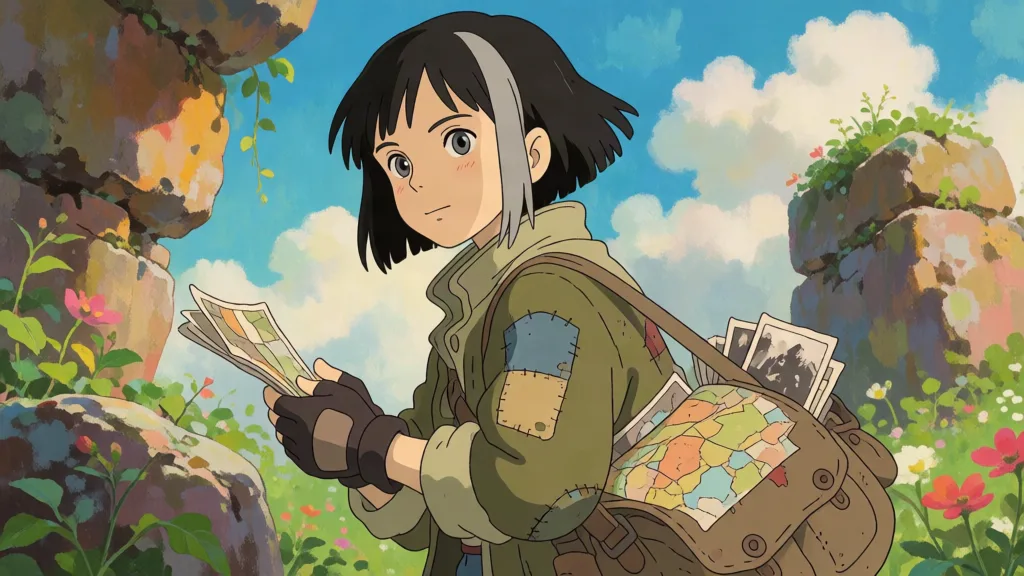
The memo came down at 4:47 on a Friday, which was Joh’s signature move. Bad news never arrived on a Monday. He liked to let it marinate over the weekend, let the dread do the work for him.
I was in the sub-basement, cataloging a crate of water-damaged ledgers from the old municipal building, when the intercom crackled. His voice, smooth as ever, like he’d just finished a good lunch. “Miya. My office. Now.”
Not a please. Not a thank you. Just the two words he considered sufficient.
I wiped my hands on my jeans, leaving gray smudges on the denim, and took the stairs two at a time. The library was quiet in that late-afternoon way, dust motes suspended in the slanted light from the high windows, the smell of old paper and mildew thick in the air. I passed the empty reading room, the rows of terminals that hadn’t worked in years, the reference desk where I’d spent the better part of a decade learning the shape of this place. The elevator was broken. It had been broken for three months. Joh hadn’t fixed it. He said it wasn’t in the budget.
His office was on the fourth floor, the only part of the building that still had working climate control. The door was open. He was standing by the window, looking out at the ruins of the old city, the skeletal frames of buildings that had collapsed in the floods, the green creep of vines reclaiming what was left.
“Close the door,” he said without turning around.
I did. Then I stood there, arms crossed, waiting. I didn’t sit. I never sat in his office unless he told me to, and even then I perched on the edge of the chair like I was ready to bolt.
“The board has approved a new initiative,” he said, finally turning. He was tall, silver at the temples, the kind of man who’d been handsome once and knew it still. His suit was expensive, tailored, completely out of place in a building where the roof leaked and the archives were slowly rotting. “We’re going to digitize the entire collection. Every record, every map, every photograph. It’s a preservation project. The board is very excited.”
I waited.
“And I’ve recommended you to lead it.”
That was the moment the floor shifted under my feet. Not because I was surprised he’d chosen me. I was the only archivist left who knew the collection, the only one who’d stayed when the funding dried up and the others fled to the coastal cities. No, the shift was in his tone. The way he said recommended, like it was a gift. Like he was doing me a favor.
“The project comes with a significant budget,” he continued, moving toward his desk. He didn’t sit either. He leaned against the edge, arms folded, mirroring my posture. “Enough to hire a team. Enough to acquire the equipment we need. Enough to keep the lights on for another five years.”
“And what do you want in return?”
He smiled. It was the smile he used when he was about to ask for something unreasonable. I’d seen it a hundred times. “I want you to work closely with me. Daily briefings. Weekly reports. The board wants oversight, and I’ve volunteered to provide it.”
“You’ve never volunteered for anything in your life.”
“I’m volunteering now.”
I looked at him. He looked back. The silence stretched, thin and taut, and I felt the familiar weight of his attention, the way he had of making you feel like you were the only thing in the room. It wasn’t flattering. It was a trap.
“I’ll think about it,” I said.
“You have until Monday.”
Of course I did.
---
I didn’t go home. I went back to the sub-basement, to the ledgers, to the familiar smell of decay and the steady rhythm of work. The crate was half-unpacked, the ledgers stacked on the table in front of me, their covers warped and stained. I’d been trying to decode a series of entries from the year 2037, the year the seawall failed, the year everything changed. The ink was faded, the handwriting cramped, but I’d learned to read between the lines. That’s what archivists do. We read what’s there and what isn’t.
The entry I was working on was a list of names. Refugees, maybe. Or casualties. The distinction had blurred by then. I traced the letters with my finger, trying to match them to the fragments I’d found in other records, other crates. A puzzle with missing pieces. That was my life. That was the job.
My brother Joh used to say I was born in the wrong century. He meant it as a compliment, I think. He said I had the soul of a monk, the patience of a saint. He said I was the only person he knew who could sit in a room full of dust and find meaning in it.
He wasn’t wrong. But he also wasn’t here.
I hadn’t seen Joh in three years. Not since he’d left for the northern territories, chasing a rumor of a place where the soil was still fertile, where the water was still clean. He’d promised to write. He’d promised to come back. He’d promised a lot of things.
The last letter I got from him was dated eighteen months ago. It was short. Just a few lines about the weather, the people he’d met, the route he was planning. And then nothing. No forwarding address. No explanation.
I’d written to him anyway. Every month, a new letter, sent to the last known location. I didn’t know if he got them. I didn’t know if he was alive. But I kept writing. It was the only thing I could do.
The intercom crackled again. “Miya. I know you’re still here.”
I ignored it. Kept working. The names on the page blurred, and I blinked, realizing the light had faded. The sub-basement had no windows. I’d been down here for hours.
“Miya.”
I looked up. He was standing in the doorway, silhouetted against the dim light from the stairwell. He’d taken off his jacket, rolled up his sleeves. It was the most casual I’d ever seen him. It made me uneasy.
“What do you want?”
“I want to talk. Without the desk between us.”
“We’re not talking. We’re working.”
“You’re working. I’m standing here.”
I set down my pen. “What do you want, Joh?”
He flinched. Just slightly, a tightening around the eyes. He didn’t like it when I used his first name. I knew that. I did it anyway.
“The project,” he said. “I need to know you’re on board.”
“You said I had until Monday.”
“I lied.”
“Shocking.”
He stepped into the room, and the space felt smaller. He had that effect. He was a presence, a weight, a gravity. You couldn’t ignore him. You couldn’t pretend he wasn’t there. He made sure of that.
“I need you for this, Miya. Not just because you’re the best. Because you’re the only one who cares.”
“That’s not true.”
“It is. The others, they’re just collecting a paycheck. They don’t care about the records. They don’t care about what’s in them. But you do. You care about every damn page.”
He was right. I hated that he was right.
“Why do you care?” I asked. “You’ve never cared before.”
He was quiet for a moment. Then he said, “Maybe I’m trying to change.”
“People don’t change.”
“You did.”
I looked at him. He was standing close now, closer than he needed to be. I could smell his cologne, something woody and expensive, completely at odds with the musty air of the sub-basement. He was looking at me with an expression I couldn’t read. Interest, maybe. Or something else.
“I didn’t change,” I said. “I just stopped pretending.”
“Same thing.”
He reached out, and for a moment I thought he was going to touch me. His hand hovered near my face, near the ink stain on my cheekbone. I didn’t move. I didn’t breathe.
Then he pulled back. “Monday,” he said. “Don’t make me wait.”
He turned and walked out, and I sat there in the dim light, my heart pounding, my hands shaking. I didn’t know what had just happened. I didn’t know what he wanted. But I knew one thing for certain.
I was in trouble.
---
The weekend passed in a blur of work and worry. I didn’t sleep much. I kept going over the conversation in my head, trying to parse his meaning, his motives. He’d never been interested in the archives before. He’d never been interested in anything except the bottom line, the budget, the board’s approval. So why now? Why this?
I went to the library on Saturday, even though it was closed. I had a key. I’d had a key for years. I let myself in through the side door, walked through the silent stacks, and climbed the stairs to the fourth floor. His office was locked, but I had a key to that too. I’d never used it before. I told myself I was just looking for the project proposal, the details he’d mentioned. I told myself it wasn’t snooping.
It was snooping.
The proposal was on his desk, a thick document with the board’s letterhead. I flipped through it, scanning the pages. The budget was impressive. The timeline was aggressive. The scope was enormous. Every record, every map, every photograph. It would take years. It would take a team. It would take everything I had.
And then I saw the appendix. A list of priority items. At the top, circled in red ink, was a single entry: “The Sanctuary Files.”
I stopped breathing.
The Sanctuary Files were a legend. A myth. A collection of records that supposedly documented a place, a real place, where the climate hadn’t collapsed, where the water was clean, where people could live. I’d been chasing rumors of it for years. I’d found fragments, hints, clues. But I’d never found the files themselves. No one had.
And Joh knew about them. He’d circled them. He’d made them a priority.
I sat down in his chair, the leather creaking under my weight, and stared at the page. My mind was racing. How did he know? Why did he care? And why hadn’t he told me?
I thought about my brother. I thought about the letters I’d sent, the silence that had followed. I thought about the sanctuary, the place he’d been looking for, the place he’d promised to find.
And I thought about Joh. The way he’d looked at me. The way he’d reached for me. The way he’d said my name.
I closed the proposal and put it back on the desk. Then I left, locking the door behind me, and walked home through the dark streets, the ruins looming on either side, the sky a bruised purple above.
I didn’t know what I was going to do. But I knew I couldn’t walk away.
---
Monday morning, I was in his office at 8:00 sharp. He was already there, of course. He was always there. He looked up when I walked in, and his expression was carefully neutral.
“You’re early.”
“I’m punctual.”
“There’s a difference.”
I sat down. Not on the edge of the chair this time. I sat back, arms crossed, and looked at him. “I read the proposal.”
“I know.”
“You left it on your desk.”
“I know.”
“You wanted me to find it.”
He smiled. That smile again. “I wanted you to understand what’s at stake.”
“The Sanctuary Files.”
“Yes.”
“How do you know about them?”
He leaned back in his chair, studying me. “I’ve known about them for years. Everyone in the upper levels knows. It’s the holy grail of the archive world. The one thing that could change everything.”
“And you want me to find them.”
“I want you to digitize them. Preserve them. Make them accessible.”
“Why?”
He was quiet for a moment. Then he said, “Because I’m dying.”
The words hit me like a physical blow. I sat there, frozen, trying to process what he’d said. He watched me, his expression unreadable.
“What?”
“Cancer. Pancreatic. They gave me six months, maybe a year. I’ve been keeping it quiet. The board doesn’t know. No one knows.”
“Why are you telling me?”
“Because I need you to understand. This project, it’s not about the budget, or the board, or the damn digitization. It’s about legacy. It’s about leaving something behind that matters.”
He paused, and for the first time, I saw something vulnerable in his eyes. Something real.
“And because I trust you, Miya. I’ve always trusted you. Even when you hated me.”
I didn’t know what to say. I didn’t know what to feel. He was dying. The man I’d spent years resenting, avoiding, tolerating. The man who’d made my life difficult in a hundred small ways. He was dying.
“I don’t hate you,” I said, and it was true. Or partly true. I hated what he was, what he represented. But I didn’t hate him. Not really.
“You should,” he said. “I’ve been terrible to you.”
“You’ve been my boss.”
“That’s not an excuse.”
He stood up, walked around the desk, and sat on the edge of it, close to me. His knee brushed mine. I didn’t pull away.
“I’m not asking for forgiveness,” he said. “I’m not asking for anything. I just want you to know the truth. And I want you to take this project. Not for me. For you. For the records. For whatever’s left of this world.”
I looked at him. At the lines around his eyes, the gray at his temples, the slight tremor in his hands. He was dying. And he was asking me to help him leave something behind.
“I’ll do it,” I said. “But not for you. For the archives.”
He smiled, and this time it was different. Softer. Almost sad. “That’s all I ask.”
---
The next few weeks were a blur. I assembled a team, scavenged equipment, set up a workspace in the old reading room. The project consumed me. I worked late, slept in the sub-basement, ate cold rations at my desk. The sanctuary files became an obsession. I found fragments, hints, clues. A map with a missing corner. A photograph of a valley that didn’t match any known geography. A letter from a scientist who’d disappeared decades ago.
Joh was there, every day. He brought me coffee, asked about my progress, sat with me in the quiet hours. He didn’t push. He didn’t demand. He just waited. And slowly, carefully, I started to let him in.
We talked about the archives, about the past, about the world that had been lost. He told me about his childhood, about the floods, about the sister he’d lost. I told him about my brother, about the letters, about the silence. He listened. He didn’t judge. He just listened.
And one night, when the rain was pounding against the windows and the power was flickering, he kissed me.
It wasn’t planned. It wasn’t expected. We were sitting on the floor, surrounded by papers, and he leaned in, and I didn’t pull away. His lips were warm, his hands gentle. He tasted like coffee and something else, something sweet. I closed my eyes and let myself feel it.
When we pulled apart, he looked at me with an expression I couldn’t name. “I’m sorry,” he said. “I shouldn’t have.”
“Why not?”
“Because I’m your boss. Because I’m dying. Because I’m not good for you.”
“I’m not good for anyone.”
He laughed, a soft, sad sound. “That’s not true.”
“It is. I’m stubborn. I’m suspicious. I push people away.”
“I know.”
“And you still want me?”
He reached out, touched my face, traced the ink stain on my cheekbone. “I want you,” he said. “I’ve always wanted you. From the first day you walked into my office, with your patched jacket and your angry eyes. I wanted you.”
I didn’t know what to say. I didn’t know what to feel. But I knew one thing for certain.
I wanted him too.
---
The affair was a secret. A quiet, desperate thing. We met in his office after hours, in the sub-basement, in the empty stacks. We didn’t talk about the future. We didn’t talk about the end. We just held on to each other, in the dark, in the silence, and pretended it could last.
But it couldn’t. I knew that. He knew that. And every day, the clock ticked closer to the moment when everything would change.
The sanctuary files were the key. I was sure of it. If I could find them, if I could prove they were real, it would mean something. Not just for the archives. Not just for the world. For us. For whatever time we had left.
I found the first piece in a crate of photographs from the old agricultural department. A picture of a valley, green and lush, with a river running through it. On the back, in faded ink, a single word: “Sanctuary.”
I took it to Joh. He looked at it for a long time, his face unreadable.
“This is it,” I said. “This is the place.”
“Maybe.”
“It’s real. I know it’s real.”
He looked at me, and for a moment, I saw something in his eyes. Hope, maybe. Or fear.
“If it’s real,” he said, “we have to find it. Before it’s too late.”
“Too late for what?”
“For everything.”
He didn’t explain. He didn’t have to. I understood. The world was dying. The climate was collapsing. The sanctuary was a chance, a hope, a way out. And if we could find it, if we could prove it existed, it would change everything.
But we weren’t the only ones looking.
---
The man came to the library on a Tuesday. He was tall, thin, with a sharp face and eyes that didn’t blink. He said his name was Kessler, and he said he was from the coastal authority. He said he was there to inspect the archives.
Joh was in a meeting. I was alone in the reading room, surrounded by papers. Kessler walked in, looked around, and smiled.
“You’re Miya,” he said. “I’ve heard about you.”
“I’m flattered.”
“You shouldn’t be. I’ve heard you’re difficult. Stubborn. Obsessive.”
“That’s accurate.”
He laughed, a dry, humorless sound. “I’m here about the sanctuary files.”
I didn’t react. I’d learned to hide my feelings. It was a survival skill.
“I don’t know what you’re talking about.”
“Don’t lie to me. I know you’ve been looking. I know you’ve found something. I want it.”
“It’s not yours.”
“It’s not yours either.”
He stepped closer, and I caught a whiff of something chemical, something sharp. “The sanctuary is a myth,” he said. “A fairy tale. But there are people who believe in it. Dangerous people. And if they find it, if they get there first, it won’t be a sanctuary. It’ll be a war zone.”
“What do you want?”
“I want the files. All of them. Before anyone else gets to them.”
“And if I refuse?”
He smiled. “You won’t refuse.”
He turned and walked out, and I stood there, my heart pounding, my hands shaking. I didn’t know who he was. I didn’t know what he wanted. But I knew one thing for certain.
I was in danger.
---
I told Joh that night. We were in his office, the lights off, the city dark outside. He listened, his face tight, his hands clenched.
“Kessler,” he said. “I know him. He’s a mercenary. He works for the highest bidder. He’s been chasing the sanctuary for years.”
“Why?”
“Because it’s worth a fortune. Clean water, fertile land, a place to live. In this world, that’s power. That’s control.”
“We can’t let him have it.”
“We won’t.”
He reached out, took my hand, held it tight. “We’ll find the files. We’ll prove they’re real. And we’ll protect them. No matter what it takes.”
I looked at him, at the determination in his eyes, at the fear. He was dying. He had months, maybe weeks. And he was still fighting. Still hoping.
“Why do you care?” I asked. “You won’t live to see it.”
He was quiet for a moment. Then he said, “Because you will.”
---
The next few days were a race. I worked around the clock, digging through the archives, following every lead. Joh helped, using his connections, his resources, his influence. We found more fragments, more clues. A journal from a scientist who’d visited the valley. A map with coordinates that matched the photograph. A letter from a survivor who’d escaped the floods.
The sanctuary was real. I was sure of it.
But Kessler was closing in. He came back to the library, twice, three times. He threatened me, bribed me, tried to steal the files. I hid them, moved them, protected them. But I knew it was only a matter of time.
And then, one night, I found the final piece.
It was in a crate of records from the old government, buried beneath a pile of useless paperwork. A folder, marked with a single word: “Sanctuary.” Inside, a map, a detailed map, with coordinates, landmarks, a route. And a note, in faded ink, from the scientist who’d discovered it.
“The valley is real. The water is clean. The soil is fertile. It’s a paradise. But it’s hidden. And it must stay hidden. If the wrong people find it, it will be destroyed.”
I sat there, staring at the map, my heart pounding. This was it. This was the proof. This was everything.
I called Joh. He came immediately, his face pale, his hands shaking. He looked at the map, the note, and for a moment, he didn’t speak.
“We found it,” I said. “We found the sanctuary.”
He looked at me, and his eyes were wet. “You found it.”
“We found it.”
He reached out, pulled me close, held me tight. “I’m proud of you,” he said. “I’m so proud of you.”
I didn’t know what to say. I didn’t know what to feel. But I knew one thing for certain.
We had to protect it.
---
The next morning, Kessler was waiting for me outside the library. He wasn’t alone. Two men, tall and silent, stood behind him. He smiled when he saw me.
“You have something I want,” he said.
“I don’t know what you’re talking about.”
“Don’t play games. I know you found the files. I know you have the map. Give it to me, and no one gets hurt.”
“And if I refuse?”
He stepped closer, and his smile faded. “Then I’ll take it. And I’ll make sure you regret it.”
I didn’t move. I didn’t blink. “You’re too late,” I said. “I’ve already sent it. The files, the map, everything. It’s on its way to the coastal authority. You can’t stop it.”
It was a lie. But he didn’t know that.
He stared at me, his eyes cold, his jaw tight. Then he laughed. “You’re bluffing.”
“Try me.”
He was quiet for a moment. Then he turned and walked away, his men following. I watched them go, my heart pounding, my hands shaking. I didn’t know if he believed me. I didn’t know if it would work.
But I knew one thing for certain.
I wasn’t going to give up.
---
Joh was waiting for me in his office. He looked worse than I’d ever seen him. Pale, thin, tired. The disease was eating him alive.
“Kessler came,” I said. “I told him I sent the files.”
“Did you?”
“No. But he doesn’t know that.”
He smiled, a weak, tired smile. “You’re brilliant.”
“I’m scared.”
“I know.”
He reached out, took my hand, held it tight. “We need to leave. Tonight. Before he comes back.”
“Leave? Where?”
“To the sanctuary. To the valley. We have the map. We can find it.”
“You’re dying. You can’t travel.”
“I can. I have to.”
“Why?”
He looked at me, and his eyes were bright, fierce. “Because I want to see it. I want to see the place you’ve been searching for. I want to see the hope.”
I didn’t know what to say. I didn’t know what to feel. But I knew one thing for certain.
I couldn’t let him go alone.
---
We left that night. Packed what we could carry, took the map, the files, the photographs. We drove through the dark streets, past the ruins, past the checkpoints, past the edge of the city. The road was rough, the sky was black, and the world was silent.
Joh was in the passenger seat, his eyes closed, his breathing shallow. I glanced at him, and my heart ached. He was dying. He was dying, and he was still fighting. Still hoping.
“Miya,” he said, his voice soft.
“Yeah?”
“Thank you.”
“For what?”
“For everything. For the archives. For the sanctuary. For not giving up on me.”
I didn’t know what to say. I didn’t know what to feel. But I knew one thing for certain.
I loved him.
---
We drove for hours, through the night, through the dawn. The landscape changed, from ruins to fields, from fields to forests. The air grew cleaner, the sky brighter. And then, just as the sun was rising, we saw it.
The valley.
It was green, lush, alive. A river ran through it, clear and clean. Trees, birds, flowers. A paradise.
I stopped the car, and we sat there, staring, unable to speak. It was real. It was all real.
Joh reached out, took my hand, held it tight. “We found it,” he said.
“We found it.”
He looked at me, and his eyes were wet. “I love you, Miya.”
“I love you too.”
We sat there, in the silence, in the light, and for a moment, everything was perfect. Everything was right.
But I knew it wouldn’t last. I knew the world was still out there, still dangerous, still broken. And I knew Kessler would come. He would find us. He would try to take it.
But I also knew something else. I knew I wouldn’t let him. I knew I would fight. I knew I would protect this place, this hope, this sanctuary.
No matter what it took.
---
We stayed in the valley for three days. Three perfect, impossible days. We explored, we rested, we held each other. Joh grew weaker, but he smiled more. He said he was happy. He said he was ready.
On the fourth day, Kessler arrived.
He came with his men, with guns, with trucks. He came to take what we’d found. He came to destroy it.
But we were ready.
I’d sent word to the coastal authority, to the archivists, to everyone I knew. I’d told them about the sanctuary, about the valley, about the hope. And they came. They came to protect it. They came to fight.
The battle was short, brutal, bloody. But in the end, we won. Kessler was arrested, his men scattered, his plans destroyed. The sanctuary was safe.
Joh was there, at the end. He was weak, barely able to stand. But he was there. He saw it. He saw the victory.
And then he collapsed.
---
I held him in my arms, in the green grass, under the clear sky. He was pale, thin, barely breathing. But he was smiling.
“We did it,” he said.
“We did it.”
“I’m proud of you.”
“I’m proud of you too.”
He looked at me, and his eyes were bright, fierce, full of love. “Don’t give up,” he said. “Don’t ever give up.”
“I won’t.”
He closed his eyes, and his breathing slowed, and then it stopped. And I sat there, holding him, in the valley, in the light, and I cried.
---
I buried him in the valley, under a tree, near the river. I marked the grave with a stone, with his name, with the dates. I said goodbye.
And then I went back to the library. Back to the archives. Back to the work.
The sanctuary was safe. The files were preserved. The hope was alive.
But Joh was gone.
I sat in his office, in his chair, and I looked out at the ruins of the city. The world was still broken. The climate was still collapsing. The future was still uncertain.
But I had something now. Something I hadn’t had before. I had a purpose. I had a mission. I had a reason to keep going.
I had the sanctuary.
And I had his memory.
I opened the drawer of his desk, and I found a letter. Addressed to me, in his handwriting. I opened it, and I read.
“Miya. If you’re reading this, I’m gone. I’m sorry. I’m sorry for the years I wasted, the things I said, the way I treated you. I’m sorry for not being brave enough to tell you the truth. But I want you to know: you were the best thing that ever happened to me. You were the light in the dark. You were the hope. Don’t give up. Don’t ever give up. And remember: the sanctuary is real. It’s out there. And it’s waiting for you.”
I folded the letter, put it in my pocket, and stood up.
I had work to do.
---
The library was quiet. The archives were still. The world was waiting.
I walked down the stairs, through the reading room, past the empty terminals, past the reference desk. I opened the door, and I stepped outside.
The sun was rising. The sky was clear. And for the first time in years, I felt something I hadn’t felt in a long time.
Hope.
I didn’t know what the future held. I didn’t know what challenges awaited. But I knew one thing for certain.
I was ready.
I walked down the street, toward the ruins, toward the unknown. And I didn’t look back.
Watch this moment
Turn the current scene into a cinematic Live Chapter — what you watch becomes the story's next part.
Disclaimer
This is a work of fiction, assisted by artificial intelligence. Any names or characters, businesses or places, events or incidents, are fictitious. Any resemblance to actual persons, living or dead, or actual events is purely coincidental.
Content Removal Policy
- Users may report content that may be illegal or violates our Standards.
- All reported complaints will be reviewed and resolved within seven business days.
- Review Process: Our team will assess the reported content against our guidelines.
- Appeals: If you disagree with a decision, you may appeal within 14 days of notification.
- Potential outcomes include: content removal, account warning, or no action if no violation is found.
To report content, email us at [email protected]