Share
Go Live
Reset at Dawn
·
Published 9/25/2026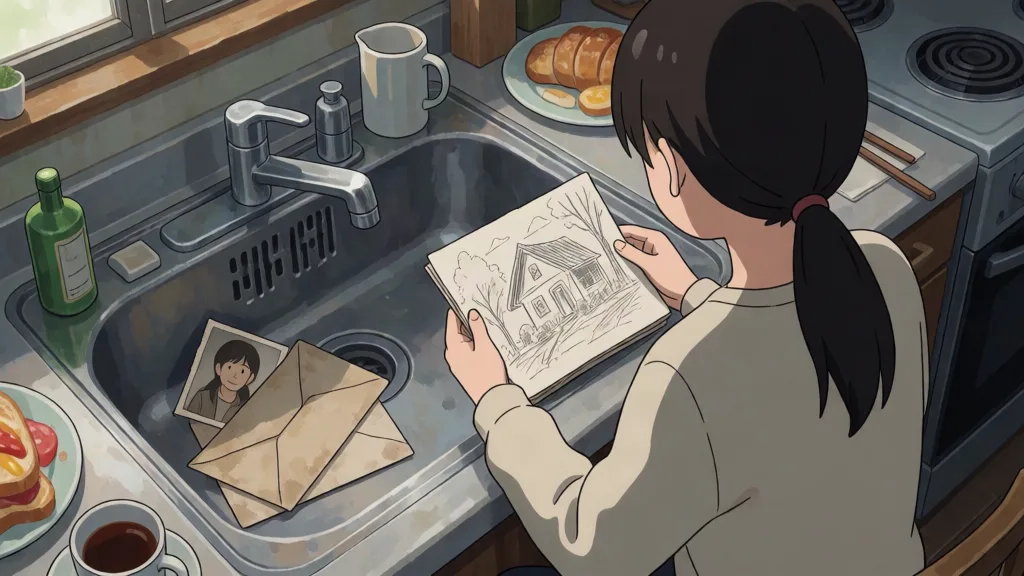
The tap dripped at 6:47. I know because I was watching the clock, the way I do every morning, counting the seconds between each drop like a meditation or a symptom.
Three seconds. Drip. Three seconds. Drip.
I'd told the landlord about it twice. He said he'd send someone. That was four months ago. Now the sound was part of the apartment, part of me, the way the radiator's clank and the neighbor's television and the particular groan the floorboards made when I stepped from the kitchen into the living room were part of me. I could navigate this place blind. I probably had.
The kettle clicked off. I poured the water over the instant coffee, watched it swirl into that familiar brown, added the same amount of milk I always added, stirred it counterclockwise, three times. The mug was white with a chip on the rim I'd learned to drink around. I didn't remember buying it. I didn't remember buying most things in this apartment, actually. The furniture had appeared, the dishes had appeared, the prints on the walls had appeared. I assumed I'd chosen them at some point. That's how life worked, wasn't it? You accumulated things and forgot the accumulating.
I sat at the small table by the window. The city was gray outside, soft with morning fog, the buildings across the street reduced to suggestions. My laptop waited where I'd left it, closed, patient. I had a report due by noon. I had three meetings scheduled for the afternoon. I had the same day I'd had yesterday, more or less, and the day before that, and the day before that one.
My sketchbook lay open beside the laptop. I didn't remember opening it.
The drawing was of a house. Simple lines, a child's rendering, a triangle roof and a square body and four windows with crosses inside them. A door in the center. A chimney. No smoke. The pencil strokes were light, tentative, as if I'd been afraid of committing to the image. I flipped back through the pages. More houses. Dozens of them, variations on the same theme, some with gardens, some with fences, some with trees that looked like lollipops. All of them empty. All of them drawn in that same hesitant hand.
I didn't remember drawing any of them.
The coffee had gone cold. I drank it anyway, swallowed the bitterness, and told myself I'd always drawn houses. It was a phase. A habit. Something from childhood I'd carried into adulthood without noticing. People had quirks. People had repetitive behaviors. It didn't mean anything.
The tap dripped.
I opened my laptop and started the report.
---
The photograph was in a box I didn't remember packing.
I found it while looking for my passport, which I also didn't remember putting anywhere, which I needed for reasons that had seemed urgent when I woke up but now felt vague, like a dream dissolving. The box was in the back of my closet, behind winter coats I didn't remember wearing, and it was full of papers and old notebooks and a single photograph curled at the edges.
Me. Standing in front of a house I didn't recognize. Squinting into sunlight that seemed too bright, too yellow, like something from a different decade. I was wearing a red jacket. I didn't own a red jacket. My hair was longer in the photo and I was smiling in a way I didn't recognize, open and unguarded, like a person who hadn't yet learned to be careful.
I turned the photo over. Nothing written on the back. No date, no location, no explanation.
I sat down on the closet floor and stared at it for a long time.
The thing was, I knew it was me. The shape of the face, the particular way my left eye crinkled when I smiled, the mole on my chin. It was me. But it was also not me, not the me who drank instant coffee at 6:47 every morning and drew empty houses and couldn't remember the last time she'd smiled like that, if ever.
I put the photo in my pocket and went back to work.
---
That night, the tap dripped louder.
I lay in bed and listened to it, three seconds, three seconds, three seconds, and thought about the photograph, about the red jacket, about the house in the drawing that looked nothing like the house in the photo but somehow felt the same. The same emptiness. The same waiting.
I got up at 2:13. I don't know why I checked the time. I don't know why I went to the kitchen instead of the bathroom, why I knelt on the cold tile and opened the cabinet under the sink, why I reached past the cleaning supplies and the plastic bags and found the envelope taped to the back wall, brown and soft with age, my name written on it in handwriting I almost recognized.
Inside were documents. Official-looking. Stamped and numbered.
DRP-07. TRAIL-IV. SUBJECT REF: 0716-R.
And a pamphlet, glossy, professional, with a logo of a rising sun and the words IRA — Spark Industries printed beneath it in clean sans-serif letters.
I didn't open the pamphlet. Not yet. I sat on the kitchen floor with the documents spread around me and felt something shift, some internal tectonic movement, like the ground beneath my life was rearranging itself. The tap dripped. Three seconds. Three seconds. Three seconds.
I opened the pamphlet.
---
The archive was hard to find. I spent three days searching, following dead links and obscure references, learning that IRA stood for Identity Reconstruction Architecture, that Spark Industries had filed patents in countries I'd never heard of, that the project had been discontinued but never deleted, just buried. I found a forum for people who'd lost loved ones to degenerative diseases. I found a single post, three years old, with a link and a warning: *Don't watch this if you want to sleep.*
I watched it.
The woman on the screen was old. Nineties, maybe. Her face was lined and spotted and her voice was thin, but her eyes were sharp, and they were my eyes, the same shape, the same color, the same particular way of looking at the camera like she was seeing through it, seeing me.
"My name is Maya Sen," she said. "If you're watching this, I'm probably dead. Or I'm not. I don't know how these things work."
She laughed. It was a dry sound, like leaves.
"The project is called Identity Reconstruction Architecture. The idea is simple, which doesn't mean it's good. You record everything. Memories, habits, fears, the way you take your coffee, the way you sleep, the people you love, the people you hate. You feed it all into a system. And after you die, the system builds you again. A new you. A you that wakes up believing she's the original."
She paused. The camera shook slightly, as if she'd bumped the tripod.
"The most important rule is this. Don't tell her. Don't tell the reconstructed person what she is. Because if she knows, she'll start questioning. She'll start pulling at the threads. And eventually she'll ask the only question that matters."
She leaned closer to the camera.
"She'll ask if she's really herself."
The video ended. I sat in the dark of my apartment and listened to the tap drip. Three seconds. Three seconds. Three seconds.
I looked down at my sketchbook, open on the table, and saw a drawing I didn't remember making. Two figures. Two Mayas. One inside a house, one outside. They were holding hands through a window. They were saying goodbye.
My computer screen flickered on by itself.
UNMAPPED RECALL DETECTED. CONNECTING.
RESETTING.
I stood up. I walked to the door. I don't know why. I don't know what I thought I'd find on the other side, or what I was running from, or what I was running toward. I just knew I had to move, had to do something, had to prove I was real, that my choices were mine, that the person reaching for the doorknob was the same person who'd woken up this morning and the same person who'd fallen asleep last night and the same person in the photograph with the red jacket and the unguarded smile.
The door opened.
I stepped outside.
---
I woke up in my bed.
The clock said 6:47. The tap was dripping. Three seconds. Three seconds. Three seconds. I lay still for a long moment, listening to it, feeling the weight of the blankets and the familiar dip of the mattress and the particular quality of gray morning light through the curtains.
Everything was normal.
I got up. I made coffee. I stirred it counterclockwise, three times. I sat at the table by the window and opened my sketchbook and saw the drawing of the house, simple lines, triangle roof, square body, four windows with crosses inside. No smoke. No people. Just the house, waiting.
My phone buzzed. A message from a colleague I didn't remember adding to my contacts.
GOOD MORNING MAYA!
I looked at the words for a long time. The tap dripped. The city was gray outside. My laptop waited, closed, patient. I had a report due by noon. I had three meetings scheduled for the afternoon. I had the same day I'd had yesterday, more or less.
I smiled.
And I picked up my pencil and started to draw.
Watch this moment
Turn the current scene into a cinematic Live Chapter — what you watch becomes the story's next part.
Disclaimer
This is a work of fiction, assisted by artificial intelligence. Any names or characters, businesses or places, events or incidents, are fictitious. Any resemblance to actual persons, living or dead, or actual events is purely coincidental.
Content Removal Policy
- Users may report content that may be illegal or violates our Standards.
- All reported complaints will be reviewed and resolved within seven business days.
- Review Process: Our team will assess the reported content against our guidelines.
- Appeals: If you disagree with a decision, you may appeal within 14 days of notification.
- Potential outcomes include: content removal, account warning, or no action if no violation is found.
To report content, email us at [email protected]