Share
Go Live
Blood and Blossom
·
Published 10/1/2026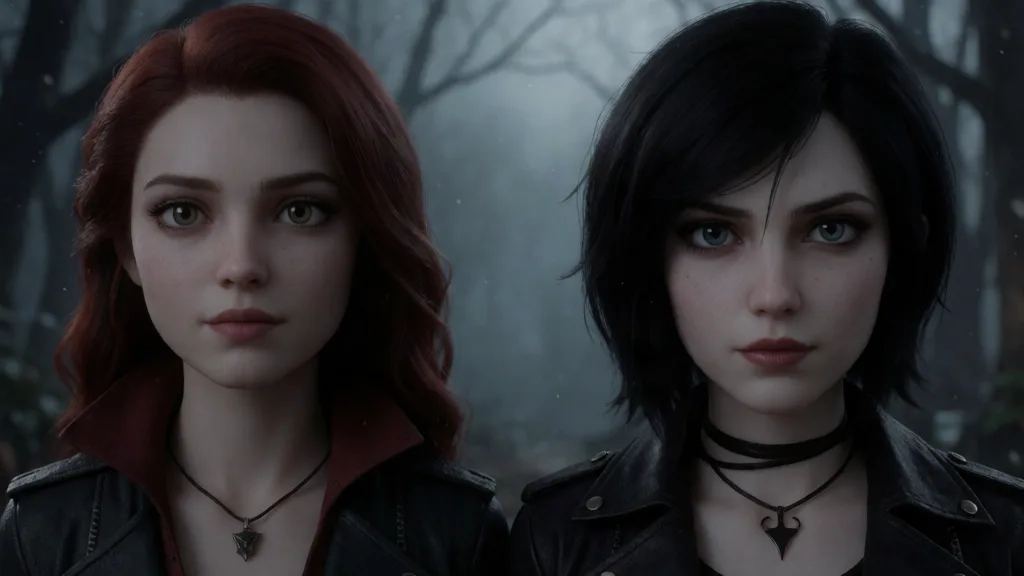
The deer came to the salt lick at dusk, and I was already waiting.
She was a young doe, ribs showing through her winter coat, and she stepped careful through the ferns like she knew something was wrong with the clearing. Smart animal. The salt crusted white on the black mud, and the mud held the heat of the day, and the heat made the whole hollow smell like iron and rot and green things dying. I'd been standing in the same spot for six hours. My boots had sunk two inches into the muck and I hadn't moved. That's the thing nobody tells you about what I am. The stillness isn't patience. Patience implies you're waiting for something to end. I could stand there until the sun swallowed the earth. The waiting doesn't cost me anything.
She put her nose down to the salt and I let her have one lick. Two. A third, her tongue pink and rough, her eyes half-closed with the pleasure of it. Then I moved.
Not fast. Fast is what the movies do, what the stories say. Fast is a blur and a snap and a body dropping. Fast is wasteful, and I was raised better than that. My mother, who was not my mother, who found me in a drainage ditch outside of Bucharest with my infant mouth full of river water, taught me that the kill is a conversation. You ask. The animal answers. You accept.
I crossed the clearing in four steps, and the doe's head came up, and her ears went flat, and she saw me. Not the blur. Me. A woman in a canvas coat with mud to her knees and hair the color of old pennies pulled back in a knot. She saw my face, and I let her see it, because that's the courtesy. Her nostrils flared. Her muscles bunched. She could have run. She should have run.
She didn't.
I knelt in the mud beside her and put my hand on her neck, and she trembled under my palm, and I felt the pulse of her, the hot blood moving under the thin skin, the fear and the salt and the green taste of the ferns she'd been eating all day. My throat burned. That's the thirst. It's not hunger. Hunger is a hollow thing, an absence. The thirst is a presence. It sits in the back of your throat like a hand, like a fist, like a lover who won't let go.
I pressed my mouth to the wound I made, which was small, which was almost gentle, and I drank.
She went still in my arms. That's the mercy of it. The venom in my saliva does that. It doesn't hurt them. It never hurts them. The stories get that wrong too. We're not monsters because we cause pain. We're monsters because we don't.
When it was done I laid her down in the ferns and closed her eyes with two fingers, and I stood up, and the mud sucked at my boots, and the clearing was quiet again except for the frogs and the far-off sound of a highway I couldn't see. I wiped my mouth with the back of my hand. The blood was warm and thick and it smelled like copper and pine, and I thought about how my wife would kiss me later and taste it on my tongue and not mind.
Rosalie never minded.
I walked back to the truck through the dark, and the trees closed behind me, and I didn't look back at the doe because there's no point. The dead don't need witnesses. They need to be left alone.
The truck was a 1972 Ford F-100, rust-red, with a dent in the driver's side door shaped like the state of Nebraska. I'd bought it in 1998 from a man in Missoula who cried when I handed him the cash. His father had driven it. His father had died in it, actually, right there in the cab, of a heart attack on the way to a doctor's appointment he never made. He told me that like it was a selling point. I gave him an extra two hundred dollars and he stopped crying and started looking at me strange, the way people do when they can't figure out why they feel watched. I get that a lot. It's the eyes. They're too still. Prey animals know it. Humans mostly don't, but sometimes, in the right light, they catch a glimpse and their hindbrain screams at them and they don't know why.
I drove with the windows down. The air coming off the mountains was cold and clean and it tasted like snow even though it was June. Montana does that. It keeps winter in its pockets all year, pulls it out when you least expect it. I liked that about Montana. I liked that the land didn't pretend to be anything other than what it was.
The road wound down through the pass and into the valley, and the lights of the town came up slow, a scatter of yellow and white against the black, and I thought about Rosalie. I always thought about Rosalie when I came home. Not in a sappy way. I'm not a sappy person. But there's a thing that happens when you've been alive as long as we have, when you've seen everything there is to see, when the world has gone gray and flat and boring in a way that no human can understand. You stop wanting things. You stop hoping. You just exist, and existence is a long corridor with no doors.
And then one day you turn a corner and there's a door, and behind the door is a woman with hair like spun gold and eyes like honey and a mouth that says your name like it's the only word that matters, and you realize you'd forgotten what wanting felt like. You'd forgotten that you could want anything at all.
That's Rosalie. That's what she is to me. Not a reason to live. Reasons to live are for people who have a choice. She's the thing that makes living not just bearable but interesting. She's the thing that makes me curious about tomorrow.
I pulled into the driveway of the house at the end of the lane. Our house. It sat back from the road behind a stand of lodgepole pines, a two-story farmhouse with white siding and black shutters and a porch that wrapped all the way around. We'd bought it in 1987 from an old woman who was moving to Arizona to die. She'd planted roses along the fence, and they were still there, still blooming every June, still smelling like something out of a memory that wasn't mine. Rosalie had added to them over the years. Hybrid teas. Floribundas. A climbing variety that had taken over the entire east wall and was threatening the roof.
The porch light was on. It was always on when I came home. She never said anything about it. She just left it on, and I just noticed, and that was our whole conversation about it. Twenty years of porch light. Twenty years of her waiting up.
I killed the engine and sat in the dark for a minute, listening to the tick of the cooling metal, and then I got out and walked up the steps and through the door.
She was in the kitchen. I could smell her before I saw her, the way you can smell rain before it falls, that electric thing that happens in the air. She was standing at the counter with her back to me, her hair pinned up, wearing one of my old flannel shirts over a pair of jeans that had been washed so many times they were almost white. She was cutting something. Strawberries, I think. The smell of them was sharp and sweet and it mixed with the smell of her and made something in my chest go tight.
"You're late," she said, without turning around.
"I know."
"You're always late when you hunt."
"I know."
She set the knife down and turned, and there it was. That face. That impossible, ridiculous, unfair face. High cheekbones and a jaw that could cut glass and eyes the color of whiskey held up to a fire. She looked at me the way she always looked at me, like I was a puzzle she'd been working on for decades and was still no closer to solving, and she smiled, and the smile was slow and small and it made me want to fall to my knees.
"Come here," she said.
I went.
She put her hands on my chest and pushed me back against the counter, and the edge of it dug into my spine, and I didn't care. She kissed me. She tasted like strawberries and coffee and the mint toothpaste she used even though she didn't need to. Her mouth was warm. That's the thing about Rosalie. She's always warm. It's the only thing about her that's human. The rest of her is something else entirely, something that was made rather than born, something that was broken and rebuilt into a shape so beautiful it hurts to look at directly.
I put my hands in her hair and pulled the pins out and it fell down around her shoulders like water. Gold water. She made a sound against my mouth, low and pleased, and I felt it in my teeth.
"You taste like blood," she said, pulling back just enough to look at me.
"I know."
"Did you eat?"
"I did."
"Was it good?"
"It was fine."
She laughed. That laugh. It was the sound of a door opening in a house you thought was empty. "You always say that. 'It was fine.' Like you're reviewing a restaurant."
"It's not a restaurant."
"Then what is it?"
"It's a conversation."
She raised an eyebrow. "A conversation."
"I ask. They answer. I accept."
"You're so weird," she said, and kissed me again, and I let her, and the kiss went on for a long time, long enough that the strawberries on the counter started to brown, long enough that the moon moved across the kitchen window, long enough that I forgot, for a little while, what I was and what I'd done and what I'd have to do again tomorrow.
She pulled away first. She always did. She liked to be the one to end things. It was a power thing, I think. A control thing. Rosalie had spent most of her existence being controlled, being told what to be and what to want and who to love, and now she was done with all of that. Now she was the one who decided. Now she was the one who said when.
"I have something for you," she said.
"What?"
"A surprise."
"I don't like surprises."
"I know. That's why it's a surprise."
She took my hand and led me out of the kitchen and up the stairs. The house creaked around us, the old wood settling, the ghosts of the people who'd lived here before us still rattling around in the walls. I liked the creaks. I liked the imperfection. Rosalie had wanted to renovate when we first moved in, to tear out the old floors and put in something new, something clean, something that didn't remember. I'd talked her out of it. I'd said that the memories were the point. That a house without ghosts was just a building.
She'd looked at me for a long time after I said that. Then she'd nodded and never mentioned it again.
The bedroom was dark except for a single candle on the nightstand, and the candle was the kind that smelled like vanilla, and the vanilla mixed with the smell of her and the smell of the roses outside and the smell of the pine trees and the smell of the mountains and the smell of the whole world, and I stood in the doorway and breathed it in and thought, This is it. This is the thing. This is what I killed a deer for.
She'd put something on the bed. A box, wrapped in brown paper, tied with string. It was small, about the size of a book, and I looked at it and then at her and she was watching me with that smile again, the slow one, the one that made me feel like I was standing on the edge of something.
"Open it," she said.
I sat on the edge of the bed and picked up the box. The paper was rough under my fingers. The string was tied in a bow that I could tell she'd spent time on, the loops even, the tails curled. I pulled it loose and unfolded the paper and opened the box.
Inside was a photograph.
It was old. Black and white. The edges were yellowed and the corners were soft from handling. It showed a group of people standing in front of a building, a church, I think, or a schoolhouse. They were dressed in clothes from another century, the women in long skirts and high collars, the men in hats and vests. They were all smiling. It was the kind of photograph that people took to prove they'd existed, to prove they'd been somewhere and done something and mattered.
I looked at the faces. I didn't recognize any of them. I looked at the building. I didn't recognize it either. I looked at the photograph again, and then I saw her.
She was in the back row, half-hidden behind a man with a mustache. Her hair was dark in the photograph, not gold, but the shape of her face was the same. The cheekbones. The jaw. The eyes. She was looking at the camera with an expression I knew, an expression I'd seen a thousand times, the one that said she was somewhere else, that she was thinking about something she wasn't going to share.
"That's you," I said.
"That's me."
"When?"
"1918."
I looked at the photograph again. The woman in it was young. Younger than Rosalie looked now, though I knew that was an illusion. We don't age. We just get better at pretending.
"Where was this taken?"
"A town in Wisconsin. It doesn't exist anymore. The whole place burned down in '32. Everyone died."
"Everyone?"
"Everyone except me."
She sat down on the bed beside me. She was close enough that I could feel the heat of her, the impossible warmth that she carried with her like a coal in her chest. She took the photograph from my hands and looked at it, and her face did something complicated, something I couldn't read.
"I found it last week," she said. "I was going through some boxes in the attic. Things I hadn't looked at in decades. And there it was."
"I didn't know you had photographs from before."
"I have a few. I don't look at them often. It's hard to see the faces of people you loved and know they're gone."
I put my hand on her knee. She didn't look at me. She kept looking at the photograph, at the girl she used to be, at the life she used to have.
"Who were they?" I asked.
"My family. My mother and father. My brothers. My sister. And the man I was supposed to marry."
"Supposed to?"
"I didn't love him. I was going to marry him because that's what you did. You married the man your father chose for you, and you had his children, and you died in childbirth or you died of old age or you died of something else, and that was your life. That was the whole thing."
She set the photograph down on the bed and turned to look at me. Her eyes were bright, brighter than usual, and I realized with a kind of shock that she was close to crying. Rosalie didn't cry. Rosalie hadn't cried in all the years I'd known her. She'd told me once that she'd used up all her tears before she was twenty-five, that there was nothing left, that the well had run dry.
"I was so unhappy," she said. "I was so unhappy and I didn't even know it. I thought that was just what life was. I thought everyone felt that way. I thought the point of being alive was to endure it."
"Rosalie."
"I'm not sad," she said. "That's the thing. I'm not sad. I'm grateful. I'm grateful that I got out. I'm grateful that I got to have this instead. I'm grateful that I got to have you."
She kissed me. It was different from the kiss in the kitchen. Softer. Slower. It was the kind of kiss that wasn't about wanting, not exactly. It was about thanking. It was about saying something that didn't have words.
I kissed her back, and we stayed like that for a while, and then she pulled away and stood up and started unbuttoning her shirt. My shirt. The flannel one that she'd stolen years ago and never given back.
"What are you doing?" I asked.
"What does it look like I'm doing?"
"It looks like you're taking your clothes off."
"Very good. You're paying attention."
She let the shirt fall to the floor. She was wearing nothing underneath. The candlelight moved across her skin, and her skin was pale and smooth and perfect, and I thought about how many times I'd seen her like this, how many times I'd watched her undress, and how it never got old. How it never stopped making my throat tight and my hands shake.
She unbuttoned her jeans and stepped out of them, and then she was standing there in nothing but the candlelight, and she looked at me with that smile again, and she said, "Your turn."
I stood up. I took off my coat and my shirt and my boots and my jeans, and I felt her eyes on me the whole time, and I felt the familiar thing that happened when she looked at me like that, the thing that was part embarrassment and part pride and part something else, something that didn't have a name.
I'm not beautiful the way she is. I never was. My body is a thing I built, a thing I made, a thing I chose. It's tall and broad and angular, and there are scars on it that I put there myself, a long time ago, before I understood that the body wasn't the problem. My hair is red, a deep copper red, and I wear it long because she likes it long, and my eyes are the color of the sky before a storm, and my hands are big and rough and they've done terrible things.
But when she looks at me, I feel beautiful. That's the thing about being loved by someone like Rosalie. She doesn't see what I see. She sees something else. Something better.
She came to me and put her hands on my chest and traced the scars, the old ones, the ones that run from my collarbone down to my navel. She'd asked me about them once, years ago, and I'd told her the truth, and she hadn't flinched, hadn't looked away, hadn't done anything except nod and kiss the worst of them and say, "I'm sorry you had to do that alone."
"I love you," she said.
"I know."
"Say it back."
"I love you."
She smiled. "Say it like you mean it."
"I mean it."
She kissed me and pushed me back onto the bed, and I let her, and she climbed on top of me and her hair fell down around us like a curtain, like a cage, like the whole world narrowed down to the space between her body and mine.
"You're mine," she said.
"I'm yours."
"Say it again."
"I'm yours."
She kissed my neck, my throat, the hollow at the base of it where my pulse would have been if I had a pulse. She kissed the scars on my chest, one by one, and each kiss was a small forgiveness, a small blessing, a small thing that I didn't deserve and couldn't refuse.
I put my hands in her hair and held on.
The candle burned down. The moon moved across the window. The house creaked around us, and the roses outside moved in the wind, and somewhere in the dark a deer was dying or being born or just standing still, and I thought about how strange it was that I could kill something in the afternoon and make love to my wife at night and feel no contradiction, no guilt, no shame. I thought about how the two things were connected, the killing and the loving, how they both came from the same place, the same hunger, the same need.
I thought about how I'd spent a hundred years looking for something I couldn't name, and how I'd found it in a woman who was supposed to be my enemy, in a house at the end of a lane, in a life I never expected to have.
And then I stopped thinking, because Rosalie was kissing me again, and thinking was the last thing I wanted to do.
Later, when the candle had gone out and the room was dark and the only sound was the wind in the pines, she lay with her head on my chest and her fingers tracing lazy circles on my stomach. I could feel her breath, slow and even, though she didn't need to breathe. It was a habit. A human habit. She had a lot of those. She liked to eat, even though food did nothing for her. She liked to sleep, even though she didn't dream. She liked to pretend, sometimes, that she was still alive, that she was still the girl in the photograph, that the last hundred years had been a long dream from which she was about to wake.
I didn't pretend. I'd never seen the point. But I understood why she did.
"Tell me something," she said.
"Anything."
"Tell me about the first time you knew."
"Knew what?"
"Knew what you were."
I was quiet for a minute. The wind moved through the trees outside, and the branches scraped against the window, and I thought about the drainage ditch and the river water and the woman who found me there.
"I was four," I said. "Maybe five. I don't know for sure. She never told me. She said I was old enough to walk and young enough to forget."
"The woman who raised you."
"Her name was Ana. She was old. Not vampire old. Human old. She was maybe sixty when she found me, and she lived another twenty years after that, and she died in her sleep in a farmhouse outside of Cluj. I was there. I held her hand."
"You loved her."
"She was my mother. She was the only mother I ever had."
"What did she tell you? About what you were?"
"She told me the truth. She said she'd found me in the ditch and she'd known right away what I was, because she'd seen my kind before. She said there were stories, in her village, about the ones who drank blood and lived forever. She said they were warnings, mostly. Don't go into the forest at night. Don't talk to strangers. Don't invite anyone in."
"Did you believe her?"
"I didn't have a choice. I was what I was. I could feel it. The thirst. The stillness. The way the world slowed down around me. I could feel that I was different, that I was wrong, that I was something that shouldn't exist."
"But she loved you anyway."
"She loved me anyway."
Rosalie was quiet for a while. Her fingers kept moving on my stomach, circles within circles, and I closed my eyes and let the sensation wash over me.
"I wish I'd known you then," she said.
"You wouldn't have liked me."
"I would have."
"I was feral. I was angry. I was a monster."
"So was I."
"You were different. You were made. You had a family. You had a life. I was just... found. I was just a thing in a ditch."
She lifted her head and looked at me. In the dark her eyes were almost black, and her face was serious, and I could see the girl from the photograph in her, the girl who'd been so unhappy and hadn't known it. The girl who'd been waiting to be saved.
"You're not a thing," she said. "You never were."
"I know."
"Say it."
"I'm not a thing."
"Good."
She put her head back down on my chest. The wind kept moving through the trees. The roses kept blooming outside, the ones the old woman had planted, the ones Rosalie had added to, the ones that would keep blooming long after we were gone, if we ever went anywhere, if we ever did anything other than stay.
"There's something I need to tell you," she said.
"What?"
"Something I should have told you a long time ago."
I felt something cold move through me. Not fear. I don't feel fear anymore. But something like it. Something that made my hands go still and my breath stop, even though I didn't need to breathe.
"What is it?"
She sat up. She pulled the sheet around her, and she looked at me with an expression I couldn't read, an expression that was part fear and part hope and part something else, something I'd never seen on her face before.
"I've been thinking," she said. "About us. About what we are. About what we could be."
"Okay."
"I've been thinking about the future."
"We don't have a future. We have a present. That's the whole point."
"That's what I used to think. That's what I thought for a hundred years. But then I met you, and I started thinking about things I hadn't thought about in a long time. I started wanting things I hadn't wanted in a long time."
"Like what?"
She looked at me. The candle was gone, and the room was dark, and I could see her perfectly anyway. Her hair. Her eyes. The line of her jaw. The small scar on her chin from a fall she'd taken in 1943, when she was still learning to control her strength. She was the most beautiful thing I'd ever seen, and I'd seen the sun rise over the Carpathians, and I'd seen the Northern Lights from a frozen lake in Finland, and I'd seen a thousand other things that people write poems about, and none of them came close.
"I want a child," she said.
The words hung in the air between us. I didn't move. I didn't speak. I just looked at her, and she looked at me, and the wind kept moving through the trees, and the roses kept blooming outside, and somewhere in the dark a deer was dying or being born or just standing still.
"A child," I said.
"Yes."
"Rosalie."
"I know."
"We can't."
"I know."
"Then why are you saying it?"
She took a breath. It was a human thing, a habit, and it made her chest rise and fall, and I watched it and thought about how much I loved her, how much I'd always loved her, how much I would always love her, no matter what she said, no matter what she asked, no matter what she wanted.
"Because I have to say it," she said. "Because I've been carrying it around for months, and I can't carry it anymore. Because I need you to know."
"Know what?"
"That I want it. That I want it more than I've ever wanted anything. That I want it so much it hurts, and I didn't know I could hurt anymore, and I don't know what to do with it."
I sat up. I took her hands in mine. They were warm, always warm, the only warm thing about her, and I held them and looked at her and tried to find the words.
"We can't have a child," I said. "That's not a choice we get to make. That's not a thing we can do."
"I know."
"Then why?"
"Because there might be a way."
I let go of her hands. I stood up. I walked to the window and looked out at the dark, at the pines, at the roses, at the moon hanging low over the mountains like something that had been left there and forgotten.
"What way?" I asked.
She didn't answer. I turned around and looked at her, and she was sitting on the bed with the sheet around her and her hair falling down and her eyes bright in the dark, and she looked small and young and afraid, and I thought about the girl in the photograph, the girl who'd been so unhappy and hadn't known it, the girl who'd been waiting to be saved.
"There's a woman," she said. "In Seattle. I've been talking to her."
"Talking to her."
"Writing to her. Emailing. I found her online. She runs a forum. For people like us."
"People like us."
"Women who want things they can't have. Women who've been told no. Women who are looking for another way."
I felt something move in my chest. Not my heart. My heart doesn't beat. But something else. Something older. Something that had been asleep for a long time.
"What's her name?" I asked.
"Her name is Amara. She says she can help."
"Help how?"
She looked at me. The wind moved through the trees. The roses moved in the wind. And somewhere in the dark a deer was dying or being born or just standing still, and I didn't know which one it was, and I didn't know if it mattered.
"She says she knows a way," Rosalie said. "She says she's done it before. She says it's possible."
"What's possible?"
She took a breath. The human habit. The rise and fall.
"To have a child," she said. "A vampire child. A child of our own."
I stood at the window and looked at her, and she sat on the bed and looked at me, and the space between us was small and vast at the same time, and I thought about the drainage ditch and the river water and the woman who'd found me there, and I thought about the girl in the photograph, and I thought about the life I'd never expected to have.
And I thought about what it would mean to want something so badly that you'd risk everything to have it.
"Tell me," I said. "Tell me everything."
And she did.
Watch this moment
Turn the current scene into a cinematic Live Chapter — what you watch becomes the story's next part.
Disclaimer
This is a work of fiction, assisted by artificial intelligence. Any names or characters, businesses or places, events or incidents, are fictitious. Any resemblance to actual persons, living or dead, or actual events is purely coincidental.
Content Removal Policy
- Users may report content that may be illegal or violates our Standards.
- All reported complaints will be reviewed and resolved within seven business days.
- Review Process: Our team will assess the reported content against our guidelines.
- Appeals: If you disagree with a decision, you may appeal within 14 days of notification.
- Potential outcomes include: content removal, account warning, or no action if no violation is found.
To report content, email us at [email protected]