Share
Go Live
Bumper Altar
·
Published 10/15/2026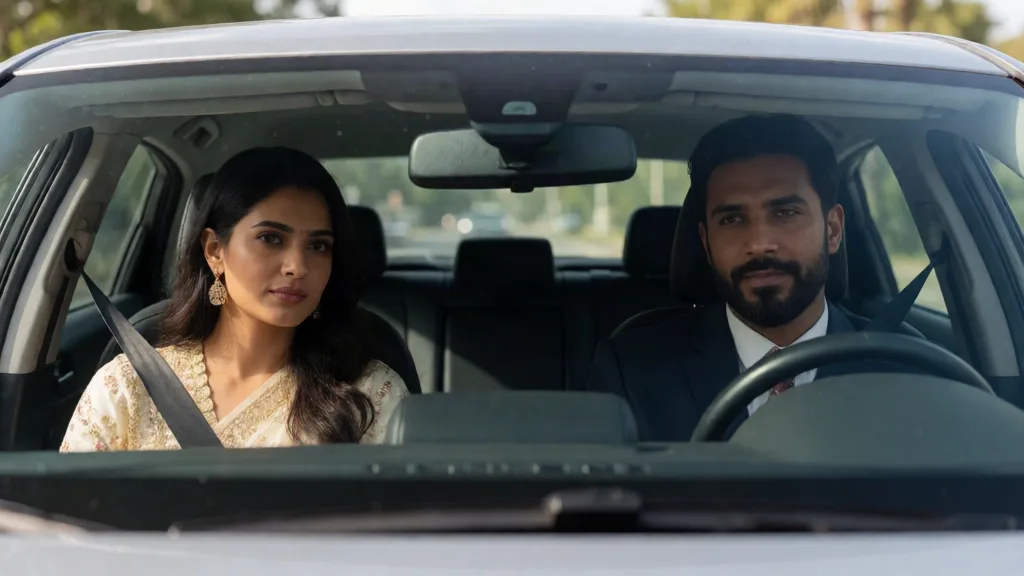
The driver's name was Mr. Okafor, and he had the kind of hands that made you trust a steering wheel. Big knuckles, steady grip, a thin gold band worn smooth on the left one. He'd been driving for the Adeyemi family for twenty-three years, he told me, which meant he'd driven my new husband to primary school, to university, to his father's funeral. Now he was driving me to a house I'd never seen, in a city I'd visited exactly twice, sitting beside a man whose full name I'd known for eleven days.
The car was a black Mercedes S-Class. I knew this because my mother had pointed it out from the window of the hotel where we'd had the wedding lunch, her voice pitched low with approval. "A 580. That's the new one." She'd squeezed my arm hard enough to leave a mark. "You see? They don't do things halfway."
I'd wanted to say that I didn't care about the car. I'd wanted to say a lot of things. Instead I'd smiled and nodded and let her fix my veil, which had come loose during the photographs. That was four hours ago. The veil was in a box in the trunk now, along with my suitcase and the two garment bags containing everything I owned that was worth keeping. The rest of my life, the apartment in Surulere with the leaky faucet and the neighbor who played Burna Boy at 2 a.m., the office job I'd quit with two weeks' notice, the friends I hadn't told the truth to because I couldn't figure out how to say it, all of that was behind me. Somewhere. I could feel the distance like a physical thing, a rubber band stretched between my ribs and everything I'd left.
The air conditioning was too cold. I crossed my arms over the lace bodice of my dress, which had cost more than my monthly rent and still managed to itch. The man beside me hadn't said a word since we'd left the reception. He was looking out the window at the Lagos traffic, which was doing what Lagos traffic always does, which is nothing, at a pace that suggested it might never do anything again. His profile was sharp. Cheekbones you could cut yourself on. A jaw that looked like it had been designed by someone with strong opinions about jaws. He wore a navy suit, no tie, and a watch that probably cost more than the car. His name was Tunde Adeyemi, and he was thirty-four years old, and he was my husband.
I'd known him for eleven days. I'd spoken to him for maybe forty minutes total. Most of that had been in the presence of our parents, who'd done all the talking, negotiating the way you'd negotiate a contract, which I suppose is exactly what it was. I'd said yes because my father was sick and the hospital bills were climbing and my mother had looked at me with those eyes, the ones that said *I'm not asking, I'm begging, and I hate myself for it.* I'd said yes because Tunde's family had money, real money, the kind that doesn't just pay bills but erases them, makes them disappear like they never existed. I'd said yes because I was twenty-eight and tired and I didn't have a better plan.
That's the truth of it. I'm not going to dress it up.
But here's the thing I hadn't expected: I wasn't scared. Nervous, sure. My stomach had been doing gymnastics since the ceremony. But underneath the nerves there was something else, something that felt almost like curiosity. Like standing at the edge of a pool you didn't choose to jump into, but now that you're falling, you might as well pay attention to the water.
Tunde shifted in his seat. His knee brushed mine, just for a second, and he pulled back like I'd burned him. "Sorry," he said. His voice was low, a little rough, like he'd been shouting at a concert or hadn't used it in a while. Maybe both.
"It's fine."
Silence again. Mr. Okafor turned up the radio, some program in Yoruba that I couldn't follow, and the sound filled the space between us like cotton. I watched the city slide by. Lagos was a bruise of a city, purple and yellow and green, always healing and always getting hit again. Street hawkers wove between the cars, selling water sachets and plantain chips and phone chargers. A woman with a baby strapped to her back balanced a tray of oranges on her head, her face set in that particular expression of someone who has decided that exhaustion is a luxury she can't afford. I used to buy from women like her on my way to work. I used to be one of the people in the danfo buses, pressed against strangers, sweating through my blouse, dreaming of air conditioning.
Now I was in the air conditioning. I was on the other side of the glass.
"You can change, if you want." Tunde's voice cut through the radio. "There's a bag in the back. I had my assistant pack some things. Comfortable stuff."
I turned to look at him. He was still facing the window, but his reflection in the glass showed me his eyes. Dark brown, almost black. Watchful. "You had your assistant pack clothes for me?"
"I didn't know your size. I guessed. There's a receipt, you can exchange whatever doesn't fit."
"That's..." I didn't know what it was. Thoughtful? Weird? Both? "Thank you."
He nodded. The reflection nodded with him.
The car turned off the main road, and the city changed. The buildings got taller, cleaner, spaced further apart. This was the Lagos I'd only seen in magazines, the one with the gated communities and the private security and the streets so smooth they looked like they'd been ironed. We passed a house with a fountain in the front yard. An actual fountain. Water shooting up in a little arc, catching the late afternoon light.
"My mother lives three streets over," Tunde said. "She'll want to visit. Probably tomorrow. Maybe tonight, if she can find an excuse."
"You don't sound happy about that."
He finally turned to look at me. Up close, his face was tired. Not old, just tired, like he'd been carrying something heavy for a long time and had forgotten what it felt like to put it down. "She's been planning this wedding for six years. Ever since I turned twenty-eight and still wasn't married. She had a spreadsheet."
"A spreadsheet?"
"Names, ages, family connections, blood types. I'm not joking about the blood types. She wanted to make sure there were no genetic issues."
I laughed. I couldn't help it. The sound surprised both of us, and for a second something flickered across his face. Surprise, maybe. Or relief. "I'm sorry," I said. "It's just. A spreadsheet."
"She's thorough." He almost smiled. Almost. "You're taking this well."
"Taking what well?"
"All of it. The wedding. The stranger in the car. The clothes your husband's assistant picked out because he didn't know your size."
I considered the question. The truth was complicated. The truth was that I'd spent the last eleven days in a state of suspended disbelief, going through the motions because stopping would mean thinking, and thinking would mean feeling, and feeling would mean I might fall apart. The truth was that I'd cried in the bathroom at my own wedding, not because I was sad but because I was overwhelmed, and then I'd fixed my makeup and gone back out and danced with my cousins like nothing was wrong.
But that wasn't what he was asking. He was asking how I was sitting here, in this car, with him, not screaming or crying or trying to jump out the door.
"I don't have a choice," I said. "So I might as well make the best of it."
It came out harsher than I meant. His face closed, the almost-smile disappearing like it had never been there. "Right," he said. "Of course."
We didn't talk again until we reached the house.
The gates opened automatically, sliding back to reveal a driveway lined with palm trees. The house was white, two stories, with big windows and a roof that angled up toward the sky like it was trying to take off. Bougainvillea climbed the walls, purple and red, and there was a garden on the left side, something with big leaves and white flowers that I didn't recognize. The fountain from the other house had nothing on this place. This place had a fountain AND a koi pond.
I counted three cars in the driveway. A Range Rover, a smaller Toyota, and something low and sleek that I assumed was a sports car. Tunde noticed me looking.
"The Toyota's yours," he said. "If you drive. If not, Mr. Okafor can take you wherever you need to go."
"I drive."
"Good."
Mr. Okafor parked and got out to open my door. I stepped onto the paving stones, which were warm under my feet, and stood there for a moment, looking up at the house. My house. Our house. The words didn't fit yet. They were like shoes that needed breaking in.
Tunde came around the car and stood beside me. He was taller than I'd realized. In the photos, we'd been arranged so I was sitting and he was standing behind me, his hand on my shoulder, both of us smiling for the camera. I hadn't noticed the height difference then. Now I noticed. He was at least six-two, and I was five-four on a good day.
"I'll show you around," he said. "Or you can explore on your own. Whatever you prefer."
"Show me."
He nodded and led the way to the front door, which was wide and wooden and carved with some kind of pattern. He unlocked it and pushed it open, and I followed him inside.
The house smelled like lemons and something else, something clean and sharp. The floors were polished wood, dark and glossy, and the walls were white with art hung in careful arrangements. I recognized a few pieces. A Ben Enwonwu print. Something that might have been a Njideka Akunyili Crosby. The furniture was modern, all clean lines and neutral colors, but there were touches of warmth. A woven basket by the door. A bowl of fruit on a console table. A throw blanket draped over the back of a couch, soft-looking, gray.
"The living room," Tunde said, gesturing. "Dining room through there. Kitchen's that way. Staff comes in the morning, so you don't have to worry about cooking unless you want to."
"I can cook."
"I didn't say you couldn't."
"I'm just saying. I'm not helpless."
He looked at me, and for a second I thought he was going to say something sharp. Instead he nodded. "Noted."
We went upstairs. The hallway was long, with doors on either side. He pointed them out as we passed. Guest room. Another guest room. His study. A bathroom that was bigger than my old apartment's entire living space. And then, at the end of the hall, two doors facing each other.
"Master bedroom," he said, nodding to the left. "And yours."
I blinked. "Mine?"
"I assumed you'd want your own space. We can... adjust. Later. If you want."
The relief that flooded through me was embarrassing in its intensity. I tried not to show it, but something must have crossed my face, because his jaw tightened.
"I'm not going to force anything," he said. His voice was flat. "I know this isn't what you wanted. I'm not a monster."
"I didn't say you were."
"You didn't have to."
He opened the door to my room and stepped back to let me in. It was big. Bigger than my old apartment, definitely. A bed with white linens. A window overlooking the garden. A desk, a chair, a bookshelf that was already stocked. A door that led to a bathroom with a clawfoot tub and a shower with one of those rainfall heads. Everything was neutral, beige and white and soft gray, but there were flowers on the nightstand. Fresh ones. Purple and white, the same as the bougainvillea outside.
"I didn't know what you liked," Tunde said from the doorway. "So I went with purple. My mother said it was a safe choice."
"It's beautiful."
"You don't have to say that."
"I mean it." I turned to look at him. He was standing with his hands in his pockets, shoulders slightly hunched, looking like he wanted to be anywhere else. "Thank you. For the room. For the flowers. For the clothes in the car. For not..." I gestured vaguely. "For not being a monster."
Something shifted in his expression. Not a smile, but close. A softening around the eyes. "You're welcome."
We stood there for a moment, the silence stretching between us. There was something there. I couldn't name it, not yet, but I could feel it. A thread, thin and fragile, connecting us. Two strangers in a big house, both of us pretending we weren't terrified.
"I should let you settle in," he said. "There's food in the kitchen if you're hungry. I'll be in my study if you need anything."
"Tunde."
He paused. Turned back.
"What happens now?"
It was the most honest question I'd asked in eleven days. He looked at me for a long moment, his dark eyes unreadable.
"I don't know," he said. "I guess we find out."
He left. I stood in the middle of my new room, surrounded by my new things, and listened to his footsteps fade down the hall. Then I sat on the edge of the bed, which was softer than anything I'd ever slept on, and I cried. Not loudly. Not for long. Just enough to let some of the pressure out, to acknowledge that this was real, that I was here, that my life had changed in ways I couldn't fully understand yet.
When I was done, I wiped my face and went to find the kitchen.
The house was quiet in a way I wasn't used to. In Surulere, there was always noise. Generators, neighbors, traffic, music. Here, the silence was almost aggressive, like the walls were holding their breath. I walked through the living room, past the art and the fruit bowl, and found the kitchen at the back of the house. It was huge. Marble countertops, stainless steel appliances, a fridge that probably cost more than my father's car. I opened it and found it fully stocked. Fruits, vegetables, meat, cheese, things I didn't recognize. Someone had thought about this. Someone had planned.
I made myself a sandwich. Turkey, lettuce, tomato, mustard. Simple. Familiar. I ate it standing at the counter, looking out the window at the garden. The sun was setting, painting everything gold, and I could see the koi pond from here, the fish moving lazily under the surface. It was beautiful. It was peaceful. It was everything I'd ever wanted and nothing I'd asked for.
I heard footsteps behind me and turned. Tunde was standing in the doorway, his suit jacket gone, his sleeves rolled up. He looked different without the jacket. Younger. Less like a stranger and more like a person.
"I didn't mean to interrupt," he said.
"You're not interrupting. It's your kitchen."
"Ours." He said it like he was testing the word. "It's ours."
He walked past me to the fridge and pulled out a bottle of water. He drank half of it in one go, his throat moving as he swallowed. I watched without meaning to, then looked away.
"I talked to my mother," he said. "She wants to come by tomorrow. For brunch. She's bringing your mother."
"My mother?"
"She said they've bonded. Over the wedding planning. They're apparently friends now."
I groaned. I couldn't help it. The thought of my mother and his mother, together, in this house, asking questions and making plans and looking at us with those eyes, the ones that said *we did this for you, now make it work.* It was too much.
"That bad?" Tunde asked.
"You don't know my mother."
"I know mine. They're probably the same person."
I laughed again. It surprised me as much as it had in the car. "Probably."
He leaned against the counter, crossing his arms. The pose should have been intimidating, but he just looked tired. "We can say we're busy. We can say we have plans."
"We don't have plans."
"We could make some."
I looked at him. He looked at me. The thread between us pulled a little tighter.
"What did you have in mind?" I asked.
He considered the question. "I don't know. What do you like to do?"
"I used to go to this bookstore in Yaba. Before I quit my job. I'd spend hours there on Saturdays."
"A bookstore."
"Don't sound so surprised."
"I'm not surprised. I'm..." He shook his head. "I'm realizing I don't know anything about you. Not really. I know your name, your age, your family. But I don't know what you like. What you do when no one's watching."
The honesty of it caught me off guard. "I don't know anything about you either."
"I know." He pushed off the counter. "So maybe we start there. Tomorrow. We'll go to your bookstore. And then you can come to mine."
"Your bookstore?"
"I don't have a bookstore. But I have a place. A spot. Where I go when I need to think."
"Okay."
"Okay."
He finished his water and tossed the bottle in the recycling bin. Then he walked past me, close enough that I could smell him. Something woodsy. Something clean. He paused at the doorway.
"Goodnight, Yemi."
"Goodnight, Tunde."
He left. I stood in the kitchen for a long time after, listening to the house breathe. Then I went upstairs to my room, to my bed, to my new life, and I lay awake staring at the ceiling, wondering what I'd gotten myself into and whether I'd survive it.
The answer, I was beginning to suspect, was yes. But not in any way I could have predicted.
The next morning, I woke up to the sound of birds. Actual birds, singing outside my window, like I was in a Disney movie or something. I lay there for a minute, disoriented, trying to remember where I was. Then it came back to me in a rush. The wedding. The car. The house. The man down the hall who was technically my husband.
I got up and showered, using the fancy rainfall shower head, which was every bit as good as it looked. Then I went to the closet, which was full of clothes that weren't mine. The assistant had done well, I had to admit. Simple things, mostly. Jeans, t-shirts, dresses in colors I actually wore. I picked a yellow sundress and sandals and went downstairs.
Tunde was in the kitchen, making coffee. He was dressed in jeans and a white shirt, his feet bare, and he looked so different from the man in the suit that I almost didn't recognize him. He turned when he heard me.
"Morning," he said. "Coffee?"
"Please."
He poured me a cup and slid it across the counter. I took a sip. It was good. Strong, black, exactly how I liked it.
"How did you know?"
"Know what?"
"How I take my coffee."
He shrugged. "I asked your mother."
"My mother knows how I take my coffee?"
"She knows everything about you. She gave me a list."
"A list?"
"Your favorite foods, your allergies, your shoe size, your preferred coffee ratio. She was very thorough."
I didn't know whether to be touched or horrified. "I'm going to kill her."
"Get in line."
We drank our coffee in comfortable silence. The kitchen was bright with morning light, and I could hear someone moving around outside, probably the gardener. It was peaceful. Almost normal. Like we'd been doing this for years instead of one day.
"The bookstore opens at ten," Tunde said. "We can leave whenever you're ready."
"I'm ready."
He looked at me, really looked at me, and something in his expression softened. "You look nice."
"Thanks. So do you."
"Thanks."
We finished our coffee and headed out. Mr. Okafor was waiting with the car, but Tunde waved him off. "We'll take the Toyota," he said. "I'll drive."
The Toyota was nice. Not as nice as the Mercedes, but nice. I got in the passenger seat and Tunde started the engine. He drove like he did everything else, carefully, deliberately, like he was thinking three moves ahead. We wound through the streets of Ikoyi, past the big houses and the security gates, and then onto the highway, where the city opened up around us.
"I grew up here," Tunde said. "In Ikoyi. Went to school here, everything. I've never lived anywhere else."
"Never?"
"I spent a year in London for my master's. Hated it. Came back as soon as I could."
"Why did you hate it?"
"The weather. The people. The way everything felt... temporary. Like everyone was just passing through. I like roots. I like knowing where I come from."
I thought about my own roots, tangled and shallow. My father's family from Ibadan, my mother's from Enugu. A childhood spent moving between apartments, never staying anywhere long enough to grow anything. "I don't know what that's like," I said. "Roots."
He glanced at me. "You will."
We drove the rest of the way in silence, but it wasn't uncomfortable. It was the silence of two people who were starting to figure each other out. The bookstore was in Yaba, on a side street I'd discovered by accident years ago. It was small, cramped, packed floor to ceiling with books. The owner was a man named Mr. Adebayo, who knew me by name and always saved the new African literature for me.
When we walked in, he was behind the counter, reading. He looked up and his face split into a grin. "Yemi! I was wondering when you'd come back. I heard you got married. I said to myself, that girl won't forget about us."
"I could never forget about you, Mr. Adebayo."
He looked at Tunde, standing behind me, and his eyebrows went up. "Is this him?"
"This is him."
Mr. Adebayo extended his hand. "You're a lucky man."
Tunde shook it. "I know."
I wandered through the shelves, running my fingers along the spines. Tunde followed, not saying much, just watching. I picked up a novel I'd been wanting, a collection of poetry, a memoir by a Nigerian author I loved. When I brought them to the counter, Tunde reached for his wallet.
"I can pay for my own books."
"I know. But I want to."
I looked at him. He looked back. Something passed between us, something small but significant.
"Okay," I said. "Thank you."
He paid. Mr. Adebayo bagged the books and winked at me. "He's a keeper."
"We'll see."
We left the bookstore and walked down the street. The sun was high now, hot, and I could feel sweat starting to form on my back. Tunde didn't seem to notice. He was looking around at the neighborhood, taking it in.
"Your turn," I said. "You said you had a place."
"I do."
He drove us across town, to a part of Lagos I didn't know. It was near the water, the real water, not the fake stuff in the fancy neighborhoods. The buildings here were older, more worn, but there was life everywhere. Music, voices, the smell of food. He parked on a side street and led me down an alley to a small building with a sign that said "The Den."
"What is this place?"
"Art studio. Belongs to a friend. I come here when I need to think."
Inside, it was all light and color. Canvases everywhere, some finished, some not. Paint splattered on the floor, on the walls, on the easels. A woman with bright orange hair looked up from a painting and smiled.
"Tunde! You brought a girl."
"Chidi, this is Yemi. My wife."
Chidi's eyebrows shot up. "Wife? You got married? When?"
"Yesterday."
"And you're just now telling me?"
"It's been a busy week."
Chidi came over and took my hands. "Welcome. Any friend of Tunde's is a friend of mine. Any wife of Tunde's is... well, I don't know what you are, but you're welcome."
"Thank you."
"Come, come. Let me show you around."
She gave me a tour of the studio, chattering the whole time. Tunde watched us from a corner, a slight smile on his face. It was the most relaxed I'd seen him. Here, in this messy, colorful place, he seemed almost happy.
When we left, the sun was starting to set. We stood on the street, watching the sky change colors, and I felt something I hadn't felt in a long time. Hope. Small, tentative, but there.
"Thank you," I said. "For today. For showing me this."
"Thank you for showing me your bookstore."
"It's not much."
"It's yours. That makes it something."
We walked back to the car. He opened my door for me, and I got in, and we drove home in the fading light. Home. The word was starting to feel less strange.
That night, we ate dinner together. I made jollof rice, using a recipe my mother had taught me, and he ate three plates. We talked about nothing and everything. His work, which was something in finance that I didn't fully understand. My work, which was now nothing, but had been something in marketing. Our families. Our childhoods. Our dreams.
"What do you want?" he asked me, somewhere in the middle of it. "Not what your parents want. Not what I want. What do you want?"
I thought about it. Really thought about it. "I want to be happy," I said. "I want to wake up and not feel like I'm waiting for something. I want to feel like I'm living my life instead of watching it happen."
"That's a good answer."
"What about you?"
He was quiet for a long moment. "I want to stop being afraid," he said. "I've spent my whole life being afraid. Of disappointing my father. Of failing. Of being alone. I want to stop."
I reached across the table and took his hand. It was the first time I'd touched him voluntarily. His skin was warm, his fingers strong. He looked at our hands, then at me.
"We're both afraid," I said. "Maybe that's okay."
"Maybe."
We sat there, holding hands, in the quiet of the house. Outside, the city hummed. Inside, something was starting. Something neither of us had expected. Something that might, if we were lucky, turn into something real.
The next morning, his mother arrived at nine sharp.
I was still in my room, getting dressed, when I heard the doorbell. Then voices. Then footsteps on the stairs. I pulled on a blouse and hurried down, and found Tunde in the living room with a woman who could only be his mother. She was tall, elegant, dressed in a blue wrap and gold jewelry. Her face was Tunde's face, the same cheekbones, the same sharp jaw. She looked at me with eyes that missed nothing.
"So you're Yemi," she said. "I've heard a lot about you."
"All good things, I hope."
"We'll see."
She crossed the room and took my hands, holding them out to look at me. "You're prettier than your photos. Tunde, why didn't you tell me she was prettier than her photos?"
"I didn't notice," Tunde said. "I was too busy being terrified."
His mother laughed. It was a warm sound, unexpected. "He's always been like this. Too serious. You'll have to teach him how to have fun."
"I'll try."
"Do more than try. That's my advice. Don't just try. Do."
She released my hands and settled onto the couch, looking around the room with approval. "The house looks good. You've made it your own."
"That's all Tunde," I said. "I just got here."
"You'll put your mark on it. Give it time."
My mother arrived a few minutes later, and the two of them disappeared into the kitchen to "help" with brunch, which meant they were probably gossiping about us. Tunde and I sat in the living room, listening to their voices, trying not to laugh.
"This is weird," he said.
"What?"
"All of it. Having you here. Having our mothers here. It's like playing house."
"Except it's real."
"Yeah." He looked at me. "It's real."
The brunch was chaotic and loud and wonderful. Our mothers talked over each other, telling stories about our childhoods, embarrassing us both. Tunde's mother told the story of the time he'd cried at his own birthday party because the cake wasn't the right shade of blue. My mother told the story of the time I'd tried to run away from home at age seven because I didn't want to share my toys. We laughed. We ate. We drank coffee.
And somewhere in the middle of it, I realized something. This was my life now. These people were my family. This house was my home. It wasn't what I'd planned. It wasn't what I'd dreamed of. But it was mine.
After brunch, our mothers left, and Tunde and I cleaned up. We worked side by side, washing dishes and putting things away, and it felt natural. Easy. Like we'd been doing this forever.
"I have a confession," he said.
"What?"
"I didn't want this. Any of it. I fought my mother for years. Told her I'd never agree to an arranged marriage. Told her I'd rather be alone."
"What changed?"
"You." He looked at me, and his eyes were serious. "I saw your photo, and I thought, she looks kind. She looks like someone who's been through something and came out the other side. And I thought, maybe. Maybe this could work."
"And now?"
"Now I think it might."
I didn't know what to say. So I said nothing. I just took the plate from his hand and put it in the dishwasher, and we stood there, close, not touching, but not far apart.
"I don't know how to do this," I said. "I don't know how to be a wife. I don't know how to be married. I've never done it before."
"Neither have I."
"What if we mess it up?"
"Then we mess it up. And we try again."
He reached out and tucked a strand of hair behind my ear. The gesture was gentle, intimate, and it made my heart beat faster.
"I'm not going to rush you," he said. "I'm not going to expect anything. We have time. We have all the time in the world."
I looked at him. At his tired eyes, his kind hands, his sharp jaw. At the man I'd known for twelve days and married for one. At the stranger who was becoming something else.
"Okay," I said. "Let's take our time."
He smiled. A real smile, the first one I'd seen. It changed his whole face. Made him look younger. Lighter.
"Okay," he said.
And that was that. We finished cleaning up, and then we sat on the couch and watched a movie. His choice. Something with explosions and car chases. I fell asleep halfway through, my head lolling onto his shoulder. When I woke up, the movie was over and his arm was around me, warm and solid.
"Sorry," I mumbled. "I didn't mean to fall asleep."
"It's fine. You needed it."
I sat up, rubbing my eyes. The room was dark, lit only by the TV screen. "What time is it?"
"Late. You should go to bed."
"You too."
He walked me to my room. We stood in the doorway, the same way we had the first night, but everything was different now. The air between us was charged with something new. Something I didn't have a name for.
"Goodnight, Yemi."
"Goodnight, Tunde."
He leaned in. For a second I thought he was going to kiss me, and my heart stopped. But he just pressed his lips to my forehead, soft and quick, and then he was gone, walking down the hall to his own room.
I stood there for a long time after he left. Then I went inside and closed the door and leaned against it, my hand pressed to my forehead, where his lips had been. I could still feel it. A warmth, spreading through me like light.
I didn't know what was happening. I didn't know where this was going. But for the first time in a long time, I was excited to find out.
The weeks that followed were a strange, slow dance. We circled each other, learning each other's rhythms. He was a morning person, up at five, coffee and emails before the sun rose. I was a night owl, staying up late with a book, sleeping in when I could. He liked order, structure, everything in its place. I was messier, leaving shoes by the door, books on the couch, cups on the counter. We clashed, sometimes. Small things. He'd ask me to hang up my towel, I'd forget, he'd sigh and do it himself. I'd ask him to relax, he'd say he was relaxed, we'd both know he was lying.
But we learned. He started leaving his shoes by the door, in case I wanted company. I started hanging up my towel. He bought me a bookshelf for my room, so my books wouldn't be on the floor. I bought him a record player, because he'd mentioned he missed his old one. We adjusted. We compromised. We built something.
And we talked. God, we talked. About everything. His father, who'd died three years ago, who'd been hard on him, who'd never said he was proud. My father, who was sick, who was getting better, who called me every week to ask if I was okay. His ex-girlfriend, who'd broken his heart, who'd made him afraid to trust. My ex-boyfriend, who'd been kind but boring, who'd never challenged me, who'd let me drift away. We talked about our fears, our hopes, our secrets. We talked until the words ran dry and then we talked some more.
I started to notice things. The way he hummed when he cooked. The way he rubbed his jaw when he was thinking. The way he looked at me when he thought I wasn't looking, something soft and wondering in his eyes. I started to look forward to his footsteps in the hall, his voice in the kitchen, his presence in the house. I started to miss him when he was gone.
One night, about a month in, I couldn't sleep. I got up and went downstairs for water, and found him in the living room, sitting in the dark, staring out the window.
"Can't sleep?" I asked.
He turned. "No. You?"
"No."
I sat beside him on the couch. The city lights glittered in the distance, a thousand small stars.
"What are you thinking about?" I asked.
"You."
"Me?"
"I think about you all the time." He said it simply, like it was a fact. Like it was obvious. "I think about your laugh. Your smile. The way you furrow your brow when you're reading. The way you sing in the shower when you think I can't hear."
"You hear that?"
"The walls are thin."
I felt my face heat. "Embarrassing."
"Not embarrassing. Endearing."
We sat in silence for a moment. Then he reached out and took my hand. His fingers intertwined with mine, warm and sure.
"I didn't expect this," he said. "Any of it. But especially not you. Not the way I feel when I'm around you. Not the way I miss you when you're not here."
"Tunde..."
"I'm not asking for anything. I'm just telling you. I want you to know."
I looked at him. At his dark eyes, his serious face, his hand in mine. And I felt something open inside me, something I'd been holding shut for a long time.
"I feel it too," I said. "I don't know what it is. But I feel it."
He smiled. That real smile, the one that changed his face. "Yeah?"
"Yeah."
He leaned in. This time, he didn't stop at my forehead. This time, his lips found mine, soft and warm and questioning. I kissed him back, and it was like a door opening, like a light turning on, like coming home.
When we pulled apart, we were both breathing hard. His forehead rested against mine.
"I've been wanting to do that for weeks," he whispered.
"Why didn't you?"
"I was scared."
"Of what?"
"Of you not wanting it. Of pushing you away. Of ruining everything."
I cupped his face in my hands. "You're not ruining anything. You're... you're building something."
"I am?"
"You are."
He kissed me again, and this time it was deeper, hungrier. His hands moved to my waist, pulling me closer, and I let him. I wanted him to. I wanted him.
We didn't go further that night. We just sat there, kissing and touching and learning each other. But something had shifted. Something had changed. The wall between us had crumbled, and what was left was just us. Two people, finding their way.
The next morning, I woke up in his bed.
I didn't remember falling asleep there. I remembered kissing him, remembered his hands in my hair, remembered the way he'd held me like I was something precious. And then I remembered him carrying me upstairs, laying me down, curling up beside me. Fully clothed. Just holding me.
I turned over. He was awake, watching me. His eyes were soft, his hair mussed, his lips curved into a small smile.
"Morning," he said.
"Morning."
"Sleep okay?"
"Better than okay."
His smile widened. "Good."
We lay there for a while, not talking, just being. The sun rose outside the window, painting the room gold. I could hear birds again. The same birds from my first morning. They sounded different now. Happier.
"What happens next?" I asked.
He thought about it. "Breakfast?"
I laughed. "I meant... with us. With everything."
"I know what you meant." He reached out and traced a finger down my arm. "I don't know. We keep going. We keep learning. We keep building."
"That simple?"
"That simple. And that hard."
I nodded. It made sense. Nothing about this had been simple. But it had been worth it. Every awkward moment, every uncertain glance, every silent dinner. It had all led here. To this bed. To this man. To this life.
"I'm glad I married you," I said.
He blinked. "You are?"
"I am."
He pulled me close, his arms wrapping around me, his face buried in my hair. "I'm glad too," he said. "More than I can say."
We stayed like that for a long time. The birds sang. The sun rose. The house woke up around us. And somewhere, in the middle of it all, I realized that I was happy. Actually, genuinely happy. For the first time in years.
It wasn't what I'd planned. It wasn't what I'd expected. But it was mine. And I was going to hold onto it with both hands.
The days turned into weeks. The weeks turned into months. We fell into a rhythm, a routine, a life. He went to work, I found a new job, something in publishing that I loved. We had dinner together every night, sometimes at home, sometimes out. We explored the city, found new places, made new memories. We fought, sometimes. About stupid things. About important things. But we always made up. We always found our way back.
His mother visited often, always with advice, always with opinions. My mother visited too, less often, but always with love. Our families blended, slowly, awkwardly, but they blended. We became a unit. A team. A partnership.
And at night, when the house was quiet and the city was dark, we lay in bed together, talking about the future. About children, maybe. About travel. About growing old. About all the things we wanted to do and see and be.
"You know what I realized?" he said one night, his voice soft in the darkness.
"What?"
"I never believed in this. In love. In marriage. I thought it was all just... performance. Something people did because they were supposed to."
"And now?"
"Now I believe." He turned to look at me, his eyes shining in the dim light. "I believe because of you."
I didn't know what to say. So I kissed him. And that was enough.
That was everything.
The story of us, the real story, started in that car. Two strangers, sitting in silence, driving toward a future neither of us had chosen. We didn't know it then, but we were already on our way. Already becoming. Already falling.
It took time. It took patience. It took work. But we got there. We found each other. We built something beautiful.
And it all started with a wedding I didn't want, a man I didn't know, and a car ride that changed everything.
Sometimes I think about that day. The lace dress that itched. The cold air conditioning. The way he looked out the window, avoiding my eyes. I think about how scared I was. How uncertain. How sure I was that I'd made a mistake.
I was wrong.
It wasn't a mistake. It was the beginning. The beginning of everything.
And I wouldn't change a single moment.
The morning light came through the curtains, soft and golden. I stretched in bed, my body still warm from sleep, and reached for him. He was already awake, propped up on one elbow, watching me.
"What?" I asked, my voice thick.
"Nothing. Just looking."
"At what?"
"At you. At my wife."
I smiled. "Your wife."
"My wife." He said it like he was tasting the word. Like it was something sweet. "I like saying that."
"I like hearing it."
He leaned down and kissed me. Slow, gentle, the kind of kiss that promised more. I wrapped my arms around his neck and pulled him closer, and for a moment, the world outside disappeared. There was only us. Only this. Only the warmth of his body and the beat of his heart.
"I love you," he whispered against my lips.
The words hung in the air between us. Heavy. Real. The first time he'd said them.
"I love you too," I whispered back.
And it was true. Every word. Every syllable. I loved him. I loved his tired eyes and his kind hands and his sharp jaw. I loved the way he hummed when he cooked and the way he rubbed his jaw when he was thinking. I loved his seriousness and his softness and his strength.
I loved him.
He kissed me again, deeper this time, and I felt something shift between us. Something that had been building for months. Something that was ready.
"Are you sure?" he asked, pulling back just enough to look at me.
"I'm sure."
He nodded. Then he kissed me again, and we stopped talking. We didn't need words anymore. We had something better.
We had each other.
Later, when the sun was high and the house was warm, we lay tangled together, breathless and smiling. His hand traced lazy patterns on my back. My head rested on his chest, listening to his heartbeat.
"That was..." he started.
"Yeah," I agreed. "It was."
"I should have said it sooner. The thing about loving you."
"You said it when you were ready."
"I was ready a long time ago. I was just scared."
I lifted my head to look at him. "Are you still scared?"
He considered the question. "A little. But not of you. Not of this. Just... of how much it matters. How much you matter."
"You matter too. More than anything."
He kissed my forehead. "We're going to be okay, aren't we?"
"We're going to be better than okay."
And I believed it. For the first time in my life, I believed it completely.
The arranged marriage that had started as a transaction, a contract, a sacrifice, had become something else. Something real. Something true. Something that neither of us had expected but both of us had needed.
We'd found each other in the strangest of ways. Two strangers in a car, driving toward a future we hadn't chosen. But somewhere along the way, we'd chosen each other. And that made all the difference.
The story wasn't over. It was just beginning. But for now, in this moment, in this bed, in this house, we were exactly where we were supposed to be.
Together.
And that was enough.
Watch this moment
Turn the current scene into a cinematic Live Chapter — what you watch becomes the story's next part.
Disclaimer
This is a work of fiction, assisted by artificial intelligence. Any names or characters, businesses or places, events or incidents, are fictitious. Any resemblance to actual persons, living or dead, or actual events is purely coincidental.
Content Removal Policy
- Users may report content that may be illegal or violates our Standards.
- All reported complaints will be reviewed and resolved within seven business days.
- Review Process: Our team will assess the reported content against our guidelines.
- Appeals: If you disagree with a decision, you may appeal within 14 days of notification.
- Potential outcomes include: content removal, account warning, or no action if no violation is found.
To report content, email us at [email protected]