Share
Go Live
London Reckoning
·
Published 11/4/2026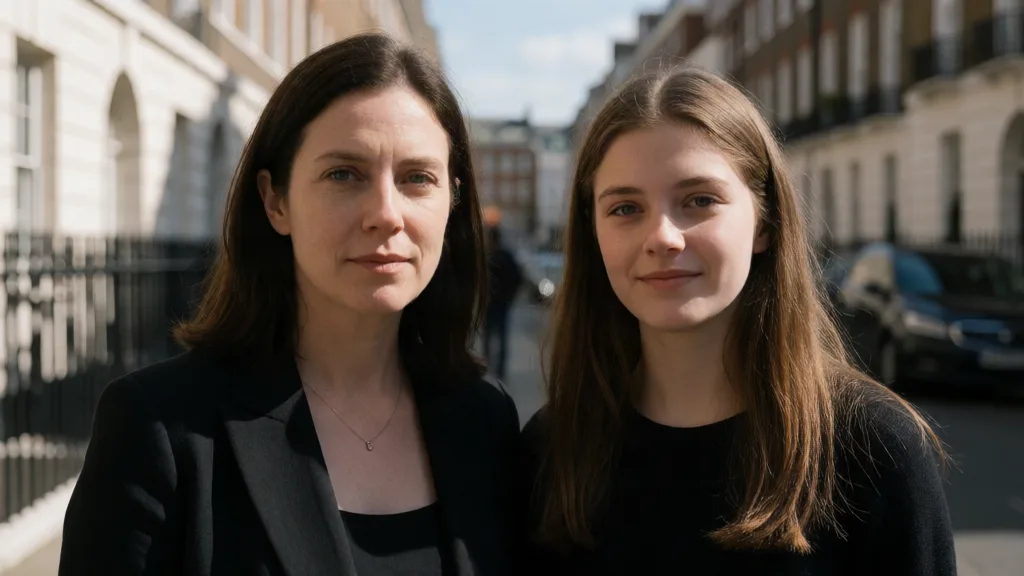
The lettings agent had a way of saying "garden flat" that made it sound like a diagnosis. I'd heard it three times that week, twice on the phone and once in person, standing in a basement in Clapham while a man in a suit too tight at the shoulders gestured at a patch of gravel and called it outdoor space.
So when I saw the listing for the place on Gipsy Hill, I didn't call ahead. I just took the morning off work, walked up the hill from the station with my coat buttoned wrong, and stood outside the building trying to decide if the front door was the right one.
It was. Number 47, first floor, a bay window with the paint peeling in long curls like something shedding its skin. The intercom didn't work. I knocked.
Nobody came. I knocked again, harder, and a woman's voice floated down from somewhere above me, not from inside the flat but from the street, from the top of the steps where a neighbor stood with a shopping trolley and a face that had opinions.
"He's deaf, love. You have to bang on the glass."
I looked at the bay window. Through it I could see a sofa, a lamp, a stack of newspapers going yellow in the light. And then a shape moving, slow, deliberate, the way a much older man moves when his knees have stopped being reliable.
He opened the door and looked at me like I was a parking ticket.
"You're early," he said. "I said two."
"It's two-fifteen."
He checked his watch. A real watch, the kind you wind. Then he stepped back and let me in without saying anything else, which I took as permission.
The flat smelled like tea and dust and something underneath, a mineral smell, like wet stone. The hallway was narrow. The floors sloped. I noticed that right away because you notice things like that when you've spent two years learning that London doesn't do level. Nothing here is level. Not the floors, not the ceilings, not the way people talk to you.
"The rent's the rent," he said, walking ahead of me into the front room. "No negotiation. I've had it at that price for eleven years and I'm not about to start haggling with Americans."
"I'm not here to haggle."
"Good." He lowered himself into a chair by the window. "Then look around. I'll be here."
His name was Gerald. I learned that from a piece of mail on the sideboard, a water bill, final notice, which told me something about him I didn't want to know. He watched me the whole time I walked through the flat, which should have felt hostile but didn't, quite. It felt like being audited by someone who'd already made up his mind and was just waiting for you to catch up.
The kitchen was small. The bathroom had a window that opened onto the back garden, which was really a strip of grass and a dead apple tree and a shed that leaned. I stood there for a while, looking at the shed, and I thought about my daughter.
Not in a sentimental way. In a practical way. I thought about the fact that she hadn't spoken to me in four days, not properly, not beyond asking where the charger was and whether we had any of the good cereal left. I thought about the fact that she was eighteen and finishing her A-levels in June and that after June she could go anywhere, and that the only thing keeping her here, in this city, in this flat, in my life, was a decision she hadn't made yet.
I wanted the place. I wanted it the way you want a thing when you've been looking for it without knowing you were looking.
"The second bedroom," I said, coming back into the front room. "Is it a real bedroom or a cupboard?"
"It's a bedroom. Small. Faces the street."
"Can I see it?"
He pointed with his chin. I went down the hall. The room was small. There was a window, single-glazed, and you could hear the traffic on Gipsy Hill, a low constant hum like something breathing. The walls were painted a color that had probably been called cream in 1974. I stood in the middle of the empty room and turned in a slow circle, and I imagined a bed against the far wall, a desk under the window, posters, a lamp, a girl sitting on the floor with her back against the radiator, headphones on, ignoring me.
I took out my phone and texted her. Found a place. Two beds. You'd have a window.
She read it. I watched the little blue ticks appear. Then nothing. No reply. I put the phone back in my pocket.
Gerald was still in his chair when I came out. He hadn't moved. He was looking at the window, at the street, at the gray afternoon light coming through the glass, and for a moment he looked like a man who had been sitting in that chair for eleven years and would keep sitting there for however many he had left.
"I'll take it," I said.
He turned his head. "Don't you want to ask about the boiler?"
"Is it working?"
"It's working."
"Then I'll take it."
He nodded slowly, like I'd passed a test I hadn't known I was taking, and then he did something unexpected. He smiled. It was a small smile, barely there, but it changed his whole face, and for a second I saw the man underneath the watch and the final notice and the shoulders that had given up on suits.
"The last tenant," he said, "was here for nine years. She left in December. Went to live with her sister in Margate." He paused. "I don't like change."
"Neither do I."
"That's a lie," he said, not unkindly. "You moved across an ocean."
I didn't have an answer for that. Or I did, but it wasn't the kind of thing you say to a stranger in an empty flat on a Tuesday afternoon. I moved because I had to. I moved because staying would have killed something in me, slowly, the way you don't notice a leak until the floor gives way. I moved because my daughter needed a life that wasn't the one we were living.
None of that was true, exactly. But it was close enough.
"I'll send the paperwork," Gerald said, and stood up, and that was that.
I walked back down the hill to the station. The sky was doing that thing London does in February, low and white and close, like a ceiling you could touch if you stretched. I stopped at the top of the hill and looked back at the building, at the bay window, at the peeling paint, and I felt something I hadn't felt in two years. Not hope. Something smaller than hope. Something like the first day of a cold when you wake up and your throat hurts and you know, before you even get out of bed, that the day is going to be different from the one you planned.
My phone buzzed. I looked at it.
Her reply. Two words.
Which room?
Watch this moment
Turn the current scene into a cinematic Live Chapter — what you watch becomes the story's next part.
Disclaimer
This is a work of fiction, assisted by artificial intelligence. Any names or characters, businesses or places, events or incidents, are fictitious. Any resemblance to actual persons, living or dead, or actual events is purely coincidental.
Content Removal Policy
- Users may report content that may be illegal or violates our Standards.
- All reported complaints will be reviewed and resolved within seven business days.
- Review Process: Our team will assess the reported content against our guidelines.
- Appeals: If you disagree with a decision, you may appeal within 14 days of notification.
- Potential outcomes include: content removal, account warning, or no action if no violation is found.
To report content, email us at [email protected]