Share
Go Live
Tension in Close Quarters
·
Published 9/6/2026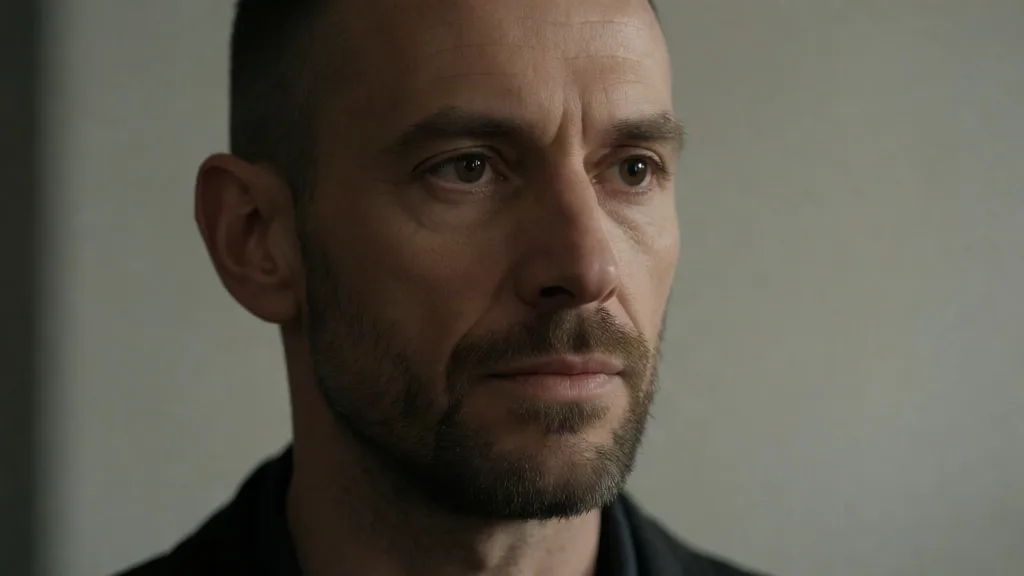
Bas’s breath smells like coffee and the mint gum he chews to cover the cigarettes. I can feel the heat coming off his arm where it presses against mine, his shoulder blade sharp through his shirt. He’s got his phone tilted so we can both see the screen, a real estate listing for a house in Zeist with a garden big enough for a dog and a kitchen that looks like it belongs in a magazine.
“She’d like this one,” he says.
He doesn’t look at me when he says it. His thumb scrolls past the living room, the spare bedroom, the bathroom with the freestanding tub. I watch his face in the reflection of the phone screen. The smooth skin, the close-cropped beard, the way his jaw tightens when he’s thinking about something he doesn’t want to say.
Erica. He’s talking about Erica. My sister.
We’ve been sitting here for twenty minutes, him on the edge of my couch, me on the armchair I pulled up next to him so I could see the photos. The couch is old and sagging, the kind of thing you get from a secondhand shop when you’re twenty-five and still think you’ll replace it when you have real money. I’m forty-nine now. I still have the couch.
“She hates Zeist,” I say.
“She used to hate Zeist.”
“She still hates Zeist. She said the people there look at you like you’re a stain on their shoe.”
Bas snorts. It’s not quite a laugh, but it’s close. “She said that about Utrecht too.”
“She said that about everywhere. She’s got opinions.”
“She’s got standards.”
I lean back. The armchair creaks under me. “Same thing, different words.”
He scrolls to the next listing. A smaller place in Amersfoort, three bedrooms, a balcony, a bathroom with a shower that looks like it was installed by someone who hated water pressure. I don’t say anything. I don’t need to. He’ll get there on his own.
Bas has always been methodical. It’s one of the things I used to hate about him, back when he was married to my sister and I had to see him at every family dinner, every birthday, every Christmas that turned into a shouting match about who forgot to bring the dessert. He’d sit there with his perfect posture and his perfect beard and his perfect hairless body, and he’d nod along while my mother talked about the neighbor’s cat, and he’d never once raise his voice, never once let anything slip.
I used to think he was a robot. A very handsome, very polished robot who had somehow convinced my sister that he was a real person.
Then the divorce happened, and I found out he was human after all. Just not in the way I expected.
“This one has a garage,” he says.
“I don’t need a garage.”
“You work on cars.”
“I work on other people’s cars. I don’t need a garage for that. I need a lift and a lot of swearing.”
He looks at me then. His eyes are brown, dark and sharp, the kind of eyes that miss nothing. I’ve always hated that about him too. The way he looks at you like he’s reading a manual, figuring out how you work, where your weak points are.
“You could use a proper space,” he says. “Somewhere to work without the rain coming in.”
“The rain doesn’t come in.”
“It came in last week. I saw the bucket.”
I don’t ask how he knows about the bucket. He probably saw it when he came by to drop off the paperwork for the insurance, the last piece of the divorce that needed signing, the final thread cut between him and my sister. I’d been in the middle of fixing a timing belt on a ’98 Volvo, and the rain had started halfway through, a steady drip through the hole in the roof that I’d been meaning to patch for three years.
He’d stood in the doorway of my workshop, holding a manila envelope, and he’d looked at the bucket like it was a personal insult.
“You should fix that,” he’d said.
“I should do a lot of things.”
He hadn’t argued. He’d just handed me the envelope and left.
Now he’s sitting on my couch, looking at houses on his phone, and I’m sitting next to him like we’re old friends, like we haven’t spent the last ten years avoiding each other’s company.
The divorce was finalized six months ago. Six months, three weeks, and four days. I know because Erica called me on the day it went through, and she was crying, but she was also laughing, and she said, “I’m free, Hessel. I’m finally free.”
I didn’t ask her what she meant by that. I didn’t want to know.
But now Bas is here, and he’s looking at houses, and he keeps saying “she” like my sister is still a part of his life, like they’re still connected by something more than a piece of paper that says they’re not.
“Why are you showing me these?” I ask.
He stops scrolling. His thumb hovers over the screen, and for a second, I think he’s going to ignore the question, just move on to the next listing and pretend I didn’t say anything.
But he doesn’t.
“Because I want to buy one,” he says.
“For you?”
“For us.”
The word hangs in the air between us. I feel it settle on my chest, heavy and warm, like a hand I didn’t ask for.
“Us,” I repeat.
“You and me.”
I look at him. He’s not looking at me. He’s looking at his phone, at the house in Amersfoort, at the shower with the bad water pressure and the balcony that probably overlooks a parking lot.
“Bas.”
“I know.”
“You can’t just say something like that.”
“I know.”
“We haven’t even talked about this.”
He puts the phone down on the coffee table. It lands with a soft thud, the screen still glowing, the house still waiting. He turns to face me, and now I see something in his eyes that I haven’t seen before. Something raw. Something unguarded.
“I’ve been thinking about it for months,” he says. “Ever since the divorce. Ever since that night.”
That night.
I don’t need him to specify which night. I know exactly which night he’s talking about. The night of the final hearing, when the judge signed the papers and Erica walked out of the courthouse with her head held high, and Bas stood in the parking lot with his hands in his pockets, looking like a man who had just lost everything.
I’d gone to the hearing. Not because I wanted to, but because Erica asked me to. She said she needed someone in her corner, someone who would look at Bas and remind him that she wasn’t alone.
I sat in the back row, watching the whole thing unfold. The lawyers did most of the talking. Bas and Erica barely looked at each other. When it was over, Erica hugged me and left, and I stood in the hallway, trying to figure out what to do with myself.
That’s when Bas found me.
He didn’t say anything. He just walked up to me, grabbed my arm, and pulled me into the men’s room. I thought he was going to hit me. I was ready for it. I’d been ready for it for years, ever since I first realized that the way I looked at him wasn’t the way a brother-in-law should look at anyone.
But he didn’t hit me.
He kissed me.
And I kissed him back.
We didn’t talk about it afterward. He walked out of the bathroom, got in his car, and drove away. I stood there for ten minutes, leaning against the sink, staring at my own reflection in the mirror, trying to figure out what had just happened.
I didn’t call him. He didn’t call me.
For six months, we didn’t speak.
And then, three weeks ago, he showed up at my workshop. He didn’t knock. He just walked in, stood in the doorway, and watched me work. I was underneath a Toyota, changing the oil, and I saw his boots before I saw his face.
“You need to fix that roof,” he said.
“I know.”
“I can help.”
I slid out from under the car. I looked at him. He looked at me. And that was it. That was all it took.
Now he’s on my couch, showing me houses, and I’m trying to figure out how we got here.
“I don’t know what you want me to say,” I tell him.
“Say you’ll think about it.”
“Think about moving in with you?”
“Think about us.”
I rub my face with both hands. My palms are rough, calloused from years of turning wrenches and gripping tools. I can feel the stubble on my jaw, rough and uneven, the way it always is when I forget to shave for a few days. Bas is sitting next to me with his perfect skin and his perfect posture, and I feel like a mess next to him.
Like I always have.
“I’m not good at this,” I say.
“At what?”
“At being with someone. At sharing space. At any of it.”
“You were married.”
“For eight years. And look how that turned out.”
He doesn’t flinch. He doesn’t look away. “That was different.”
“How?”
“Because she wasn’t me.”
I don’t have an answer for that. I don’t have an answer for any of this. I’m a mechanic from a working-class neighborhood, a man who spends his days covered in grease and his nights drinking beer alone in front of the television. I’m not the kind of person who gets to have a second chance at something real.
But Bas is looking at me like I am.
“I don’t know if I can do this,” I say.
“That’s not what I asked.”
“What did you ask?”
He picks up his phone again. He scrolls back to the first listing, the house in Zeist with the garden and the magazine kitchen. He looks at it for a long moment, and then he turns the screen toward me.
“I asked if you’d think about it.”
I look at the house. It’s nice. It’s more than nice. It’s the kind of place I never thought I’d live in, the kind of place that belongs to people with steady jobs and steady lives and steady relationships.
I look at Bas. He’s watching me, waiting, his eyes soft in a way I’ve never seen before.
“I’ll think about it,” I say.
He nods. He puts the phone down. He doesn’t say anything else.
We sit there in the silence, the two of us, closer than we should be, closer than we have any right to be. The rain starts again outside, a soft patter against the window. I think about the bucket in the workshop, the one I keep meaning to fix.
Maybe I’ll fix it tomorrow.
Maybe I won’t.
Maybe I’ll just let it keep dripping, let it keep reminding me that nothing stays the same, that everything changes, that even the things you think are broken can be made into something new.
Bas reaches out. His hand lands on my knee, light, tentative, like he’s asking permission.
I don’t move it away.
“Thank you,” he says.
“For what?”
“For not running.”
I laugh. It’s a short, bitter sound, the kind of laugh that comes out when you don’t know what else to do.
“I’m still thinking about it.”
“I know.”
He leaves his hand where it is. I leave mine where it is. The rain keeps falling. The house in Zeist keeps glowing on the phone screen, waiting for someone to claim it.
I don’t know what happens next.
But for the first time in a long time, I want to find out.
---
The next morning, I wake up alone.
Bas left sometime around midnight. I heard him get up, heard him pull on his shoes, heard the soft click of the front door closing behind him. I didn’t open my eyes. I didn’t say goodbye. I just lay there in the dark, listening to the rain, feeling the space next to me where he’d been.
Now the sun is coming through the window, pale and weak, the kind of light that makes everything look washed out. I roll out of bed and shuffle to the kitchen. The coffee maker is old and stained, the kind you get at a garage sale for five euros and never bother to replace. I fill it with water, scoop in the grounds, press the button.
It makes a sound like a dying animal.
I stand there, waiting, staring at the wall. There’s a crack in the plaster, running from the ceiling to the windowsill, thin and jagged, like a vein. I’ve been meaning to fix that too.
The coffee finishes brewing. I pour a cup, black, no sugar, and take it to the living room. The phone is still on the coffee table, the screen dark now, the house in Zeist tucked away somewhere in Bas’s saved listings.
I pick it up. I don’t know why. It’s not my phone. It’s his. But I pick it up anyway, and I hold it in my hand, and I think about what he said.
*Us.*
The word feels strange in my head. Foreign. Like a language I don’t speak.
I put the phone down. I drink my coffee. I stare at the crack in the wall.
The workshop is attached to the house, a concrete box with a roll-up door and a concrete floor that’s stained with oil and grease and everything else that’s leaked out of cars over the years. I go out there after breakfast, pull up the door, and stand in the opening, looking at the sky.
It’s gray. It’s always gray.
There’s a car on the lift, a blue Peugeot that’s been sitting there for two weeks, waiting for a part I ordered from Germany. The part arrived yesterday, a small box wrapped in brown paper, sitting on my workbench like a gift I didn’t ask for.
I walk over to the bench. I pick up the box. I open it.
The part is small and shiny, a thing of precision and purpose. I hold it in my hand, feeling its weight, its shape, the way it fits perfectly in my palm. This is what I’m good at. This is what I know. Engines and transmissions and the quiet satisfaction of making something work again.
I don’t know how to make a relationship work. I barely made my marriage work, and that was with someone I’d known my whole life.
But Bas isn’t someone I’ve known my whole life. He’s someone I’ve known for ten years, someone I’ve watched from a distance, someone I’ve wanted in ways I never let myself admit.
Until that night in the bathroom.
Until he kissed me.
I put the part down. I walk back to the doorway. I look at the sky.
The rain has stopped. For now.
I hear a car pull up outside. I don’t have to look to know who it is. I recognize the sound of the engine, the way it idles rough, the way the driver shifts into park with a little too much force.
Bas.
He gets out of the car. He’s wearing jeans and a black sweater, simple, clean, the kind of clothes that look good on him without trying. He walks toward me, his hands in his pockets, his eyes on mine.
“Morning,” he says.
“Morning.”
He stops in front of me. He’s close enough that I can smell him, soap and coffee and something else, something that’s just him.
“I left my phone,” he says.
“I know.”
“Did you look at it?”
I don’t answer.
He waits. The silence stretches between us, thin and fragile, like glass.
“I thought about it,” I say.
“And?”
“And I don’t know.”
He nods. He doesn’t push. He just stands there, looking at me, waiting for me to say something else.
I don’t.
“Can I show you something?” he asks.
“What?”
“Just come with me.”
I should say no. I should tell him I have work to do, that the Peugeot isn’t going to fix itself, that I don’t have time for whatever this is.
But I don’t.
“Fine,” I say.
He smiles. It’s a small thing, barely there, but I see it. I see the way it softens his face, the way it makes him look younger, less guarded.
I follow him to his car.
---
He drives us to Zeist.
I don’t ask where we’re going. I already know. The streets are quiet, lined with trees and houses that all look the same, neat and orderly, the kind of neighborhood where nothing ever happens.
He pulls up in front of a house. It’s the one from the listing. The garden, the kitchen, the whole thing.
“I called the realtor this morning,” he says. “She’s going to meet us here in ten minutes.”
“Bas.”
“Just look at it. That’s all I’m asking.”
I stare at the house. It’s nice. It’s more than nice. It’s the kind of place I never thought I’d live in, the kind of place that belongs to people with steady jobs and steady lives and steady relationships.
But I’m not those people. I’m a mechanic with a hole in his roof and a crack in his wall and a heart that doesn’t know how to hold onto anything.
“I can’t do this,” I say.
“Can’t do what?”
“This. Us. Any of it.”
He turns to me. His eyes are steady, calm, the way they always are. But there’s something underneath, something that looks almost like fear.
“Why not?”
“Because I don’t know how.”
“Neither do I.”
I laugh. It’s not a happy sound. “You always know how. You’ve always known how. You’re the one with the plan, the one with the perfect life, the one who has everything figured out.”
“Is that what you think?”
“It’s what I know.”
He shakes his head. “You don’t know anything.”
“Then tell me.”
He looks at me for a long moment. The car is quiet, the engine ticking as it cools. Outside, a woman walks her dog past the house, not even glancing at us.
“I’ve been alone for six months,” he says. “Six months, three weeks, and four days. I’ve counted every single one. I’ve been alone, and I’ve been fine. I’ve been more than fine. I’ve been functional. I’ve been productive. I’ve been everything I’m supposed to be.”
He pauses. His hands are gripping the steering wheel, his knuckles white.
“But I haven’t been happy,” he says. “Not once. Not for a single second. Not since that night in the bathroom.”
I don’t know what to say. I don’t know what to do. I just sit there, staring at him, feeling the weight of his words settle on my chest.
“I don’t know how to do this either,” he says. “But I want to learn. I want to try. I want to see if there’s something here worth building.”
He reaches over. His hand lands on mine, warm and solid.
“And I want to build it with you.”
I look at his hand. I look at his face. I look at the house, waiting for us, empty and full of possibility.
“Ten minutes,” I say.
“What?”
“The realtor. You said ten minutes.”
He looks at his watch. “Eight now.”
I take a breath. I let it out.
“Fine,” I say. “Let’s look at the house.”
He smiles again. That small, soft thing that makes him look human.
We get out of the car.
---
The house is everything the listing promised. The kitchen is clean and modern, the living room bright and open, the garden big enough for a dog and a barbecue and a life I never thought I’d have.
The realtor is a woman in her fifties, sharp and efficient, the kind of person who knows exactly what she’s selling and exactly how to sell it. She shows us the bedrooms, the bathroom, the storage space in the attic. She talks about the neighborhood, the schools, the nearby park.
I barely hear her.
I’m too busy watching Bas. The way he runs his hand along the countertop, the way he looks out the window at the garden, the way he smiles when he catches my eye.
He wants this. He wants this so badly I can feel it.
And I want to want it too.
The realtor leaves us alone in the living room. She says she’ll be outside, making a call, giving us time to think.
Bas turns to me. “Well?”
“It’s a nice house.”
“That’s not what I’m asking.”
I walk to the window. The garden is green and neat, a rectangle of grass bordered by flowers I can’t name. There’s a tree in the corner, an old oak, its branches spreading wide.
“Why Zeist?” I ask.
“What?”
“Why here? Why not somewhere closer to the city? Why not somewhere cheaper?”
He comes to stand next to me. His shoulder brushes mine.
“Because it’s quiet,” he says. “Because it’s safe. Because I want to wake up in the morning and hear birds instead of traffic. Because I want to sit in the garden with a cup of coffee and not have to think about anything except what I’m going to make for dinner.”
He pauses.
“Because I want to do that with you.”
I look at him. He’s not looking at the garden. He’s looking at me.
“I’m scared,” I say.
“I know.”
“I don’t know if I can do this.”
“I know.”
“What if I mess it up?”
He reaches out. His hand finds mine, fingers interlacing, gentle and sure.
“Then we’ll fix it,” he says. “Together.”
I stand there, holding his hand, looking at the garden, feeling the weight of the moment settle around us.
I don’t know if this will work. I don’t know if I’m capable of being the person he needs me to be.
But I want to try.
“Okay,” I say.
He looks at me. “Okay?”
“Okay. Let’s do this.”
He doesn’t say anything. He just pulls me close, wraps his arms around me, and holds on.
I hold on too.
---
We put in an offer that afternoon.
The realtor calls the next day to say it’s been accepted. Bas calls me from his office, his voice steady and calm, but I can hear the smile in it.
“We got it,” he says.
“We got it.”
“I’ll pick you up at six. We’ll go celebrate.”
I hang up the phone. I stand in my workshop, surrounded by oil and grease and the smell of gasoline. I look at the hole in the roof, the bucket, the crack in the wall.
I think about the house in Zeist. The garden. The kitchen. The life waiting for us.
I think about Bas.
I smile.
It feels strange on my face. Foreign. Like something I’m not sure I deserve.
But I’m going to try.
For him. For us.
For whatever comes next.
Watch this moment
Turn the current scene into a cinematic Live Chapter — what you watch becomes the story's next part.
Disclaimer
This is a work of fiction, assisted by artificial intelligence. Any names or characters, businesses or places, events or incidents, are fictitious. Any resemblance to actual persons, living or dead, or actual events is purely coincidental.
Content Removal Policy
- Users may report content that may be illegal or violates our Standards.
- All reported complaints will be reviewed and resolved within seven business days.
- Review Process: Our team will assess the reported content against our guidelines.
- Appeals: If you disagree with a decision, you may appeal within 14 days of notification.
- Potential outcomes include: content removal, account warning, or no action if no violation is found.
To report content, email us at [email protected]