Share
Go Live
The Third Knock
·
Published 10/3/2026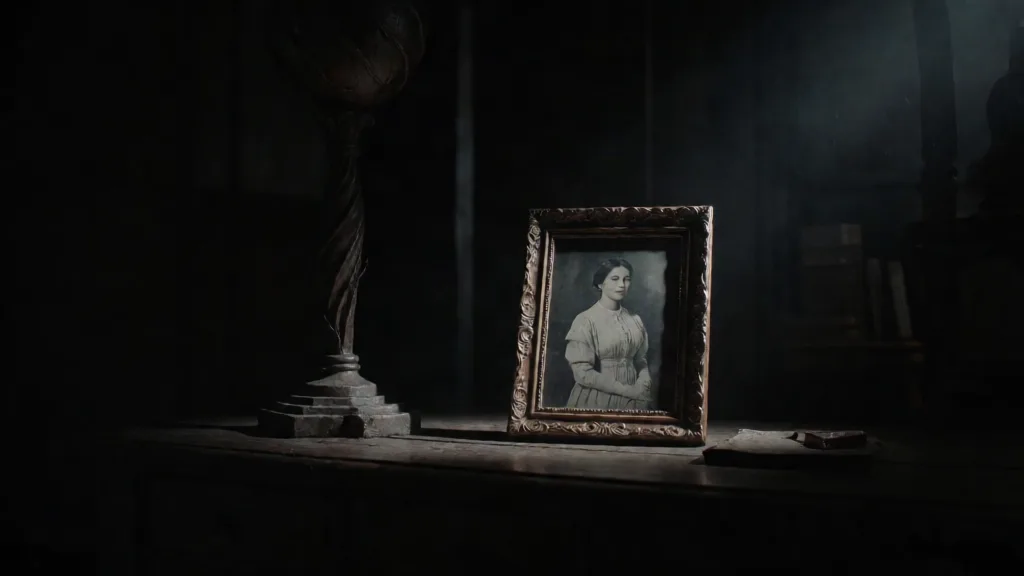
The knock came from the back of the house, which was impossible.
I was sitting on the floor of the living room, my back against the wall, eating cold rice with my fingers because I was too tired to wash a spoon. The electric fan clicked its head left and right, left and right, pushing warm air across my face without cooling anything. Outside, the tricycle drivers had finally stopped arguing about basketball, and the neighbor's videoke machine had died mid-song. The silence that followed was the kind that made you notice your own breathing.
Then the knock.
Three slow beats against the plywood wall at the back of the house, near where the old kitchen used to be before Tatay boarded it up. I stopped chewing. My hand hovered in front of my mouth, rice grains stuck to my fingertips.
Nobody knocks on that wall. There's nothing behind it but the narrow alley that runs along the back of the lot, choked with weeds and broken concrete and the rusted frame of a bicycle my father never finished repairing. The alley leads nowhere. It dead-ends at the creek, and the creek is just a trickle of black water now, not even deep enough to drown a rat.
I waited. The fan clicked. Left. Right. Left.
Nothing.
I put the rice down on the newspaper I'd spread on the floor, stood up, and walked to the back of the house. My footsteps sounded too loud on the linoleum, which had curled up at the edges years ago and never been fixed. The hallway was dark. The bulb there had burned out three weeks ago and I kept forgetting to buy a replacement, or maybe I kept remembering but never doing anything about it, the way you do with small problems that don't hurt enough yet.
The back door was a slab of wood with a deadbolt I'd installed myself after Tatay died. The deadbolt was still locked. The chain was still hooked. I put my ear against the door and listened. Nothing but the creek, a faint trickle, and somewhere far off a dog barking at something I couldn't see.
I went back to the living room. Sat down. Picked up the rice. The fan clicked. Left. Right.
That's when I saw the photograph.
It was on the dining table, propped against the fruit bowl that held nothing but three overripe bananas and a dead fly. The photograph hadn't been there when I came home. I would have noticed. The table was the first thing you saw when you walked in the door, and I always dropped my keys there, and I had dropped my keys there that night, and the table had been empty except for the fruit bowl.
I set the rice down again and picked up the photograph.
It was old. Not just yellowed but foxed, the edges soft and peeling, the paper so thin I could feel the grain of it against my thumb. The image was black and white, faded to gray in the center where the light had hit it most. A woman stood in front of a house. The house was this house. Our house. The same crooked window on the left side, the same step that sloped down too far on the right, the same narra tree that Tatay had cut down when I was twelve because its roots were cracking the foundation. The woman was young, maybe twenty, wearing a dress with a collar that stood up stiff around her neck. She wasn't smiling. She was looking at the camera like it had insulted her.
I turned the photograph over.
There was writing on the back. Blue ink, faded but legible, in handwriting I didn't recognize. It said:
*Abai, huwag kang lalabas bukas ng gabi.*
Abai, don't go outside tomorrow night.
I read it four times. Then I read it again, out loud, because sometimes hearing a thing makes it more real. My voice sounded thin in the empty house. The fan clicked. Left. Right.
I don't know how long I stood there. Long enough for the rice to go cold, though it was already cold. Long enough for the fan to start making a noise, a small rattle deep in its motor, like something loose inside. Long enough for my feet to go numb against the linoleum.
Who wrote this? Who left it here? The doors were locked. The windows were closed. I had checked them all before I sat down to eat, the way I checked them every night, the way Tatay taught me before he died. Lock the front. Lock the back. Check the windows. Check them again.
I walked to the front door. Locked. I walked to the back door. Locked. I checked the windows in the living room, the kitchen, my bedroom. All closed. All latched. The house was sealed like a jar.
I sat down on the floor again. The photograph was still in my hand. I looked at the woman's face. She had my eyes. Not the shape exactly, but the way she held them, the flat stare, the refusal to look away. My mother used to say I had the eyes of someone who didn't know how to blink.
My mother. I hadn't thought about her in years. She left when I was six, walked out the front door on a Tuesday morning and never came back. Tatay never talked about her. When I asked, he'd say she was gone, and when I asked where, he'd say gone, and when I asked why, he'd say eat your food, Abai, it's getting cold. So I stopped asking. I learned to live in the space where a mother should have been, the way you learn to live in a house with a missing wall. You just don't look in that direction.
But here she was. Or someone who looked like her. Or someone who looked like me. The photograph was old enough to be her, young enough to be her before I was born. Before she left. Before any of this.
I turned it over again. The handwriting. It wasn't mine. It wasn't Tatay's, either. His letters were big and round and slanting to the right, the handwriting of a man who learned to write late and never got comfortable with it. This was different. Small, precise, the letters cramped together like they were trying to hide from something.
*Huwag kang lalabas bukas ng gabi.*
Don't go outside tomorrow night.
Tomorrow. That meant tonight was fine. Tonight I could go outside. Tonight I could do whatever I wanted. The note was specific. It wasn't warning me about tonight. It was warning me about tomorrow.
I laughed. It came out wrong, too loud, echoing off the bare walls. I laughed because it was absurd, because someone had broken into my house to leave a note telling me not to go outside on a specific night, because the whole thing felt like a joke someone was playing on me, except I didn't know anyone who played jokes.
I put the photograph on the table, face down, so I wouldn't have to look at her eyes. Then I turned it face up again, because I couldn't stand not knowing. Then I turned it face down. Then face up. I did this three times before I realized what I was doing and stopped.
I finished my rice. I washed my hands in the kitchen sink, which dripped no matter how hard you turned the faucet. I brushed my teeth. I changed into the shirt I slept in, the one with the hole in the collar that I kept meaning to throw away. I lay down on my bed and stared at the ceiling.
The fan clicked. Left. Right. Left.
I didn't sleep. Every time I closed my eyes I saw the photograph, the woman with my eyes, the handwriting I didn't recognize, the words that made no sense. *Huwag kang lalabas bukas ng gabi.* Don't go outside tomorrow night. Why tomorrow? What was happening tomorrow? What was happening tonight?
At some point I must have drifted off, because the next thing I knew, the sun was coming through the window and the fan had stopped clicking and the house was full of the sound of jeepneys honking on the main road. I sat up. My neck ached. The photograph was still on the table, exactly where I'd left it, face up, the woman staring at me across the room.
I made coffee. I drank it standing at the kitchen window, looking out at the alley behind the house. The weeds were tall and brown. The bicycle frame was still rusting. The creek was still a trickle. Nothing had changed. Everything was the same as it had always been.
But the photograph was there. And the words were there. And I couldn't stop thinking about them.
I went to work. I work at a call center in the business district, the kind of place where you sit in a cubicle under fluorescent lights and talk to strangers about their internet bills. The shift starts at noon and ends at nine, which means I leave the house in the heat of the day and come home in the dark. I've been doing it for three years. I hate it. But it pays the bills, and the bills are the only thing Tatay left me besides the house.
The whole shift I couldn't focus. I kept hearing the knock. Three slow beats against the plywood wall. I kept seeing the woman's face, my face, staring at me from a photograph that shouldn't exist. I kept reading the words in my head, over and over, like a song you can't get rid of.
*Abai, huwag kang lalabas bukas ng gabi.*
My supervisor, a woman named Grace who wore too much perfume and smiled too wide, asked me if I was okay. I said I was fine. She asked if I was sure. I said I was sure. She looked at me for a long moment, then walked away. I could feel her watching me for the rest of the shift, the way you watch someone who might break something.
At nine I clocked out. I walked to the jeepney stop. I rode home in a jeep packed with other tired people, their faces lit by their phones, their bodies swaying with every turn. I got off at my corner. I walked down my street. I unlocked my front door. I stepped inside.
The house was dark. I turned on the light. The photograph was still on the table. The woman was still staring. I picked it up and looked at the back again.
*Abai, huwag kang lalabas bukas ng gabi.*
Today was tomorrow. Today was the night the note was warning me about.
I stood in the middle of my living room, holding the photograph, and I felt something I hadn't felt in a long time. Not fear exactly. Something older. Something that lived in my chest and my throat and the backs of my knees. The feeling of being watched. The feeling of being known by something I didn't know.
I locked the doors. I checked the windows. I sat down on the floor with my back against the wall and I waited.
The fan clicked. Left. Right.
The hours passed. The sounds of the neighborhood faded one by one. The tricycle drivers went home. The videoke machine died. The dogs stopped barking. The silence came, the same silence as the night before, the kind that made you notice your own breathing.
I waited.
Nothing happened.
I started to relax. I started to feel stupid, sitting on the floor like a child hiding from a monster, holding a photograph that was probably just a prank, probably just something someone had left as a joke. I started to think about going to bed.
Then the knock.
Three slow beats against the plywood wall at the back of the house.
Tok. Tok. Tok.
I didn't move. I couldn't move. My body had turned to stone, my blood to ice, my thoughts to static. The knock came again. Three beats. Slower this time. Deliberate. Like whoever was on the other side knew I was there and wanted me to know they knew.
Then a voice.
"Abai."
It was a woman's voice. Low. Familiar in a way that made no sense, because I had never heard it before. It came through the wall like the wall wasn't there, like the voice was inside my head, like it had always been there and I was only now noticing.
"Abai, alam kong nandiyan ka."
Abai, I know you're there.
I stood up. I don't know how. My legs moved without my permission, carrying me down the dark hallway, past the burned-out bulb, to the back door. The deadbolt was still locked. The chain was still hooked. I put my hand on the door and felt the wood, cold and rough under my palm.
"Abai."
The voice was closer now. Right on the other side. I could hear her breathing, slow and even, like she was waiting for something.
"Buksan mo ang pinto."
Open the door.
I didn't want to. Every part of me was screaming not to. But my hand moved anyway, turning the deadbolt, unhooking the chain, pulling the door open.
The alley was empty.
The weeds stood still. The bicycle frame rusted in the dark. The creek trickled somewhere I couldn't see. There was no one there. No woman. No voice. Nothing but the night and the silence and the smell of wet earth.
I stepped outside. The concrete was cold under my bare feet. I looked left. I looked right. Nothing.
Then I looked down.
There were footprints in the mud. Bare feet, small, the toes spread wide like the person had been running. They started at the door and led away from the house, past the weeds, past the bicycle frame, toward the creek. I followed them. I don't know why. I just did.
The footprints ended at the creek. The water was black and still. I stood there, looking at the last print, the heel sinking into the mud, and I felt something break inside me. A wall I didn't know I had. A door I didn't know was closed.
She was real. The woman in the photograph. The voice through the wall. She was real, and she had been here, and she had left footprints in the mud outside my back door.
I turned around.
The footprints didn't stop at the creek. They turned. They came back. They led past me, past the weeds, past the bicycle frame, back to the house. But they didn't stop at the back door. They went through it. Into the house.
I ran.
I ran through the back door, through the dark hallway, into the living room. The light was still on. The fan was still clicking. The photograph was still on the table. Everything was exactly as I had left it.
Except for the footprints.
They were on the floor. Wet. Muddy. Leading from the back door, through the hallway, into my bedroom. I followed them. My heart was pounding so hard I could feel it in my teeth.
The footprints stopped at my bed.
I stood in the doorway and looked at my room. The bed was unmade, the sheets tangled, the pillow still holding the shape of my head. The window was closed. The closet was closed. Everything was normal.
But on the pillow, right where my head had been, there was a photograph.
I walked to the bed. I picked it up. It was the same woman. The same house. The same stiff collar and flat stare. But this time, on the back, there was different writing.
*Abai, anak ko.*
Abai, my child.
I sat down on the bed. The photograph shook in my hand. The words swam in front of my eyes. *Anak ko.* My child. She was my mother. The woman who left when I was six. The woman Tatay never talked about. She was here. She had been here. She had knocked on the wall and called my name and left footprints in the mud and put a photograph on my pillow.
But that was impossible. She left twenty years ago. She never came back. She was gone.
Unless she wasn't.
Unless she had been here all along, in the alley, in the creek, in the walls of the house. Unless she had been watching me, waiting for something, waiting for a night when she could finally reach me.
I looked at the photograph again. *Abai, anak ko.* I turned it over. The woman stared at me. My eyes. My refusal to blink.
And then I heard it.
The knock.
Three slow beats against the plywood wall at the back of the house.
Tok. Tok. Tok.
But this time, it wasn't coming from outside.
It was coming from inside the walls.
Watch this moment
Turn the current scene into a cinematic Live Chapter — what you watch becomes the story's next part.
Disclaimer
This is a work of fiction, assisted by artificial intelligence. Any names or characters, businesses or places, events or incidents, are fictitious. Any resemblance to actual persons, living or dead, or actual events is purely coincidental.
Content Removal Policy
- Users may report content that may be illegal or violates our Standards.
- All reported complaints will be reviewed and resolved within seven business days.
- Review Process: Our team will assess the reported content against our guidelines.
- Appeals: If you disagree with a decision, you may appeal within 14 days of notification.
- Potential outcomes include: content removal, account warning, or no action if no violation is found.
To report content, email us at [email protected]