Share
Go Live
Beneath the Scrubs
·
Published 10/17/2026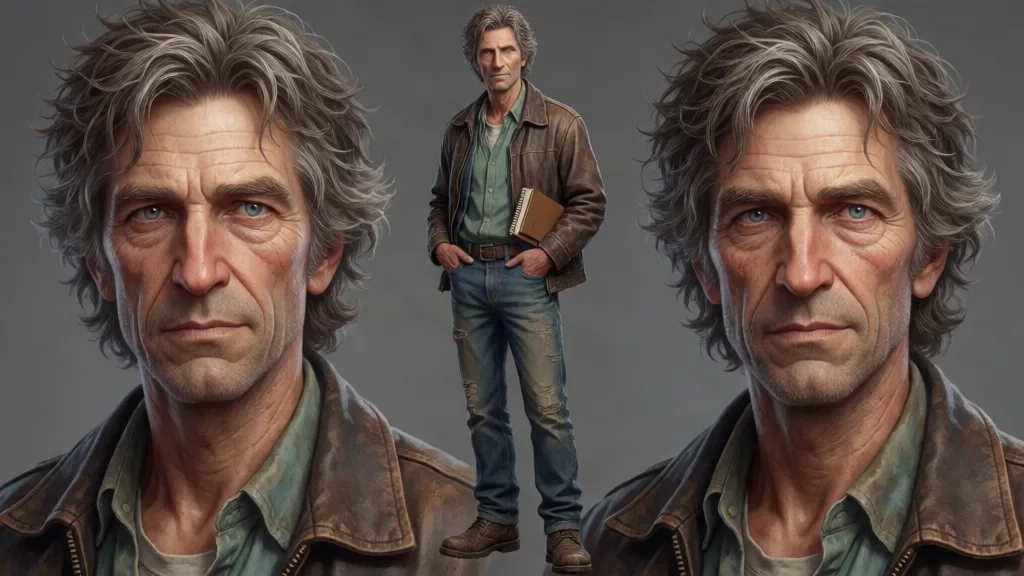
The blood on my knuckles wasn't mine, which was the first problem. The second was the woman standing in my doorway with a stethoscope around her neck and a look on her face like she'd seen this exact scene a hundred times before and was tired of it.
"You're bleeding," she said.
"No," I said, wiping my hand on my jeans. "I'm not."
Ana didn't argue. She just stepped past me into the apartment, her sneakers squeaking on the hardwood, and set her bag down on the kitchen counter like she lived here. She didn't. She'd been here exactly twice. Once to check my vitals after I got released from the hospital, and once to tell me I was an idiot for checking myself out early. Both times she'd worn the same expression. Professional concern with a thin layer of exasperation underneath.
"The hospital called," she said, opening cabinets until she found a first aid kit I didn't remember owning. "You missed your follow-up."
"I've been busy."
"Doing what? Getting into fights?"
I looked at my hand. The split on my middle knuckle had already started to scab. It wasn't a fight, not really. More like a conversation that got out of hand. The guy I'd been talking to, a mid-level city contractor with a taste for expensive watches and cheap cover-ups, hadn't appreciated my questions about the Harbor Point development deal. He'd taken a swing. I'd taken his wallet.
Not my finest moment. But not my worst, either.
"Occupational hazard," I said.
Ana pulled out a gauze pad and a bottle of antiseptic. She gestured at the kitchen chair. "Sit."
"I don't need a nurse."
"You need a tetanus shot, probably. And someone to tell you that whatever you're doing is going to get you killed." She paused, tilting her head. "But since you won't listen to that, sit down and let me clean your hand."
I sat.
She pulled up the other chair and took my hand in hers. Her fingers were warm and steady, the kind of hands that had held dying people and newborn babies and everything in between. She turned my knuckles toward the light, examining the damage with the same focus she'd probably give a gunshot wound.
"This is superficial," she said. "You got lucky."
"I usually do."
"No, you don't." She pressed the gauze to my knuckle and I flinched. "You just think you do."
I watched her work. Dark hair pulled back, a few strands loose around her face. No makeup. She smelled like hand sanitizer and something softer underneath, vanilla maybe, or just laundry detergent. She'd come straight from a shift, I realized. The scrubs were wrinkled and there were shadows under her eyes.
"Long day?" I asked.
"Twelve hours. A car accident, two overdoses, and a kid with a broken arm who kept asking me if I was a doctor." She smiled without looking up. "I told him I was better than a doctor. I could actually get things done."
"That's a dangerous thing to say in front of a journalist."
"I'm not worried. You're too busy bleeding to take notes."
She had a point. My notebook was on the counter, out of reach, and I wasn't about to get up and ruin whatever this was. The antiseptic stung. She blew on my knuckles, a small, absent gesture that felt more intimate than it should have.
"Why are you here, Ana?"
"Because you missed your follow-up and the hospital flagged your file. You're a liability risk."
"Try again."
She stopped blowing. Looked at me. Her brown eyes were tired but clear, and I got the feeling she was deciding something. Whether to lie or not. Whether to tell me the truth or give me the standard line about patient care and professional responsibility.
"I was worried about you," she said.
The words landed heavier than they should have. We barely knew each other. Two visits, a handful of phone calls, a few text messages about appointment times. But I'd remembered her. The way she'd talked to me in the hospital like I was a person and not a problem to be solved. The way she'd laughed when I told her I'd rather die than eat another cup of hospital Jell-O. The way her hand had lingered on my arm when she said goodbye.
I hadn't expected to see her again. I'd told myself that was fine.
"I'm not your patient anymore," I said.
"I know."
"So why are you really here?"
She let go of my hand. Sat back in the chair. For a second, she looked like she might leave. Then she pulled the stethoscope from around her neck and set it on the table between us, like a surrender.
"I don't know," she said. "I just... I couldn't stop thinking about you. About what you said. About the story you were working on. The one that got you shot at."
I hadn't been shot at. I'd been shot. There's a difference. The bullet had gone through my shoulder, missing the artery by an inch. I'd spent three days in the hospital and checked myself out on the fourth. The cops had asked questions. I'd given them nothing. The story was too big, too dangerous, and I wasn't about to let them screw it up.
"It's not a story anymore," I said. "It's a war."
"Against who?"
"Everyone. No one. The people who think they own this city."
She nodded slowly, like that made sense to her. Maybe it did. Nurses saw the fallout of corruption every day. The kids who came in with preventable diseases because their parents couldn't afford insurance. The old men who died alone because the nursing homes were understaffed and underfunded. The women who showed up with bruises and said they fell down the stairs.
"You're not going to stop," she said.
"No."
"Even though it could get you killed."
"Especially then."
She looked at me for a long moment. Then she did something I didn't expect. She laughed. Not a big laugh, just a small, rueful sound, like she'd finally figured out the punchline to a joke she'd been hearing for years.
"You're impossible," she said.
"I've been told."
"By who?"
"My ex-wife. My editor. A judge. A few cops." I shrugged. "It's a recurring theme."
"And yet here you are. Still alive. Still fighting."
"Still bleeding."
She smiled. It was the first real smile I'd seen from her, not the professional one she used on patients, and it changed her face. Made her look younger. Softer. I felt something shift in my chest, something I hadn't felt in a long time. Interest. Real interest. The kind that had nothing to do with a story.
I pushed it down. Hard.
"You should go," I said. "It's late."
"I know."
"Your shift starts in the morning."
"I know."
She didn't move. Neither did I. The apartment was quiet except for the hum of the refrigerator and the distant sound of traffic outside. I could hear her breathing. Could see the pulse in her throat. Could feel the heat coming off her skin, even from across the table.
"This is a bad idea," I said.
"What is?"
"You being here."
"I'm just cleaning your hand."
"You're doing more than that."
She held my gaze. Didn't flinch. Didn't look away. There was something stubborn in her, something that matched the stubbornness in me. Two people who'd spent their lives taking care of other people, and neither of us knew how to let someone take care of us.
"I know," she said again.
And then she stood up, gathered her supplies, and walked to the door. I thought she was leaving. I thought that was it. But she stopped with her hand on the knob and turned back.
"Davis."
"Yeah."
"The story you're working on. The one that got you shot. Is it worth it?"
I thought about the files in my safe. The photographs. The recordings. The names of men who'd sold out this city to the highest bidder. The names of women who'd helped them do it. The names of children who'd paid the price.
"Yeah," I said. "It's worth it."
She nodded. Opened the door. Stepped into the hallway.
Then she looked back one more time.
"Then I guess I'll see you around."
The door closed behind her. I sat in the kitchen for a long time, staring at the gauze on my knuckle and the stethoscope she'd left on the table. She'd forgotten it. Or maybe she hadn't. Maybe she'd left it on purpose, a reason to come back.
I picked it up. Held it in my hand. It was still warm.
I should have thrown it away. Should have forgotten about her. Should have focused on the story, the one that mattered, the one that could bring down a city councilman and a real estate mogul and maybe, if I got lucky, a senator.
But I didn't throw it away. I put it in my pocket, next to my notebook, and went to bed.
That night I dreamed about her. Not anything explicit. Just her hands on mine. Her voice in my ear. Her laugh, small and rueful, like she'd finally figured out the punchline.
When I woke up, I knew I was in trouble.
Watch this moment
Turn the current scene into a cinematic Live Chapter — what you watch becomes the story's next part.
Disclaimer
This is a work of fiction, assisted by artificial intelligence. Any names or characters, businesses or places, events or incidents, are fictitious. Any resemblance to actual persons, living or dead, or actual events is purely coincidental.
Content Removal Policy
- Users may report content that may be illegal or violates our Standards.
- All reported complaints will be reviewed and resolved within seven business days.
- Review Process: Our team will assess the reported content against our guidelines.
- Appeals: If you disagree with a decision, you may appeal within 14 days of notification.
- Potential outcomes include: content removal, account warning, or no action if no violation is found.
To report content, email us at [email protected]