Share
Go Live
Caravan of Strangers
·
Published 11/11/2026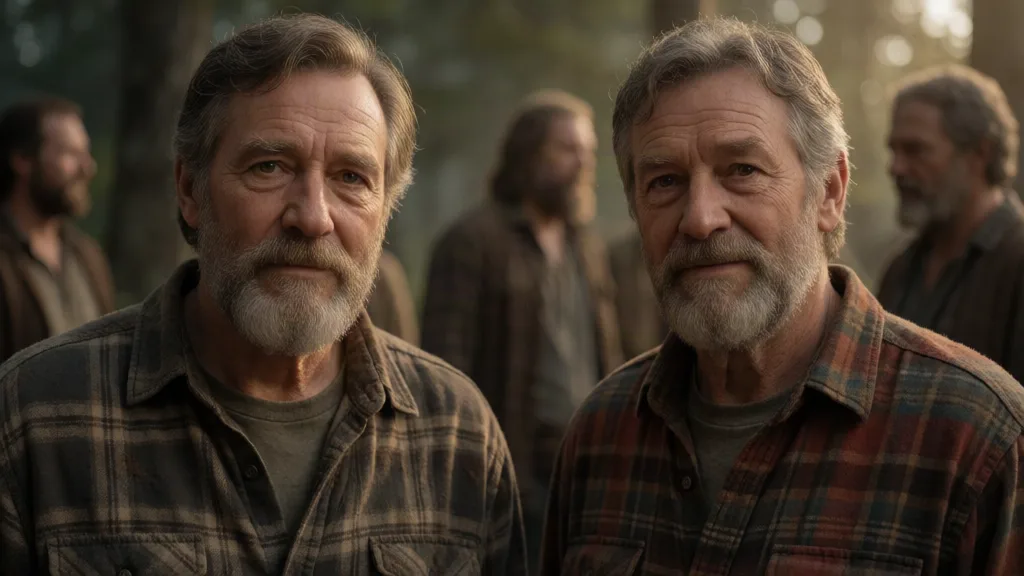
The screen door of the caravan slapped shut behind me, and I stood there on the top step, breathing in air that tasted of dust and diesel and something sweet I couldn't name. The thing was parked in my driveway like a mistake someone had forgotten to take back. Thirty-two feet of white fiberglass and peeling decals, a faded sunset painted on the side above the words *Adventure Awaits*. Adventure. At my age.
"Doris," I said, though she couldn't hear me. She was already in the air somewhere over the Atlantic, her seat reclined, a glass of something cold in her hand, my grandson Caleb probably asking her for the hundredth time how much longer. The whole lot of them. Doris and her sister Margaret, both my sons, their wives, the grandkids. A villa in Portugal. Two weeks.
And me, standing in my own driveway with a duffel bag at my feet, watching Henry Kessler try to parallel park his truck so he could hitch up the caravan we were apparently going to share.
"You gonna stand there gawking or you gonna help me with this hitch?" Henry called out his window. His face was flushed already, and it wasn't even nine in the morning. "Damn thing's got a mind of its own."
I came down the steps. The driveway gravel crunched under my boots, that familiar sound I'd heard ten thousand times, only now it felt different. Final. Like the house behind me had already let go.
Henry killed the engine and climbed out. He was wearing his overalls, the ones with the burn mark on the left thigh from a welding incident in '89 that he still brought up at every barbecue. His white beard was thicker than I remembered, and he'd grown it out since spring. It made him look like a department store Santa who'd wandered off the job.
"Sam," he said, and clapped me on the shoulder. "We're doing this."
"Seems like it."
"Two old bachelors on the open road." He laughed, that big rolling laugh that always made me think of a train coming through a tunnel. "Well, not bachelors. Our wives ditched us. That's different."
"They didn't ditch us."
"They went to Portugal without us."
"They went with the kids."
Henry raised an eyebrow. "And we're not kids?"
I didn't have an answer for that. I helped him line up the hitch, and we worked in silence for a few minutes, the kind of silence that comes easy between men who've known each other for forty years. The ball mount slid into place. The coupler clicked. Henry tested the chains while I checked the lights.
"Margaret said you didn't want to come," he said, not looking at me.
"Margaret says a lot of things."
"She said you told Doris you'd rather stay home and rot."
"I said I'd rather stay home."
"Same thing, according to Margaret."
I tightened the last chain and stood up. My knees popped, both of them, a sound I was getting used to. "Doris didn't want me there anyway. Sixteen people in one villa. I'd just be in the way."
Henry looked at me then, really looked, and I felt that thing he did, the way he could see through a person without meaning to. "You know that's not true."
I shrugged and walked around to the passenger side of the truck. The caravan loomed behind us, waiting. I'd never been inside one before. Never wanted to. Now it was going to be my home for two weeks, me and Henry, driving up the coast to some campground his cousin recommended, eating beans from a can and pretending we weren't both thinking about our wives on the other side of the ocean.
Henry climbed in and started the engine. "You ready?"
"No."
He laughed again. "Good. Me neither."
We pulled out of the driveway, and I watched my house shrink in the side mirror, the porch where I'd drunk my morning coffee for thirty years, the garden I'd planted with Doris the spring after we got married, the fence I'd built with my own hands. Then we turned the corner, and it was gone.
The road opened up ahead of us, gray and endless, and Henry turned on the radio. Some old song, something from the sixties, and he hummed along while I stared out the window and wondered what the hell I'd agreed to.
---
We made it forty miles before Henry needed to pee.
"Should've gone before we left," I said.
"Should've, could've, would've." He pulled into a gas station that looked like it hadn't been updated since the Reagan administration. "You want anything?"
"Coffee."
"You hate gas station coffee."
"I hate a lot of things."
He laughed and disappeared inside. I stayed in the truck, watching the caravan in the side mirror. It sat there behind us, patient, like a dog waiting for its owner. I'd never understood the appeal. Doris had talked about buying one for years, about driving down to Florida in the winter, about seeing the country. I'd always found reasons to say no. Too expensive. Too much maintenance. The truth was simpler than that. I didn't like the idea of being unmoored. Of waking up somewhere different every day. I liked my house. I liked my garden. I liked knowing where the light switches were.
Henry came back with two coffees and a bag of donuts. "They had a special. Six for three dollars."
"That's not a special. That's a cry for help."
"Don't be a snob." He handed me a cup and pulled back onto the highway. "You know what your problem is, Sam?"
"I'm sure you're going to tell me."
"You don't know how to have fun."
"I know how to have fun."
"Name one fun thing you've done in the last year."
I thought about it. "I built a birdhouse."
"That's not fun. That's a chore with feathers."
"It was for the grandkids."
"See? Everything you do is for someone else." He bit into a donut, and powdered sugar dusted his beard. "When's the last time you did something just because you wanted to?"
I didn't answer. The truth was I couldn't remember. Doris was the one who planned things, who suggested trips and outings and new restaurants. I went along. I was good at going along. It was a skill, I supposed, a kind of negative capability, the ability to be present without being in the way.
Henry turned up the radio. Another old song, something about a highway and a woman and a heartbreak I'd never experienced. He sang along, off-key, and I closed my eyes and let the road hum under the wheels.
---
The campground was called Whispering Pines, which was a lie on both counts. There were no pines, just a scattering of scrub oak and something that might have been a eucalyptus, and the only thing whispering was the generator on the RV next to us, a monstrous thing the size of a small house, with a satellite dish on top and a family of six spilling out of it like clowns from a car.
Henry parked the caravan in our spot, a patch of gravel with a picnic table and a fire ring, and we stood there looking at it.
"Home sweet home," he said.
"It's a box."
"It's a home on wheels."
"It's a box on wheels."
He clapped me on the shoulder again. "You're gonna love it."
I didn't love it. The inside was smaller than I expected, which was saying something, since I'd expected it to be small. There was a dinette that converted into a bed, a kitchenette with a two-burner stove and a sink the size of a cereal bowl, and a bathroom that was basically a closet with a toilet. The whole thing smelled like old wood and propane and something faintly chemical, like the inside of a new car but sadder.
Henry took the bed in the back, the one that was technically a queen but looked more like a double. I got the dinette. He said it was because I was shorter, which was true, but I knew it was also because he was being kind. Henry was always being kind. It was his default setting.
We ate dinner at the picnic table, hot dogs and beans from a can, and Henry told stories about the old days, about the construction jobs we'd worked together, about the time he fell off a roof and broke his arm and kept working anyway because the client was a widow and he didn't want to leave her hanging. I listened. I was good at listening. The fire crackled in the ring, and the sky turned orange and then purple and then black, and the stars came out, more stars than I ever saw at home, and I thought about Doris, somewhere over the ocean, probably asleep by now, and I wondered if she was thinking about me.
"You miss her," Henry said. It wasn't a question.
"Of course I miss her."
"I miss Margaret too." He poked the fire with a stick. "But you know what? It's good for us. A little time apart. Gives you perspective."
"What kind of perspective?"
"The kind where you remember why you married her in the first place." He looked at me across the fire, his face half in shadow. "You remember why you married Doris?"
I did. I remembered everything. The way she laughed at my jokes even when they weren't funny. The way she hummed while she cooked. The way she'd reach for my hand in the middle of the night, not saying anything, just needing to know I was there. Forty years of that. Forty years of small things that added up to everything.
"Yeah," I said. "I remember."
Henry nodded and went back to poking the fire. We sat there until the logs burned down to embers, and then we went inside and went to bed, and I lay on that dinette mattress listening to Henry snore in the back, thinking about perspective and how maybe I'd had it all along and just didn't know it.
---
The next morning, Henry made pancakes on the two-burner stove. They were terrible. Too much batter, not enough heat, and he'd forgotten the baking powder, so they came out flat and dense like frisbees. I ate three of them anyway.
"You don't have to eat them," he said.
"I know."
"They're not good."
"I know."
"You're just being polite."
"I'm being hungry."
He laughed and flipped another pancake onto my plate. "You know what I like about you, Sam? You never complain. Forty years I've known you, and I've never heard you complain about anything."
"I complain."
"To Doris, maybe. But not to me." He sat down across from me, his plate piled high with his own terrible pancakes. "Why is that?"
I shrugged. "What's the point?"
"The point is you're a person. People complain. It's what we do."
"Not me."
He studied me for a moment, his eyes crinkled at the corners, that look he got when he was trying to figure something out. "You know what I think? I think you're scared."
"Of what?"
"Of taking up space." He pointed his fork at me. "You've spent your whole life making yourself small so other people can be big. Doris, the kids, the grandkids. Even me. You're always in the background, always helping, never asking for anything. And I think you're scared that if you stop, if you actually say what you want, people will realize you've been there all along and they'll wonder why."
I set down my fork. The pancakes sat in my stomach like stones.
"That's not true," I said.
"Isn't it?"
"I don't want anything."
"Everybody wants something."
"I want Doris to be happy."
"That's not what I asked."
I didn't have an answer. I picked up my fork and took another bite of pancake, and Henry watched me with that patient look he had, the one that said he could wait forever if he had to. But he didn't have to, because I wasn't going to give him anything. I'd spent sixty-five years learning how to keep things inside, and I wasn't about to unlearn it over breakfast.
"Fine," he said, and went back to his pancakes. "Keep your secrets."
"I will."
"See if I care."
"You don't."
"I don't."
We finished eating in silence, and then we cleaned up and hit the road. The highway stretched ahead of us, and the sun was bright, and Henry turned on the radio, and I closed my eyes and let the miles roll by.
---
We stopped for lunch at a diner somewhere in the middle of nowhere, a place with vinyl booths and a jukebox that still worked and a waitress named Flo who called us "hon" and "sweetheart" and didn't seem to care that we were two old men in flannel shirts who hadn't showered in two days.
Henry ordered a burger and fries. I ordered a club sandwich.
"You always order the same thing," he said.
"I like club sandwiches."
"You've been ordering club sandwiches since I met you. Forty years. Same sandwich."
"What's wrong with that?"
"Nothing. It's just..." He shook his head. "Don't you ever want to try something different?"
"I know what I like."
"But how do you know you like it if you never try anything else?"
"I don't need to try anything else. I know what I like."
He laughed and stole a fry off my plate. "You're impossible."
"I'm consistent."
"Same thing."
The waitress brought our food, and we ate in comfortable silence, the kind that comes from years of shared meals and shared memories. I watched Henry eat, the way he attacked his burger like it might try to escape, and I thought about what he'd said at breakfast. About taking up space. About wanting things. I thought about Doris, and how she'd asked me, a few weeks before she left, if I was happy.
"Happy?" I'd said. "What kind of question is that?"
"A simple one."
"I'm fine."
"That's not what I asked."
"I don't know what you want me to say."
She'd looked at me then, really looked, the way Henry did, and I'd felt that thing I always felt when someone got too close, a kind of panic, a need to change the subject. So I'd asked about the trip, about the villa, about whether she thought Caleb would like Portugal. And she'd let me change the subject, because she always did, because she knew me better than I knew myself.
I wondered if she was happy. I wondered if she'd ever asked herself the same question.
"You're thinking about her," Henry said.
"How do you know?"
"You get this look on your face. Like you're somewhere else."
"I'm right here."
"Physically, maybe." He wiped his mouth with a napkin. "You know what I think?"
"I'm sure you're going to tell me."
"I think you've been somewhere else your whole life. I think you've been waiting for something, and you don't even know what it is."
I didn't answer. I didn't have an answer. The jukebox switched to another song, something slow and sad, and I watched the door and thought about leaving, about walking out and hitchhiking home, about being alone in my house with my garden and my tools and my memories. But I didn't. I stayed. I finished my sandwich. I paid the bill. And I followed Henry back to the truck.
---
That night, we parked at a campground near the coast. The ocean was close, I could smell it, that salt-and-fish smell that always made me think of childhood vacations, of my father teaching me to fish, of my mother spreading a blanket on the sand. Henry built a fire, and we sat around it, and he told more stories, about the time he and Margaret went to Vegas and lost all their money on the first night, about the time he got stuck in an elevator with a woman who was nine months pregnant, about the time he accidentally set his kitchen on fire trying to make a birthday cake for his daughter.
I listened. I always listened. But this time, something was different. This time, I found myself wanting to talk, wanting to share something of my own. It was a strange feeling, like a door opening in a room I'd kept locked for years.
"I used to write," I said.
Henry stopped mid-sentence and looked at me. "Write what?"
"Poems. Stories. When I was young."
"Before Doris?"
"Before everything." I poked the fire with a stick. "I wanted to be a writer. Went to college for it, even. Dropped out after a year because my father got sick and I had to come home and take over the business."
"You never told me that."
"I never told anyone."
"Why not?"
I shrugged. "It didn't matter. It was a long time ago."
"Does it still matter?"
I thought about it. The poems I'd written, the stories, all those words I'd put on paper and then hidden away in a box in the attic. I hadn't thought about them in years. Hadn't thought about that version of myself, the one who believed he could do something, be something. Before the business. Before Doris. Before everything.
"I don't know," I said. "Maybe."
Henry was quiet for a long moment. Then he reached over and put his hand on my shoulder, and I felt the warmth of it through my flannel shirt, the weight of it, the way it grounded me.
"You should write again," he said.
"I'm too old."
"You're sixty-five. That's not old."
"It feels old."
"It feels like you're scared." He squeezed my shoulder and let go. "But you don't have to be. Not with me."
I looked at him across the fire, and something passed between us, something I couldn't name. It wasn't romantic, not exactly. It was something older than that, something deeper. It was the recognition of one soul by another, the way two animals might recognize each other in the dark. I'd known Henry for forty years, but I'd never seen him like this. Never let myself see him.
"I don't know how," I said.
"To write?"
"To be... this."
"What's this?"
"Open. Honest. I don't know."
He smiled, that warm smile that crinkled his whole face. "You just do it. One word at a time."
The fire crackled. The ocean roared in the distance. And I sat there, in the light of the flames, and felt something shift inside me. Something I'd been holding onto for years, a tension, a fear, a need to be small. It didn't disappear. It didn't even loosen. But I noticed it. For the first time in my life, I noticed it.
And that, I supposed, was a start.
---
The next few days passed in a blur of highway and diners and campgrounds. We drove up the coast, stopping at every roadside attraction Henry could find. A giant ball of twine. A museum dedicated to antique doorknobs. A tree that had been struck by lightning seven times and was still standing. Henry took pictures of everything. I stood in the background and watched.
At night, we sat around the fire and talked. Or rather, Henry talked and I listened. But something had changed. I found myself asking questions, offering opinions, sharing small pieces of myself. It wasn't much. A memory from childhood. A thought about the ocean. A joke I'd heard at the hardware store. But it was something. It was more than I'd shared in years.
On the fourth night, we parked at a campground that was nearly empty. The season was winding down, and most of the other sites were vacant. We had the place to ourselves, just us and the trees and the stars.
Henry built a fire, and we sat around it, and he told a story about his father, about the time they'd gone fishing and caught nothing and his father had said, "It's not about the fish, Henry. It's about the time." I'd heard the story before, but this time it hit me differently. This time I thought about my own father, about the time we'd spent together, about all the things I'd never said to him before he died.
"I never told my father I loved him," I said.
Henry stopped talking and looked at me.
"I mean, I did. When I was a kid. But not when I was grown. Not when it mattered." I stared into the fire. "He died when I was thirty-five. I was at work. I got the call, and I went to the hospital, and he was already gone. And I stood there, looking at him, and I thought, 'I never told him.'"
"Did he know?"
"I don't know. I hope so. But I never said it."
Henry was quiet for a moment. Then he said, "You can say it now."
"He's dead."
"I know. But you can still say it. You can say it to the fire. To the sky. To me." He looked at me, his eyes soft. "You can say it to me, Sam."
I felt something rise in my chest, something hot and tight and painful. I hadn't cried in years. Not when my father died. Not when my mother died. Not when Doris's sister got sick. I'd held it all in, all those years, all that grief. And now, sitting in front of a fire with a man I'd known for forty years, I felt it start to crack.
"I loved him," I said. "I loved him, and I never told him."
And then I was crying. Not the way I'd cried as a child, big heaving sobs that shook my whole body. But the way I'd never let myself cry as a man, quiet tears that ran down my cheeks and disappeared into my beard. Henry didn't move. He didn't try to comfort me. He just sat there, watching, letting me feel it. And that was the kindest thing he could have done.
After a while, the tears stopped. I wiped my face with my sleeve and looked at him.
"Sorry," I said.
"Don't be."
"I didn't mean to..."
"I know."
We sat in silence for a while. The fire burned down. The stars moved overhead. And I felt something I hadn't felt in years. Light. Empty. Clean.
"You know what I think?" Henry said.
"What?"
"I think you've been carrying that around for a long time. Longer than you know."
"I think you're right."
"I usually am."
I laughed. It surprised me, the sound of it, rough and rusty from disuse. But it was real. It was mine.
Henry grinned at me across the fire. "There he is."
"Who?"
"The guy I've been looking for. The one who's been hiding in there all along."
I didn't know what to say to that. So I didn't say anything. I just sat there, in the warmth of the fire, and let myself be seen.
---
On the fifth day, it rained. Not a gentle rain, but a torrent, a deluge, the kind of rain that made you wonder if the world was ending. We stayed inside the caravan, and Henry made coffee, and we played cards at the dinette while the water drummed on the roof.
"I used to love the rain," Henry said. "When I was a kid, I'd sit on the porch and watch it come down. My mother would make hot chocolate, and we'd listen to the radio, and it felt like the whole world was ours."
"My mother hated the rain," I said. "She said it made her bones ache. She'd close all the curtains and turn on all the lights and pretend it wasn't happening."
"Your mother sounds like a character."
"She was. She was a teacher. Third grade. She'd come home every day exhausted, and my father would have dinner waiting, and she'd sit at the table and tell us stories about her students. There was this one kid, Tommy, who ate glue. Every day. She couldn't figure out why."
"Did she ever find out?"
"Turns out he liked the taste." I smiled at the memory. "She said it was the most honest answer she'd ever gotten."
Henry laughed. "Kids are the best. They don't know how to lie yet."
"They learn."
"They do. But for a while, they're pure. They're just themselves." He dealt another hand. "You know what I miss most about being a kid?"
"What?"
"The wondering. Everything was a question. Everything was new. You'd wake up in the morning and not know what the day would bring. Now I wake up and I know exactly what's going to happen. Same coffee. Same routine. Same everything."
"Is that bad?"
"It's not bad. It's just... predictable." He looked at his cards. "I used to think I'd be someone. You know? I used to think I'd do something important. Something that mattered."
"You built houses. You raised a family. You were a good man."
"That's not the same."
"It's better."
He looked at me, surprised. "You think so?"
"I know so." I set down my cards. "I've spent my whole life trying to be good. Trying to do the right thing. And I think... I think that's enough. I think that's all any of us can do."
Henry was quiet for a moment. Then he smiled, that warm, crinkly smile. "You're a wise man, Sam."
"I'm not wise. I'm just old."
"Same thing."
We played cards until the rain stopped. Then we went outside and stood in the fresh air, breathing in the smell of wet earth and pine, and I felt something I hadn't felt in a long time. Peace. Not the quiet kind, the kind that comes from avoiding things. But the real kind, the kind that comes from facing them.
---
That night, I dreamed of Doris. She was standing on a beach, looking out at the ocean, and I was walking toward her, but no matter how fast I walked, I couldn't reach her. She was always just ahead, just out of reach. And then she turned around, and she was smiling, and she said, "It's okay, Sam. I'm right here."
I woke up with tears on my face and a feeling in my chest like something had opened. Something I'd kept closed for years.
Henry was already up, making coffee. He looked at me when I came out of the bathroom, and I saw something in his eyes. Understanding. He didn't ask what I'd dreamed. He didn't ask why I'd been crying. He just handed me a cup of coffee and said, "Good morning."
"Good morning," I said.
And that was enough. That was more than enough.
---
We drove further up the coast that day, past towns with names like Sea View and Cliffside and Harbor's End. Henry pointed out every interesting thing he saw. A pelican. A lighthouse. A house that looked like it was about to fall into the ocean. I watched out the window and let the world pass by.
Around noon, we stopped at a lookout point. The ocean stretched out before us, endless and blue, and the sky was so clear it hurt to look at. Henry stood next to me, his hands in his pockets, and we just stood there, two old men looking at the sea.
"You know what I've been thinking?" Henry said.
"What?"
"About us. About this trip." He paused. "I've been thinking that maybe this isn't just about the wives. Maybe this is about something else."
"What else?"
"Maybe it's about us. You and me. Maybe we've been waiting our whole lives for something, and we didn't even know it."
I looked at him. The wind was blowing his white beard, and his eyes were bright, and I felt something shift inside me. Something I'd been feeling for days, but hadn't let myself name.
"What are you saying?" I asked.
"I'm saying I don't know. I'm saying I've been married for forty years, and I love Margaret, I do. But I've never had a friend like you. I've never had someone who just... gets it. Gets me."
"I get it," I said.
"I know you do. That's what I'm saying." He turned to face me. "I don't know what this is, Sam. I don't know if it's friendship or something else. But I know it's real. I know it's important. And I know I don't want it to end."
I didn't know what to say. I'd spent my whole life not saying things, not feeling things, not letting myself want. And now, standing on a cliff overlooking the ocean with a man I'd known for forty years, I felt something I'd never felt before. Something that scared me. Something that excited me. Something that felt like the truth.
"I don't want it to end either," I said.
Henry smiled. And then he reached out and took my hand. His hand was warm and rough and calloused, the hand of a man who'd worked with tools his whole life. And I held it. I held it and looked out at the ocean and felt the wind on my face and knew, for the first time in my life, that I was exactly where I was supposed to be.
---
The rest of the trip passed in a blur. We drove and we talked and we sat around fires and we looked at the stars. We didn't talk about what had happened at the lookout. We didn't need to. We just were. Together. Two old men on the road, figuring things out.
On the last night, we parked at a campground near the city where we'd started. Tomorrow, we'd drive home. Tomorrow, Doris would be back. Tomorrow, everything would go back to normal.
But I didn't want normal. I wanted this. I wanted the road and the fires and the conversations that went deep into the night. I wanted Henry's laugh and Henry's stories and Henry's hand on my shoulder. I wanted to be seen. I wanted to be known.
I sat by the fire, watching the flames dance, and Henry came and sat next to me. He didn't say anything. He just sat there, close enough that I could feel the warmth of his body, and we watched the fire together.
"I don't want to go home," I said.
"I know."
"I don't know what that means."
"Neither do I." He looked at me. "But we'll figure it out. Together."
"How?"
"I don't know. But we will. We've got time."
I looked at him. His face was lit by the fire, all shadows and light, and I felt something rise in my chest. Something I'd been holding back for days. Something I couldn't hold back anymore.
"Henry," I said.
"Yeah?"
"I think... I think I love you."
He didn't say anything for a long moment. Then he smiled. That warm, crinkly smile that I'd known for forty years.
"I know, Sam. I love you too."
And then he leaned over and kissed me. It was gentle, tentative, the kiss of two men who'd never kissed a man before. But it was real. It was true. It was the beginning of something I'd never expected, something I'd never let myself want.
When we pulled apart, I was crying. Henry was too.
"What now?" I asked.
"I don't know." He wiped his eyes with the back of his hand. "But we'll figure it out. One day at a time."
I nodded. And we sat there, holding hands, watching the fire burn down. The stars came out, one by one, and the ocean roared in the distance, and I felt something I hadn't felt in years. Hope. Not the quiet kind, the kind that comes from avoiding things. But the real kind, the kind that comes from facing them.
We had a lot to figure out. Doris. Margaret. Our families. Our lives. But for now, in this moment, we had each other. And that was enough. That was more than enough.
---
The drive home was quiet. Not the uncomfortable kind of quiet, but the kind that comes from two people who've said everything they need to say. Henry held my hand across the console, and I watched the world go by, the trees and the towns and the miles of highway, and I felt something I hadn't felt in a long time.
Ready.
Ready for whatever came next. Ready for the hard conversations. Ready for the changes. Ready for the truth.
We pulled into my driveway just as the sun was setting. My house looked the same as it always had. The porch. The garden. The fence I'd built with my own hands. But it felt different. It felt like a place I'd been, not a place I was stuck.
Henry parked the truck and turned off the engine. We sat there for a moment, not saying anything.
"You want to come in?" I asked.
"I'd like that."
We walked up the steps together, and I opened the door, and the house welcomed us in. It smelled like home. It smelled like Doris. And for the first time in my life, I didn't feel like I was hiding.
I turned on the lights and looked at Henry, standing in my living room, his white beard and his plaid shirt and his warm, crinkly eyes. And I knew, with a certainty I'd never felt before, that everything was about to change.
"I don't know what happens next," I said.
"Neither do I."
"But we'll figure it out."
He smiled. "Together."
And we stood there, in the light of my living room, two old men on the edge of something new, and I felt the world open up around me like a door I'd been afraid to walk through my whole life.
I walked through it.
Watch this moment
Turn the current scene into a cinematic Live Chapter — what you watch becomes the story's next part.
Disclaimer
This is a work of fiction, assisted by artificial intelligence. Any names or characters, businesses or places, events or incidents, are fictitious. Any resemblance to actual persons, living or dead, or actual events is purely coincidental.
Content Removal Policy
- Users may report content that may be illegal or violates our Standards.
- All reported complaints will be reviewed and resolved within seven business days.
- Review Process: Our team will assess the reported content against our guidelines.
- Appeals: If you disagree with a decision, you may appeal within 14 days of notification.
- Potential outcomes include: content removal, account warning, or no action if no violation is found.
To report content, email us at [email protected]