Share
Go Live
Salt and Silver
·
Published 9/30/2026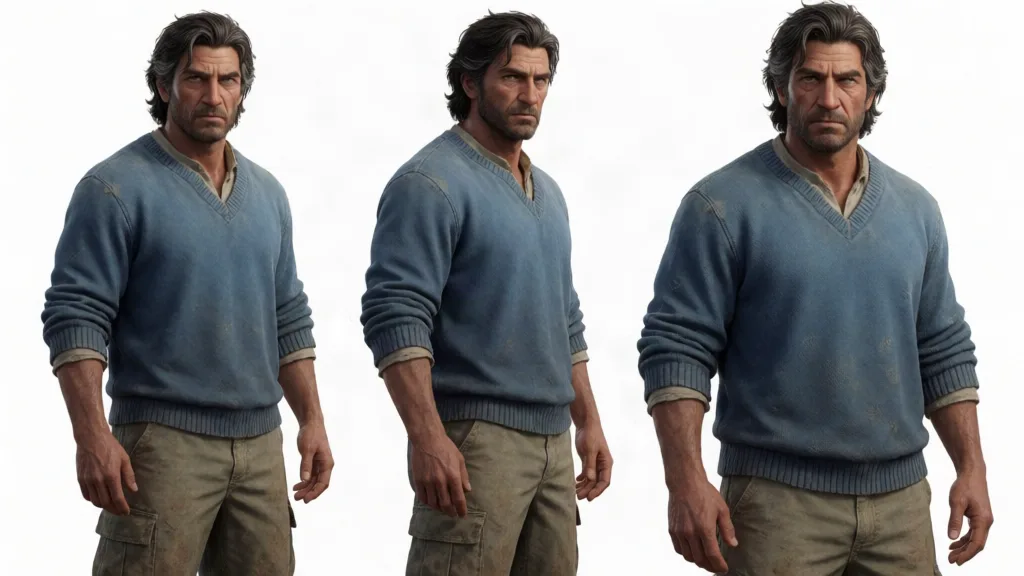
The knife in your hand is dull, the fish is slick, and Pedro watches you from the doorway with those sea-green eyes that give nothing away. You’ve been scaling this cod for ten minutes. The blade stutters over the skin, tearing instead of slicing. You don’t look up. You won’t.
“You’re holding it wrong,” he says.
“I’m holding it fine.”
He crosses the kitchen. His boots leave wet prints on the tile. The smell of him, salt and diesel and something darker underneath, fills the space between you. He reaches around, his chest against your back, and adjusts your grip. His hands are rough. Calloused. The scar along his jaw catches the light from the window, a pale seam in weathered skin.
“Like this,” he says. “Let the blade do the work.”
You want to lean back into him. You don’t. Instead you follow his motion, and the knife slides clean, scales falling away in silver curls. He steps back. The absence of his body is a cold spot on your spine.
“Ana’s coming by later,” you say. Not a question.
He nods. Takes an apple from the bowl on the counter. Bites into it. The crunch is loud in the small kitchen. “She’s bringing wine.”
“She always brings wine.”
“She likes wine.”
You set the knife down. The fish is ruined anyway, hacked in places where your impatience got the better of you. You wipe your hands on the towel draped over your shoulder. “Are you going to tell her about Lisbon?”
Pedro chews. Swallows. His throat moves. The silver cross at his neck swings forward, catching the light. “Nothing to tell.”
“You were gone four days.”
“Salvage takes time.”
“You came back with a hickey the size of a fist.”
He doesn’t flinch. Doesn’t blink. “Ana knows.”
“Ana knows about Maria,” you say. “She doesn’t know about the other one. The one from the bar in Setúbal. Or the one from the docks last month. Or the one whose number you still have in your jacket pocket.”
Now he looks at you. Really looks. The sea in his eyes goes dark, storm-green, and you feel it in your stomach, that pull, that sick thrill of being seen by a man who sees everything and says nothing.
“You went through my jacket,” he says.
“You left it on my chair.”
“That’s not an answer.”
“No,” you say. “It’s not.”
He finishes the apple in three more bites. Tosses the core into the bin. It lands with a thud. He runs water over his hands, dries them on the same towel you used, and the intimacy of it, the shared cloth, the shared space, makes your chest ache.
“Maria knows too,” he says finally. “About the others.”
“Maria’s not the one you’re dating.”
“No.” He turns to face you, leaning against the counter, arms crossed. The fisherman’s sweater strains across his shoulders. “You are.”
You’ve been dating Pedro for eight months. He told you about Maria on the third date, sitting across from you at a seafood restaurant where the tables were sticky and the wine was cheap. He said it plain: I have a woman. Maria. She’s been with me longer than you. She knows about you. She doesn’t mind.
You should have walked out. You didn’t. You asked what she was like, and he told you, and something in his voice, something raw and honest, made you stay. Then he told you about the others, the women he meets in ports, the ones whose names he doesn’t always remember, and you felt it again, that twist in your gut that wasn’t jealousy. It was something else. Something you didn’t have a name for.
Ana, you learned, was different. Ana was the one he came home to. The one who patched his wounds and cursed his recklessness and held him when the nightmares came. Ana knew about you. Ana knew about Maria. Ana didn’t care.
That should have been the end of it. But you met Ana three months ago, and she looked at you with those sharp brown eyes and said, “So you’re the one he talks about,” and you felt the floor tilt.
Now she’s coming over. Now there’s wine.
Pedro pushes off the counter. “I’m going to shower.”
“You’re always going to shower.”
“I work on a boat.”
“You work on a boat so you can avoid conversations.”
He pauses at the doorway. His back is to you. The scar on his jaw is hidden, but you know it’s there. You’ve traced it with your tongue. You’ve traced all of him, every inch, every secret he won’t speak aloud.
“You’re not wrong,” he says. Then he’s gone, and the shower starts, and you’re alone with the ruined fish and the smell of salt.
You met Maria two months after you started dating Pedro. She showed up at your apartment with a camera around her neck and a smirk on her face. “I wanted to see what all the fuss was about,” she said.
You let her in. You made tea. She told you about the tunnels under the city, the ones she photographs, the ones nobody remembers. You told her about your work, the salvage dives, the things you pull from the sea. She asked if you’d ever found a body. You said yes. She asked what it felt like. You said like holding someone’s last breath.
She stayed until midnight. When she left, she kissed your cheek, and her lips were warm, and you stood in the doorway for a long time after she was gone.
Pedro never asked what happened that night. He never asks about anything that happens between you and Maria. That’s the rule. That’s the unspoken thing.
But you know he knows. You know because sometimes he looks at you with something like gratitude, something like relief, and you understand that this, all of this, is what he wanted. Not just the other women. Not just the freedom. He wanted you to have someone too. He wanted you to understand.
The shower stops. You hear him moving in the bedroom, the creak of the floorboards, the rustle of clothes. You finish cleaning the fish, or what’s left of it, and put it in the fridge. The kitchen smells like lemon and salt and something else, something metallic, like blood.
Ana arrives at seven. She brings two bottles of wine and a bag of oranges. She kisses Pedro on the mouth, long and slow, and then she kisses you, softer, her lips tasting like chapstick and cigarettes. She sets the oranges on the counter and says, “I’m making caipirinhas.”
“We don’t have cachaça,” Pedro says.
“I brought cachaça.” She pulls a bottle from her bag, grins. The scar on her jaw is more prominent in the low light, a pale line that mirrors Pedro’s. You wonder if they got them together, some accident you don’t know about, some story they’ve never told.
You sit at the small table by the window. The sea is visible in the distance, black and restless, the moon a sliver above it. Pedro opens the wine. Ana muddles limes and sugar, her hands quick and sure. She’s wearing fingerless gloves, and you watch the muscles in her forearms as she works.
“How was Lisbon?” she asks, not looking up.
Pedro doesn’t answer. He pours wine into three glasses.
Ana glances at him. Then at you. Her eyes are sharp, observant, and you feel caught, though you’ve done nothing wrong. Or maybe you have. Maybe the wrongness is the point.
“It was fine,” Pedro says.
“Fine.” Ana slices an orange. The knife makes a clean sound on the cutting board. “That’s all?”
“What else do you want me to say?”
“I want you to say her name.”
The room goes still. The sea outside, the wind against the window, the drip of the faucet, all of it fades. Pedro sets down the wine bottle. He looks at Ana, and something passes between them, something old and worn and heavy.
“Isabel,” he says.
Ana nods. She doesn’t look surprised. She looks tired. “Isabel,” she repeats. “The one from the bar.”
“Yes.”
“Did you use a condom?”
“Yes.”
“Did you think about me?”
“Yes.”
She hands him a drink. Her fingers brush his. “Good,” she says. Then she turns to you, and her smile is back, easy and warm. “What about you? Any interesting women in Lisbon?”
You take the glass she offers. The cachaça burns your throat. You think about lying. You think about saying no, nothing, nobody. But Pedro is watching you, and Ana is watching you, and the truth is a living thing inside your chest, clawing to get out.
“There was someone,” you say. “A bartender. Her name was Sofia.”
Ana’s eyes light up. “Tell me everything.”
Pedro sits down. He doesn’t speak. He just drinks his wine and watches you, and the sea-green of his eyes is unreadable, and you realize, with a start, that you don’t know what he’s thinking. You don’t know if he’s jealous or proud or something else entirely.
You tell Ana about Sofia. You tell her about the way Sofia laughed, the way she touched your wrist, the way you kissed her in the alley behind the bar while the rain came down. You tell her everything, and Ana listens, leaning forward, her lips parted, her breath quick.
When you finish, she reaches across the table and takes your hand. Her grip is firm. Her palm is warm.
“I’m glad,” she says.
Pedro sets down his glass. “We should eat.”
“In a minute,” Ana says. She doesn’t let go of your hand. “I want to hear more.”
Pedro stands. He walks to the window. The moon is higher now, silver on the water. He doesn’t look at either of you. His shoulders are tense, his jaw tight, and you wonder, not for the first time, what he’s afraid of.
“There’s something I haven’t told you,” he says.
Ana’s grip tightens. “What?”
He turns. The scar on his jaw is a shadow. The cross at his neck catches the light.
“The galleon,” he says. “I found it.”
The words hang in the air. Ana’s face goes pale. You feel your heart stop, then start again, a hard thud against your ribs.
“Where?” Ana whispers.
Pedro looks at you. Then at her. His eyes are dark, storm-green, and there’s something in them you’ve never seen before. Fear. Or maybe hope. Or maybe both.
“Off the coast of Sagres,” he says. “Sixty meters down. I’ve seen it. I’ve touched it.”
Ana stands. Her chair scrapes the floor. “You said it was a myth.”
“I was wrong.”
She crosses to him, grabs his face in her hands. “You said it was a myth, Pedro. You said you were done chasing it.”
“I lied.”
She slaps him. The sound is sharp, shocking. His head turns, but he doesn’t raise a hand. He doesn’t move.
“You lied,” she says again. Her voice breaks. “After everything. After your brother. After what it cost us. You lied.”
He catches her wrist. Gently. “I had to know.”
“Know what?”
“If it was real. If it was worth it.”
She pulls away. She’s crying now, silent tears that track down her cheeks. You’ve never seen her cry. You didn’t think she could.
“And is it?” she asks. “Is it worth it?”
Pedro looks at you. The question isn’t just for her. It’s for you too. For all of you.
“I don’t know yet,” he says. “But I’m going back. Tomorrow. I’m going back, and I’m bringing it up.”
Ana wipes her face. She looks at you, and her eyes are hard, calculating. “What about you?” she asks. “Are you going with him?”
You think about the sea. The cold. The dark. The things you’ve pulled from it, the bodies, the bones, the secrets. You think about Pedro’s hands on yours, guiding the knife. You think about the way he looked at you just now, like you were the only thing keeping him tethered to the shore.
“Yes,” you say.
Ana nods. She doesn’t look surprised. She looks like she’s been waiting for this, for the moment when everything would break open, when the truth would finally surface.
“Then we all go,” she says. “All three of us.”
Pedro shakes his head. “It’s too dangerous.”
“I don’t care.”
“Ana.”
“I don’t care, Pedro. You don’t get to do this alone. Not again.”
She’s not asking. She’s telling. And you understand, suddenly, that this is what she’s been waiting for, not the galleon, not the gold, but this. A reason to hold on. A reason to fight.
Pedro looks at you. His eyes are wet. You’ve never seen him cry either.
“And you?” he asks. “You’ll come?”
You stand. You walk to him. You put your hand on his chest, over his heart, and feel it beating, fast and strong.
“I already said yes,” you tell him.
He closes his eyes. Breathes. When he opens them, something has shifted. Something has broken. Something has begun.
“Tomorrow, then,” he says. “We leave at dawn.”
Ana pours the rest of the wine. Her hands are shaking. She raises her glass.
“To the galleon,” she says.
You raise yours. Pedro raises his. The three of you, standing in the small kitchen, the sea outside, the moon above, the weight of everything unsaid pressing down.
“To the galleon,” you say.
The glasses clink. The sound is small, fragile, lost in the wind. But it’s there. It’s real.
And somewhere, deep beneath the waves, the galleon waits.
Watch this moment
Turn the current scene into a cinematic Live Chapter — what you watch becomes the story's next part.
Disclaimer
This is a work of fiction, assisted by artificial intelligence. Any names or characters, businesses or places, events or incidents, are fictitious. Any resemblance to actual persons, living or dead, or actual events is purely coincidental.
Content Removal Policy
- Users may report content that may be illegal or violates our Standards.
- All reported complaints will be reviewed and resolved within seven business days.
- Review Process: Our team will assess the reported content against our guidelines.
- Appeals: If you disagree with a decision, you may appeal within 14 days of notification.
- Potential outcomes include: content removal, account warning, or no action if no violation is found.
To report content, email us at [email protected]