Share
Go Live
Carnal Current
·
Published 10/1/2026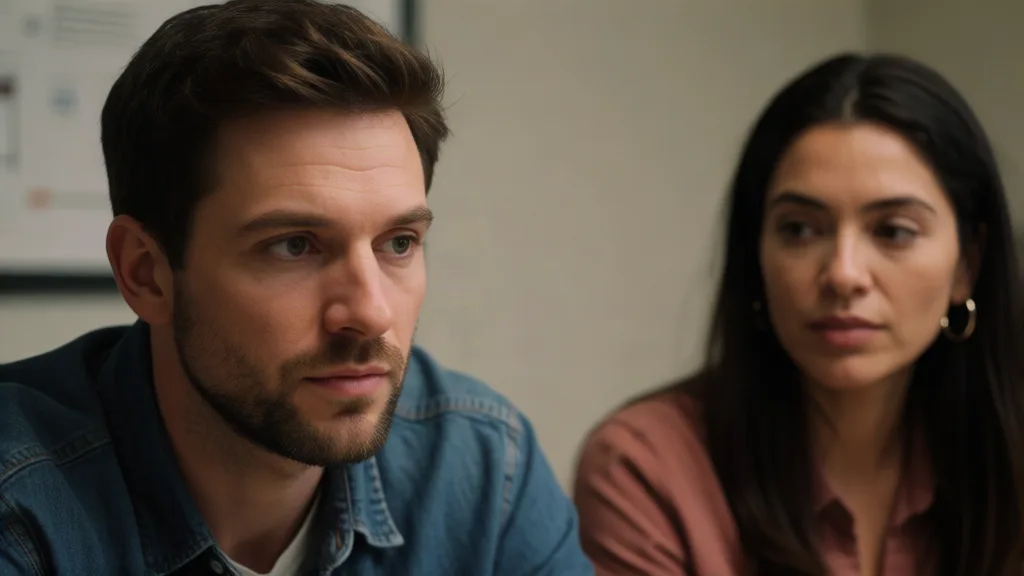
The smell of phenyl and marigolds hit me before I even got through the gate. That sharp chemical bite underneath the sweet rot of old flowers, the exact scent of every Indian government office from Kashmir to Kanyakumari. I'd been gone eleven years and the smell hadn't changed one bit.
The peon at the front desk looked up from his register with the particular boredom of a man who'd been sitting in the same chair since before I was born. His nameplate said R. K. Sharma. It had always said R. K. Sharma. I wondered if he was the same R. K. Sharma or if they'd replaced him with a younger model and just kept the plate.
"Kaam kya hai?" he asked, not looking at me.
"Meeting with the Director. Three o'clock."
"Naam?"
"Vikram Rathore."
His pen stopped. He looked up then, really looked, and I watched recognition crawl across his face like a slow sunrise. "Rathore sahab ka beta?"
I nodded. He didn't say anything else. Just picked up the phone, dialed three digits, and spoke in a voice too low for me to hear. Then he gestured toward the corridor with his chin. "Second floor. Cabin twelve. He's expecting you."
The corridor was exactly as I remembered. Same tube lights buzzing overhead, same cracked linoleum, same smell of dust and old paper and someone's tiffin leaking through a cabin door. I passed the room where my father used to sit. The nameplate outside said S. K. Verma now. Different man, same chair, same view of the parking lot where the peacocks sometimes wandered in from the ridge.
My father had hated the peacocks. Said they were just fancy crows with better PR.
Cabin twelve had a new air conditioner. That was the first thing I noticed. The old one had rattled like a tractor engine and leaked water onto the floor. This one hummed quietly, almost politely, and the room was cold enough to make me wish I'd worn a jacket.
The man behind the desk stood up when I entered. He was younger than I expected, maybe fifty, with the kind of pressed khakis and polished shoes that told you he'd never had to run for a bus in his life.
"Vikram." He shook my hand with both of his. "I'm Ajay Mehta. I worked with your father for six years."
"I know who you are."
He smiled like I'd complimented him. "Please, sit. Chai?"
"No."
"Something cold? We have a new machine in the break room. Filtered water."
"I'm fine."
He sat down and folded his hands on the desk. The file in front of him was thick, the kind of thick that meant someone had spent months adding papers to it. My father's name was on the tab. I could read it upside down from where I sat.
"You've been in Bangalore," Mehta said.
"Pune."
"Ah. Software?"
"Logistics."
He nodded like this made perfect sense, like any man's son who'd left the service had to end up in something with computers. "Your father was a great officer. Everyone here still talks about him."
"Do they."
"Of course. The way he handled the land acquisition case. The way he stood up to the contractors. He was a man of principle."
I said nothing. My father had been a man of principle the way a wall is a wall. Solid, unmovable, and impossible to get around.
Mehta opened the file. I caught a glimpse of photographs, official stamps, a page of handwritten notes in a script I recognized. My father's handwriting. Small, cramped, the letters leaning forward like they were trying to escape the page.
"Your father left something with us," Mehta said. "A sealed envelope. Instructions that it be given to you if you ever came back."
"If I ever came back."
"Yes."
"And if I never came back?"
Mehta's smile flickered. "Then I suppose it would have stayed in the file forever."
He reached into the drawer and brought out an envelope. It was brown, the kind you buy in bundles of fifty from any stationery shop, and it was sealed with tape that had yellowed at the edges. My name was written on the front. Vikram. Nothing else. No address, no date, no explanation.
I didn't reach for it.
"Why now?" I asked. "He's been dead six years. Why did you wait until I walked in the door?"
Mehta's expression didn't change, but something behind his eyes shifted. A door closing. A drawer sliding shut. "Those were his instructions."
"That's not an answer."
"It's the only one I have."
The air conditioner hummed. Outside, somewhere in the distance, a peacock screamed. That awful sound they make, like a woman being murdered, like something breaking. My father used to say it was the only honest sound in the whole city.
I picked up the envelope. It was lighter than it looked. Almost empty.
"Open it here," Mehta said. "Please."
"No."
"Vikram, I think you should."
"I think I've had enough of what people think I should do." I stood up. The envelope went into my jacket pocket. "Tell me one thing. Was he in trouble? At the end. Was there something he was trying to fix?"
Mehta looked at me for a long moment. Then he did something I didn't expect. He glanced at the door. Just a quick flick of the eyes, like a man checking whether anyone was listening.
"He was trying to protect something," Mehta said quietly. "Someone. I don't know the details. He never told me. But he was afraid, Vikram. Your father was never afraid of anything. And in those last months, he was afraid."
The tube light in the corridor flickered as I walked out. Same flicker as always. Same cracked linoleum. Same smell of dust and old paper.
But something had changed. The air felt different. Thicker, somehow. Like the whole building was holding its breath.
I didn't open the envelope in the parking lot. I didn't open it in the auto rickshaw, or at the tea stall where I stopped to drink something that wasn't chai, or in the room I'd rented for the week, a place with a ceiling fan that wobbled and a window that looked out onto a construction site.
I put the envelope on the table and sat across from it. The fan wobbled. The construction site clanged. The city went on doing what it always did, which was to keep moving forward without any concern for what it was leaving behind.
My father had been afraid. That was the thing I couldn't fit into any of the boxes I'd built for him over the years. The box marked "cold." The box marked "distant." The box marked "gone."
I'd come back to sell the house. That was the plan. Sign the papers, empty the rooms, put the whole thing behind me. Eleven years of distance, and I'd thought that was enough.
The envelope sat on the table, light as air, heavy as everything.
I reached for it.
Watch this moment
Turn the current scene into a cinematic Live Chapter — what you watch becomes the story's next part.
Disclaimer
This is a work of fiction, assisted by artificial intelligence. Any names or characters, businesses or places, events or incidents, are fictitious. Any resemblance to actual persons, living or dead, or actual events is purely coincidental.
Content Removal Policy
- Users may report content that may be illegal or violates our Standards.
- All reported complaints will be reviewed and resolved within seven business days.
- Review Process: Our team will assess the reported content against our guidelines.
- Appeals: If you disagree with a decision, you may appeal within 14 days of notification.
- Potential outcomes include: content removal, account warning, or no action if no violation is found.
To report content, email us at [email protected]