Share
Go Live
Vibrations of the Lost
·
Published 11/14/2026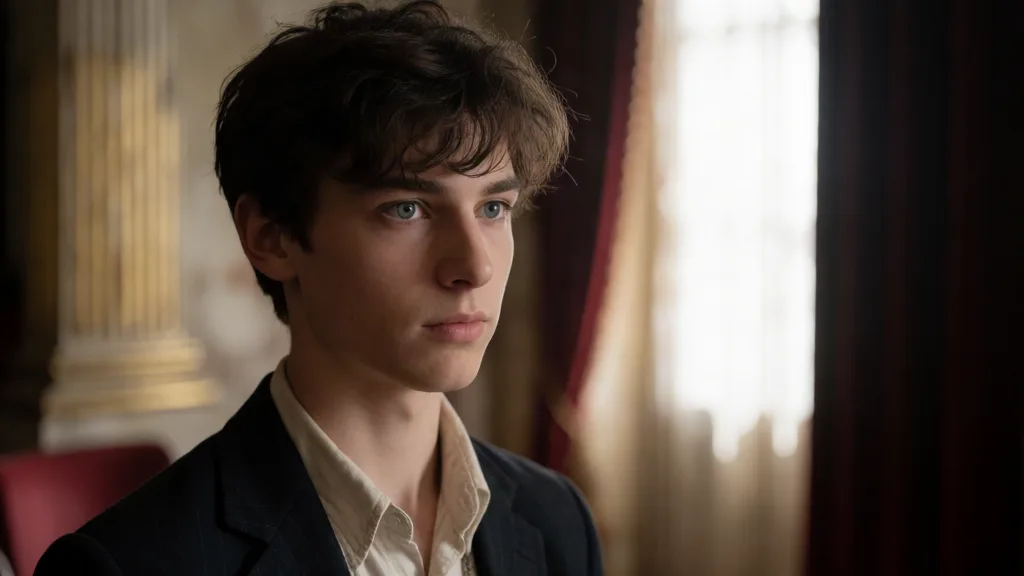
The first thing I noticed about the Théâtre du Vertige was that it was dying.
Not the dramatic kind of dying you see in movies, with flames licking up the curtains or chandeliers crashing to the floor. This was the slow, quiet death of neglect. Dust covered everything like a gray snow that had fallen decades ago and never melted. The velvet seats had faded from crimson to a sad pinkish-brown, and half of them were ripped open, their stuffing spilling out like guts. The ceiling fresco, some mythological scene with nymphs and satyrs, had water damage that made the figures look like they were melting.
And the smell. God, the smell. Old wood, mildew, and something else underneath. Something sweet and metallic that I couldn't quite place.
I stood in the center aisle, hands shoved in the pockets of my leather jacket, trying to figure out what the hell I was doing here. The email had been vague. Something about a "unique investment opportunity" and a "once-in-a-lifetime chance to own a piece of Parisian history." My bullshit detector had been screaming at me from the first line.
But I was here anyway. Because that's what I did. I chased opportunities, even the ones that smelled like scams, because sometimes scams turned into something real. And I needed something real. My last venture, a crypto startup that was supposed to revolutionize how people paid for coffee, had crashed and burned so spectacularly that I was still getting emails from angry investors. My father had called it "a learning experience." My mother had called it "typical Bentley."
They weren't wrong.
The theatre had been built in 1923, back when Paris was still drunk on the idea of itself. The golden age of jazz and absinthe and artists starving in garrets. The kind of place where Hemingway might have gotten into a fistfight with Fitzgerald over a woman neither of them actually loved. I'd read up on it during the train ride from London. The Théâtre du Vertige had been famous once. Not famous like the Moulin Rouge or the Folies Bergère, but famous in the way that mattered to the people who mattered. Dancers, musicians, poets. The ones who made the world interesting.
Now it was just a corpse waiting for the coroner.
"You're early."
The voice came from somewhere to my left, and I turned to see a man emerging from the shadows near the stage. He was short and round, with a balding head and a smile that didn't reach his eyes. He wore a suit that had probably cost more than my first car, but it fit him badly, like he'd bought it for a different body and was still hoping to grow into it.
"Bentley," I said, extending my hand. "We spoke on the phone."
"Ah, yes. The young entrepreneur." He shook my hand with a grip that was just a little too firm, the kind of handshake that was trying to prove something. "I'm Claude Moreau. Thank you for coming all this way."
"Your email was intriguing."
"I'm glad." He gestured toward the stage. "Shall we?"
I followed him down the aisle, my sneakers leaving prints in the dust. The closer we got to the stage, the stronger that sweet, metallic smell became. It was almost familiar now, like something I'd encountered before but couldn't quite name.
"The theatre has been in my family for three generations," Moreau said, his voice echoing in the empty space. "My grandfather bought it in 1952, after the original owners went bankrupt. He had a vision, you see. A vision of restoring it to its former glory."
"But that didn't happen."
"No." He stopped at the edge of the stage and turned to face me. "It didn't. The theatre has been bleeding money for decades. My father tried to save it. I've tried to save it. But some things cannot be saved."
He said it with a kind of finality that made me uneasy. Like he'd already made up his mind about something and was just going through the motions of pretending otherwise.
"So why sell?" I asked. "If it's such a burden, why not just walk away?"
Moreau's smile flickered. "Because there are people who would pay a great deal for this land. The building itself is worthless, but the location..." He spread his hands. "Prime real estate. A developer has already made an offer. They want to tear it down and build luxury apartments."
"Luxury apartments." I looked around at the crumbling walls, the peeling paint, the water-stained ceiling. "In this neighborhood?"
"Paris is changing," Moreau said. "The old gives way to the new. It's the natural order of things."
Something about the way he said it made my skin crawl. But I pushed the feeling aside. I was here for a reason, and that reason had nothing to do with my feelings about urban development.
"You said there was an investment opportunity," I said. "What exactly are you offering?"
Moreau smiled again, and this time it almost reached his eyes. "Not an investment. An experience. A chance to be part of something historic before it disappears forever."
"I don't understand."
"The theatre is scheduled for demolition tomorrow morning. The crew arrives at dawn."
I stared at him. "Tomorrow? You're telling me this now?"
"I wanted you to see it first. To understand what's at stake." He reached into his pocket and pulled out a key, old and tarnished. "Tonight, the theatre will host one final performance. A private event. Very exclusive. And I want you to be there."
"What kind of performance?"
"A dance." He held out the key. "The last dance this theatre will ever see."
I should have said no. Every instinct I had was telling me to walk away, to get back on the train to London and forget this whole thing. But I didn't. I took the key.
"Why me?" I asked.
Moreau's smile finally reached his eyes, and what I saw there made me wish it hadn't. "Because you're the kind of person who takes chances. And tonight, that's exactly what's needed."
---
The theatre had a thousand hiding places.
I discovered this over the next few hours as I wandered through its corridors, killing time until the mysterious performance. There were dressing rooms filled with costumes that had turned to moth-eaten rags. A prop room where fake swords and papier-mâché heads gathered dust. A staircase that led to a catwalk above the stage, where I could look down at the seats below and imagine what it must have been like to perform for a packed house.
The smell was everywhere. That sweet, metallic scent that I still couldn't identify. It was strongest near the stage, but it lingered in every room, like the building itself was sweating it out.
I found the dressing room at the end of a long hallway on the third floor. The door was locked, but the key Moreau had given me fit. I pushed it open and stepped inside.
The room was small and cramped, with a single window that looked out onto a narrow alley. A vanity table sat against one wall, its mirror cracked and clouded. Costumes hung from a rack in the corner, their colors faded to ghosts of what they'd once been. And in the center of the room, a single pair of ballet shoes hung from a hook on the wall.
They were old. Older than anything else in the room. The leather was cracked and worn, the ribbons frayed. But there was something about them that drew my eye. Something that made me reach out and touch them.
The moment my fingers brushed the leather, the room changed.
I don't know how else to describe it. One second I was standing in a dusty dressing room, and the next I was somewhere else entirely. The walls were still there, the vanity, the window, but everything was different. Brighter. Cleaner. Alive.
And there was music.
It was faint at first, just a whisper of melody, but it grew louder as I stood there, frozen. A piano, I thought. And a violin. Playing something sad and slow, the kind of music that made you want to cry even if you didn't know why.
I blinked, and the room was normal again. The music was gone. The colors had faded back to their dull, dusty shades.
I pulled my hand away from the shoes and stumbled backward, my heart pounding in my chest.
What the hell was that?
I stood there for a long moment, trying to catch my breath, trying to convince myself that I'd imagined it. But I knew I hadn't. Something had happened. Something I couldn't explain.
I looked at the shoes again, hanging there like they'd been waiting for me.
And I knew, with a certainty that made no sense, that I needed to find out who they belonged to.
---
I found the girl on the stage.
She was dancing.
I don't know how long I'd been wandering the theatre, trying to shake off whatever had happened in that dressing room. Minutes? Hours? Time had lost all meaning in this place. But when I heard the sound of movement coming from the auditorium, I followed it.
She was alone on the stage, barefoot, wearing a simple white dress that seemed to glow in the dim light. Her dark hair was pulled back in a messy bun, and her eyes were closed. She moved like water, like wind, like something that didn't need to obey the laws of physics. Her body twisted and turned, her arms reaching toward the ceiling, her feet barely touching the floor.
She was the most beautiful thing I'd ever seen.
I stood in the shadows at the back of the auditorium, not wanting to interrupt, not wanting to break the spell. She danced like she was the only person in the world, like the music was coming from inside her rather than from any external source. And there was music, I realized. Faint, ghostly, the same melody I'd heard in the dressing room.
The same piano. The same violin.
She spun, and her eyes opened.
They found me immediately, as if she'd known I was there all along. Hazel eyes, sharp and wary. A faint scar on her chin. She stopped moving, her body going still, and for a moment we just looked at each other across the empty seats.
Then she smiled.
"You're the investor," she said. Her voice was low and rough, like she didn't use it often. "Moreau's big surprise."
"I'm not an investor," I said, stepping forward. "I'm just... here."
"Same thing." She walked to the edge of the stage and sat down, her legs dangling over the side. "Everyone's here for something. Money, usually. Or power. Or both."
"And what are you here for?"
She tilted her head, studying me. "I'm here because this is my home."
"Your home?"
"I've been dancing in this theatre since I was a kid. My mother brought me here when I was five. She said it was the only place in Paris where the ghosts could hear you."
"Ghosts?"
She laughed, a short, sharp sound. "You don't believe in ghosts?"
"I don't know what I believe."
"That's fair." She stood up and brushed off her dress. "I'm Lila. And you're..."
"Bentley."
"Bentley." She said it like she was tasting the word. "That's a weird name."
"It's a family name."
"Must be a weird family."
I couldn't help but smile. "You have no idea."
She laughed again, and this time it was warmer. "Come on. I'll show you around."
---
Lila knew the theatre the way I knew the back of my own hand. Every creaky floorboard, every hidden passage, every secret room. She led me through corridors I hadn't found, up staircases that seemed to lead nowhere, into rooms that hadn't been opened in years.
"The theatre is alive," she said as we walked. "Most people don't realize it, but buildings have memories. They remember everything that's ever happened inside them. The laughter, the tears, the blood."
"The blood?"
She glanced at me, her hazel eyes unreadable. "Dancers bleed. We push our bodies past their limits, and sometimes they break. This stage has seen more blood than you can imagine."
I thought about the sweet, metallic smell that lingered everywhere. The way it was strongest near the stage. "That's what I smelled," I said. "When I first walked in. It wasn't just dust and mildew."
Lila nodded. "The theatre remembers. It holds onto everything. The joy, the pain, the love." She stopped in front of a door I hadn't noticed before, tucked into a corner behind a faded curtain. "This is the room where the dancers used to warm up. Before performances. Before everything changed."
She pushed open the door, and I followed her inside.
The room was small, with a wooden floor that had been worn smooth by decades of bare feet. Mirrors lined the walls, their surfaces clouded with age. And in the center of the room, a single barre, bolted to the floor.
"This is where I learned to dance," Lila said. "My mother would bring me here every day after school. She'd stand by the door and watch, and she'd tell me stories about the dancers who came before me. The ones who made this theatre famous."
"What happened to her?"
Lila's expression didn't change, but something in her eyes went dark. "She died. When I was twelve. The theatre was all she had, and when she was gone, it became all I had too."
"I'm sorry."
"Don't be. It was a long time ago." She walked to the barre and ran her hand along its surface. "The theatre's going to be demolished tomorrow. Moreau sold it to a developer. They're going to tear it all down and build apartments."
"I know. He told me."
"He told you." She turned to face me, and there was something fierce in her expression now. "Did he tell you why he invited you here? Why he wanted you to see this place before it's gone?"
"He said it was an investment opportunity."
Lila laughed, but there was no humor in it. "Of course he did. That's what he tells everyone. But the truth is, he doesn't care about the theatre. He never did. He just wants the money."
"Then why did you stay? If you knew he was going to sell it, why did you keep dancing here?"
She looked at me for a long moment, and I got the feeling she was deciding whether to trust me. Whether I was worth the risk.
"Because the theatre isn't just a building," she said finally. "It's a living thing. And it's dying. But before it goes, I need to do something. Something important."
"What?"
She shook her head. "You wouldn't understand."
"Try me."
She studied me again, her hazel eyes searching my face for something I couldn't name. Then she nodded, as if she'd found what she was looking for.
"Tonight," she said. "There's going to be a performance. The last performance this theatre will ever see. And I need you to be there."
"Why?"
"Because I can't do it alone." She reached out and took my hand, her fingers cold against my skin. "The theatre has memories, Bentley. Hundreds of them. Thousands. Every dancer who ever performed here left something behind. A piece of themselves. And tonight, I need to give those pieces back."
"I don't understand."
"You will." She squeezed my hand, and for a moment, I felt something pass between us. Something electric. Something that made my heart skip a beat. "Meet me here at midnight. And bring an open mind."
---
I spent the rest of the day wandering Paris, trying to make sense of what Lila had told me. I walked along the Seine, watched the tourists take selfies in front of Notre-Dame, ate a croissant that cost more than my first laptop. Normal things. Things that made sense.
But my mind kept drifting back to the theatre. To the smell of blood and dust. To the ghostly music I'd heard in the dressing room. To Lila's eyes, sharp and knowing, like she could see right through me.
I didn't believe in ghosts. I didn't believe in magic or memories or any of that stuff. I was a tech guy. A rational person. Everything had an explanation, and if it didn't, it just meant you hadn't found the explanation yet.
But something about that theatre made me want to believe.
Maybe it was the way the light fell through the stained-glass windows, casting colored patterns on the floor. Maybe it was the way the walls seemed to breathe, like they were holding secrets they were desperate to share. Maybe it was Lila herself, with her fierce eyes and her sad smile and the way she moved like she was made of music.
I didn't know. But I knew I had to go back.
At midnight, I stood in front of the theatre, staring up at its crumbling facade. The moon was full, casting silver light on the peeling paint and the broken windows. It looked like a haunted house. The kind of place where ghosts would feel at home.
I pushed open the door and stepped inside.
The theatre was different at night. Darker, yes, but also more alive. The shadows seemed to move, to shift, like they were watching me. The smell of blood was stronger now, mixed with something else. Something sweet and floral. Roses, maybe. Or lilies.
"Bentley."
Lila's voice came from the stage, and I followed it like a beacon. She was standing in the center, wearing the same white dress, her dark hair loose around her shoulders. In the moonlight, she looked like a ghost herself. Beautiful and untouchable.
"You came," she said.
"I said I would."
She smiled, and it was the first real smile I'd seen from her. Warm and genuine and a little bit sad. "Most people don't. They say they will, but they don't."
"I'm not most people."
"No." She tilted her head, studying me. "You're not."
I climbed the steps to the stage and stood in front of her. Up close, I could see the faint lines around her eyes, the calluses on her feet, the way she held herself like she was ready to run at any moment.
"What are we doing here, Lila?"
She took a deep breath. "The theatre is going to be destroyed tomorrow. Everything it remembers, everything it holds, will be gone forever. Unless..."
"Unless what?"
"Unless I can give it back." She gestured to the floor, the worn wooden boards that had supported countless dancers over the years. "The memories are in the wood. The blood, the sweat, the tears. Every dancer who ever performed here left a piece of themselves behind. And tonight, I need to dance those pieces back into the wood. So they'll be preserved. So they won't be lost."
"That doesn't make any sense."
"I know." She laughed, a soft, sad sound. "It doesn't make sense to me either. But it's what my mother told me. Before she died, she said the theatre was a living thing, and that one day, someone would need to save it. I didn't understand then. But I do now."
"You think you're the one who's supposed to save it?"
"I know I am." She looked at me, and there was something in her eyes that made my breath catch. "And I think you're here to help me."
"I don't know anything about dancing."
"You don't need to. You just need to watch. To witness. To remember." She reached out and took my hand, and again I felt that electric spark. "The theatre needs someone to see it. To acknowledge what it's done. What it's been. Can you do that?"
I looked at her hand in mine, at the stage beneath our feet, at the shadows that seemed to lean in closer, listening.
"Yes," I said. "I can do that."
She smiled, and this time it reached her eyes. "Then let's begin."
---
The music started without warning.
One moment, the theatre was silent, and the next, it was filled with sound. The same piano, the same violin, but stronger now. More urgent. Like the music itself was alive, desperate to be heard.
Lila began to dance.
I don't have words for what I saw. She moved like she was made of light, like her body was just a vessel for something older and more powerful. Her feet barely touched the floor, and yet I could feel every step she took vibrating through the boards, through the air, through my bones.
The shadows around the stage began to shift.
At first, I thought it was my imagination. Just tricks of the light. But then I saw them. Figures. Ghostly, translucent, flickering in and out of existence. Dancers, dozens of them, spinning and leaping and reaching toward the ceiling. They moved in sync with Lila, like they were following her lead, like she was calling them back from wherever they'd been hiding.
And the music grew louder.
I stood there, frozen, watching. Watching Lila dance. Watching the ghosts dance. Watching the theatre come alive in a way I'd never imagined possible.
This wasn't real. It couldn't be real. But it was happening. Right in front of me. And I couldn't look away.
Lila spun, and one of the ghosts spun with her. An old woman in a faded costume, her face lined with age, her eyes bright with joy. She danced like she was young again, like the decades had fallen away and she was back where she belonged.
Lila leaped, and a young man leaped with her. He was handsome, dark-haired, with a smile that could break hearts. He moved with a grace that made me ache, like he'd been born to dance, like dancing was the only thing he'd ever wanted to do.
Lila reached toward the ceiling, and a child reached with her. A little girl in a pink tutu, her face alight with wonder. She couldn't have been more than eight years old, but she danced like she'd been doing it her whole life.
One by one, the ghosts appeared. Dozens of them. Hundreds. All the dancers who had ever performed on this stage, all the souls who had ever given themselves to the theatre. They filled the space around Lila, a swirling, shimmering crowd of memories, and they danced.
And as they danced, I saw their stories.
I don't know how to explain it. It was like the theatre was speaking to me, showing me things I couldn't possibly know. Flashes of images, fragments of emotion. A woman crying in a dressing room after a performance, her dreams shattered by a cruel review. A man standing in the wings, watching his lover dance, knowing it would be their last night together. A child taking her first bow, terrified and exhilarated, knowing that this was where she belonged.
The memories flooded through me, and I understood. This was what Lila meant. The theatre remembered. And now, so did I.
The music reached a crescendo, and Lila stopped.
She stood in the center of the stage, her chest heaving, her skin slick with sweat. The ghosts had vanished, but I could still feel them. Still feel their presence, like they were watching from the shadows.
Lila turned to me, and her eyes were bright with tears.
"Did you see them?" she asked.
"Yes."
"Did you remember them?"
"Yes."
She smiled, and it was the most beautiful thing I'd ever seen. "Then it worked. They're not lost anymore. They're part of the theatre. Part of you."
I walked toward her, my legs shaky, my heart pounding. "What happens now?"
"Now the theatre dies. But it dies with its memories intact. Its stories preserved." She reached out and touched my face, her fingers gentle against my cheek. "Thank you, Bentley. For being here. For witnessing."
"I didn't do anything."
"You did everything." She stepped closer, and I could feel the heat of her body, the rhythm of her breath. "You saw them. You remembered them. That's all they ever wanted."
We stood there, inches apart, the silence of the theatre wrapping around us like a blanket. I could smell her now, sweat and roses, and something else. Something that was just her.
"Why me?" I asked. "Why did you bring me here?"
She looked up at me, her hazel eyes searching my face. "Because you were lost," she said. "And I thought maybe the theatre could help you find your way."
"I don't understand."
"You will." She smiled, and there was something in that smile that made my heart ache. "The theatre has one more story to tell. And I think it's yours."
She kissed me then. Soft and sweet and tasting of salt. And in that moment, standing on the stage of a dying theatre, surrounded by the ghosts of everyone who had ever danced there, I felt something I hadn't felt in years.
I felt like I belonged.
---
The wrecking crew arrived at dawn.
I stood outside the theatre, watching as the machines moved in. Bulldozers and cranes, their metal jaws ready to tear down the walls, to destroy the stage, to erase everything that had ever happened here.
Lila stood beside me, her hand in mine. She hadn't spoken since the kiss, but she didn't need to. I understood now. Or at least, I understood enough.
"The memories are safe," she said as the first wall came down. "They're in the wood. They'll always be in the wood."
"But the wood is being destroyed."
"The wood changes. It becomes something else. But the memories remain." She squeezed my hand. "That's how it works. Nothing is ever really lost. It just becomes something new."
I watched as the theatre crumbled, piece by piece. The stage where Lila had danced. The dressing room where I'd touched the ballet shoes. The seats where audiences had laughed and cried and fallen in love.
Gone. All gone.
But not forgotten. Never forgotten.
"What now?" I asked.
Lila turned to me, and her smile was brighter than the rising sun. "Now we find a new stage. A new place to dance. A new story to tell."
"And me?"
"You come with me." She said it like it was the most obvious thing in the world. "If you want to."
I looked at the ruins of the theatre, at the dust and the rubble and the memories that would never fade. Then I looked at Lila, at her fierce eyes and her sad smile and the way she held my hand like she was never going to let go.
"Yes," I said. "I want to."
She kissed me again, and the sun rose over Paris, and somewhere in the distance, I could swear I heard music. The same piano. The same violin. Playing something new.
Something that sounded like a beginning.
Watch this moment
Turn the current scene into a cinematic Live Chapter — what you watch becomes the story's next part.
Disclaimer
This is a work of fiction, assisted by artificial intelligence. Any names or characters, businesses or places, events or incidents, are fictitious. Any resemblance to actual persons, living or dead, or actual events is purely coincidental.
Content Removal Policy
- Users may report content that may be illegal or violates our Standards.
- All reported complaints will be reviewed and resolved within seven business days.
- Review Process: Our team will assess the reported content against our guidelines.
- Appeals: If you disagree with a decision, you may appeal within 14 days of notification.
- Potential outcomes include: content removal, account warning, or no action if no violation is found.
To report content, email us at [email protected]