Share
Go Live
Paris Without Her
·
Published 11/11/2026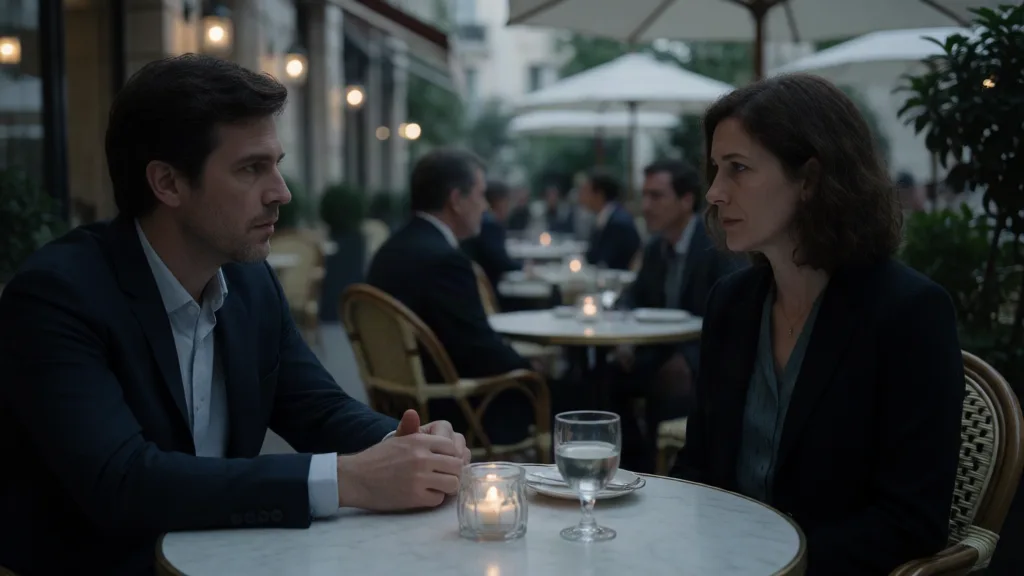
The waiter brought my coffee and I let it sit. Steam curled off the surface, and I watched a woman across the terrace fold her newspaper with a precision that suggested she’d done it a thousand times before. Everything in Paris seemed practiced. The way the waiters carried trays. The way lovers argued in whispers. The way the light fell on the zinc bar at the corner, soft and forgiving, as if the city had agreed to lie about what time it was.
I was sixty years old and alone for the first time in thirty-four years. That’s not a metaphor. My wife, Anja, had left in March. Not for another man. For a version of herself she said she couldn’t find inside our house. I didn’t argue. What was there to say? The house was mine now, and the silence in it had a texture, like holding your hand against a window in winter.
The travel agent had asked where I wanted to go. I said Paris because it was the first place that came to mind. The truth is I’d never been. Anja hated flying. She hated crowds, too, and the idea of eating dinner at ten o’clock at night. So we went to the same cottage in Zeeland every summer for thirty years, and I told myself that was enough.
It wasn’t. But that’s not the kind of thing you realize until you’re sitting alone on a Parisian terrace with a coffee you don’t want to drink.
I picked up the cup. The handle was too small for my fingers, and I burned my thumb. I set it down and looked at the woman again. She’d finished her newspaper and was now reading a book. Something about the way she held it, tilted at a slight angle, her head cocked to the left. I knew that angle. I knew it from a classroom in Utrecht, from a girl who sat two rows ahead of me and always had her hair pulled back with a wooden clip.
Marijke.
I hadn’t thought that name in forty years. Not once. Not even when I’d driven past the old school on a business trip, not when I’d found a photograph from that time in a box in the attic. The mind is a strange archivist. It keeps what it needs and discards the rest, and I suppose Marijke had been filed away under things that no longer mattered.
But there she was. Older, obviously. Her hair was grey now, cut short, and she wore glasses I didn’t recognize. But the angle. The wooden clip was gone, replaced by a silver pin. And she was alone.
I should have left. That’s what a sensible man would have done. I’d come to Paris to be invisible, to walk the streets without purpose, to eat bread and cheese in my hotel room and watch the news in a language I barely understood. I wasn’t looking for anyone. I wasn’t looking for anything.
But I didn’t leave. I sat there and watched her turn a page, and I remembered something I hadn’t remembered in decades. The way she used to laugh. Not a giggle, not a polite laugh. A real one, loud and unguarded, the kind that made teachers look up from their desks. She laughed like she didn’t care who heard.
I stood up. My knees cracked, which they did now, every time. I walked across the terrace, weaving between tables, and stopped beside her chair.
“Marijke?”
She looked up. For a moment, nothing. Then her face changed. Not recognition exactly. Something more cautious. A door opening a crack.
“Yes?”
“It’s Willem. Willem de Groot. We went to school together. In Utrecht.”
She stared at me. I could see her trying to place me, sorting through old memories, and I felt suddenly foolish. Forty years is a long time. Maybe she didn’t remember. Maybe I’d been one of those boys who sat in the back and never said anything worth remembering.
Then she smiled. Not the laugh. Just a smile, small and careful.
“Willem,” she said. “You look different.”
I laughed. I couldn’t help it. “So do you.”
She gestured to the empty chair across from her. “Sit. I’m almost finished with this chapter.”
I sat. She went back to her book, and I watched her read. It was strange, being this close to someone I’d known when we were both seventeen. Her hands were older now, veined and spotted, but they held the book the same way. The same slight tilt. The same stillness.
I ordered another coffee. The waiter brought it without comment. I drank it this time, even though it was too hot, and I felt the burn all the way down.
“What are you doing in Paris?” she asked, without looking up.
“Vacation.”
“Alone?”
“Yes.”
She turned a page. “Me too.”
That was all. We sat there for maybe ten minutes, her reading and me drinking my coffee, and it felt like the most natural thing in the world. I didn’t feel the need to fill the silence. I didn’t feel the pressure to explain myself. I just sat there, and the sun moved across the terrace, and somewhere a church bell rang.
When she closed her book, she looked at me properly for the first time. Her eyes were the same. Grey, like the North Sea in winter. I’d forgotten that.
“I heard about Anja,” she said. “I’m sorry.”
I didn’t ask how she knew. Small country. Word travels. “It’s fine. It was time.”
“Was it?”
I didn’t answer. She didn’t push.
“I’m here for a month,” she said. “I rented an apartment in the Marais. It’s too big for one person, but I couldn’t resist. The ceilings are high, and there’s a balcony that looks over a courtyard. I sit there in the mornings and watch the neighbors argue.”
“That sounds nice.”
“It’s lonely.” She said it plainly, without self-pity. “But I’m learning to like it.”
I nodded. I understood. That was the thing. I understood exactly what she meant, and I hadn’t expected to understand anyone ever again.
“Do you want to walk?” she asked.
I did.
We walked along the Seine, past the book stalls and the tourists, past the lovers holding hands and the men fishing with long poles. She talked about her divorce, which had happened ten years ago, and her daughter, who lived in Berlin and called every Sunday. I talked about my retirement, which had come two years early, and the woodworking I’d taken up in the garage. I made a table. It wobbled. I hadn’t fixed it yet.
“Why not?” she asked.
“I don’t know. I guess I like knowing it’s not perfect.”
She stopped walking. We were on a bridge, the Pont Neuf, and the river below us was brown and slow. She looked at me with an expression I couldn’t read.
“You’ve changed,” she said.
“I told you. Forty years.”
“No. Not that.” She started walking again. “You used to be so sure of everything. You had opinions about everything. Politics. Music. The right way to tie your shoes.”
I laughed. “Did I?”
“You were insufferable.” She said it with a smile. “But I liked you anyway.”
We walked in silence for a while. The sun was starting to set, and the sky over Paris was pink and gold, the kind of sky that makes you want to believe in something. I didn’t believe in anything. Not anymore. But I felt something, standing there next to her, something I couldn’t name.
“Why did you come to Paris?” she asked.
“I don’t know. It was the first place I thought of.”
“That’s not an answer.”
“It’s the only one I have.”
She looked at me. The same grey eyes. The same stillness.
“I came because I wanted to see if I could be someone else,” she said. “Someone who doesn’t need anyone. Someone who can sit alone in a café and not feel like she’s missing something.”
“And can you?”
“No.” She laughed. The same laugh. Loud and unguarded. “But I’m trying.”
We stood on the bridge, and the river moved beneath us, and I felt the weight of all those years, all those choices, all those things I’d never said. I thought about Anja, about the house, about the table that wobbled. I thought about Marijke, about the wooden clip, about the way she used to laugh.
“I have to go,” she said. “I have a dinner reservation.”
“Okay.”
She didn’t move. Neither did I.
“Will I see you again?” I asked.
She tilted her head. The same angle. “Do you want to?”
“Yes.”
She smiled. Not the careful smile. The real one. “Then you will.”
She walked away, and I watched her go, and the sky darkened over Paris, and I stood on the bridge for a long time, not thinking about anything. Just standing there. Just breathing.
When I got back to my hotel, I sat on the bed and looked at the wall. The wallpaper was faded, a pattern of flowers that had once been blue and was now grey. I thought about calling Anja. I didn’t. I thought about the table in the garage, the one that wobbled. I thought about fixing it.
I didn’t sleep that night. I lay awake and listened to the city, to the cars and the voices and the distant sound of a saxophone. And I thought about Marijke, about the way she’d said my name, about the way she’d looked at me like I was someone worth remembering.
In the morning, I went back to the terrace. She wasn’t there. I ordered a coffee and let it sit. I watched the waiters and the lovers and the light on the zinc bar. I waited.
And I realized, sitting there, that I wasn’t waiting for her. I was waiting for something else. Something I couldn’t name. Something that had been missing for a long time.
The waiter brought my coffee. I drank it. It was too hot, and it burned my tongue, and I didn’t mind.
Watch this moment
Turn the current scene into a cinematic Live Chapter — what you watch becomes the story's next part.
Disclaimer
This is a work of fiction, assisted by artificial intelligence. Any names or characters, businesses or places, events or incidents, are fictitious. Any resemblance to actual persons, living or dead, or actual events is purely coincidental.
Content Removal Policy
- Users may report content that may be illegal or violates our Standards.
- All reported complaints will be reviewed and resolved within seven business days.
- Review Process: Our team will assess the reported content against our guidelines.
- Appeals: If you disagree with a decision, you may appeal within 14 days of notification.
- Potential outcomes include: content removal, account warning, or no action if no violation is found.
To report content, email us at [email protected]