Share
Go Live
Broken Vows
·
Published 11/14/2026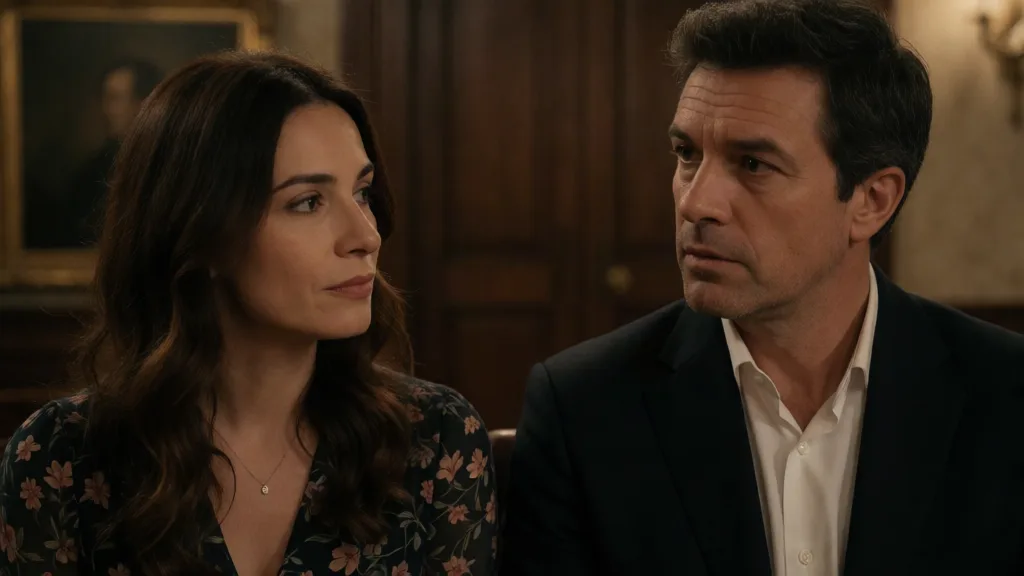
The lemon tree was dying and nobody in the family would say it out loud, which was how I knew something was wrong before I even stepped through the gate.
My mother stood on the back terrace with a watering can she wasn't using, watching the yellowed leaves like they were a relative in a hospital bed. She didn't turn when I called her name. That was the first thing.
"Giada," she said finally, still not looking. "You're early."
"I'm on time. You said seven."
"I said seven-thirty."
She hadn't. I let it go because she was doing the thing she did, the thing where she rearranged the facts of a small moment so she wouldn't have to talk about the large one. The lemon tree had been in that courtyard since before I was born. My grandmother planted it the year she married my grandfather, and every summer of my childhood it dropped fruit so heavy the branches bowed like a servant. Now it stood there with half its canopy bare, and my mother watered it every evening as if devotion could reverse whatever was eating it from the roots.
Inside, the house smelled of onions and something sweeter underneath, rosemary maybe, and the low hum of the radio tuned to the station that only played songs from before I was born. I found Omar in the kitchen, his back to me, stirring a pot he didn't need to stir.
"You're early," he said.
"So I've heard."
He laughed, but it came out wrong. Too quick. He set the spoon down and turned, and there it was, the thing I'd been feeling since I parked the car. Not guilt exactly. Something more like distance, like he was standing three feet further away than his body suggested.
I kissed him on the cheek. He smelled of soap and cigarettes, though he'd quit two years ago. I didn't ask.
"Your mother's been out there an hour," he said. "She won't come in."
"She's worried about the tree."
"She's worried about you."
That stopped me. I set my bag on the counter and looked at him properly for the first time since I'd walked in. Omar has one of those faces that gives nothing away until you've known it long enough to read the small print. The jaw tight. The eyes doing that thing where they land everywhere except on you.
"Why would she be worried about me?"
He shrugged and turned back to the pot. "Ask her."
---
Dinner was the four of us, which was already strange because my brother Paolo never came to these things anymore, not since the fight about the shop, and my father had been dead for six years. So it was my mother, Omar, me, and the empty chairs that did most of the talking.
My mother served the pasta and sat down and immediately began moving food around her plate without eating it. Omar ate like a man who hadn't eaten in days, which he does when he's nervous. I watched them both and felt the shape of a conversation nobody wanted to start.
"Sharon called," my mother said, to her plate.
The name landed in the room like a dropped glass. Omar's fork paused, maybe a quarter second, then kept moving. I kept my face still because I'd learned that from him, the trick of not reacting, and I hated that I'd learned it.
"She's back in town," my mother continued. "She wants to see you."
"Me?" I said.
"She said she misses you. You were close once."
Once. That was a generous way to describe it. Sharon had been my best friend from the age of eleven until the age of twenty-four, when she moved to Milan and stopped answering my calls, and I never found out why, and I'd spent a year telling myself I didn't care. She was the kind of friend who took up all the air in a room, and when she left, I had to learn how to breathe on my own. I did learn. That's the part nobody gives me credit for.
"I'll think about it," I said.
Omar said nothing. That was the second thing.
---
After dinner I went out to the terrace to stand with my mother and the dying lemon tree. The night was warm and the sky over the rooftops had that bruised purple color it gets in late September, and somewhere down the street a dog was barking at nothing.
"She's not dying," my mother said.
"The tree? She's half dead, Ma."
"Not the tree."
I looked at her. She was sixty-three years old and she had the same face she'd had in every photograph from my childhood, which is to say she'd never looked young and she'd never looked old, just permanent, like a piece of furniture that came with the house. But tonight something had shifted in her. A crack in the permanence.
"What are you saying?"
She was quiet for a long time. The dog kept barking. Somewhere a scooter went past and faded.
"I'm saying that a woman knows things," she said finally. "And a mother knows more. And sometimes a mother has to decide whether knowing is the same as saying."
"Ma, you're not making any sense."
"I'm making perfect sense. You're just not listening."
She picked up her watering can and went inside, and I stood there alone with the lemon tree and the bruised sky and the feeling that I'd walked into the middle of a story that had started without me.
---
I found Omar in the bedroom we always slept in when we stayed over, the one with the window that faced the courtyard. He was sitting on the edge of the bed with his phone face-down on his knee, and when I came in he put his hand over it, casual, like he was just resting it there.
"Your mother's in a mood," he said.
"My mother's always in a mood."
"This one's different."
I sat down next to him. The bed dipped and our shoulders touched and he didn't lean into me the way he usually did. He stayed exactly where he was, holding his phone under his hand like it might try to escape.
"Omar."
"Hm."
"Look at me."
He looked at me. And for one second, one honest second, I saw it. The thing he was carrying. It was there in his eyes, plain as the dying tree outside, and then it was gone, folded back into the place where he keeps everything he doesn't want me to see.
"I'm tired," he said. "Long day at the shop."
"The shop was closed today. It's Sunday."
He blinked. Once. Twice. "Paperwork."
"On a Sunday."
"Giada, don't."
Don't. There it was, the wall, the one he builds so fast you don't see the bricks until you've already walked into it. I'd hit that wall a hundred times in eight years of marriage. I knew its texture. I knew the sound it made.
I stood up. He reached for my hand and I let him take it, and his palm was warm and familiar and completely foreign, all at once, the way your own house feels when you come home after a long trip and everything is the same except the light.
"I'm going to call Sharon," I said.
His hand tightened. Just a fraction. Just enough.
"Why?"
"Because my mother's right. She was my friend. Maybe it's time."
He let go of my hand. He picked up his phone and turned it over and the screen lit up and I saw, for half a second before he turned it away, a name at the top of a message thread. I didn't read it. I didn't need to. I already knew.
But knowing and saying are two different things. My mother taught me that tonight, and I hated her for it, and I loved her for it, and I stood in the doorway of that bedroom with my husband behind me and my best friend's name hanging in the air between us, and I made a decision.
I walked out. Not far. Just to the courtyard, where the lemon tree stood half-dead under the bruised sky, and I put my hand on its trunk and felt the rough bark and the small stubborn pulse of something still alive underneath.
Tomorrow I would call Sharon. Tomorrow I would find out what everyone in this family already seemed to know.
Tonight I just stood there, in the dark, with my hand on the tree, and waited to see what would fall.
Watch this moment
Turn the current scene into a cinematic Live Chapter — what you watch becomes the story's next part.
Disclaimer
This is a work of fiction, assisted by artificial intelligence. Any names or characters, businesses or places, events or incidents, are fictitious. Any resemblance to actual persons, living or dead, or actual events is purely coincidental.
Content Removal Policy
- Users may report content that may be illegal or violates our Standards.
- All reported complaints will be reviewed and resolved within seven business days.
- Review Process: Our team will assess the reported content against our guidelines.
- Appeals: If you disagree with a decision, you may appeal within 14 days of notification.
- Potential outcomes include: content removal, account warning, or no action if no violation is found.
To report content, email us at [email protected]