Share
Shattered Infinity
·
Published 8/19/2026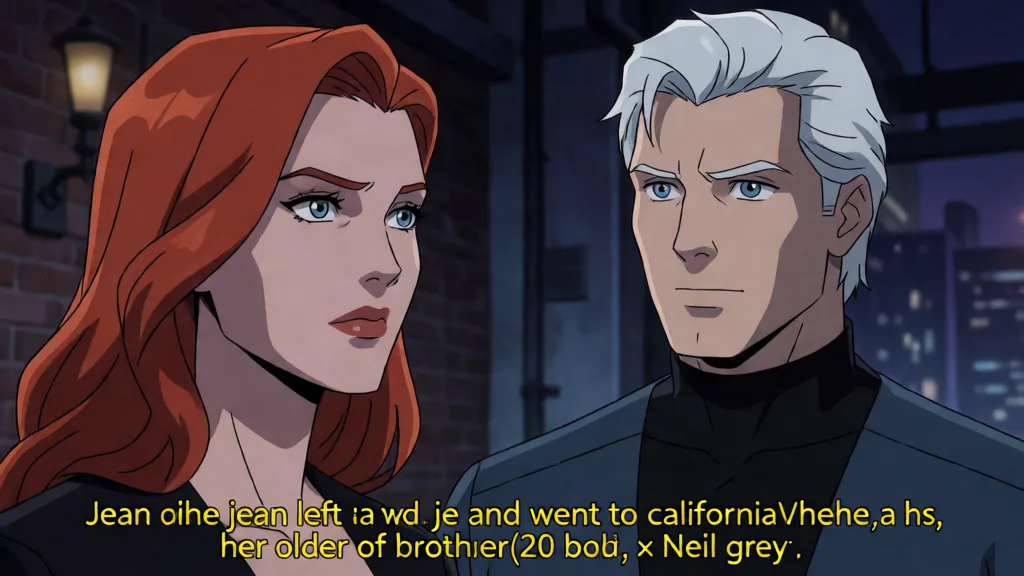
I left New York the same way I arrived. Alone, broke, and running from something I couldn’t name.
The bus groaned across the country like a dying animal, and I sat in the back, cheek pressed to the cold glass, watching the skyline of Manhattan shrink to a smudge and then nothing. The old woman next to me smelled like mothballs and regret. She tried to talk to me twice. I pretended to sleep. She gave up after the second try, which was good because I didn’t have the energy to explain why a seventeen-year-old girl with red hair and dark circles under her eyes was heading west with nothing but a duffel bag and a bus ticket bought with crumpled twenties.
Damage Control called it a containment failure. The news called it a mutant attack. I called it the moment I stopped pretending I could be normal.
The thing about telepathy is you can’t turn it off. You learn to build walls, to filter, to push the noise down until it becomes a hum you can almost ignore. But walls crack. Filters fail. And when they do, you hear everything. The man three rows up thinking about his mistress. The driver wondering if his son will ever call him again. The girl across the aisle, fifteen maybe, hoping the baby inside her isn’t real.
I heard it all. I couldn’t stop hearing it.
So I built new walls. Thicker ones. I imagined concrete and steel, rebar twisted through every thought, every stray emotion. I packed the noise into a box and buried it somewhere behind my eyes. It worked. Mostly.
California hit me like a slap.
The heat, the light, the way the air smelled different. Dry and clean and nothing like the wet exhaust of New York. I stepped off the bus in Los Angeles with no plan, no money worth mentioning, and no idea what came next. The station was crowded. People everywhere, their minds buzzing like flies. I kept my head down and walked.
I walked until my feet hurt, then I kept walking. Past the palm trees and the strip malls, past the billboards selling beauty and the cars that cost more than I’d ever see. I walked until the city thinned out, until the buildings got smaller and the streets got quieter. I walked until I found a bench in a park that didn’t have anyone else on it.
I sat down. I put my head in my hands. I let myself feel tired for the first time in three days.
That’s when he sat down next to me.
I didn’t hear him coming. That should have been my first warning. I always hear people coming, even when I’m not trying. Footsteps, breathing, the static of their thoughts before they get close. But he made no sound. No mental footprint. Just the creak of the bench as his weight settled on the wood.
I looked up.
White hair. Not gray, not silver. White, like fresh snow or bone. Cut short, pushed back from a face that was young and old at the same time. High cheekbones. A jaw that could cut glass. And his eyes.
Blue. Not sky blue or ocean blue. Something deeper. The blue of deep water where the light doesn’t reach. They looked at me and I felt seen in a way I hadn’t felt in years.
“You look like you’ve been through hell,” he said.
His voice was low. Calm. The kind of voice that could talk a jumper off a ledge or convince you to do something stupid.
“I’ve been through worse,” I said.
“I know.”
I should have been scared. A strange man, sitting too close, saying he knows things about me. But I wasn’t scared. I was too tired for scared. And there was something about him. Something familiar, like a song I hadn’t heard since childhood but still remembered the melody.
“Who are you?” I asked.
He smiled. It was a sad smile, the kind that comes from somewhere deep and old.
“My name is Neil Grey,” he said. “And I’m your brother.”
I laughed.
Not because it was funny. Because it was absurd. Because I’d spent my whole life alone, shuffled between foster homes and institutions, told my parents were dead and I had no family. And now this man, this stranger with white hair and impossible eyes, sits down on a bench and claims to be my brother.
“Right,” I said. “And I’m the Queen of England.”
He didn’t laugh. He just watched me with those blue eyes, patient and sad.
“You have a birthmark on your left hip,” he said. “It looks like a crescent moon. You used to call it your moon spot when you were three. You’d show it to anyone who’d look.”
I stopped laughing.
“You were afraid of the dark until you were five,” he continued. “Not monsters. The dark itself. You said it felt like being swallowed. Mom would leave the hall light on and crack your door, and you’d still cry until I came and sat with you.”
My throat tightened. I didn’t remember that. But I felt it. A ghost of a memory, buried so deep I’d forgotten it existed.
“You used to follow me everywhere,” he said. “I’d be trying to read, and you’d climb into my lap and demand I tell you a story. You liked the ones about dragons best. You said you wanted to be a dragon when you grew up.”
I remembered that. Not the details, but the feeling. Warmth. Safety. Someone who loved me.
“Where were you?” My voice cracked. I hated it. “Where the hell were you?”
Neil looked down at his hands. They were strong hands, scarred across the knuckles. Hands that had seen work. Hands that had seen violence.
“I tried to find you,” he said. “For years. But I was young too. And things happened. Things I couldn’t control.”
“Things,” I repeated. “What things?”
He looked up. His eyes met mine, and for a second I saw something flicker behind them. Not a thought. Something else. Something that made the air around us feel heavy.
“I’m not a telepath like you,” he said. “My abilities are different. More dangerous.”
“Dangerous how?”
He didn’t answer. Instead, he reached into his pocket and pulled out a coin. A quarter. He held it up between his thumb and forefinger.
“Watch,” he said.
He closed his hand. When he opened it, the coin was gone. I blinked. He closed his hand again, and when he opened it, the coin was back.
“Magic trick?” I said.
“No.”
He held out the coin. I took it. It was warm, like it had been sitting in the sun. I turned it over in my fingers. It felt real. It was real.
“I can manipulate probability,” he said. “Reality. The lines between what is and what could be. I can see them, touch them, pull them. It’s called the Six Eyes. It lets me perceive the infinite possibilities of every moment.”
I stared at him. “That’s not possible.”
“Neither is reading minds,” he said. “But you do it anyway.”
He had a point.
“And Infinity?” I asked. “You mentioned that too.”
His smile faded. “Infinity is what happens when I push too hard. When I reach beyond the lines and touch what’s on the other side. It’s power. Real power. The kind that could unmake the world if I’m not careful.”
I should have run. I should have stood up, walked away, and never looked back. This man was either insane or dangerous, and I had enough problems without adding a delusional brother to the list.
But I didn’t run.
Because when I tried to read his mind, I hit nothing. Empty air. Like he wasn’t there. Like he was a hole in the world where thoughts should be.
I’d never met anyone I couldn’t read. Not once. Not ever.
And that scared me more than anything he’d said.
“Why now?” I asked. “Why find me now?”
“Because you needed me,” he said. “Because I finally found you. Because the universe has a way of bringing people together when it matters most.”
“That’s not an answer.”
“It’s the only one I have.”
I wanted to scream at him. I wanted to hit him. I wanted to ask him why he didn’t find me when I was eight and crying in a foster home, when I was twelve and being tested like a lab rat, when I was fifteen and alone in the world with powers I couldn’t control.
But I didn’t.
Because I was tired. And hungry. And so damn lonely it felt like a physical weight in my chest.
“I don’t have anywhere to go,” I said. It came out small. Weak. I hated that too.
Neil stood up. He held out his hand.
“Come with me,” he said. “I have a place. It’s not much, but it’s safe. You can rest. Eat. Figure out what you want to do next.”
I looked at his hand. Strong. Scarred. Open.
I thought about New York. About the fire and the screaming and the faces I couldn’t forget. About the people I hurt and the people who hurt me. About the life I left behind because there was nothing left to stay for.
I took his hand.
His grip was firm. Warm. He pulled me to my feet and I stood there, swaying, feeling the weight of the past three days crash down on me all at once.
“I’m sorry,” he said. “For not finding you sooner.”
I didn’t answer. I couldn’t. Because if I opened my mouth, I’d cry, and I’d been doing so well at not crying.
He led me off the bench and down the street. We walked in silence. The sun was starting to set, painting the sky in shades of orange and pink. The air cooled. The noise of the city faded.
We stopped at a car. An old sedan, faded blue, with a dent in the passenger door and a crack in the windshield.
“It’s not much,” Neil said.
“It’s a car,” I said. “That’s more than I have.”
He smiled. That sad, old smile. He opened the passenger door and I climbed in. The seats were worn, the fabric soft from years of use. The car smelled like coffee and old paper. It felt lived in. It felt like someone actually existed here.
Neil got in on the driver’s side. He started the engine. It coughed, sputtered, then settled into a low hum.
“Buckle up,” he said. “It’s a bit of a drive.”
“Where are we going?”
“Home.”
He said it like it was simple. Like it was a word he used every day. But I heard the weight behind it. The hope. The fear. The desperate need for it to be true.
I didn’t say anything. I just watched the city slide past the window and tried not to think about how badly I wanted this to be real.
The drive took an hour. We left LA behind and climbed into the hills, winding along roads that got narrower and darker the farther we went. The houses got farther apart. The trees got thicker. The sky opened up, stars appearing one by one until the whole thing was scattered with light.
Neil didn’t talk much. He asked if I was hungry. I said yes. He nodded and kept driving. He asked if I was warm enough. I said I was fine. He nodded again.
I watched him from the corner of my eye. The way he held the wheel. The way his jaw tightened when he passed a certain turn. The way his eyes flicked to the rearview mirror every few seconds, checking for something I couldn’t see.
He was nervous. Not scared. Nervous. Like he was bringing me somewhere he’d been preparing for a long time.
The house appeared at the end of a gravel driveway, hidden behind a wall of trees. It was small. Two stories, white paint peeling at the edges, a porch that sagged slightly in the middle. A light glowed in the front window.
It was the most beautiful thing I’d ever seen.
Neil parked the car. He turned off the engine and sat there for a moment, hands still on the wheel.
“It’s not much,” he said again.
“You said that already.”
“I mean it.”
I looked at the house. At the light in the window. At the way the trees seemed to lean in, like they were protecting it.
“I don’t care if it’s not much,” I said. “It’s a roof. It’s walls. It’s more than I’ve had in a long time.”
He nodded. He opened his door and got out. I followed.
The air was cold. Clean. It smelled like pine and earth and something else. Something green and alive. I breathed it in and felt some of the tension in my shoulders ease.
Neil unlocked the front door and pushed it open. He stepped aside to let me in.
The inside was warm. A fire crackled in a stone fireplace. Books lined the walls, stacked on shelves and tables and the floor. A couch sat in the middle of the room, covered in a blanket that looked handmade. The kitchen was visible through an archway, small but clean.
It was a home. A real home. The kind I’d only ever seen in movies.
“There’s a spare bedroom upstairs,” Neil said. “It’s not set up yet, but the bed’s clean. I’ll get you some sheets.”
I stood in the middle of the living room, turning in a slow circle. Books. So many books. Science fiction, fantasy, history. A guitar leaned against the wall. A half-finished painting sat on an easel in the corner.
“You do all this?” I asked.
“I have time,” he said. “And not much else.”
He disappeared up the stairs. I heard him moving around, opening closets, pulling things out. I sat down on the couch. It was soft. The blanket was wool, scratchy but warm.
I looked at my hands. They were shaking. I didn’t know when that started.
Neil came back down with an armful of sheets and a pillow. He nodded toward the stairs.
“Room at the end of the hall,” he said. “Bathroom’s next to it. Towels are in the cabinet. I’ll make something to eat.”
I took the sheets. They smelled like detergent. Clean. Normal.
“Thank you,” I said. The words felt small. Inadequate.
He looked at me. Those blue eyes, deep and sad and full of something I couldn’t name.
“You don’t have to thank me,” he said. “You’re my sister. You shouldn’t have to thank me for doing what I should have done a long time ago.”
I wanted to say something. Something that would make him understand how much this meant. But I didn’t have the words. So I just nodded and climbed the stairs.
The room was small. A bed, a dresser, a window that looked out into the trees. The walls were bare, but they were clean. The floor was wood, worn smooth by years of footsteps.
I put the sheets on the bed. My hands were still shaking. I sat down on the mattress and let myself breathe.
I was safe. For the first time in I didn’t know how long, I was safe.
I didn’t believe it. I couldn’t. But I wanted to.
I stayed in that room for a while. Long enough for the sun to fully set and the room to go dark. I didn’t turn on the light. I just sat there, listening to the house settle, to the creak of wood and the whisper of wind.
Neil called up the stairs. “Food’s ready.”
I went down.
He’d made pasta. Simple, with tomato sauce and vegetables. He set a plate on the table and gestured for me to sit. I sat. He sat across from me.
We ate in silence. It wasn’t awkward. It was comfortable, like we’d done this a hundred times before. Like we were picking up a rhythm we’d left behind years ago.
“You’re a good cook,” I said.
“I’ve had practice,” he said. “Living alone, you either learn or you starve.”
“How long have you lived alone?”
He paused. His fork hovered over his plate.
“A while,” he said.
I didn’t push. I could tell he didn’t want to talk about it. And I wasn’t ready to talk about my own past either. So we ate, and the silence stretched, and it was okay.
After dinner, he washed the dishes. I dried them. We worked side by side, not talking, just existing in the same space. It felt natural. It felt right.
When the dishes were done, he led me to the living room. He stoked the fire and sat down on the couch. I sat on the other end, pulling my knees up under me.
“Do you want to talk about it?” he asked. “New York?”
“No.”
He nodded. “Okay.”
“But I have questions.”
“Ask.”
I looked at him. The firelight played across his face, casting shadows that made him look older. Ancient, almost.
“Our parents,” I said. “Are they really dead?”
He was quiet for a long moment. Then he shook his head.
“No,” he said. “They’re not dead. But they might as well be.”
“What does that mean?”
He closed his eyes. When he opened them, they were different. Harder. Colder.
“They gave us up,” he said. “When I was eight and you were three. They said we were too dangerous. Too powerful. They said they couldn’t handle us.”
I felt something crack inside me. A wall I didn’t know I’d built.
“They didn’t die?”
“No.”
“They abandoned us?”
“Yes.”
I stood up. I walked to the fire and stared into the flames. The heat washed over my face, but I didn’t feel it. I felt nothing. Empty. Hollow.
“I spent my whole life thinking they were dead,” I said. “I mourned them. I grieved for people who didn’t exist. And they’re alive. Somewhere. Living their lives without me.”
“Jean.”
“Don’t.” My voice broke. “Don’t say my name like that. Don’t act like you understand.”
“I do understand,” he said. “I was there. I remember. They told me I had to protect you. That it was my job to keep you safe. And then they handed us over to strangers and walked away.”
I turned around. He was still on the couch, but his hands were clenched into fists. His jaw was tight.
“I tried to find you,” he said. “After I got out of the system. After I got control of my powers. I searched for years. But you were off the grid. No records. No traces. It was like you didn’t exist.”
“I was in a lab,” I said. “For two years. They ran tests. They poked and prodded and tried to figure out what made me tick. I was a science experiment.”
He flinched. A visible wince, like I’d struck him.
“I didn’t know,” he said.
“You couldn’t have known.”
“I should have found you anyway.”
I walked back to the couch. I sat down next to him, closer this time. Close enough to feel the heat from his body.
“You found me now,” I said. “That’s what matters.”
He looked at me. His eyes were wet. He blinked, and a tear slid down his cheek.
“I’m sorry,” he said. “For everything. For not being there. For not protecting you. For all of it.”
I reached out and took his hand. It was warm. Solid. Real.
“It’s okay,” I said. “I forgive you.”
He squeezed my hand. I squeezed back.
We sat like that for a long time. Holding hands in front of the fire, not talking, just being. It was the first time I’d felt connected to another person in years.
And it scared me.
Because I didn’t just feel safe with him. I felt wanted. I felt loved. And I didn’t know what to do with that.
The days that followed were strange. Beautiful. Terrifying.
Neil was patient. He didn’t push. He let me set the pace, let me decide when to talk and when to stay silent. He cooked for me. He made sure I ate. He left books on the nightstand and told me I could read anything I wanted.
I read a lot. It was easier than thinking.
But I also watched him.
I watched the way he moved through the house, quiet and deliberate. I watched the way he talked to himself when he thought I wasn’t listening. I watched the way his hands moved when he played the guitar, fingers finding chords without thought.
I watched the way he smiled when I said something funny. The way his eyes crinkled at the corners. The way his whole face lit up, like he was seeing something beautiful for the first time.
I started noticing things I shouldn’t have noticed.
The curve of his neck when he tilted his head back. The strength in his shoulders when he carried firewood. The way his voice dropped when he was tired, rough and low and intimate.
I told myself it was nothing. That I was just grateful. That he was my brother and I was confused and lonely and projecting.
But the feeling didn’t go away.
It got worse.
One night, I couldn’t sleep. I came downstairs and found him on the porch, staring at the stars. I sat down next to him.
“Can’t sleep either?” he asked.
“No.”
We sat in silence. The stars were bright. Brighter than I’d ever seen them. The air was cold, but I didn’t mind.
“What are you thinking about?” I asked.
“The past,” he said. “The future. All the things I can’t change.”
“That’s heavy.”
He laughed. A quiet, sad sound. “Yeah. It is.”
I looked at him. His profile was sharp against the starlight. His white hair glowed. He looked like something out of a myth. A god, or a monster, or both.
“Neil,” I said.
“Yeah?”
“Why didn’t you ever get married? Have a family?”
He was quiet for a long time. When he spoke, his voice was barely a whisper.
“Because I’m dangerous,” he said. “Because the people I love get hurt. Because I can’t risk bringing someone into this life, only to lose them.”
“That’s not fair to you.”
“It’s not fair to them either.”
I wanted to argue. I wanted to tell him he deserved happiness, that he deserved love. But I couldn’t. Because I understood. I understood better than anyone.
“What about you?” he asked. “Anyone special in New York?”
“No,” I said. “No one.”
“I find that hard to believe.”
I shrugged. “I don’t let people close. It’s easier that way.”
“Easier isn’t the same as better.”
“I know.”
We fell silent again. The wind picked up, rustling the trees. I shivered.
Neil noticed. He took off his jacket and draped it over my shoulders. It smelled like him. Woodsmoke and soap and something I couldn’t name.
“Thank you,” I said.
“You don’t have to thank me.”
I pulled the jacket tighter around me. It was warm. It felt like safety.
“I’m glad you found me,” I said.
He turned to look at me. His eyes were soft. Gentle.
“Me too,” he said.
We sat there until the stars began to fade, and the sky turned gray with the promise of dawn. Then we went inside, and I went to my room, and I lay in bed with his jacket still wrapped around me.
I didn’t sleep. I couldn’t. Because every time I closed my eyes, I saw his face. And every time I saw his face, my chest ached with something I couldn’t name.
I knew it was wrong. I knew it was impossible. He was my brother. My blood. The only family I had left.
But I couldn’t stop.
And that terrified me more than anything I’d ever faced.
A week passed. Then two. The days blurred together, soft and warm and safe.
I started helping around the house. Cooking. Cleaning. Neil taught me how to tend the fire, how to chop wood, how to fix the leak under the sink. Simple things. Normal things. Things I’d never learned because I’d never had a home to take care of.
It felt good. It felt like I was building something. Like I was becoming someone.
But the feeling in my chest didn’t fade. It grew.
I started finding excuses to touch him. A hand on his arm when I passed. A shoulder bump when we stood side by side. I’d sit closer on the couch, let my knee press against his. He never pulled away. He never seemed to notice.
Or maybe he did. Maybe he noticed and didn’t say anything. Maybe he was trying to protect me from myself.
I didn’t care. I couldn’t care. The feeling was too strong.
One afternoon, I found him in the backyard. He was standing in the middle of the grass, eyes closed, hands at his sides. The air around him shimmered, like heat rising off asphalt. I felt it before I saw it. A pressure. A weight. Something pushing against the world.
“Neil?”
He opened his eyes. The shimmer vanished. He turned to me, and for a second, his eyes weren’t blue. They were something else. Something I couldn’t look at directly.
Then they were blue again.
“Sorry,” he said. “I was practicing.”
“What does it look like? The Six Eyes?”
He hesitated. Then he held out his hand.
“I can show you. But it might be intense.”
I took his hand. He closed his eyes.
And the world opened.
I saw everything. Every possibility. Every choice I’d ever made and every choice I hadn’t. Every path branching out like a tree, infinite and endless. I saw myself staying in New York. I saw myself dying in the fire. I saw myself never meeting Neil. I saw myself happy. I saw myself broken. I saw everything.
Then it stopped.
I was on my knees. Breathing hard. My head spinning.
Neil knelt beside me. His hand on my back.
“I’m sorry,” he said. “I should have warned you.”
I looked up at him. His face was blurry. I was crying. I didn’t know when I’d started.
“I saw us,” I said. “In some of them. We were together.”
He went still.
“Jean.”
“In some of them, we weren’t brother and sister. In some of them, we were something else.”
He pulled his hand away. He stood up.
“You shouldn’t have seen that.”
“But I did.”
“Jean, stop.”
“Why?” I stood up. My legs were shaking. “Why won’t you look at me?”
He looked at me. His eyes were pained. Tortured.
“Because I know,” he said. “I’ve known since the moment I found you. I can feel it. The way you look at me. The way you touch me. I know.”
“Then why don’t you say something?”
“Because you’re my sister.”
“I know what I am.”
“Then you know this can’t happen.”
I stepped closer. He stepped back.
“I don’t care,” I said. “I don’t care what’s right or wrong. I don’t care what anyone thinks. You’re the only person who’s ever loved me. The only person who’s ever made me feel safe. And I can’t lose that. I can’t lose you.”
“You won’t lose me,” he said. “I’m not going anywhere.”
“Then let me love you.”
He closed his eyes. When he opened them, they were wet.
“I love you too,” he said. “But not the way you want. I can’t. I won’t. It would destroy us both.”
“You don’t know that.”
“I do.” His voice cracked. “I’ve seen it. In the possibilities. Every path where we go down that road ends in fire. I lose you. You lose yourself. We both burn.”
I wanted to argue. I wanted to scream. But I saw it too. In that flash of vision. The paths where we crossed that line. They all ended the same way.
Broken. Empty. Alone.
I turned away. I walked back to the house. I went to my room and closed the door.
I didn’t come out for the rest of the day.
That night, I heard him playing the guitar. A sad song. A slow song. It drifted up through the floorboards and wrapped around me like a ghost.
I lay in bed and listened. I didn’t sleep.
I thought about leaving. About running again. It was what I did. It was what I knew.
But I couldn’t. Because leaving meant losing him. And I’d rather burn than lose him.
So I stayed.
And I kept the feeling locked inside me, where it couldn’t hurt anyone. Where it couldn’t destroy the only good thing I had left.
I told myself it was enough. That his love, even if it was only brotherly, was better than nothing.
I told myself I could live with it.
I was wrong.
Disclaimer
This is a work of fiction, assisted by artificial intelligence. Any names or characters, businesses or places, events or incidents, are fictitious. Any resemblance to actual persons, living or dead, or actual events is purely coincidental.
Content Removal Policy
- Users may report content that may be illegal or violates our Standards.
- All reported complaints will be reviewed and resolved within seven business days.
- Review Process: Our team will assess the reported content against our guidelines.
- Appeals: If you disagree with a decision, you may appeal within 14 days of notification.
- Potential outcomes include: content removal, account warning, or no action if no violation is found.
To report content, email us at [email protected]