Share
Songs of Flesh and Memory
·
Published 8/16/2026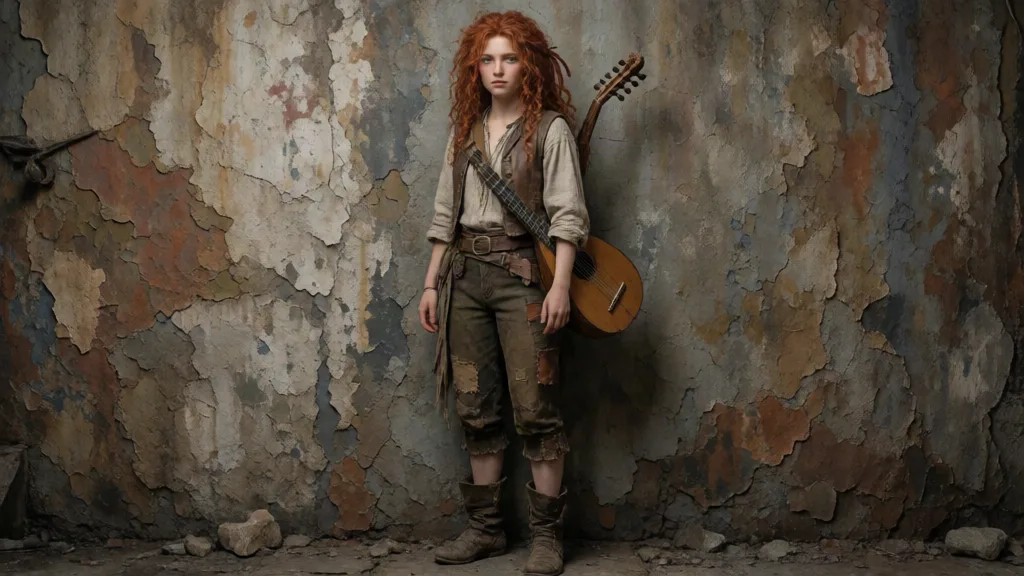
The first time I saw her naked, I was trying to steal her horse.
Not my finest hour. But the horse was a chestnut mare with a white blaze and the kind of legs that promised speed, and I had three days of hard travel ahead of me with nothing but sore feet and a half-empty purse. The mare was tied to a post outside the Broken Wheel Inn, and the night was dark enough to swallow a man whole.
I had my hand on the knot when the window above me creaked open.
“You’ll never get the saddle off before I’m down there,” she said. Her voice was low and amused, like she was in on a joke I hadn’t heard yet. “And even if you did, she won’t run for a stranger. She bites.”
I looked up. A woman leaned out of the window, her wild auburn hair spilling over her bare shoulders. The candlelight behind her turned her skin to gold. She wasn’t wearing a shirt.
I let go of the knot.
“I wasn’t stealing her,” I said. “I was admiring her.”
“You were admiring her with your fingers on the rope.”
“A man can admire and touch at the same time.”
She laughed. It was a real laugh, not a polite one. It carried down into the street and bounced off the cobblestones. “You’re a terrible liar. I like that. Come up here instead. I’ll buy you a drink.”
I should have walked away. That’s what a smart man would have done. A smart man doesn’t climb through the window of a woman who just caught him trying to steal her horse. A smart man doesn’t trust a stranger who laughs at his failures.
But I was never smart. Not about women. Not about anything that mattered.
The window was on the second floor. There was a trellis covered in dead ivy. It held my weight. Barely. By the time I swung my legs over the sill, my palms were scraped raw and I was already wondering what the hell I was doing.
Her room was small and cluttered. A lute leaned against the wall, its wood scarred from years of travel. A leather vest hung from the bedpost. Clothes were scattered across the floor like she’d shed them in a hurry. She stood by the window, still shirtless, and she didn’t bother covering herself.
She was beautiful. Not in the way the court ladies are beautiful, with their powdered faces and silk gowns and careful smiles. She was beautiful in the way a storm is beautiful. Wild. Unpredictable. Dangerous.
“Rere,” she said, holding out her hand.
“That’s not your real name.”
“It’s the one I give to strangers who climb through my window.” She didn’t lower her hand. “And you are?”
I took her hand. Her grip was firm, her palm calloused. “Liam.”
“Liam the horse thief.”
“Liam the man who made a mistake.”
“Same thing.” She let go and walked to the table where a bottle of wine sat open. She poured two cups and handed me one. Her movements were easy, unhurried. She wasn’t shy about her body. She wore her nakedness the way she wore her voice, like it was just another instrument.
I tried not to stare. I failed.
“You’re wondering why I’m not dressed,” she said.
“I assumed you were about to sleep.”
“I was about to sing.” She nodded at the lute. “I sing better without clothes. Something about the air on my skin. Helps the notes find their way out.”
“Is that true?”
“No. But it sounds good, doesn’t it?” She grinned and took a long drink of wine. “The truth is I was hot. The fire in the common room was too high, and the innkeeper’s wife keeps the rooms like ovens. I took off my shirt and opened the window and saw a man trying to steal my horse. Seemed like a sign.”
“A sign of what?”
“That I wasn’t going to sleep alone tonight.”
The wine was cheap and bitter. I drank it anyway. The heat in the room had nothing to do with the fire downstairs.
“You travel alone?” I asked.
“When I have to. Sometimes I find company.” She sat on the edge of the bed, her legs crossed, her cup balanced on her knee. “You?”
“Alone.”
“Why?”
“Easier that way.”
“Easier isn’t the same as better.”
I didn’t have an answer for that. She didn’t seem to need one. She set down her cup and picked up the lute, cradling it against her bare stomach. Her fingers found the strings without looking. She played a few notes, soft and tentative, like she was testing the air.
“You like stories?” she asked.
“Depends on the story.”
“I know a story about a man who stole a horse from a witch. The horse was actually her lover, transformed. The witch cursed the man so that every time he tried to speak, only horse sounds came out. He spent the rest of his life neighing his apologies.”
“That’s a terrible story.”
“It’s a true story.” She played a chord, let it hang in the air. “At least, it’s true enough. The point is, you never know what you’re stealing. Sometimes the thing you take has more value than you can imagine. Sometimes it has teeth.”
She looked at me. Her green eyes caught the candlelight and held it.
“Are you warning me?” I asked.
“I’m telling you a story. What you take from it is your own business.”
I finished my wine. The room felt smaller than it had a moment ago. The air was thick with something I couldn’t name. Not desire, though that was there too. Something older. Something that hummed in the space between her words.
“I should go,” I said.
“You should stay.”
“I don’t even know you.”
“You know my name. You know I sing naked and I own a horse that bites. What more do you need?”
“A reason.”
She set the lute aside. The movement was deliberate, careful. She stood and walked toward me, and I didn’t back away. She was shorter than me by half a head. Her hair smelled like woodsmoke and lavender.
“Here’s your reason,” she said. “I’ve been on the road for six weeks. I’ve sung in fifteen taverns and slept in twelve different beds. I’ve been alone in all of them. I’m tired of being alone. You look like you understand that.”
I did. I understood it too well.
She reached up and touched my face. Her fingers were cool against my cheek. “I’m not asking for forever. I’m asking for tonight. Tomorrow you can go back to stealing horses and I’ll go back to singing for my supper. But tonight, I want to feel someone’s skin against mine. I want to remember what it’s like to be touched by someone who isn’t just reaching for a coin purse.”
Her hand moved to the back of my neck. She pulled me down, and I let her.
Her mouth tasted like wine and salt. She kissed like she played the lute, with confidence and rhythm and a hint of mischief. Her hands found the buttons of my shirt and worked them open while my own hands found her waist, her hips, the curve of her spine.
We fell onto the bed together. The mattress was thin and lumpy, the sheets rough from too many washings. I didn’t care. She didn’t care. Her body was warm and alive beneath me, and she made sounds that had nothing to do with music but were more honest than any song.
Afterward, we lay in the dark. The candle had burned down to a stub. Her head rested on my chest, her hair spread across my skin like a net.
“That was good,” she said.
“It was.”
“You’re not bad for a horse thief.”
“You’re not bad for a naked singer.”
She laughed, and I felt it in my ribs. “We should travel together.”
“What?”
“Travel together. You and me. We’ll be partners. You can steal horses and I’ll sing songs about how brave you are. We’ll split the take.”
“I don’t steal horses.”
“You tried to steal mine.”
“That was a mistake.”
“Mistakes are how adventures start.” She propped herself up on one elbow and looked at me. Her eyes were serious now. The mischief was gone. “I mean it. I’ve been alone too long. You seem like someone who knows how to keep quiet and watch the road. I need that. And you need someone who can talk her way out of the trouble you’ll get into.”
“I don’t get into trouble.”
“Everyone gets into trouble. The question is whether you’ve got someone to help you get out.”
I thought about it. I thought about the road ahead of me, the empty miles, the inns where no one knew my name. I thought about the thing I was running from, the shadow that had been following me for months. I thought about how heavy silence gets when you carry it alone.
“One condition,” I said.
“Name it.”
“No more trying to steal your horse.”
“Deal.” She held out her hand. I shook it. Her grip was firm and warm.
“Partners,” she said.
“Partners.”
She lay back down, her head on my chest again. Within minutes, her breathing slowed. She was asleep. I stayed awake, staring at the ceiling, feeling the weight of her against me.
I didn’t know her. Not really. I knew her name and her laugh and the way she moved when she was lost in pleasure. I knew she was brave enough to invite a stranger into her room and trusting enough to fall asleep beside him.
I didn’t know what she was running from. But I knew she was running. You don’t learn to laugh like that without having cried first.
The morning came too fast. Light slipped through the curtains, gray and thin. She was already awake when I opened my eyes, sitting on the edge of the bed, pulling on her boots.
“There’s bread and cheese on the table,” she said. “The innkeeper’s wife brought it up. She thinks you’re my husband.”
“Do I look like a husband?”
“You look like a man who spent the night in a woman’s room. She drew her own conclusions.” She stood and stretched, her back arching. She was dressed now, in the leather vest and linen shirt, her lute slung across her back. She looked ready to leave.
I ate the bread and cheese. It was good. Better than the wine.
“Where are we going?” I asked.
“South. There’s a festival in Thornwood. Three days of drinking and dancing and telling lies. I’m booked to play.”
“Booked?”
“The innkeeper there knows me. He pays in coin and hot baths. It’s the best deal I get.” She grabbed her pack and tossed it over her shoulder. “You ready?”
I wasn’t ready. I had nothing to pack. My belongings were in a bag I’d left at the stable, which I’d planned to retrieve after stealing her horse. I told her that.
She laughed. “You really are a terrible thief. Come on. We’ll get your things. Then we’ll get my horse. She’s called Ember. She bites, but she’s loyal.”
We went downstairs together. The innkeeper’s wife gave us a knowing look. Rere waved at her like they were old friends.
The morning air was cool and clean. The road stretched south, winding through fields and patches of forest. Ember was waiting at the post, and she did not bite me when I approached. She sniffed my hand and decided I was acceptable.
“She likes you,” Rere said.
“She barely tolerated me.”
“That’s as close to affection as she gets.”
We walked. The road was quiet. Farmers were already in their fields, bent over the soil. Birds sang in the hedgerows. The sun climbed slowly, warming the air.
Rere talked. She talked about the festival, about the songs she planned to sing, about the innkeeper’s wife who had a secret love affair with the blacksmith. She talked about the weather and the quality of the road and the way the light fell on the hills. She talked like she was afraid of silence.
I let her. I didn’t have much to say anyway.
By midday, we stopped at a stream to rest. She sat on a rock and pulled out her lute. She played something soft and sad, a melody that seemed to rise from the water itself.
“What’s that one called?” I asked.
“It doesn’t have a name yet. I’m still writing it.”
“What’s it about?”
She didn’t answer right away. Her fingers kept moving, finding the notes. “It’s about a woman who lost someone she loved. She spends the rest of her life looking for him in the faces of strangers.”
“That’s sad.”
“It’s true.” She looked at me. “Most of my songs are true. That’s why people listen. They can feel the weight in them.”
I thought about the weight I carried. The thing I didn’t talk about. The shadow.
“What are you running from, Liam?”
The question hit me like a stone. I should have expected it. She was a bard. Bards ask questions. It’s what they do.
“Who says I’m running?”
“Everyone who travels alone is running from something. Or toward something. Sometimes both.” She kept playing, the melody circling back on itself. “You don’t have to tell me. I’m just curious.”
I looked at the water. It was clear and cold. Small fish darted between the rocks.
“I killed a man,” I said.
Her fingers stopped. The music died.
“In a fight,” I continued. “He was drunk. He started it. But I finished it. His family had money. They put a price on my head. I’ve been moving ever since.”
She was quiet for a long moment. Then she started playing again. A different song. Something lighter.
“Was it self-defense?” she asked.
“Yes.”
“Then you did what you had to do.”
“That doesn’t make it easier.”
“No. It doesn’t.” She looked at me, and her eyes were soft. “But you’re still here. That counts for something.”
We sat by the stream until the sun started to dip. Then we walked on.
The road to Thornwood took us through a forest that thickened as the day wore on. The trees grew tall and close together, their branches lacing overhead until the light was dappled and green. The air smelled of moss and damp earth.
Rere walked ahead of me, her lute bumping against her back. She hummed as she walked, fragments of songs I didn’t recognize. Her hair caught the light when it broke through the canopy.
I watched her. I couldn’t help it.
She turned and caught me looking. She grinned. “See something you like?”
“I’m making sure you don’t walk into a spiderweb.”
“You’re a terrible liar. I told you that already.”
She waited for me to catch up, then fell into step beside me. Her shoulder brushed mine. She didn’t pull away.
“Do you believe in fate?” she asked.
“No.”
“Good. Neither do I. Fate is just a word people use when they don’t want to take responsibility for their choices.” She kicked a stone off the path. “I believe in luck. And timing. And the strange way the world sometimes puts people in the right place at the right moment.”
“Is that what this is? Right place, right moment?”
“Maybe. Or maybe it’s just a woman who needed company and a man who needed somewhere to go.” She shrugged. “Does it matter?”
It didn’t. Not really.
We made camp that night in a clearing. She built a fire while I gathered wood. We ate dried meat and hard bread, and she opened a bottle of wine she’d stolen from the inn.
“Borrowed,” she corrected when I raised an eyebrow. “I left a coin on the counter.”
“That’s not borrowing. That’s buying.”
“I left less than the bottle was worth. It’s borrowing.”
She had an answer for everything. I was starting to like that about her.
After we ate, she played again. The firelight danced across her face, and her voice rose into the dark air. She sang about lovers and liars, about kings who lost their crowns and maidens who lost their hearts. She sang about the road and the people who walked it.
I listened. The fire crackled. The forest breathed around us.
When she finished, the silence felt full. Like the song was still there, hanging in the air.
“You’re good,” I said.
“I know.”
“Modest too.”
“Modesty is for people who aren’t talented.” She set the lute aside and moved closer to me. The fire was between us, but she came around to my side and sat beside me, her shoulder against mine.
“Thank you,” she said.
“For what?”
“For not asking. For not pushing. For just being here.”
I didn’t know what to say. So I put my arm around her. She leaned into me. Her hair smelled like smoke and lavender.
We stayed like that for a long time. The fire burned down to embers. The stars came out, cold and bright.
“I had a sister,” she said quietly.
I didn’t move. I didn’t speak.
“Her name was Mira. She was two years younger than me. We used to sing together. Harmonies. Our voices fit like puzzle pieces.” She paused. “She died three years ago. Fever. It took her in three days.”
“I’m sorry.”
“I don’t talk about it. Not usually. But you told me about the man you killed. It seemed fair.” She laughed, but there was no humor in it. “Fair. What a stupid word. There’s nothing fair about any of it.”
I held her tighter. She let me.
“She’s why I travel,” Rere said. “After she died, I couldn’t stay in the place we grew up. Every corner had her in it. Every song reminded me of her. So I left. I took her lute and I started walking.”
“You play her lute?”
“It’s the only thing I have left of her.” She touched the instrument, her fingers resting on the strings. “Sometimes I think I can still hear her voice in it. When I play the right notes.”
I didn’t know what to say. So I said nothing. I just held her.
The fire popped. An owl called from somewhere deep in the trees.
“We should sleep,” she said. “Long walk tomorrow.”
“Yeah.”
We spread our bedrolls on opposite sides of the fire. But after a few minutes, she got up and moved hers next to mine. She lay down and wrapped her arm around my chest.
“Partners,” she said.
“Partners.”
She fell asleep quickly. I stayed awake, listening to her breathe, feeling the rise and fall of her chest against my side.
I thought about the sister she’d lost. I thought about the man I’d killed. I thought about the road ahead and the festival in Thornwood and the strange, bright woman who had decided I was worth trusting.
I didn’t know what was going to happen. I didn’t know if we’d make it to Thornwood, or if the price on my head would catch up with me, or if she’d wake up one morning and decide I wasn’t worth the trouble.
But for the first time in months, I wasn’t alone. And that was something.
We reached Thornwood on the third day. The town was bigger than I expected, with stone walls and a proper gate. Banners hung from the battlements, bright blue and gold. The festival was already underway. We could hear the music from half a mile away.
“There’s an inn on the main square,” Rere said. “The Sleeping Fox. The innkeeper’s name is Marta. She’s got a temper and a soft spot for musicians. Let me do the talking.”
We passed through the gate. The streets were crowded with people. Stalls sold food and trinkets. Children ran between the legs of adults. A juggler was tossing flaming torches near the fountain.
Rere moved through the crowd like she belonged there. She nodded at people, smiled at children, called out greetings to strangers. She knew how to work a crowd. It was a skill I didn’t have.
The Sleeping Fox was a three-story building with a sign above the door showing a fox curled up on a pillow. Inside, it was warm and loud. A fire roared in the hearth. The common room was packed.
A woman with gray-streaked hair and arms like a blacksmith came out from behind the bar. She saw Rere and broke into a grin.
“You made it,” Marta said. “I was starting to worry.”
“I told you I’d be here. I keep my promises.”
“You keep the ones that suit you.” Marta looked at me. “Who’s this?”
“My partner. Liam.”
“Partner in what?”
“Partner in everything.” Rere slung an arm around my shoulders. “He’s my new traveling companion. He steals horses and I sing songs about how brave he is.”
Marta raised an eyebrow. “He doesn’t look like a horse thief.”
“That’s why he’s good at it.”
Marta laughed. It was a big, booming laugh that made the glasses on the bar rattle. “Fine. I’ve got a room for you. The usual one. Your friend can sleep on the floor.”
“He can sleep in the bed. I’m generous.”
“You’re something, all right.” Marta handed her a key. “You’re on at sundown. Don’t be late.”
“I’m never late.”
“You were late last year.”
“I was fashionably late.”
“You were drunk in a ditch.”
“Fashionably drunk in a fashionable ditch.” Rere took the key and headed for the stairs. I followed.
The room was small but clean. A bed with a real mattress. A washbasin. A window that looked out over the square.
Rere dropped her pack on the floor and fell onto the bed. She spread her arms and legs like she was making a snow angel.
“I love this room,” she said. “I love this bed. I love Marta. I love everything.”
“You’re in a good mood.”
“I’m always in a good mood when I’m about to get paid.” She rolled onto her side and looked at me. “You should go explore. See the festival. Eat something that isn’t dried meat.”
“What about you?”
“I’m going to soak in a hot bath. Marta keeps a tub in the back. It’s the real reason I come here.” She sat up and started unbuttoning her vest. “You’re welcome to join me.”
“I thought you had to prepare for your performance.”
“I prepare best when I’m clean and relaxed.” She shrugged off the vest and reached for the buttons on her shirt. “Last chance. Hot water. Warm company. No obligations.”
I should have said no. I should have gone out into the festival and given us both some space. But she was looking at me with those green eyes, and her fingers were working the buttons, and I could already see the curve of her collarbone.
“Fine,” I said.
She grinned. “I knew you’d come around.”
The bath was in a small room behind the kitchen. A copper tub sat in the middle, steam rising from the water. Marta had left a basket of soap and towels.
Rere stripped without ceremony and climbed in. The water sloshed over the sides. She sighed and sank down until only her head was visible.
“This is heaven,” she said. “This is what I imagine heaven is like. Hot water and quiet.”
I undressed more slowly. She watched me. Her eyes traveled over my body, and she didn’t bother hiding it.
“You’ve got scars,” she said.
“I’ve had a hard life.”
“They’re beautiful.”
I didn’t know what to say to that. I got into the tub. It was barely big enough for one person. With two of us, it was a tight fit. I ended up with my back against one end and her legs draped over mine.
She picked up the soap and started washing. The smell of lavender filled the steam.
“You can wash my back,” she said.
I took the soap. My hands were rough against her skin. She leaned forward, letting me reach her shoulders, her spine. Her skin was warm and slick.
“You have gentle hands,” she said. “For a horse thief.”
“I’m not actually a horse thief.”
“I know. But I like calling you one.” She turned around, water splashing. Her knees pressed against my thighs. Her face was close to mine. “I like you, Liam. I don’t know why. You’re quiet and you’ve got a price on your head and you tried to steal my horse. But I like you.”
“I like you too.”
“Good.” She kissed me. Water dripped from her hair onto my face. Her hands found my shoulders, my chest. The soap made her skin slippery.
The bath was too small for what we wanted. We ended up on the floor, towels beneath us, steam curling around our bodies. She was laughing when I pulled her down. She was laughing when I kissed her throat, her breasts, the soft skin of her stomach.
She stopped laughing when I found the right places. Her breath caught. Her fingers dug into my back.
Afterward, we lay on the wet towels, breathing hard. The steam had cleared. The water in the tub had gone cold.
“We’re going to be late,” I said.
“I don’t care.”
“You said you’re never late.”
“I lied.” She turned her head to look at me. Her hair was a mess, tangled and wet. “I’m a bard. I lie all the time. It’s part of the job.”
“What parts of you are true?”
She thought about it. Her fingers traced patterns on my chest.
“My name is Rere. I had a sister named Mira. I play her lute and I sing songs that are mostly true. I bite my nails when I’m nervous. I can’t sleep in a room without a window. I’m scared of drowning, but I love water. I think you’re the most interesting thing that’s happened to me in a long time.”
She looked at me.
“That’s all true.”
I kissed her forehead. “That’s enough.”
We got dressed. She fixed her hair. I helped her carry her lute downstairs.
The common room was packed. Marta had saved a table near the fire. Rere climbed onto a small stage at the far end of the room. She settled the lute on her knee and tuned it.
The crowd quieted.
She started to play.
Her voice filled the room. It was warm and clear, with an edge of something raw. She sang about love and loss, about the road and the people who walk it. She sang about a woman who lost her sister and found a stranger.
She was looking at me when she sang that part.
The crowd cheered. They clapped and stamped their feet. They called for more.
She played for two hours. By the end, her voice was hoarse and her fingers were raw. She bowed and blew kisses and promised to play again tomorrow.
She came back to the table and collapsed into the chair across from me. Marta brought her a mug of ale.
“You were amazing,” I said.
“I know.” She drank half the mug in one go. “But I’m exhausted. Take me to bed.”
“We’re already in bed.”
“Take me to our bed. The one upstairs. With the mattress that doesn’t have lumps.”
I took her upstairs. She fell onto the bed without taking off her boots. I pulled them off for her.
“You’re good at that,” she said.
“I’ve had practice.”
“With boots or with women?”
“Both.”
She laughed. It was tired now, soft. She reached up and pulled me down beside her.
“Stay,” she said.
“I’m not going anywhere.”
“Promise?”
“I promise.”
She closed her eyes. Within a minute, she was asleep.
I lay beside her, watching the moonlight move across the ceiling. The festival sounds drifted up from the square. Music and laughter and the crackle of fire.
I thought about the road ahead. About the price on my head. About the shadow that was still following me.
But for now, there was this. There was her. There was the warmth of her body and the sound of her breathing and the strange, fragile thing we were building.
I closed my eyes and let myself have it.
In the morning, there was a knock on the door.
I woke first. Rere was still asleep, her arm thrown across my chest. The knock came again, harder.
“Rere.” I shook her shoulder. “Someone’s at the door.”
She groaned and rolled over. “Tell them I’m dead.”
“You tell them. It’s your room.”
She sat up, rubbing her eyes. Her hair was a disaster. She looked like she’d been dragged through a hedge backward.
The knock came a third time. “Rere! Open up!”
She recognized the voice. Her face went pale.
“Shit,” she said.
“Who is it?”
She didn’t answer. She got up and walked to the door. She opened it.
A woman stood in the hallway. She was tall and sharp-featured, with the same auburn hair as Rere, but pulled back tight. Her eyes were the same green, but harder. Colder.
She was wearing a uniform. A sword hung at her hip.
“Hello, sister,” she said.
Rere’s voice was flat. “What do you want?”
“I want to know why you’ve been telling people I’m dead.”
The air in the room changed. I sat up slowly.
Rere’s sister looked past her at me. Her eyes narrowed.
“And I want to know who the hell he is.”
Disclaimer
This is a work of fiction, assisted by artificial intelligence. Any names or characters, businesses or places, events or incidents, are fictitious. Any resemblance to actual persons, living or dead, or actual events is purely coincidental.
Content Removal Policy
- Users may report content that may be illegal or violates our Standards.
- All reported complaints will be reviewed and resolved within seven business days.
- Review Process: Our team will assess the reported content against our guidelines.
- Appeals: If you disagree with a decision, you may appeal within 14 days of notification.
- Potential outcomes include: content removal, account warning, or no action if no violation is found.
To report content, email us at [email protected]