Share
Go Live
Stepmothers Shadow
·
Published 10/3/2026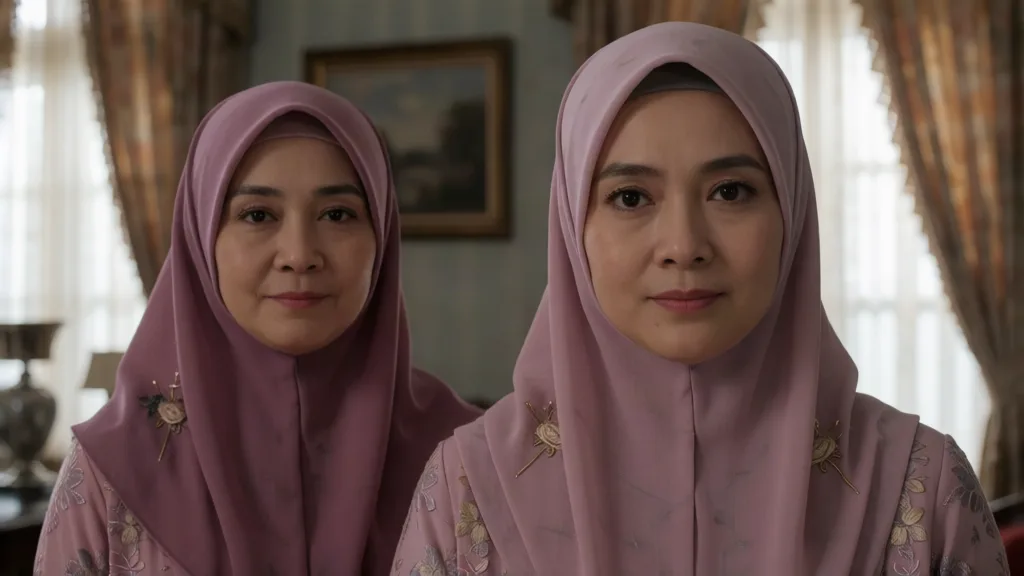
The first thing Ibu tiri did when she entered our house was move my mother's shoes.
I was twelve, sitting on the stairs, watching through the wooden railing. She didn't announce it. She just knelt by the shoe rack near the front door, her batik sarong pooling around her knees, and picked up my mother's sandals one by one. The brown ones with the worn heels. The white ones with the strap that always came loose. She held each pair like it was something dead she had to dispose of carefully, then stacked them in a cardboard box she'd brought with her. The box had "Indomie" printed on the side.
My father stood in the kitchen doorway. He watched her the way you watch someone perform a magic trick, waiting to see how it worked, whether you should clap.
"Where should I put these?" she asked. Not to me. To him.
He shrugged. "Storage room, maybe."
She nodded and carried the box past me on the stairs. I could smell her perfume, something floral and sharp, like the soap they sell at the market near the mosque. She didn't look at me. I was just part of the house then, like the railing or the faded wallpaper.
That was three months after the funeral. Three months of my father burning rice every Tuesday because he forgot he'd already cooked. Three months of me eating instant noodles for breakfast and pretending I didn't mind. Three months of my mother's hair still tangled in the drain, which I couldn't bring myself to clean out because it felt like erasing her.
Ibu tiri's name was Ratna. She was thirty-four, which seemed ancient to me then, though now I understand it's nothing. She'd been a widow herself, her husband dead from a motorcycle accident two years before. No children. She worked at a beauty salon in the mall, doing makeup for brides and birthday parties. My father met her there. He'd gone to buy a gift certificate for my aunt's birthday and came home with a phone number written on a receipt.
He told me about her on a Sunday. We were eating lunch, just the two of us, at the table that suddenly seemed too big. He said, "I've met someone." He said it like he was confessing a crime.
I put down my spoon. "Okay."
"She's kind. You'll like her."
I didn't say anything. What was there to say? He was my father. He was lonely. I was twelve and didn't know how to be a person yet, let alone how to tell him he was allowed to want things.
They married at the courthouse. No ceremony, no reception. Ibu tiri wore a cream-colored kebaya and carried a small bouquet of white roses that she left on my mother's grave afterward. I watched her do it from the car. She stood there for a long time, her back straight, her head bowed. I couldn't tell if she was praying or apologizing or just standing.
When she came back to the car, her eyes were dry.
"I know I'm not her," she said, sliding into the passenger seat. "I'm not trying to be."
I nodded. That was the first real thing she'd said to me.
---
She was not unkind. That's the part people don't understand when I tell them this story. They want Ibu tiri to be a villain, the evil stepmother from the fairy tales, and she wasn't. She cooked good food. She kept the house clean. She made sure I did my homework and took my vitamins and didn't stay out past dark. She was, in many ways, more responsible than my mother had been.
But she was not my mother. And she never pretended to be. That was the problem.
My mother used to sing while she cooked. Off-key, always, some dangdut song from the eighties that she'd learned as a teenager. She'd dance around the kitchen with a spatula in her hand, and I'd laugh, and she'd say, "See? This is how you make rendang taste better. You have to be happy while you stir."
Ibu tiri cooked in silence. She chopped onions with surgical precision. She measured salt with a spoon, not her fingers. Everything she made tasted the same, which is to say it tasted fine, but it didn't taste like anything I recognized.
I started eating at my friend Dimas's house after school. His mother made fried bananas and let us watch TV while we ate. She'd ruffle my hair and say, "You're too skinny, eat more." I let her. It felt good to be touched by someone who wasn't being careful.
One night I came home late. Ibu tiri was sitting at the kitchen table, waiting.
"Where were you?"
"Dimas's house."
"You didn't tell me."
I shrugged. "I forgot."
She looked at me for a long moment. Then she said, "I'm not your enemy."
"I know."
"Do you?"
I didn't answer. I went to my room and closed the door. Later, I heard her crying through the wall. Not loud. Just soft, hiccupping sounds, the kind you make when you're trying not to be heard. My father was on night shift that week, so there was no one to comfort her. I lay in bed and listened and felt nothing. Or felt something I didn't want to name.
---
The friction between us wasn't dramatic. It was small things. A thousand small things.
She moved my mother's photo from the living room to the hallway. She said it was because the frame clashed with the new curtains. I moved it back. She moved it again. We did this for weeks, a silent war of attrition, until finally I found the photo in a drawer, face down.
I didn't confront her. I just took it to my room and put it on my nightstand. That night, I heard her crying again. I didn't care.
She started calling me "sayang." Sweetheart. The way a mother would. My mother never called me that. She called me by my name, or sometimes "nak," which is just what you call a child. But "sayang" was different. It was too much. It was a word that belonged to someone else.
"Don't call me that," I said one morning, when she handed me my lunch box.
She blinked. "What?"
"Sayang. Don't call me that."
Her hand hovered in the air between us. Then she pulled it back. "Okay," she said. "I won't."
She didn't. She called me by my name after that. And somehow that was worse.
---
I started noticing things about her. The way she checked the lock three times before bed. The way she flinched when my father raised his voice, even if he was just joking. The way she never talked about her first husband, not once, not even when my father asked.
She had a scar on her forearm, thin and white, like a line drawn with a ruler. I asked her about it once, and she said she'd fallen off a motorbike as a child. But the way she said it, too quick, too flat, made me think she was lying.
I didn't ask again. I was twelve. I didn't know how to ask the questions that mattered.
My father was happy. That was the thing. He laughed more. He came home earlier. He touched Ibu tiri's shoulder when he passed her in the hallway, small gestures of affection that I'd never seen him give my mother. He was becoming someone new, and I didn't know if I was supposed to be glad for him or angry at him for it.
One night I heard them talking in their room. The door was slightly open. Ibu tiri was saying something about money, about how they couldn't afford to send me to the private school I wanted.
"He's smart," my father said. "He deserves it."
"We'll find a way," she said. "I can take extra shifts at the salon."
I stood in the hallway, listening. She was willing to work more, for me, for a boy who wouldn't even call her by her name. I didn't understand it. I didn't want to understand it. Understanding would mean I owed her something, and I wasn't ready to owe her anything.
I went back to my room and lay in the dark. My mother's photo watched me from the nightstand. I turned it face down.
---
The next morning, Ibu tiri made me breakfast. Nasi goreng with a fried egg on top, the yolk still runny, the way I liked it. She didn't say anything. She just put the plate in front of me and sat down across the table with her own coffee.
I ate. She watched.
"You don't have to take extra shifts," I said, not looking at her.
She was quiet for a moment. Then: "I know."
"I mean it. I don't need that school."
"You do."
I looked up. Her face was calm, but her hands were wrapped tight around her mug, knuckles white.
"Why do you care?" I asked. "I'm not your son."
She didn't flinch. She just held my gaze, and for a second I saw something in her eyes that I recognized. Loneliness. The same kind I felt. The kind that sits in your chest like a stone.
"I know," she said again. "But you're here. And I'm here. And that has to mean something."
I didn't answer. I finished my rice. Then I got up, put my plate in the sink, and went to school.
That night, I moved my mother's photo back to the living room. I didn't tell Ibu tiri. I just did it. And when she saw it, she didn't move it again.
We didn't hug. We didn't cry. We didn't have a moment. But something shifted. Small. Almost nothing.
But I noticed.
Watch this moment
Turn the current scene into a cinematic Live Chapter — what you watch becomes the story's next part.
Disclaimer
This is a work of fiction, assisted by artificial intelligence. Any names or characters, businesses or places, events or incidents, are fictitious. Any resemblance to actual persons, living or dead, or actual events is purely coincidental.
Content Removal Policy
- Users may report content that may be illegal or violates our Standards.
- All reported complaints will be reviewed and resolved within seven business days.
- Review Process: Our team will assess the reported content against our guidelines.
- Appeals: If you disagree with a decision, you may appeal within 14 days of notification.
- Potential outcomes include: content removal, account warning, or no action if no violation is found.
To report content, email us at [email protected]