Share
Go Live
D
·
Published 10/17/2026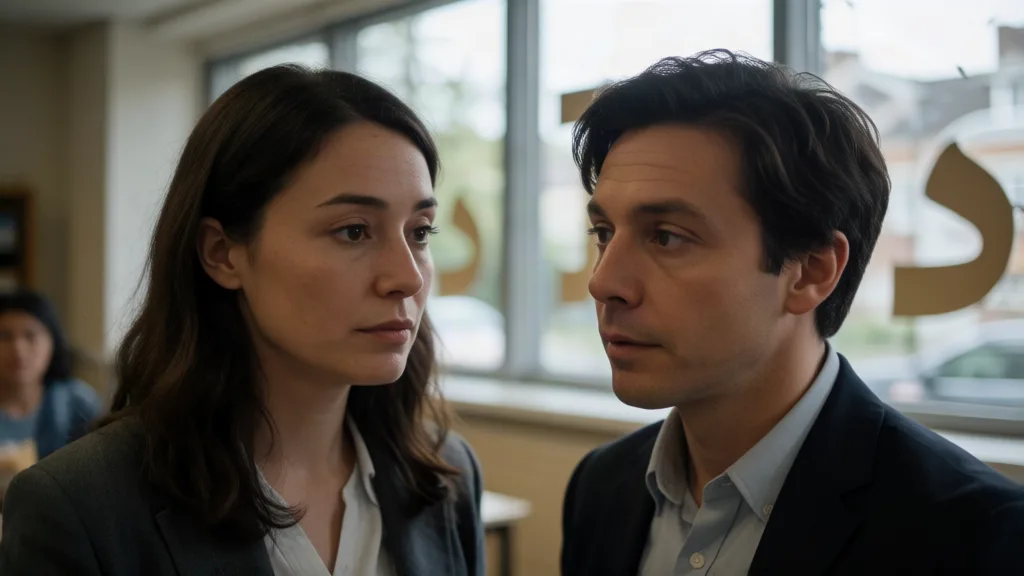
The fish was already dying when I found it, which is how I knew my brother was back.
I don't mean that as a figure of speech. I mean a real fish, a fat koi the color of wet rust, floating on its side in the pond behind my mother's house with its mouth opening and closing like it was trying to say something it had rehearsed. The other four koi had gone to the bottom, huddling under the lily pads the way they do when they sense a heron. But there was no heron. There was only me, standing on the mossy flagstones in my work clothes, holding a bag of groceries, watching a fish drown in air.
My mother had been dead for eleven months. I'd been feeding those koi every Saturday since the funeral, driving forty minutes each way from the city because I couldn't bring myself to sell the house and I couldn't bring myself to live in it either. The fish were the only reason I had to come back. That's a sad thing to admit, that five ornamental carp were holding my grief together, but there it is.
I set the groceries down on the stone bench and crouched at the pond's edge. The dying koi drifted toward my shadow. Its scales had gone dull, the way metal goes dull. I didn't know what was wrong with it. I don't know the first thing about fish. I put my hand in the water and it didn't flinch, just let me cup it, its body cool and strangely soft, like a fruit that's gone past ripe.
That was when I saw the back door was open.
Not wide. A hand's width. The white paint on the frame was chipped where the latch had been forced, and there were scratches in the wood, fresh ones, pale against the old varnish. The door had been locked when I left last Saturday. I remembered locking it. I remembered standing on the back steps afterward, keys in my hand, listening to the house settle, the way I always did before I could make myself walk to the car.
I put the fish back in the water, where it resumed its slow dying, and I stood up. My knees cracked. Thirty-four years old and my knees cracked like an old man's. I walked to the door and pushed it open with two fingers, the way you'd touch something you weren't sure was dead.
The kitchen smelled like cigarettes. Not stale smoke, not the ghost of smoke that clings to a room for years. Fresh smoke. The kind that's still in the air, still deciding where to land. And underneath it, coffee. Burnt coffee, the smell of a pot left on the burner until the bottom went black.
My brother had always made coffee that way. He'd put the pot on and forget it, and the whole house would smell like scorched beans, and my mother would yell at him in Arabic and he'd just smile and pour himself a cup anyway, drinking it black and bitter like it was a punishment he deserved.
"Karim," I said. Not loud. I don't know why I said it quietly, as if I might be wrong, as if there might be some other explanation for the open door and the cigarettes and the burnt coffee. A stranger, maybe. A burglar who'd decided to make himself at home, brew a pot, smoke a few cigarettes, and leave the back door open on his way out.
But burglars don't leave the door open. My brother always did. He never closed anything behind him. Doors, drawers, cabinets, jars. He left a trail of open things wherever he went, as if he were always halfway out of every room he entered, and maybe he was.
I walked through the kitchen into the living room. The house was dim, the curtains drawn, dust floating in the slanted light. My mother's furniture was still where it had always been, the same brown sofa with the worn arms, the same glass coffee table with the chip in the corner from when Karim and I were kids and he'd thrown a remote control at me and missed. The same framed photograph of our father on the wall, the one taken before I was born, when he was young and thin and hadn't yet decided to leave us.
There was a suitcase by the sofa. A green canvas duffel bag, actually, the kind you'd take on a camping trip, and it was open, clothes spilling out of it. A pair of boots. A paperback book with a cracked spine. An ashtray, a real one, ceramic and heavy, sitting on my mother's coffee table, and in it, four cigarette butts, crushed flat.
I stood there for a long moment. The house was quiet. Not the quiet of an empty house, which I knew well, which I'd grown intimate with over eleven months of Saturday visits. This was a different quiet. A held breath. A quiet with someone in it.
"You might as well come out," I said. "I know you're here."
Nothing. Then, from the hallway, from the direction of our old bedroom, a sound. Not footsteps. Something softer. A kind of sliding, dragging sound, like someone moving something heavy across the floor, or someone pulling themselves along a wall.
And then my brother's voice, hoarse and cracked, a voice that had been through something, a voice that didn't sound like the voice I remembered.
"I was going to call you," he said. "I was going to call you first."
He came out of the hallway then, and I saw him fully for the first time in four years, and the first thing I noticed was that he was thinner. Not thin in the way of someone who's been dieting or running. Thin in the way of someone who's been sick, or hungry, or running from something. His face had gone hollow at the cheeks, and there were lines around his mouth that hadn't been there before, lines that made him look older than thirty-eight. His hair was longer than I'd ever seen it, curling at his neck, and he was wearing a shirt I recognized, one of our father's old shirts, the blue one with the frayed collar that our mother had kept in the back of the closet for twenty years even though she'd thrown away everything else of his.
He was holding his side. His right hand pressed against his ribs, and even in the dim light I could see the dark stain spreading between his fingers.
"You're bleeding," I said.
"It's not as bad as it looks."
"That's what people say when it's exactly as bad as it looks."
He laughed, or tried to. It came out as a cough, and he winced, and his hand pressed harder against his side. "I missed you," he said.
I didn't say it back. I wanted to. Some part of me, the part that remembered sharing a bedroom with him, the part that remembered him teaching me to ride a bike, the part that remembered him holding my hand at our father's funeral, that part wanted to say I missed you too. But there was another part of me, a larger part, the part that had spent four years not knowing if he was alive or dead, the part that had watched our mother cry at the kitchen table every night for a year after he disappeared, the part that had stood alone at her funeral because Karim was gone, gone, gone, and no one knew where. That part of me stood silent.
"What happened to you?" I asked.
He looked at me, and his eyes were the same, dark and deep-set, our mother's eyes, and they were tired in a way that had nothing to do with sleep.
"I made some mistakes," he said. "Big ones."
"People are looking for you."
"I know."
"They came to the house. After Mom died. Two men, in a car. They sat outside for three days."
Karim nodded slowly. He didn't look surprised. "They're still looking," he said. "That's why I'm here. I didn't have anywhere else to go."
The fish. I thought of the fish, dying in the pond, its mouth opening and closing. I thought of my mother, who had spent her last years waiting for a son who never came, who had died with his name on her lips, who had made me promise, made me promise, that if he ever came back I would take care of him. I hadn't wanted to promise. I'd told her it wasn't fair. But she'd held my hand with what little strength she had left and she'd looked at me with those eyes, those same eyes now looking at me from my brother's face, and I'd promised.
"You need a doctor," I said.
"I need a place to sleep. And maybe some food. And then I'll go."
"You'll go where?"
He didn't answer. He just stood there, swaying slightly, his hand pressed to his side, his blood seeping through our father's old shirt, and I knew, the way you know things you don't want to know, that he wasn't going anywhere. That he'd come home because he had nowhere else, and that whatever was coming for him was coming here, to this house, to me.
"Come on," I said. "Let's get you cleaned up."
I put my arm around him and he leaned into me, and he was lighter than he should have been, lighter than a man his size should ever be. We walked together toward the bathroom, and behind us, through the open kitchen door, I could hear the pond, the small sounds of water, the fish still dying in the dark.
Watch this moment
Turn the current scene into a cinematic Live Chapter — what you watch becomes the story's next part.
Disclaimer
This is a work of fiction, assisted by artificial intelligence. Any names or characters, businesses or places, events or incidents, are fictitious. Any resemblance to actual persons, living or dead, or actual events is purely coincidental.
Content Removal Policy
- Users may report content that may be illegal or violates our Standards.
- All reported complaints will be reviewed and resolved within seven business days.
- Review Process: Our team will assess the reported content against our guidelines.
- Appeals: If you disagree with a decision, you may appeal within 14 days of notification.
- Potential outcomes include: content removal, account warning, or no action if no violation is found.
To report content, email us at [email protected]