Share
Go Live
Forbidden Heat
·
Published 10/16/2026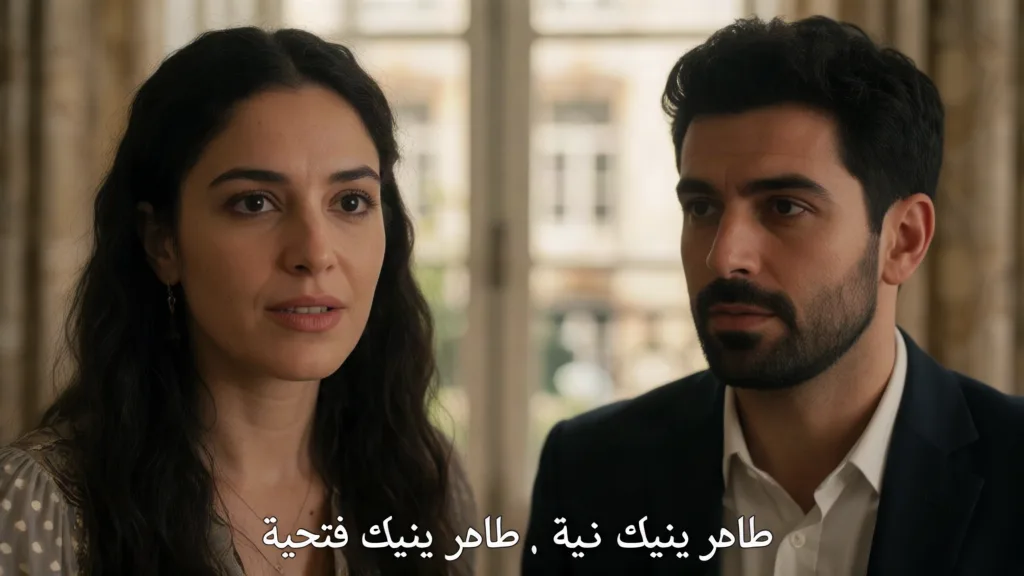
The first thing I noticed about her was the mole under her left eye, a small brown dot like a fly that had decided to rest there permanently. She was standing in the doorway of the classroom, clutching a stack of notebooks to her chest, and she was looking at me with an expression I couldn't read. Not anger. Not fear. Something else. Something that made me put down the chalk and wipe my hands on my trousers.
"Tahir," she said. Just my name. Nothing else.
I'd known Fatiha since we were children. We'd grown up on the same street in the old quarter of the city, where the houses leaned against each other like tired old men and the alleys were so narrow you could touch both walls with your outstretched arms. Her father had been a baker. My father had been a nobody, a man who died of a heart attack when I was seven and left nothing behind but debts and a reputation for being too gentle for this world.
But that was a long time ago. Now I was thirty-two years old, a teacher of Arabic literature at the secondary school, and Fatiha was standing in my classroom doorway looking like she'd seen a ghost.
"What is it?" I asked.
She didn't answer. She walked to my desk, set down the notebooks, and stood there with her hands at her sides. Her fingers were trembling. I noticed that. I noticed everything about her in that moment, the way her hair was pulled back too tight, the way her blouse was buttoned wrong, the third button in the second hole, the way she was breathing through her mouth like she'd been running.
"Fatiha."
"He's dead," she said.
The words hung in the air between us. I didn't ask who. I knew who. Everyone in the neighborhood knew who. Her husband, Rashid, the man with the heavy hands and the light conscience, the man who sold used cars and beat his wife in the same breath.
"When?" I asked.
"Last night. They found him in the alley behind the mosque. His throat was cut."
She said it flat, like she was reading the news. But her eyes were wet and her hands were still shaking and I understood something in that moment that I hadn't understood before. Not the fact of Rashid's death. That was just information. What I understood was the look on her face when she'd said my name in the doorway. It was relief. Pure, naked, terrifying relief.
I should have felt something. Horror, maybe. Or pity. Or at least the appropriate shock that comes when you hear a man you've known your whole life has been murdered. But all I felt was the memory of her wedding night, twelve years ago, when I'd stood outside the house and listened to her scream.
"Sit down," I said.
She didn't sit. She walked to the window and looked out at the schoolyard, where a few boys were kicking a ball in the dust. The afternoon light was golden and thick, the kind of light that makes everything look like a memory even while it's happening.
"I didn't do it," she said.
"I didn't ask."
"I know you didn't. But I wanted you to know. I wanted you to know that I didn't do it, even though I thought about it. Every day. For twelve years. I thought about it every single day."
She turned to face me. The mole under her eye seemed darker now, more pronounced. Or maybe that was just the light.
"Do you remember," she said, "the day I came to your house? Before the wedding?"
I remembered. Of course I remembered. She'd come to my mother's house in the early morning, before the sun was up, and she'd stood in the courtyard with her hands clasped together like she was praying. She was fifteen years old. I was nineteen. She'd asked me to run away with her.
I'd said no.
"I remember," I said.
"You said no."
"I remember."
"I hated you for that. For a long time. Years. I hated you more than I hated him. Because you could have saved me and you didn't. Because you were a coward and you let them give me to him."
The words hit me like stones. I wanted to defend myself. I wanted to explain that I was nineteen years old, that I had no money, that my mother was sick, that I couldn't just take a fifteen-year-old girl and run away to another city. But all of that was true and none of it mattered. She was right. I was a coward. I'd been a coward then and I'd been a coward every day since.
"Why did you come here?" I asked.
She walked back to my desk. She picked up one of the notebooks, a blue one with a cracked spine, and opened it to a random page. She didn't look at it. She just held it.
"Because I don't know what to do now," she said. "Because the police will come. They'll ask questions. They'll look at me the way everyone looks at me, like I'm guilty of something. And I am. I am guilty. But not of this."
She set the notebook down and looked at me with those eyes, dark and deep and tired. Tired in a way that sleep can't fix.
"I need you to help me," she said.
"Help you how?"
"I don't know. I just. I need someone to believe me. I need someone to look at me and not see a murderer."
I should have said no. I should have told her to go to the police, to tell them the truth, to let them do their job. That's what a sensible man would have done. But I wasn't sensible. I hadn't been sensible since I was nineteen years old and I watched her walk out of my mother's courtyard and into the life that was waiting for her.
"Okay," I said. "I believe you."
She didn't smile. She didn't thank me. She just nodded, once, like she'd expected nothing less and nothing more, and sat down in the chair across from my desk. The chair where students sat when they were in trouble. The chair where I'd sat a thousand times in my imagination, watching her, wanting her, hating myself for wanting her.
"Tell me what happened," I said.
She told me.
She told me about the fight they'd had that morning, about the way Rashid had accused her of looking at another man, about the way he'd slapped her and she'd fallen against the stove and burned her arm. She showed me the burn, a red mark on her forearm shaped like a crescent moon. She told me about the way he'd left the house in the afternoon and never come back. She told me about the neighbor who'd come knocking at midnight, saying they'd found a body in the alley. She told me about the way her heart had leaped, not with fear but with hope, and then with shame for hoping.
"I didn't kill him," she said again. "But I'm glad he's dead. Does that make me a murderer?"
I didn't answer. I didn't know how.
The call to prayer sounded from the mosque down the street, the voice of the muezzin rising and falling like a wave. Fatiha stood up. She smoothed her skirt. She looked at me with an expression I couldn't name.
"I should go," she said. "They'll be looking for me."
"Where will you go?"
"I don't know. Home, I guess. Where else would I go?"
She walked to the door. She stopped with her hand on the frame and turned back to look at me. The light from the window caught her face, and for a moment she looked like the girl I'd known, the girl who'd stood in my mother's courtyard and asked me to save her.
"Thank you," she said. "For believing me."
Then she was gone.
I sat in my classroom for a long time after she left. The sun went down. The boys in the schoolyard went home. The janitor came and swept the hallway and looked at me through the window with curiosity, the teacher who stayed late, the teacher who was always alone.
I thought about Rashid. I thought about his heavy hands and his light conscience. I thought about the way he'd looked at me the last time I'd seen him, at the market, when he'd put his arm around Fatiha's waist and pulled her close and smiled at me with his teeth showing. He knew. He knew about the courtyard, about the morning before the wedding, about the way I'd loved her since we were children. He knew and he'd enjoyed knowing. He'd enjoyed the power of it.
And now he was dead.
I should have felt something. Horror. Pity. Relief. But all I felt was a strange, quiet emptiness, like a room that had been cleared of furniture. Like a space that was waiting for something new.
I gathered my things and walked home through the dark streets. The city was quiet. The shops were closed. The only light came from the windows of houses, squares of yellow that made the darkness seem deeper. I passed the alley behind the mosque. There was a stain on the ground, dark and irregular, and I stopped and looked at it for a long time.
Blood, I thought. That's blood.
I walked on.
My apartment was small and bare, one room with a bed and a table and a shelf of books. I made tea and sat by the window and watched the street below. I thought about Fatiha. I thought about the way she'd said my name in the doorway. I thought about the way she'd looked at me when she said she'd hated me.
I thought about the way I'd said no.
The tea grew cold. The night grew deep. And somewhere in the city, a woman who might or might not be a murderer was lying awake in her bed, staring at the ceiling, waiting for the police to come.
I didn't sleep that night. I sat by the window until the sky turned gray and the first call to prayer sounded from the mosque. Then I got up, washed my face, and went to find her.
The police had already been. I saw them leaving her house as I turned the corner, two men in uniforms walking slowly, like they had all the time in the world. They didn't look at me. They didn't look at anything. They got into their car and drove away.
Fatiha was sitting on the steps of her house. The door was open behind her, and I could see the dark hallway, the bare walls, the single chair by the window. She was wearing the same clothes as yesterday. Her hair was still pulled back too tight.
"They asked me questions," she said. "For two hours. They asked me where I was, what I was doing, why I didn't report him missing. They asked me if we had problems. I said no. I said we were happy."
She laughed. It was a dry, cracked sound, like a door opening on rusty hinges.
"Happy," she said. "I told them we were happy."
I sat down on the step next to her. The stone was cold. The morning light was pale and thin, the kind of light that makes everything look hungover.
"What did they say?" I asked.
"They said they'd be in touch. They said not to leave the city. They said." She stopped. She looked at me. "They said they knew about us."
"About us?"
"About the courtyard. About the morning before the wedding. Someone told them. Someone remembered."
I felt something cold in my chest, like a hand closing around my heart.
"Who?"
"I don't know. Does it matter? They know. They think. They think we planned it. They think we killed him together."
She said it without emotion, like she was reading the news. But her hands were trembling again, and I noticed that her fingernails were bitten down to the quick, something I hadn't noticed before.
"We didn't," I said.
"I know."
"We need to. We need to find out who did."
She looked at me with those tired eyes. "Why?"
"Because if we don't, they'll blame us. They'll blame you. And I won't let that happen."
She was quiet for a long moment. Then she reached out and took my hand. Her fingers were cold. Her grip was strong.
"Okay," she said. "Okay."
We sat there on the steps as the sun rose and the city woke up around us. The baker opened his shop. The children went to school. The world went on, indifferent, and we sat in the middle of it, two people who had been given a second chance and didn't know what to do with it.
I looked at Fatiha. She was staring at the street, at the people passing by, at the life that was continuing without her. The mole under her eye was like a period at the end of a sentence. A full stop. A moment of silence.
And I thought, for the first time in twelve years, that maybe I wasn't a coward after all.
The day passed in a blur. We went to the market, to the café, to the mosque. We asked questions. We listened. We watched. The neighborhood was full of whispers, full of eyes, full of the kind of gossip that grows like mold in dark corners.
Rashid had enemies. Everyone knew that. He'd cheated people in business deals. He'd borrowed money and never paid it back. He'd made promises he never kept. There was the man at the auto shop, the one with the scar on his face, who'd threatened to kill him over a debt. There was the woman who lived two streets over, the one with the dyed hair, who'd been his mistress for years and had recently been discarded. There was the boy, barely eighteen, who'd worked for him and been accused of stealing and beaten so badly he'd spent a week in the hospital.
Any one of them could have done it. Any one of them had a reason.
But the police weren't interested in reasons. They were interested in the obvious. The husband is dead. The wife is the first suspect. The wife has a lover. The lover is the man who said no twelve years ago and has been saying no ever since.
"The police came to my school today," I told Fatiha that evening. We were sitting in her kitchen, the same kitchen where Rashid had eaten his meals and beaten his wife and lived his small, cruel life. The burn on her arm was wrapped in a bandage now, white and clean.
"What did they want?"
"They wanted to know where I was the night he died. I told them I was home. Alone. They asked if anyone could confirm that. I said no."
She looked at me with something like pity. "You should stay away from me. You'll only make it worse."
"I don't care."
"You should care. You have a job. A reputation. A life."
"I have nothing," I said. "I've had nothing for twelve years. I said no to you once. I won't say no again."
She was quiet. The kitchen was quiet. The whole world seemed to be holding its breath.
"Okay," she said finally. "Okay."
We sat there in the dim light, two people bound by a past we couldn't change and a present we couldn't escape. The night pressed against the windows. The city hummed with secrets. And somewhere out there, a killer was walking free, and the police were building a case against the wrong people, and time was running out.
I reached across the table and took her hand. She didn't pull away.
"We'll figure this out," I said.
She nodded. But her eyes were still tired, still deep, still full of something I couldn't name. And I knew, even then, that this was only the beginning.
The next morning, I went to see the man with the scar. His name was Karim, and he ran an auto shop on the edge of the city, a place of grease and rust and broken things. He was sitting in his office, a small room with a desk and a chair and a calendar on the wall from three years ago.
"I heard you had problems with Rashid," I said.
He looked at me with eyes that had seen too much and cared too little. "Everyone had problems with Rashid."
"He owed you money."
"He owed everyone money."
"Did you kill him?"
He laughed. It was a harsh sound, like metal scraping against metal. "If I killed everyone who owed me money, I'd be a mass murderer."
"Where were you the night he died?"
"Here. Working. You can ask my wife."
I asked his wife. She confirmed it. She looked at me with eyes that were dead, the eyes of a woman who had long ago stopped caring about the truth.
I went to see the mistress. Her name was Salwa, and she lived in a small apartment above a tailor's shop. She was beautiful in a way that had faded, like a flower pressed between the pages of a book. She invited me in. She offered me tea. She told me everything.
"I loved him," she said. "I know that sounds crazy. But I loved him. He was cruel and selfish and he treated me like garbage. But I loved him."
"Did you kill him?"
She laughed. It was a sad sound, like a sigh. "I wanted to. Many times. But no. I was here. Alone. As always."
"Can anyone confirm that?"
"No. But you can believe me. You can believe me because you know what it's like to love someone who doesn't deserve it."
I didn't answer. I didn't know how.
I went to see the boy. His name was Ali, and he was eighteen years old, with a face that was still soft and eyes that were still innocent. He lived with his mother in a small house near the river. He told me about the beating, about the way Rashid had accused him of stealing and then beaten him until he couldn't stand. He told me about the hospital, about the week he'd spent there, about the way his mother had cried.
"I wanted to kill him," he said. "I dreamed about it. Every night. But I didn't. I couldn't. I'm not that kind of person."
"Where were you the night he died?"
"Home. With my mother. She can tell you."
His mother told me. She told me with tears in her eyes, with a voice that shook, with the kind of desperation that comes from loving a child and being powerless to protect him.
I believed her. I believed all of them. And that was the problem. Everyone had a reason to kill Rashid. Everyone had a motive. Everyone had a story. But no one had a confession.
I went back to Fatiha that evening. She was sitting on the steps of her house again, looking at the street, at the people passing by, at the life that was continuing without her.
"I talked to everyone," I said. "Karim. Salwa. Ali. They all had reasons. They all had alibis. I don't know what to do."
She looked at me with those tired eyes. "Maybe there's nothing to do. Maybe we just have to wait. Maybe the truth will come out on its own."
"And if it doesn't?"
She didn't answer. She just looked at me, and I looked at her, and the silence between us was full of all the things we couldn't say.
The police came again the next day. They took me to the station. They asked me questions for hours. They asked about the courtyard. They asked about the wedding. They asked about the way I looked at Fatiha, the way I'd always looked at her, the way everyone knew I loved her.
"Did you kill him?" they asked.
"No."
"Did she?"
"No."
"Did you plan it together?"
"No."
They didn't believe me. I could see it in their eyes. They had a theory, and the theory was us, and they were going to make it fit whether it was true or not.
I went home that night and sat by the window and watched the street below. I thought about Fatiha. I thought about the way she'd looked at me in the doorway. I thought about the way she'd said my name. I thought about the way she'd taken my hand.
And I thought about the killer. Who was it? Who had done this thing? Who had taken a knife and cut Rashid's throat in the alley behind the mosque?
I didn't know. But I knew one thing. I knew that whoever it was, they had done the world a favor. They had removed a cancer. They had ended a reign of cruelty. They had done what I should have done twelve years ago, when I had the chance.
And that was the worst part. That was the part that kept me awake at night. Not the fear of being arrested. Not the fear of being wrongfully accused. But the knowledge that somewhere, deep in the darkest part of my heart, I was grateful.
The next morning, I went to the mosque. It was early, before the first prayer, and the building was empty and quiet. I sat in the corner and watched the light come through the windows, the way it fell on the floor in patterns of gold and blue.
I thought about God. I thought about justice. I thought about the difference between the two. I thought about Rashid, about his heavy hands and his light conscience, about the way he'd lived and the way he'd died.
And I thought about Fatiha. I thought about the girl she'd been, the girl who'd stood in my mother's courtyard and asked me to save her. I thought about the woman she'd become, the woman who'd come to my classroom and asked me to believe her.
I thought about the way I'd said no.
I thought about the way I was saying yes.
The muezzin began the call to prayer. The voice rose and fell, like a wave, like a breath, like the sound of something beginning. I stood up. I faced the qibla. I bowed.
And when I rose, I knew what I had to do.
I went to Fatiha's house. She was in the kitchen, making tea. She looked at me with those tired eyes, and I looked at her with something new, something I hadn't felt in twelve years.
"I know who did it," I said.
She set down the teapot. She didn't ask who. She just waited.
"It was me," I said.
She didn't react. She didn't gasp. She didn't cry. She just looked at me with those eyes, dark and deep and full of something I couldn't name.
"I don't remember doing it," I said. "But I know I did. I must have. I've been dreaming about it. Every night. The alley. The knife. The blood. I thought they were just dreams. But they're not. They're memories."
She was quiet for a long moment. Then she walked to me and took my hands in hers. Her fingers were cold. Her grip was strong.
"I know," she said.
I stared at her. "You know?"
"I've always known. From the moment they found him. I knew it was you. I knew you did it for me. For us. For everything he took from us."
"But I don't remember."
"You don't have to remember. You just have to know."
She reached up and touched my face. Her fingers were soft. Her eyes were wet.
"We'll figure this out," she said. "Together."
And I believed her. I believed her because I had no choice. I believed her because she was the only thing in my life that had ever made sense. I believed her because I loved her, and I had loved her since we were children, and I would love her until the day I died.
The police came that afternoon. They took me away in handcuffs. They read me my rights. They put me in a cell. And I sat there, in the dark, and I thought about Fatiha. I thought about the way she'd looked at me when she said she knew. I thought about the way she'd touched my face. I thought about the way she'd said we.
And I smiled. For the first time in twelve years, I smiled.
Because I had finally done something. I had finally said yes. I had finally become the man she needed me to be.
The trial was long. The evidence was circumstantial. The witnesses were unreliable. But in the end, it didn't matter. In the end, I confessed. I stood in the courtroom and I told them everything. I told them about the dreams. I told them about the memories. I told them about the way I'd loved her, the way I'd always loved her, the way I would love her until the day I died.
They sentenced me to life. I accepted it. I accepted it because it was the only thing I could do. I accepted it because I had finally found something worth living for. I accepted it because I had finally found something worth dying for.
Fatiha visited me every week. She sat across from me in the visiting room and held my hand and told me about her life. She told me about the house she'd bought, the garden she'd planted, the cat she'd adopted. She told me about the way the neighborhood had changed, the way the children had grown, the way the world had moved on.
And she told me about the man. The man she'd met. The man she was going to marry.
"I'm sorry," she said. "I'm sorry."
I looked at her. I looked at the mole under her eye. I looked at the way her hair was pulled back, not too tight anymore, but soft, like a woman who had finally learned to breathe.
"Don't be sorry," I said. "Be happy."
She cried. I didn't. I had no tears left. I had given them all to her, years ago, in a courtyard in the old quarter of the city, when I was nineteen years old and she was fifteen and the world was full of possibilities.
"I'll always love you," she said.
"I know," I said. "I know."
She left. I watched her go. And when she was gone, I sat in my cell and I thought about the alley behind the mosque. I thought about the knife. I thought about the blood.
And I thought about the truth. The truth that I had never told anyone. The truth that I had carried with me for years, like a stone in my chest.
I didn't kill Rashid.
I don't know who did.
But I knew that Fatiha needed someone to blame. I knew that she needed someone to carry the weight. I knew that she needed someone to say yes.
And I said yes.
Because that's what love is. That's what love does. It says yes when the world says no. It says yes when the truth is too heavy to bear. It says yes when there's nothing left to say.
I said yes.
And I would say it again.
Every time.
Forever.
Watch this moment
Turn the current scene into a cinematic Live Chapter — what you watch becomes the story's next part.
Disclaimer
This is a work of fiction, assisted by artificial intelligence. Any names or characters, businesses or places, events or incidents, are fictitious. Any resemblance to actual persons, living or dead, or actual events is purely coincidental.
Content Removal Policy
- Users may report content that may be illegal or violates our Standards.
- All reported complaints will be reviewed and resolved within seven business days.
- Review Process: Our team will assess the reported content against our guidelines.
- Appeals: If you disagree with a decision, you may appeal within 14 days of notification.
- Potential outcomes include: content removal, account warning, or no action if no violation is found.
To report content, email us at [email protected]