Share
Go Live
Becoming Rashlium
·
Published 10/3/2026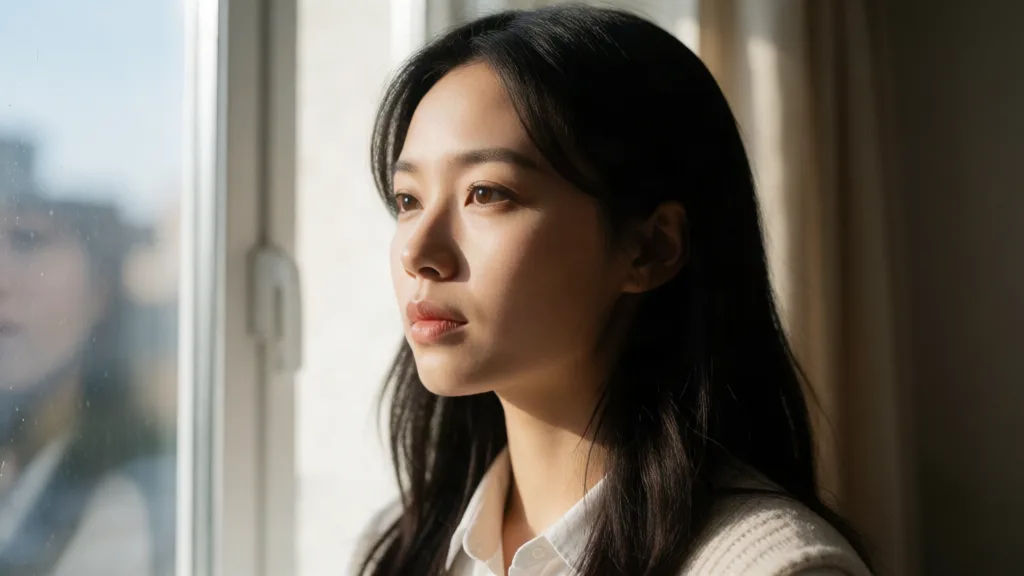
The first thing I remember about the day everything shifted was the smell. Not the antiseptic sting of the hospital corridors I'd grown up trailing behind my mother, not the sharp chemical bite of formaldehyde from the anatomy lab where I'd spent three semesters learning the architecture of the human body. No. It was jollof rice. My aunt's jollof rice, the kind she made only for occasions she considered important enough to warrant the good pot, the one with the cracked handle she refused to replace because it had belonged to her own mother.
I was nineteen years old, standing in the doorway of our cramped kitchen in Surulere, watching steam rise from that pot like prayers ascending, and I was trying to remember how to breathe.
"Rashlium." My aunt didn't turn around. She stirred with a wooden spoon worn smooth by decades of use. "You've been standing there for five minutes. Either come and help me or go and sit down. Your hovering is making the stew nervous."
"I'm not hovering."
"You're hovering." She tapped the spoon against the rim of the pot. "I can feel you behind me like a small anxious ghost. Sit. The rice will be ready when it's ready. Not before."
I sat. The plastic chair creaked under me, the same complaint it made every evening when my mother came home from her shift at the general hospital, her feet swollen, her spirit somewhere between exhaustion and gratitude. I'd learned to read that chair. It told me things about my mother's day before she said a word.
Today, though, the chair was mine, and it was telling me I was afraid.
The envelope was in my bag. I'd checked it four times since I'd picked it up from the post office that morning. Four times I'd slid my thumb under the flap, felt the edge of the paper inside, and stopped. The letter was from the university. The letter would tell me whether the last three years of my life, the late nights, the early mornings, the tears I'd hidden in bathroom stalls and library corners, the prayers I'd whispered into my pillow when I thought no one could hear, whether all of it had been enough.
"You know," my aunt said, still stirring, "when your mother was your age, she had three choices. Nursing. Teaching. Or marriage."
"I know."
"She chose nursing. And then she chose marriage anyway. To your father." The spoon paused. "And then he left. And she chose nursing again. Because it was the only thing that didn't leave."
I didn't say anything. There was nothing to say. My father was a photograph I'd memorized, a voice on the phone twice a year, a name that appeared on my birth certificate and nowhere else. He'd gone to London when I was four, promising to send for us. He'd sent money for a while. Then he'd sent nothing. Then he'd sent a divorce letter, which my mother had read once and then burned in the backyard, watching the flames with a face I couldn't read.
"The rice is done," my aunt said. "Go and call your mother."
"She's not home yet."
"Then go and stand at the window and wait for her. That's what you do when you're waiting for someone. You stand at the window. You don't sit in my kitchen and vibrate like a trapped insect."
I went to the window.
Surulere at dusk was a symphony of ordinary life. The woman across the street was frying plantains again, the oil popping and hissing like applause. The boys from the next compound were playing football with a ball made of plastic bags tied with twine, their shouts rising and falling in a rhythm I'd known since childhood. A bus stopped at the corner, disgorging passengers who scattered like seeds, each one heading home to their own small dramas, their own quiet hopes.
I loved this street. I hated this street. I loved it because it was home, because every crack in the pavement held a memory, because the woman who sold akara in the morning knew my name and always gave me one extra piece. I hated it because it was small, because the same faces appeared day after day, because sometimes I felt like I could see my entire future written in the lines of the women who'd lived here their whole lives, women who'd dreamed of more and settled for enough.
I didn't want to settle. That was the thing. That was the secret I held in my chest like a burning coal.
My mother appeared at the corner. She walked slowly, the way she always did after a shift, her shoulders curved forward as if carrying something invisible and heavy. When she saw me at the window, she raised one hand in a small wave. I waved back.
The letter was still in my bag.
We ate dinner together, the three of us, my mother and my aunt and me. The jollof was perfect, as always, the rice tender and spiced, the kind of meal that made you close your eyes on the first bite. My mother ate in silence, her gaze fixed somewhere in the middle distance, and I knew she was still at the hospital, still with her patients, still carrying their stories in her body like stones.
"Rashlium has something to tell us," my aunt said.
I nearly choked on my rice. "I don't."
"You do. You've been walking around all day like a hen that's swallowed a coin. Whatever it is, it's heavy. Put it down."
My mother looked at me then, really looked, and I saw the exhaustion in her eyes give way to something else. Concern. Curiosity. Love, always love, that was the foundation of everything she did.
"The letter came," I said.
The room went quiet. Even the street outside seemed to hold its breath.
"And?"
"I haven't opened it."
My mother set down her spoon. She didn't tell me to open it. She didn't ask why I hadn't. She just looked at me with those eyes that had seen everything, that had held dying patients and newborn babies and the face of a man who'd promised her forever and then disappeared, and she waited.
"I'm scared," I said. The words came out smaller than I intended, smaller than I wanted them to be. "What if I didn't get in? What if all of this was for nothing?"
"Nothing is for nothing," my mother said. "You know that."
"I know it in my head. But my heart..."
"Your heart is a coward sometimes. That's normal. Hearts are cowards. They want to protect you. They don't understand that sometimes you have to risk being broken to become something new."
My aunt nodded, reaching for more rice. "What your mother said. Also, open the letter. I didn't cook this jollof for a sad occasion. I cooked it for a celebration. Don't make me a liar."
I opened the letter.
The world, as it turned out, did not end. It did not even crack. It simply rearranged itself around a single word: Congratulations.
I got in. I got into the program. Pharmacology, my first choice, the path I'd chosen after months of agonizing, after nights of lying awake and weighing possibilities, after conversations with my mother that had stretched past midnight and into the soft gray hours before dawn. I got in.
My mother didn't scream. She didn't cry. She simply reached across the table and took my hand, her fingers rough from years of washing and sanitizing, her grip steady and sure. "I knew," she said. "I always knew."
My aunt did scream. She screamed and then she laughed and then she served more rice, and we ate and laughed and talked about the future, my future, which suddenly seemed vast and bright and terrifying in the best possible way.
That night, I lay in my bed and stared at the ceiling, listening to the sounds of the city settling into sleep. The fan whirred overhead, stirring the warm air but not cooling it. Somewhere in the distance, a dog barked. A baby cried. Life went on, ordinary and extraordinary, the way it always does.
I thought about my mother, who had chosen nursing because it was the only thing that didn't leave. I thought about my aunt, who had never married, who had devoted her life to her sister and her niece, who had made jollof rice for every important moment of my existence. I thought about the girl I'd been, the girl who'd dreamed of more, and the woman I was becoming, the woman who was starting to believe those dreams might actually be possible.
I thought about pharmacology, about the way drugs interact with the body, about the delicate balance between healing and harm. I thought about the patients I would one day help, the lives I would touch, the difference I would make. I thought about my father, somewhere in London, living a life I knew nothing about, and I wondered if he ever thought about me.
I didn't want to think about him. I wanted to think about the future.
So I did.
The first day of the program arrived faster than I expected. One moment I was celebrating with jollof rice and laughter, and the next I was standing in front of a building I'd only seen in photographs, my heart hammering against my ribs like a trapped bird.
The University of Lagos was a world unto itself. Students moved in currents, some alone, some in groups, their voices rising and falling in a language I was only beginning to learn. The buildings were older than I'd imagined, their facades weathered by decades of sun and rain, but there was a vitality to them, a sense that important things happened here, that futures were made and broken within these walls.
I found my lecture hall after three wrong turns and one embarrassing conversation with a security guard who seemed to find my confusion amusing. The hall was already half full when I arrived, and I stood in the doorway for a moment, scanning the rows of seats, looking for a friendly face, a familiar face, any face that might make this easier.
There were none. I knew no one here.
I sat in the back row, near the window, where I could see the campus spread out below like a map of possibilities. The seat was hard and uncomfortable, but it was mine. I pulled out my notebook, a fresh one I'd bought specifically for this day, its pages blank and full of potential.
The professor arrived precisely on time. He was older than I'd expected, with gray hair and a face lined by years of thought. He didn't introduce himself. He didn't welcome us. He simply walked to the front of the room, looked out at the sea of faces, and said: "Pharmacology is not about memorizing drug names. It is not about passing exams. It is about understanding the relationship between the human body and the substances we introduce into it. It is about knowing when to intervene and when to step back. It is about respecting the power you will one day hold in your hands."
He paused, letting the words settle.
"Some of you will fail this course. Some of you will drop out. Some of you will realize that this is not the path for you. But those of you who remain, those of you who persist, will become the guardians of a sacred trust. You will hold lives in your hands. You will make decisions that ripple outward in ways you cannot predict. You will be asked to be both scientist and healer, both analyst and advocate."
He looked directly at me then, or at least it felt that way, his gaze sharp and assessing.
"The question is not whether you are smart enough. The question is whether you are brave enough. Whether you are willing to fail, to learn, to grow. Whether you are willing to become something new."
I wrote those words in my notebook. I underlined them twice. I didn't know it then, but they would become a kind of scripture for me, a reminder of why I was here, a compass for the long road ahead.
The weeks that followed were a blur of lectures and labs, of textbooks and flashcards, of coffee and exhaustion. I learned the names of drugs I'd never heard of, the pathways they traveled through the body, the ways they could heal and the ways they could harm. I learned to read a patient's history like a story, to look for clues in the spaces between the lines. I learned that pharmacology was not just a science but an art, a practice of attention and intuition as much as knowledge and skill.
I also learned that I was not the smartest person in the room. There were students who grasped concepts instantly, who answered questions without hesitation, who seemed to have been born with the knowledge already in their bones. I was not one of them. I had to work. I had to study twice as hard, three times as hard, just to keep up.
But I kept up. I kept going. I kept showing up, even when I was tired, even when I was scared, even when the voice in my head whispered that I didn't belong here, that I was fooling myself, that I would never be enough.
I kept going because I remembered why I started.
I remembered my mother, who had chosen nursing because it was the only thing that didn't leave. I remembered the patients she came home talking about, the ones she'd saved and the ones she'd lost, the ones whose names she carried with her like prayers. I remembered the way she looked at me when I told her I wanted to go into healthcare, the pride in her eyes, the hope, the fear.
I remembered the girl I'd been, the one who'd dreamed of more. And I remembered the woman I wanted to become.
One evening, about three months into the program, I found myself in the library, surrounded by books and notes, my head pounding with fatigue. I'd been studying for hours, trying to memorize the mechanisms of action for a class of drugs I couldn't quite wrap my mind around. The words blurred on the page. My eyes kept closing. I was on the verge of giving up, of packing my bags and going home, when a voice interrupted my spiral.
"You look like you're trying to solve the mysteries of the universe."
I looked up. A woman stood at the end of my table, her arms full of books, her smile knowing and kind. She was older than me, maybe in her thirties, with a face that had seen things, that had lived things, that understood something I was only beginning to learn.
"Just trying to pass pharmacology," I said.
"Ah. The great filter." She set her books down and sat across from me, uninvited but not unwelcome. "I remember those days. I nearly quit three times."
"You did?"
"I did. And then I remembered that quitting would mean letting them win."
"Letting who win?"
"The ones who said I couldn't do it. The ones who looked at me and saw a girl from the village, a girl who didn't belong in a university, a girl who should be married and having babies instead of studying the human body." She leaned back in her chair, her eyes distant. "I proved them wrong. It took me ten years, but I proved them wrong."
I didn't know what to say. I didn't know who this woman was, why she was talking to me, what she wanted. But there was something about her, something that made me want to listen.
"My name is Dr. Folake," she said. "I teach here. I also mentor students who remind me of myself. Students who are the first in their families to go to university. Students who are carrying the weight of other people's dreams on their shoulders. Students who are scared and tired and wondering if they made the right choice."
"How do you know I'm one of those students?"
"Because I see it in your eyes. The same look I used to have. The look of someone who's fighting for something bigger than herself."
She reached into her bag and pulled out a card, sliding it across the table toward me.
"If you ever need to talk, if you ever need advice, if you ever feel like giving up, call me. I can't promise I'll have the answers. But I can promise I'll listen."
I took the card. I put it in my pocket. I didn't call her that night, or the next, or the one after that. But I kept the card. I kept it with me, a small reminder that I wasn't alone, that there were people who understood, that there was help available if I was brave enough to ask for it.
The semester ended. I passed my exams. Not with flying colors, not with the highest marks in the class, but I passed. I passed, and that was enough. I passed, and I was still here, still standing, still fighting.
The second semester was harder. The material was more complex, the expectations higher, the competition fiercer. I found myself struggling in ways I hadn't expected, questioning things I'd always taken for granted. Did I really belong here? Was this really the path for me? Was I strong enough to keep going?
I called Dr. Folake on a Tuesday afternoon, after a particularly brutal exam that I was sure I'd failed. My hands were shaking. My voice was trembling. I was on the verge of tears.
"I don't think I can do this," I said. "I don't think I'm good enough."
"Good enough for what?"
"For this. For pharmacology. For a career in healthcare. For any of it."
"Rashlium." Her voice was calm, steady, the voice of someone who had weathered many storms. "Do you know why I became a pharmacologist?"
"No."
"Because my mother died from a medication error. She was given the wrong drug, the wrong dose, and she died. I was twelve years old. I decided then that I would learn everything there was to know about drugs, about how they work, about how they can heal and how they can hurt. I decided that I would spend my life making sure that what happened to my mother never happened to anyone else."
I was silent. I hadn't known. How could I have known?
"I failed my first pharmacology exam," she continued. "I failed it spectacularly. I thought about quitting. I thought about giving up. But then I remembered my mother. I remembered why I started. And I kept going."
"How?"
"One day at a time. One exam at a time. One small victory at a time. I didn't try to be perfect. I tried to be persistent. I tried to show up, even when I didn't want to. I tried to learn from my failures instead of being defined by them."
She paused.
"You are not failing, Rashlium. You are learning. There is a difference. The question is not whether you will struggle. The question is whether you will keep going when you do."
I kept going.
The years passed. I moved through the program, one semester at a time, one exam at a time, one small victory at a time. I made friends, fellow travelers on the same road, people who understood the weight of what we were carrying. I found mentors, professors who saw something in me worth nurturing, who pushed me to be better than I thought I could be. I found moments of joy, of wonder, of gratitude, moments when I knew, with absolute certainty, that I was exactly where I was supposed to be.
And I found moments of doubt, of fear, of exhaustion, moments when I wanted to give up, to walk away, to choose a different path. But I didn't. I kept going. I kept showing up. I kept remembering why I started.
I wanted to graduate. I wanted to make my family proud. I wanted to become successful. And most importantly, I wanted to use my career to help people.
So I kept studying. I kept praying. I kept moving forward.
One day, I looked back and realized something.
The girl who once dreamed about her future had finally started becoming the woman she dreamed of.
I was in my final year when I met Mr. Adeyemi. He was a patient at the hospital where I was doing my clinical rotation, an older man with diabetes and hypertension and a long list of medications that he struggled to keep straight. He came in every month for his check-ups, always alone, always with a plastic bag full of pill bottles that he couldn't quite remember how to take.
The first time I met him, he was confused and frustrated, snapping at the nurses, refusing to answer questions. I sat with him for an hour, going through each medication one by one, explaining what it was for, when to take it, why it mattered. I drew a chart for him, simple and clear, with pictures and colors and large print.
He looked at the chart. He looked at me. And then he started to cry.
"No one has ever taken the time," he said. "No one has ever explained it like this."
I held his hand. I told him it was okay. I told him I understood.
That night, I called my mother. I told her about Mr. Adeyemi, about the chart, about the tears. I told her about the way it felt to help someone, to make a difference, to be the person who took the time.
"That's why we do this," my mother said. "That's why we choose this work. Not for the money. Not for the prestige. For the moments like this. For the chance to be there when someone needs us."
I understood then, in a way I hadn't before, what it meant to be a healer. It wasn't just about knowledge. It wasn't just about skill. It was about presence. It was about showing up, again and again, for people who needed someone to show up for them.
It was about love.
The graduation ceremony was held on a Saturday morning, under a sky so blue it seemed painted. My mother sat in the front row, wearing her best dress, the one she'd saved for special occasions. My aunt sat beside her, her camera ready, her eyes already wet with tears. Dr. Folake was there too, in the third row, her smile proud and knowing.
I walked across the stage. I accepted my diploma. I shook hands with the dean, with the professors, with the people who had shaped me, challenged me, believed in me.
And then I looked out at the crowd, at the faces of my family, at the woman who had raised me, at the aunt who had fed me, at the mentor who had guided me, and I felt something I hadn't expected.
Gratitude. Overwhelming, overflowing gratitude.
Not just for the diploma. Not just for the degree. But for the journey. For the struggles and the triumphs, the failures and the successes, the moments of doubt and the moments of certainty. For all of it. For every single step that had brought me here.
After the ceremony, we went home and ate jollof rice. My aunt had made it, of course, in the good pot, the one with the cracked handle. We ate and laughed and talked about the future, my future, which was no longer just a dream but a reality.
My mother raised her glass. "To Rashlium," she said. "To the girl who dreamed big and worked hard and never gave up."
"To Rashlium," my aunt echoed.
"To Rashlium," Dr. Folake said.
I raised my own glass, my heart full to bursting.
"To the future," I said. "To all of us. To the journey ahead."
The night was warm and soft, the air filled with the sounds of the city, the smells of home. I sat on the balcony and looked up at the stars, thinking about everything that had brought me here, everything that lay ahead.
I thought about the girl I'd been, the one who'd stood in the kitchen and watched the steam rise from the jollof rice, the one who'd been too scared to open a letter, the one who'd dreamed of more.
I thought about the woman I'd become, the one who'd opened that letter, who'd walked through those doors, who'd kept going even when it was hard.
I thought about the woman I was still becoming, the one who would face new challenges, new fears, new doubts. The one who would keep learning, keep growing, keep showing up.
And I thought about all the girls out there, all over the world, who were dreaming of more. Who were scared and tired and wondering if they had what it took. Who were standing at the edge of something new, something terrifying, something beautiful.
I wanted to tell them something. I wanted to tell them that it was possible. That they were enough. That they could do it, if they kept going, if they kept believing, if they kept remembering why they started.
But I couldn't tell them. Not yet. Not all of them.
So I told myself instead. I told myself the words I needed to hear.
You are enough. You are brave. You are becoming.
And I believed it. For the first time in my life, I believed it completely.
The journey wasn't over. It was just beginning. There would be more challenges, more struggles, more moments of doubt. There would be days when I wanted to give up, when I questioned everything, when I wondered if I'd made the right choice.
But I knew, now, that I would keep going. I would keep showing up. I would keep remembering why I started.
Because this was my story. My journey. My life.
And I was only just beginning to write it.
The years that followed were a blur of new experiences, new challenges, new opportunities. I got a job at a hospital in Lagos, working in the pharmacy department, helping patients understand their medications, making sure they got what they needed. I worked long hours, difficult hours, hours that tested my patience and my strength. But I loved it. I loved every moment of it.
I loved the look on a patient's face when they finally understood how to take their medication. I loved the satisfaction of solving a problem, of finding the right drug, the right dose, the right combination. I loved the feeling of being part of something bigger than myself, of contributing to something that mattered.
I also loved the moments of quiet, the moments between patients, when I could sit and think and reflect. Those moments were rare, but they were precious. They reminded me of why I was here, of what I was working for, of the person I wanted to become.
One day, I received a letter. It was from Dr. Folake, who had moved to Abuja to take a position at a larger hospital. She was starting a mentorship program for young women in healthcare, and she wanted me to be part of it.
"I see something in you," she wrote. "Something special. Something that reminds me of myself, all those years ago. I want to help you become the leader I know you can be."
I said yes. Of course I said yes.
The mentorship program changed my life. It connected me with women from all over Nigeria, women who were fighting the same fights, facing the same challenges, dreaming the same dreams. We met once a month, sharing our stories, our struggles, our successes. We supported each other, encouraged each other, held each other up.
I learned that I was not alone. I learned that there were others like me, others who had faced the same doubts, the same fears, the same obstacles. I learned that the journey was hard, but it was possible. I learned that we could do it together.
And I learned something else, something that would shape the rest of my life.
I learned that I wanted to be a mentor too. I wanted to help other young women, other girls like me, who were dreaming of more. I wanted to be the person who said: You can do this. I believe in you. I've been where you are, and I made it through.
So I started. I started small, mentoring one student at a time, sharing what I'd learned, offering what I could. I started with a girl named Amara, who reminded me of myself, who was scared and tired and wondering if she had what it took.
I told her my story. I told her about the jollof rice, about the letter, about the years of struggle and doubt. I told her about Dr. Folake, about the card she'd given me, about the call I'd made when I was on the verge of giving up.
"Keep going," I told her. "Keep showing up. Keep remembering why you started."
She did. She kept going. She kept showing up. And one day, she graduated, and she came to me with tears in her eyes and said: "Thank you. Thank you for believing in me."
That moment, that single moment, was worth everything. Every struggle, every doubt, every sleepless night. It was worth it. It was all worth it.
I looked back on my journey, on everything I'd been through, and I realized something.
The girl who once dreamed about her future had finally become the woman she dreamed of.
But the journey wasn't over. It was never over. There was always more to learn, more to grow, more to become. There were always more girls to help, more dreams to nurture, more lives to touch.
I thought about my mother, who had chosen nursing because it was the only thing that didn't leave. I thought about my aunt, who had fed me and loved me and believed in me. I thought about Dr. Folake, who had seen something in me and helped me see it too.
I thought about all the women who had come before me, who had fought and struggled and sacrificed so that I could stand here today. I thought about all the women who would come after me, who would stand on my shoulders, who would reach even higher.
And I thought about myself. The girl. The woman. The dreamer. The doer.
I thought about the journey ahead, the challenges and the triumphs, the failures and the successes. I thought about the person I was still becoming, the person I would be ten years from now, twenty years from now.
I didn't know exactly what the future held. I didn't know what obstacles I would face, what joys I would experience, what sorrows I would endure.
But I knew one thing. I knew that I would keep going. I would keep showing up. I would keep remembering why I started.
Because this was my story. My journey. My life.
And I was still writing it.
The sun was setting over Lagos, painting the sky in shades of orange and pink and gold. I stood on my balcony, looking out at the city, at the millions of lives unfolding below me, each one a story, each one a dream.
I thought about the girl I'd been, standing in that kitchen, watching the steam rise from the jollof rice. I thought about the woman I'd become, standing here, looking out at the world.
The same girl. Bigger dreams.
I smiled. I took a deep breath. And I got ready to keep going.
Watch this moment
Turn the current scene into a cinematic Live Chapter — what you watch becomes the story's next part.
Disclaimer
This is a work of fiction, assisted by artificial intelligence. Any names or characters, businesses or places, events or incidents, are fictitious. Any resemblance to actual persons, living or dead, or actual events is purely coincidental.
Content Removal Policy
- Users may report content that may be illegal or violates our Standards.
- All reported complaints will be reviewed and resolved within seven business days.
- Review Process: Our team will assess the reported content against our guidelines.
- Appeals: If you disagree with a decision, you may appeal within 14 days of notification.
- Potential outcomes include: content removal, account warning, or no action if no violation is found.
To report content, email us at [email protected]