Share
Go Live
Veiled Dawn
·
Published 10/6/2026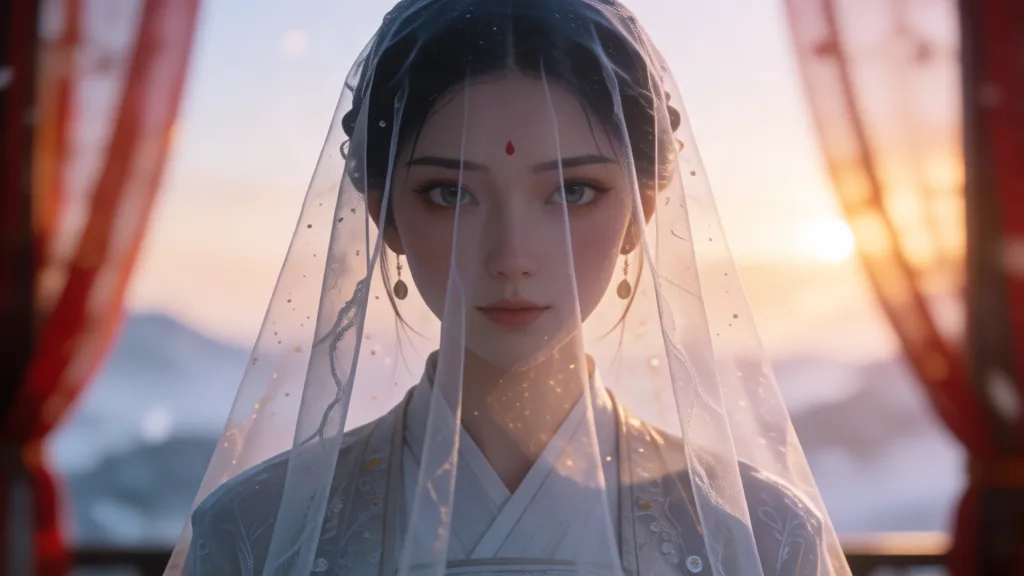
The first thing I stole was a loaf of bread.
I was seven. It was still warm, and I remember the heat of it against my chest more than I remember the hunger, which had been there so long it felt like a organ, something I was born with. My mother was asleep on the floor of the room we rented above a tailor's shop, and the tailor was shouting up the stairs about the rent, and I slipped out the window and down the drainpipe because the stairs would take me past his door and his hands.
The baker's stall was three streets over, near the river. He was arguing with a woman about the price of eggs. I took the bread and I walked, not ran, because running is what guilty people do. I ate it in an alley behind a temple, and I fed the crusts to a dog who had one eye and no interest in me. That dog followed me home. He stayed for six years. I still think about him more than I think about most people.
That's the thing nobody tells you about stealing. It's not about the thing. It's about the walking away. It's about the being seen and not being seen. The bread was gone in ten minutes. The walking away stayed.
My name is Asha, and I am a thief, and I have been one for so long that I don't remember what my hands did before they learned to take. Maybe nothing. Maybe they were always waiting to be useful.
The city is called Orugbo, and it sits where the river splits into three and then forgets to come back together. The water is brown and slow and it smells like iron. On the east bank, the traders sell cloth and pepper and sometimes people, though they call it something else. On the west bank, the government buildings are painted white every year and gray by the next. And in the middle, on the island that isn't really an island because the water is shallow enough to walk across in the dry season, that's where I live. That's where everyone lives who can't afford to live anywhere else.
The island is called the Between. Not officially. Officially it's called Saint Mary's, after some priest who drowned there three hundred years ago trying to convert the fishermen. The fishermen drowned him instead. The name stuck in the ledgers but not in the mouths. In the mouths it's the Between, because that's what it is. Between the river and the river. Between the law and the law. Between the people who have and the people who take.
I live in a room on the third floor of a building that leans toward the water like it's tired. The stairs are wooden and they groan. The walls are thin and I can hear the woman next door singing to her baby, and the man below her coughing, and the couple above me fighting about money. I know all their business. They know mine. That's the price of the Between. You get to be nobody, but you don't get to be nobody alone.
My mother died when I was twelve. Fever. The kind that comes in the rainy season and takes the old and the young and the unlucky. She was thirty-four. I sat with her for two days while she burned and shook and called for people I didn't know. Her mother, maybe. A man she never told me about. She called for water and I gave it to her. She called for my father and I told her he was coming. He wasn't. I don't know who he was. She never said. I used to think that was cruelty. Now I think it was mercy. Some things you can't give a child. Some things you can only carry yourself.
After she died, I kept the room because the landlord forgot to evict me. Or maybe he felt sorry for me. Or maybe he was waiting for me to grow up so he could charge me more. I was small for twelve. I stayed small. That was useful. Small means forgettable. Small means you can fit through windows and into corners and under tables where people talk without looking down.
I learned to listen before I learned to take. That's the real skill. The taking is just the hand. The listening is the whole body. You have to hear what people don't say. You have to watch where their eyes go when they lie. You have to know the weight of a purse by the way a woman holds her shoulder. You have to know the sound of a man who's carrying something he shouldn't. These are not things you can teach. These are things you learn because you have to.
By fifteen, I was good. By eighteen, I was better than good. I had a system. I had rules. Never steal from the poor. Never steal from children. Never steal anything you can't carry at a run. Never go back to the same place twice in a month. Never trust a man who smiles too much. Never trust a woman who doesn't. Never, ever, steal from the temple, because the temple sees everything and forgives nothing.
I broke that last rule on a Tuesday in the dry season, when the river was low and the air was thick with dust and the heat made everyone stupid.
His name was Father Emeka, and he was not a priest, not really. The temple on the Between was a shrine to the old gods, the ones the missionaries tried to bury and couldn't, and Father Emeka was the man who kept the flame. He was tall and thin and he wore white robes that were always clean, which in the Between meant something. Nobody's clothes are always clean. Not unless they have water to spare. Not unless they have someone to wash for them. Not unless they have power.
He had power. Everyone knew it. The traders on the east bank paid him tribute. The government men on the west bank came to him for blessings before elections. The fishermen gave him the first of every catch. He was the hinge the city swung on, and he knew it, and he liked it.
I didn't steal from him because I was hungry. I stole from him because I was curious.
There was a box in the shrine. Small, wooden, carved with symbols I didn't understand. It sat on the altar next to the flame, and every time I went to the temple, which was not often, I watched it. I watched who touched it. I watched who didn't. I watched Father Emeka's hands when he walked past it, the way they twitched toward it and then away, like a man who wants to touch a woman he shouldn't.
Nobody touched the box. Not even him.
That's what made me want it. Not the box itself. The not touching. The way everyone in that shrine, every worshipper, every priest, every child who came to light a candle, they all looked at the box and then looked away. Like it was a sun they couldn't stare at. Like it was a wound they couldn't press.
I wanted to know what was inside. I wanted to know what could make a whole city afraid to look.
So on that Tuesday, when the heat had made everyone slow and stupid, I climbed through the window of the shrine while Father Emeka was blessing a boat down at the river. I walked to the altar. I picked up the box. It was lighter than I expected. It fit in my palm like it was made for my palm. I put it in the pocket of my dress and I climbed back out the window and I walked, not ran, because running is what guilty people do.
I didn't open it until I was home. I sat on the floor of my room, with the door bolted and the shutters closed, and I put the box on my knees and I looked at it. The wood was dark and smooth and warm. The symbols were not symbols. They were words, in a language I didn't know, carved so deep they went all the way through.
I opened it.
Inside was a key. Small, iron, rusted at the edges. And a piece of paper, folded four times, so old the creases had gone soft and brown.
I unfolded the paper. There was one line, written in a hand that shook.
*The door is under the water. The water is under the city. The city is under the debt.*
I read it three times. I didn't understand it. I still don't, not fully. But I understood the key. I understood that I was holding something that someone had hidden, something someone had been afraid of, something that had been waiting in a box on an altar for longer than I had been alive.
I heard footsteps on the stairs. Heavy. Fast. More than one person.
I put the key in my pocket. I put the paper in my mouth and swallowed it, because that's what you do when you don't know what else to do. The paper tasted like dust and old ink. It tasted like a question I had just asked and couldn't take back.
The footsteps stopped outside my door.
And I sat there, on the floor, with the empty box in my lap, and I waited.
Watch this moment
Turn the current scene into a cinematic Live Chapter — what you watch becomes the story's next part.
Disclaimer
This is a work of fiction, assisted by artificial intelligence. Any names or characters, businesses or places, events or incidents, are fictitious. Any resemblance to actual persons, living or dead, or actual events is purely coincidental.
Content Removal Policy
- Users may report content that may be illegal or violates our Standards.
- All reported complaints will be reviewed and resolved within seven business days.
- Review Process: Our team will assess the reported content against our guidelines.
- Appeals: If you disagree with a decision, you may appeal within 14 days of notification.
- Potential outcomes include: content removal, account warning, or no action if no violation is found.
To report content, email us at [email protected]