Share
Go Live
The Prime Minister's Heart
·
Published 9/8/2026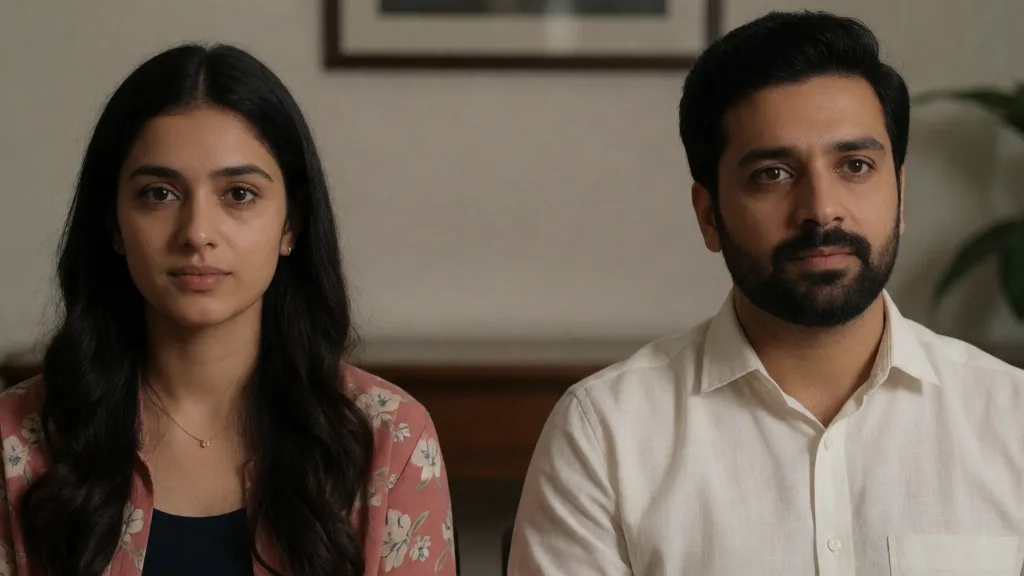
The first time I saw Krish Kapoor, he was wiping sweat from his forehead with the back of his hand, and I thought, *that man has no idea how to stand in the shade.*
It was May in Delhi. The kind of heat that turns the air into a wet blanket you can’t shrug off. I was pressed against a barricade near the stage at Ramlila Maidan, my kurta sticking to my lower back, my phone recording a speech I’d already transcribed from the press release. My professor wanted a field report on the Home Minister’s new anti-radicalization policy. I wanted a glass of water and a fan that worked.
He was thirty minutes late. The crowd didn’t care. They chanted his name like a prayer, a rhythm that beat against my ribs. *Krish. Krish. Krish.*
He climbed the steps to the podium and the noise swelled, crested, broke. He didn’t wave like a politician. He just stood there, adjusted the microphone, and said, “Sorry for the delay. Traffic in this city is a form of punishment I wouldn’t wish on my enemies.”
Laughter. Applause. I rolled my eyes.
He was younger than I expected. Thirty-three, the news said. The youngest Home Minister in Indian history. They called him the boy wonder, the Brahmin prince, the man who could drink chai with a terrorist and negotiate peace before the cup went cold. I called him a product. A well-marketed solution to a problem most people couldn’t name.
But I watched him anyway.
He spoke without notes. His voice was low, unhurried, the kind of voice that made you lean in. He talked about radicalization like it was a disease of the lonely, not the faithful. He talked about jobs, about mothers who lost sons to ideology, about a center for de-radicalization that would offer counseling and vocational training instead of prison cells.
It was smart. It was compassionate. It was the kind of policy that sounds beautiful on paper and falls apart when you ask who pays for it.
I kept recording. I kept watching.
And then he looked at me.
Not at the crowd. Not at the cameras. At me. Directly at me. His eyes caught mine for a second, maybe two. A pause that felt longer than it was. Then he smiled, a small crooked thing, and turned back to his speech.
I told myself it meant nothing. Eye contact is a politician’s currency. They spend it freely.
But my stomach did something stupid anyway.
---
After the speech, the crowd dispersed like water finding cracks in concrete. I packed my recorder, my notebook, my phone. I was ready to leave when a hand touched my elbow.
“Miss Batra?”
I turned. A man in a white kurta, young, with the kind of face that belonged in a toothpaste ad. “Yes?”
“The Home Minister would like a word.”
I blinked. “About what?”
“He didn’t specify, ma’am.”
I should have said no. I had nothing to say to Krish Kapoor. I was a PhD student with a thesis on state-sponsored rehabilitation programs. He was the man who could make my research relevant or irrelevant with a single policy change. I was nobody. He was the Home Minister.
But curiosity is a bastard. It never lets you walk away.
I followed the man through the crowd, past security, into a small tent behind the stage. The air inside was cooler. A portable AC unit hummed in the corner. Krish Kapoor sat on a folding chair, a bottle of water in his hand, his tie loosened.
He stood when I entered. “Sorry for pulling you away. I saw you in the crowd. You weren’t cheering.”
I crossed my arms. “I was working.”
“I know.” He smiled again. That crooked thing. “You had a recorder. A notebook. You looked like you were fact-checking me in real time.”
“Someone has to.”
He laughed. A real laugh, not a politician’s chuckle. “What’s your name?”
“Vaani Batra.”
“Vaani.” He said it like he was tasting it. “Your thesis?”
I hesitated. “State-sponsored rehabilitation programs in conflict zones. Comparative analysis of India and Sri Lanka.”
His eyebrows went up. “That’s specific.”
“That’s the point.”
He nodded, slow. “You think my plan won’t work.”
“I think it’s untested. I think you’re betting on human behavior changing because the government builds a nice building and hires good counselors. I think that’s optimistic at best and naive at worst.”
Silence. The AC hummed. A fly buzzed against the tent wall.
Then he said, “Come work with me.”
I stared. “What?”
“My office. Three months. Consultant on the de-radicalization project. You’ll get access to everything. Data, meetings, policy drafts. You can write your thesis from the inside.”
“That’s insane.”
“Probably.” He shrugged. “But I’d rather have someone who thinks I’m naive than someone who tells me I’m brilliant. At least you’ll tell me the truth.”
I opened my mouth. Closed it. Opened it again.
“Why me?”
“Because you were the only person in that crowd who wasn’t impressed.”
He held out his hand. I looked at it. A politician’s hand. Clean, manicured, offered like a deal.
I should have walked away.
But curiosity is a bastard. And ambition is its cruel sister.
I shook his hand. His palm was warm. Dry. His grip was firm but not hard.
“I’ll think about it.”
“Don’t think too long. The offer expires in forty-eight hours.”
“That’s arbitrary.”
“It’s intentional.” He let go of my hand. “I need people who make decisions. Not people who make pros and cons lists.”
I left the tent without saying goodbye. The heat hit me like a wall. I walked through the emptying maidan, my phone buzzing with messages from my advisor, my head spinning.
I told myself I wouldn’t take the offer. I told myself it was a trap. A way to co-opt a critic, to neutralize dissent with proximity.
But that night, lying in my hostel room, the fan rotating above me like a lazy bird, I thought about his eyes. The way they held mine across a crowd of thousands. The way he said my name. Like it mattered.
I didn’t sleep well.
---
Three days later, I was in his office at North Block. A room with high ceilings and old files and a portrait of Gandhi on the wall. He sat behind a desk that looked too big for him, a cup of tea cooling at his elbow.
“You’re late,” he said.
“I wasn’t sure I was coming.”
“But you did.”
I sat down without being invited. “Don’t make me regret it.”
He smiled. That crooked thing. “I never make women regret anything.”
“That’s a terrible line.”
“It’s not a line. It’s a policy.”
I didn’t laugh. But I wanted to.
The office smelled like old paper and sandalwood. Sunlight fell in long rectangles across the floor. A fan stirred the air without cooling it. I was wearing a blue saree, the one I saved for interviews, and I could feel the fabric sticking to my skin.
He watched me settle. “You look nervous.”
“I’m not.”
“Good. Nervous people make bad decisions.”
“What do calm people make?”
He leaned back in his chair. The leather creaked. “Interesting ones.”
I held his gaze. I didn’t blink.
And somewhere in that room, between the Gandhi portrait and the cooling tea and the heat that pressed against the windows like a living thing, something shifted. A door I didn’t know was there cracked open.
I walked through it anyway.
Watch this moment
Turn the current scene into a cinematic Live Chapter — what you watch becomes the story's next part.
Disclaimer
This is a work of fiction, assisted by artificial intelligence. Any names or characters, businesses or places, events or incidents, are fictitious. Any resemblance to actual persons, living or dead, or actual events is purely coincidental.
Content Removal Policy
- Users may report content that may be illegal or violates our Standards.
- All reported complaints will be reviewed and resolved within seven business days.
- Review Process: Our team will assess the reported content against our guidelines.
- Appeals: If you disagree with a decision, you may appeal within 14 days of notification.
- Potential outcomes include: content removal, account warning, or no action if no violation is found.
To report content, email us at [email protected]