Share
Go Live
The Seven Generation Gate
·
Published 9/16/2026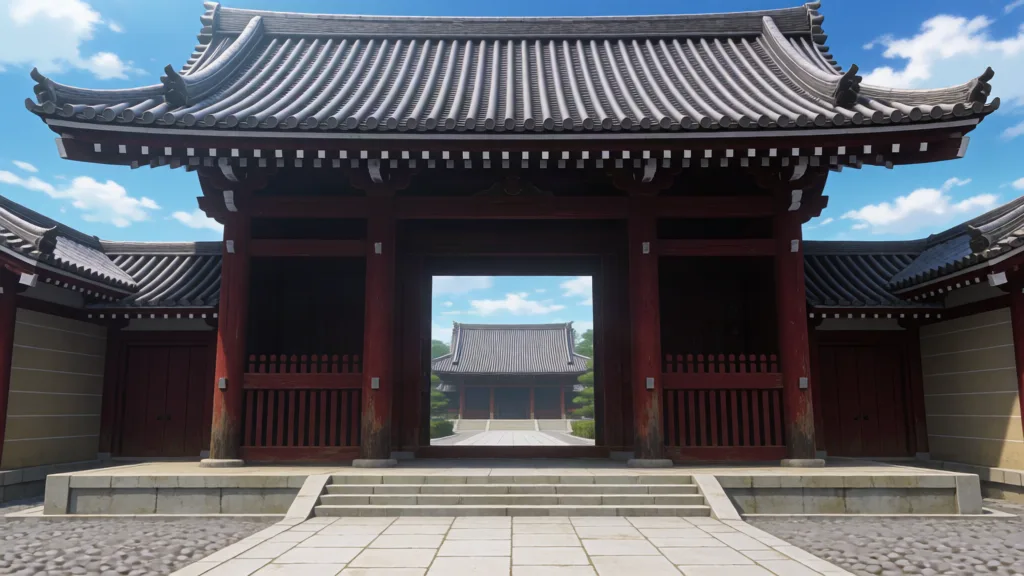
The thunder did not come from the sky.
It came from the ground beneath my feet, from the air around my skin, from the bones inside my body. One moment I was standing in my bedroom in Tokyo, the year 2003, my mother's voice calling me down for dinner. The next moment I was somewhere else, and the somewhere else was screaming.
Light poured through me. Not around me. Through me. I could see my own ribs, the shape of my heart beating, the dark branches of my lungs. The light was white and it was gold and it was the color of nothing I had ever seen, and then it stopped.
I was on my knees.
The ground was dirt packed hard as stone. The air smelled of wood smoke and rice and something else, something green and wet that I would later learn was the Sumida River in summer. My hands were pressed flat against the earth and I could feel the heat radiating up from it, the memory of a sun that had been shining all day.
I looked up.
They were already there. Six of them. Men in armor that I recognized from history textbooks and video games, from woodblock prints in my grandfather's study. Samurai. Real samurai. Their swords were drawn and their faces were the faces of men who had just watched a god fall out of the sky.
The one in front was older. His hair was pulled back in a topknot streaked with gray, and there was a scar that ran from his temple to the corner of his mouth, a pale line that pulled his lip into a permanent half-sneer. His sword was pointed at my throat. The tip did not tremble.
I raised my hands. Slow. Careful. The way you do when a dog has decided you might be a threat and you need to convince it otherwise.
"I am not armed," I said.
The words came out in Japanese. Not the Japanese I had studied in school, not the polite, textbook Japanese of my tutors. The Japanese that came out of my mouth was older, rougher, the kind of language that had not been spoken in my world for four hundred years. I did not know how I knew it. I just did.
The samurai did not lower his sword.
"You came from the thunder," he said. It was not a question.
"I came from somewhere else."
"Where?"
I looked at him. I looked at the armor he wore, the way the lacquered plates caught the afternoon light. I looked at the buildings behind him, low wooden structures with curved tile roofs, and beyond them the shape of a castle rising against the sky. A castle I had seen in photographs. A castle that should not have been standing in the year I had just left.
"Is this Edo?" I said.
The sword pressed against my throat. Just a little. Just enough to feel the cold.
"You will answer my question first," the samurai said. "Where did you come from?"
I thought about lying. I thought about telling him I was a traveler, a merchant's son, a lost boy from a province he had never heard of. I thought about all the ways I could make this easier on myself. But I had not been sent here to make things easier.
"My name is Gabriel Ludovic," I said. "I do not remember my family name. And as you can hear, I am able to speak at least a good Japanese."
The scarred samurai's eyes narrowed. Behind him, one of the younger men shifted his weight, his sword still raised.
"I came from a world that could have been your world," I said. "It has failed so many things. You would have been shocked."
The sword did not move.
"The Gods from my world spared me." I gestured with my chin toward the backpack still strapped across my shoulders. "You see that backpack? It has so many books and technologies. And it is magical too. The Gods sent me here to your world so that it does not repeat the same mistakes that my world made."
I let my hands rise higher. Surrender. Open palms.
"Then they destroyed the planet," I said. "Nothing remains. Only empty void."
The silence that followed was not the silence of disbelief. It was the silence of men trying to decide if they were talking to a prophet or a madman. Sometimes there is not much difference between the two.
The younger samurai spoke. He could not have been more than twenty, his face still smooth, his eyes wide.
"Did you see his eyes?" he said. "They look like someone who saw so many things."
The scarred man did not look away from me. But I saw something shift in his face. A crack in the certainty.
"How old are you?" he said.
"Sixteen."
"So young."
He said it like it was a tragedy. Like being sixteen and carrying the weight of a dead world was the saddest thing he had ever heard. Maybe it was.
The sword lowered. Not all the way. But enough.
"Stand up," he said.
I stood. My legs were shaking. I did not know if it was fear or the aftereffects of whatever had pulled me through time and space. Probably both.
"Your Japanese is strange," the scarred man said. "You speak like a scholar, but your accent is wrong. Where did you learn it?"
"I told you. I came from another world."
"You said the Gods sent you."
"Yes."
"Why?"
I looked at him. At the scar on his face. At the castle in the distance. At the wooden city that spread out around us, a city that in my world had become a metropolis of glass and steel and neon, a city that here was still made of timber and paper and the careful hands of craftsmen.
"Because my world made every mistake it could make," I said. "And the Gods decided that your world deserved a chance to avoid them."
The scarred man studied me for a long moment. Then he sheathed his sword. The others followed his lead, the metal sliding into scabbards with a sound like a sigh.
"You will come with us," he said. "The Shogun will want to see you."
He turned and began walking toward the castle. The other samurai fell into formation around me, not quite touching me, but close enough that I knew there was no point in running.
I followed.
The streets of Edo were nothing like I had imagined. I had seen the woodblock prints, the paintings, the museum recreations. I had walked through the Edo-Tokyo Museum in my own time, had stared at the dioramas and thought I understood. I understood nothing.
The city was alive. It breathed. The smell of grilled eel and pickled vegetables and human sweat and horse manure and incense and river mud all mixed together into something that was not unpleasant, just overwhelming. The streets were crowded with people in kimono and hakama, merchants and laborers and women with their teeth blackened in the old fashion, children running between the legs of adults, a blind monk chanting sutras as he tapped his way down the road with a staff.
They all stopped to stare at me.
I did not blame them. I was wearing jeans and a t-shirt and a pair of running shoes that had cost twelve thousand yen at a department store in Shinjuku. My backpack was made of nylon and zippers and bright blue fabric that probably looked like sorcery to them. My hair was short and unstyled, my skin pale from too many hours indoors, my eyes the color of nothing special.
But they did not know that. To them, I was a creature from beyond the edge of the map, a boy who had fallen out of a clear sky, a messenger from gods they might or might not believe in.
The scarred samurai walked ahead of me, his presence parting the crowd like a knife through silk. People bowed as he passed. They did not look at his face. They looked at the ground.
We reached the castle gates. They were massive, wooden, reinforced with iron bands that gleamed dully in the afternoon light. The guards at the gate recognized the scarred man and stepped aside without a word.
Inside, the castle was a maze of corridors and courtyards. I tried to keep track of the turns, but I lost count after the fifth one. The walls were white plaster and dark wood, the floors polished to a mirror shine. Every surface was clean. Every corner was straight. The architecture was a meditation on order, a physical manifestation of the idea that the universe could be controlled if you just tried hard enough.
It reminded me of my grandfather's house. The same attention to detail. The same refusal to let anything be out of place.
We stopped in a room that was mostly empty. Tatami mats on the floor. A single scroll on the wall, calligraphy in black ink, characters I could read but did not understand. A low table in the center of the room with a ceramic vase that held a single branch of cherry blossoms.
"Sit," the scarred man said.
I sat.
He sat across from me. The other samurai arranged themselves along the walls, their hands on their knees, their eyes fixed on me.
"Wait here," he said.
He left.
I waited.
The room was quiet. I could hear the sound of my own breathing, the rustle of my clothes when I shifted my weight, the distant murmur of voices from somewhere deeper in the castle. A bird sang outside the window. The cherry blossoms in the vase were starting to wilt, their petals curling at the edges.
I took off my backpack. I set it on the tatami in front of me. I unzipped it and looked inside.
The books were still there. The laptop was still there. The solar charger, the hard drives, the notebooks filled with my handwriting, the photographs I had printed on archival paper, the maps I had drawn by hand. Everything I had packed in the hours before I left, when I still thought I was crazy, when I still thought I was just running away from home.
I had not been running away from home. I had been running toward something. I just had not known what.
I closed the backpack. I zipped it shut. I put my hands on my knees and waited.
The scarred man came back. He was not alone.
The man who entered behind him was shorter than I expected. Older. His face was lined with age and worry, his eyes deep-set and dark, his beard trimmed to a precise point. He wore robes of dark silk, the fabric heavy with embroidery, the colors muted and expensive. He moved like a man who had never needed to hurry.
He sat down across from me. The scarred man sat to his left. A servant appeared with tea, pouring it with hands that did not tremble, then disappearing as silently as she had come.
The older man did not speak. He studied me the way a swordsman studies an opponent. Looking for weaknesses. Looking for tells. Looking for something that would tell him what I really was.
I met his eyes. I did not look away.
"You are the boy from the sky," he said finally.
"I am."
"My name is Tokugawa Ieyasu."
I had known it. I had known from the moment I saw the castle, from the moment I heard the name of the city, from the moment I saw the way people moved around the scarred man. But hearing it spoken aloud was different. It made it real.
Tokugawa Ieyasu. The man who would unite Japan. The man who would establish a dynasty that would rule for two hundred and fifty years. The man who, in my world, was a figure from history, a name in textbooks, a portrait in museums.
Here he was a living man. Sitting across from me. Drinking tea.
"You know my name," he said.
"I know many names."
"Tell me one."
I thought about it. I thought about what I could say, what I should say, what the Gods had sent me here to say.
"Oda Nobunaga is dead," I said. "Toyotomi Hideyoshi will die soon. And you will become Shogun."
Ieyasu's face did not change. But the scarred man's hand moved toward his sword.
"Those are dangerous words," Ieyasu said.
"Those are true words."
"How do you know them?"
I reached into my backpack. The scarred man drew his sword halfway, the blade catching the light. Ieyasu raised his hand. The sword stopped.
I pulled out a book. It was a history textbook, the kind used in Japanese high schools, the pages filled with dates and names and photographs of artifacts. I opened it to the section on the Sengoku period. I turned it around and slid it across the table.
Ieyasu looked at the page. He looked at the photographs of armor and castles and swords. He looked at the kanji characters that described events that had not happened yet.
He did not touch the book.
"What is this?" he said.
"A history of your world," I said. "Written four hundred years from now."
He stared at the page for a long time. Then he looked up at me.
"Show me your world," he said.
I opened my backpack. I took out the laptop. I opened it and pressed the power button. The screen glowed to life, the familiar startup sound filling the quiet room.
The samurai along the walls shifted. One of them made a sound, a sharp intake of breath. The scarred man's hand stayed on his sword.
I opened a folder of photographs. I turned the laptop around.
The first image was of Tokyo at night. The skyline stretched to the horizon, a forest of glass and steel and light, the Tokyo Tower rising like a red needle against the dark sky. The second image was of Shibuya Crossing, the intersection packed with people, the screens on the buildings glowing with advertisements. The third was of Mount Fuji, seen from a bullet train, the mountain white with snow against a blue sky.
Ieyasu looked at each image in silence. His face did not change. But his hands, resting on his knees, trembled.
"This is Edo," he said. It was not a question.
"This is what Edo becomes," I said. "In four hundred years."
He looked at the image of Tokyo at night. At the lights. At the towers. At the millions of people who lived in a city that had not yet been built.
"What happened?" he said. "In between?"
I closed the laptop. I put it back in my backpack. I looked at him, this man who would shape the next two centuries of Japanese history, this man who had the power to change everything.
"War," I said. "Peace. Isolation. Opening. Modernization. Industrialization. War again. Defeat. Recovery. Prosperity. And then..."
I stopped.
"And then what?" he said.
I thought about the world I had left. The world that was gone. The world that the Gods had erased because it had failed too many times.
"The world ended," I said. "Not just Japan. The whole world. Everything. The Gods decided that humanity had been given enough chances, and we had wasted every single one."
Ieyasu was silent for a long time. The room was silent. The whole castle seemed to hold its breath.
"Why you?" he said finally. "Why did they send you?"
"I do not know. I was just a boy. I was not special. I was not chosen. I was just... there."
"There is no such thing as just there," Ieyasu said. "The Gods do not act without purpose."
He stood. I stood. The samurai stood.
"You will stay here," he said. "In the castle. You will be my guest. My student. My advisor."
"I am sixteen years old."
"So young," he said again. "And yet you carry the weight of a dead world."
He looked at me. His eyes were old, and tired, and full of something I could not name.
"Tell me," he said. "What mistakes did your world make?"
I thought about it. I thought about the wars and the famines and the genocides. I thought about the factories that choked the sky and the oceans that filled with plastic and the forests that burned to ash. I thought about the greed and the fear and the hatred, the endless cycle of violence that humanity could never seem to break.
"Everything," I said. "We made every mistake."
"But which one came first?"
I looked at him. At the castle. At the city outside the walls. At the world that was still young, still green, still full of possibility.
"We forgot that we were connected," I said. "To each other. To the earth. To the future. We stopped thinking about the seventh generation."
Ieyasu's eyes widened. Just a little. Just enough.
"You know of the Seven Generations Ethos?"
"I know that in my world, it was forgotten."
He nodded slowly. He turned to the scarred man.
"Find him rooms," he said. "Near mine. He is not to be harmed. He is not to be left alone. He is not to be allowed to leave the castle without my permission."
"Yes, my lord."
Ieyasu looked at me one more time.
"We will talk again," he said. "Tomorrow. There is much I need to know."
He left. The scarred man stayed.
"Come," he said. "I will show you where you will sleep."
I followed him out of the room, through the corridors, past the guards and the servants and the courtiers who stared at me with open curiosity. The sun was setting, painting the castle in shades of orange and gold. The air was cooling. The sounds of the city were fading.
I thought about my mother. About the dinner she had been calling me to. About the life I had left behind.
I thought about the world that was gone. The world that had failed. The world that was now nothing but empty void.
And I thought about this world. This world that was still here. This world that still had a chance.
The scarred man stopped in front of a door. He slid it open. The room inside was small but clean, with a futon on the floor and a low table and a window that looked out over the castle gardens.
"This is yours," he said.
"Thank you."
He looked at me. In the fading light, his scar seemed deeper, his face more lined.
"My name is Honda Tadakatsu," he said. "I have served the Tokugawa clan for forty years. I have fought in more battles than I can count. I have seen men die in ways that would make you weep."
He paused.
"But I have never seen anything like you."
"I have never seen anything like this," I said. "We are even."
He almost smiled. Almost.
"Rest," he said. "Tomorrow will be long."
He left. The door slid shut behind him.
I stood in the middle of the room. I listened to the silence. I listened to the distant sounds of a city that was still alive, still breathing, still full of people who did not know that their world was about to change.
I set my backpack on the table. I sat down on the futon. I closed my eyes.
And I prayed.
Not to the Gods who had sent me. Not to the Gods of this world. I prayed to whatever force had brought me here, whatever power had decided that I was the one who would carry this burden.
I prayed that I was strong enough.
I prayed that I was smart enough.
I prayed that I did not fail.
Because if I failed, this world would end too. And there would be no one left to remember.
---
I woke to the sound of birds.
For a moment, I was home. I was in my room in Tokyo, the window open to the summer morning, the sound of cicadas already building in the heat. I was sixteen years old and my biggest problem was the math test I had not studied for.
Then I opened my eyes.
The ceiling was wrong. It was not the white plaster of my apartment. It was dark wood, the beams exposed, the paper screens casting a soft golden light across the room. The smell was wrong too. Not the smell of my mother's cooking, not the smell of exhaust from the street below. It was the smell of incense and old wood and the faint, clean scent of rain.
I sat up.
The room was exactly as I had left it. My backpack was on the table. The futon was rumpled beneath me. A tray of food had been placed by the door, covered with a cloth, still warm.
I ate. Rice and grilled fish and pickled vegetables and a bowl of miso soup that was the best thing I had ever tasted. I ate like I had not eaten in days, because in a way I had not. I had eaten dinner in 2003. I had woken up in 1599. My body did not know what time it was.
When I finished, I opened my backpack. I took out the history book. I opened it to the section on the Tokugawa shogunate.
I knew what was coming. I had studied it in school. The Battle of Sekigahara. The establishment of the shogunate. The two hundred and fifty years of peace that followed. The isolation. The opening. The Meiji Restoration. The wars. The defeat. The recovery. The bubble. The crash. The lost decades.
I knew it all.
But knowing it and living it were different things.
A knock at the door.
"Come in."
The door slid open. Honda Tadakatsu stood in the doorway, his armor replaced by formal robes, his hair still pulled back in its topknot.
"The Shogun will see you now," he said.
I stood. I put the book back in my backpack. I slung the backpack over my shoulder.
"Leave that here," Tadakatsu said.
"I cannot."
"You will not need it."
"You do not know what I will need."
He looked at me. His eyes were hard, but there was something else there. Something almost like respect.
"Fine," he said. "Bring it."
I followed him through the corridors again. The castle was awake now, full of servants and clerks and samurai, all of them moving with purpose. They bowed as Tadakatsu passed. They stared at me.
We reached a different room this time. Larger. The walls were painted with scenes of cranes and pine trees, the colors faded but still beautiful. The floor was covered in tatami mats so new they still smelled of straw.
Ieyasu was there. He was sitting at a low table, a scroll spread out before him, a brush in his hand. He looked up when I entered.
"Sit," he said.
I sat.
He finished writing. He set down his brush. He looked at me.
"I have been thinking about what you said," he said. "About the Seven Generations Ethos."
"It is not just an ethos," I said. "It is a way of thinking. Every decision you make, you consider how it will affect the seventh generation after you."
"I know what it is," he said. "I was raised with it. My father was raised with it. His father before him."
He paused.
"But I have never met anyone who truly lived by it."
I did not know what to say to that.
"In my world," I said, "we forgot it. We thought only of the next quarter. The next election. The next meal. We consumed everything. We left nothing for the seventh generation. And then there was nothing left to leave."
Ieyasu nodded slowly.
"Tell me about your world," he said. "Tell me everything."
I told him.
I told him about the wars that had killed millions. About the weapons that could destroy cities. About the diseases that had been cured and the diseases that had been created. About the machines that had connected the world and the machines that had enslaved it. About the progress and the destruction, the beauty and the horror, the hope and the despair.
I told him about the internet and the atomic bomb and the space program and the concentration camps. I told him about democracy and fascism and communism and capitalism. I told him about the good and the bad and the things that were neither.
I told him about the end.
When I finished, my throat was dry and my eyes were wet and my hands were shaking. I had never told anyone the whole story before. I had never even told it to myself.
Ieyasu was silent for a long time.
Then he stood. He walked to the window. He looked out at the city, at the rooftops and the gardens and the river glinting in the morning light.
"You said the Gods destroyed your world," he said.
"Yes."
"Why?"
"Because we failed. Because we had been given so many chances and we kept making the same mistakes. Because they were tired of watching us destroy ourselves."
"And they sent you here to stop it from happening again."
"Yes."
He turned to face me.
"Then tell me what to do."
I looked at him. At the most powerful man in Japan. At the man who would shape the next two centuries of history. At the man who was asking a sixteen-year-old boy from another world for advice.
"I do not know," I said.
He raised an eyebrow.
"You were sent by the Gods. You carry a book that contains four hundred years of history. And you do not know?"
"I know what happened in my world," I said. "I do not know what should happen in yours."
He studied me for a long moment.
"Then what good are you?"
It was a fair question.
"I can tell you what not to do," I said. "I can warn you about the mistakes. I can show you the paths that lead to destruction."
"And the paths that lead to salvation?"
I shook my head.
"There are no paths to salvation. There are only paths away from destruction. The rest is up to you."
He nodded slowly. He walked back to the table. He sat down.
"Then tell me," he said. "What is the first mistake I should avoid?"
I thought about it. I thought about all the things that had gone wrong in my world. The wars. The famines. The environmental collapse. The social divisions. The political failures.
But I thought about something else too. Something I had not told him yet. Something I was not sure I should tell him.
"The first mistake," I said, "is thinking that you have time."
He frowned.
"What do you mean?"
"I mean that the world is changing faster than you realize. The Europeans are coming. The guns are getting better. The old ways are dying. If you wait too long to adapt, you will be left behind."
"I have already thought of this," he said. "I am not a fool."
"I know you are not a fool. But thinking about something and acting on it are different things."
He looked at me. His eyes were sharp, calculating.
"What would you have me do?"
I took a breath.
"Open the country," I said. "Not completely. Not all at once. But start trading with the Europeans. Learn their technology. Learn their science. Learn their medicine. Build schools. Build universities. Send students abroad. Bring scholars here."
"The Portuguese are already here. The Dutch."
"More than that. Bring the English. The French. The Spanish. Learn from all of them. Do not isolate yourselves. Do not close the country. That is the path to stagnation."
He was silent for a long time.
"The other daimyo will not agree," he said. "They see the Europeans as barbarians. As threats."
"Then convince them. Or defeat them. You are going to do that anyway."
He looked at me sharply.
"What do you mean?"
I had said too much. I knew it. But I could not take it back.
"I mean that you will become Shogun," I said. "I told you that yesterday. And when you do, you will have the power to shape the future."
"How do you know I will become Shogun?"
I reached into my backpack. I pulled out the history book. I opened it to the page that described the Battle of Sekigahara.
"Because I have read the book," I said. "And I know how it ends."
He looked at the page. He looked at the map of the battle. He looked at the names of the commanders, the numbers of the troops, the outcome that was written in black and white.
"You are telling me that the future is already written," he said.
"No," I said. "I am telling you that in my world, the future was written a certain way. In your world, it can be different."
"Then why show me this?"
"Because you need to know that change is possible. That the future is not fixed. That you have a choice."
He closed the book. He pushed it back across the table.
"Keep it," he said. "I do not want to know the future. I want to make it."
I put the book back in my backpack.
"Then make it," I said. "Make it better than mine."
He looked at me. For the first time, I saw something like hope in his eyes.
"I will try," he said.
---
That night, I could not sleep.
I lay on the futon, staring at the ceiling, listening to the sounds of the castle. The guards changing shifts. The distant barking of a dog. The wind moving through the trees in the garden.
I thought about my mother. About the dinner she had been calling me to. About the way she would have found my room empty, my bed unslept in, my things gone. About the police report and the search and the eventual acceptance that I was never coming back.
I thought about my world. The world that was gone. The world that the Gods had erased.
I thought about the people I had known. My friends. My teachers. The girl I had been too shy to talk to. The old man who ran the corner store. The homeless woman who slept in the park.
All of them. Gone.
I did not cry. I had not cried since I arrived. I was not sure I could.
I reached into my backpack. I pulled out the laptop. I opened it and looked at the photographs I had saved.
My mother's face. Smiling. Her hair pulled back, her eyes bright, her hand raised in a wave.
I closed the laptop. I put it away.
I lay back on the futon. I closed my eyes.
And I made a promise.
I promised that I would not let this world end. I promised that I would do everything in my power to save it. I promised that the seventh generation after me would have a world worth living in.
I did not know how I would keep that promise.
But I would try.
---
The next morning, I was woken by shouting.
I sat up. The shouting was coming from outside, from the courtyard, from somewhere beyond the castle walls. It was not angry shouting. It was excited shouting. The kind of shouting that meant something had happened.
I pulled on my shoes. I slung my backpack over my shoulder. I slid open the door and stepped into the corridor.
A servant ran past. He was carrying a tray of cups. He nearly dropped them when he saw me.
"What is happening?" I said.
"The ships," he said. "There are ships in the bay."
"What kind of ships?"
"Foreign ships. With flags I have never seen."
He ran off.
I stood in the corridor. I thought about the history I knew. I thought about the ships that should not have been here, not yet, not this early.
I started walking.
I found Tadakatsu in the courtyard. He was already armored, his helmet tucked under his arm, his sword at his side.
"You heard," he said.
"I heard."
"They are flying a flag I do not recognize. Red and white. With a cross."
My heart stopped.
"Are you sure?"
"I saw them myself."
I looked toward the bay. I could not see the ships from here. But I knew what they were. I knew what the flag meant.
The Portuguese had arrived.
But they were not supposed to be here. Not yet. Not for another forty years.
Something had changed.
I turned to Tadakatsu.
"Take me to the Shogun," I said. "Now."
---
Ieyasu was in the same room as before. He was standing at the window, looking out toward the bay. His hands were clasped behind his back. His shoulders were tense.
"You heard," he said.
"I heard."
"The Portuguese were supposed to come later."
"Yes."
"They are here now."
"Yes."
He turned to face me.
"Is this because of you?"
I thought about it. I thought about the thunder that had brought me here. I thought about the Gods who had sent me. I thought about the possibility that my arrival had changed something, had rippled outward, had altered the course of history in ways I could not predict.
"I do not know," I said.
He looked at me. His eyes were hard.
"Then find out," he said. "Because if your presence here has changed the future, I need to know what else has changed."
I nodded.
I walked to the window. I looked out at the bay.
In the distance, I could see the ships. Three of them. Their sails were white. Their flags were red and white. Their hulls were dark against the blue water.
I did not know what they wanted. I did not know why they were here.
But I knew one thing.
The world I had studied was gone.
The world I was in was new.
And I had no idea what would happen next.
Watch this moment
Turn the current scene into a cinematic Live Chapter — what you watch becomes the story's next part.
Disclaimer
This is a work of fiction, assisted by artificial intelligence. Any names or characters, businesses or places, events or incidents, are fictitious. Any resemblance to actual persons, living or dead, or actual events is purely coincidental.
Content Removal Policy
- Users may report content that may be illegal or violates our Standards.
- All reported complaints will be reviewed and resolved within seven business days.
- Review Process: Our team will assess the reported content against our guidelines.
- Appeals: If you disagree with a decision, you may appeal within 14 days of notification.
- Potential outcomes include: content removal, account warning, or no action if no violation is found.
To report content, email us at [email protected]