Share
Go Live
Fractured Orbit
·
Published 9/6/2026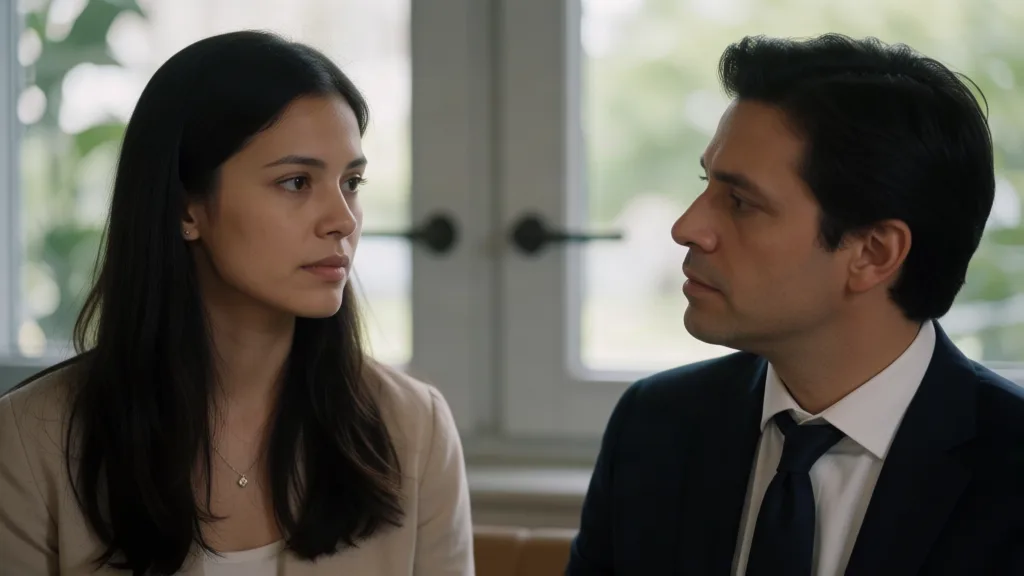
I didn’t want to be there.
That’s not entirely true. I wanted to be in my office, with the radiator that hissed like a dying cat and the stack of undergraduate theses that smelled faintly of desperation and instant coffee. I wanted to be anywhere that wasn’t a crowded lecture hall in the Academy Building, listening to some British lawyer explain international law to a room full of people who already agreed with him.
But Eva had grabbed my arm in the faculty lounge and said, “You’re coming. No excuses.”
“I have theses.”
“You always have theses.”
“I have a headache.”
“You always have a headache.”
She wasn’t wrong. I’d been running on caffeine and spite for three years. My PhD was a scar I carried in my bones, and the postdoc in London had nearly finished me off. Now I was teaching biology to first-years who couldn’t tell a mitochondria from a membrane, and I was too tired to even be properly bitter about it. Leiden was supposed to be a soft landing. A teaching position. A chance to breathe.
Instead I was being dragged to a lecture on international jurisprudence by a man I hadn’t thought about in seven years.
The Academy Building smelled like old wood and older secrets. We climbed the stairs past portraits of dead men who looked like they’d never laughed at anything in their lives. Eva was talking about something. Her husband’s promotion, maybe. Or the departmental budget. I nodded in the right places and let my mind drift.
I’d been doing that a lot lately. Drifting. My friends called it going “unreal,” like I was a radio station losing signal. I’d be in the middle of a conversation and suddenly I was somewhere else entirely, watching myself from a distance, wondering who was supposed to be piloting this body. Usually it happened when I was tired. I was always tired.
The lecture hall was already full. Eva pushed us toward seats near the front, because she was the kind of person who believed that proximity to the speaker meant proximity to wisdom. I sat down, pulled out my phone, and started scrolling through Wikipedia articles about the mating habits of deep-sea anglerfish. It was better than making eye contact with anyone.
“You’re not going to pay attention at all, are you?” Eva whispered.
“I’m going to pay attention to something.”
“That’s not the same thing.”
“It’s literally the definition of the same thing.”
She sighed. I kept reading. Female anglerfish absorb the male into their bodies. They become one organism. The male loses his eyes, his organs, his identity. He exists only to fertilize and be consumed. I thought about my mother. I put my phone away.
The speaker was introduced by a dean I’d never met, a woman with perfect posture and a voice that carried like she was used to being heard. She talked about the ICJ, about the importance of international law in an increasingly fractured world, about the distinguished career of the man we were about to hear from. I stopped listening after the first thirty seconds. I was watching the door at the side of the stage, waiting for it to open.
It opened.
He walked out like he belonged there. Which he did, I suppose. He was a judge at the International Court of Justice. He had probably given a hundred lectures just like this one. He was wearing a dark suit that fit him perfectly, the kind of suit that cost more than my monthly rent, and wire-rimmed glasses that made him look like someone who read dense legal documents for fun.
Theodore Reiner-Orston.
He looked almost exactly the same. Same dark hair, cut short and neat. Same face that was handsome in a way that felt almost accidental, like he hadn’t decided to be good-looking but had simply ended up that way. Same way of standing, straight-backed and still, like he was used to being watched.
But his eyes were different. I remembered them as careful, polite, the eyes of someone who had been trained since childhood not to show too much. Now they were sharper. More present. Seven years had done something to him, stripped away whatever veneer of pleasantness he’d worn like a uniform.
He adjusted his glasses and smiled at the audience. It was a professional smile. Warm but not intimate. The smile of someone who knew how to manage a room.
“Thank you for having me,” he said. His voice was the same. That British accent that made everything sound important, even the simplest words. “I’m going to talk to you today about a case that changed how I think about the law. It’s a case about water. About borders. About what happens when two countries disagree on something as basic as who owns a river.”
I should have stopped listening. I should have gone back to my phone, back to the anglerfish and their terrible romance. But I didn’t. I watched him talk, and I remembered.
Seven years ago, I was in the Netherlands for my master’s. A different city. A different life. I was twenty-three and convinced I knew everything, which is the kind of arrogance that only exists in people who have never actually been tested. I was studying biology because I loved it, because it made sense in a way that people never did. Cells divided. Genes expressed. Cause and effect was a law you could trust.
I met him at a faculty mixer, the kind of event I’d been forced to attend by my supervisor, who believed that networking was a skill as important as lab technique. I’d spent most of the night standing near the snack table, eating cheese cubes and pretending to be fascinated by a conversation about protein folding. He’d appeared beside me, holding a glass of wine he wasn’t drinking, and said, “You look like you’d rather be anywhere else.”
I’d looked at him. Really looked. He was tall and well-dressed and had the kind of face that belonged on a magazine cover or a wanted poster. I’d decided immediately that I didn’t trust him.
“I’d rather be in a lab,” I said.
“What kind of lab?”
“The kind with microscopes and dead things.”
He’d laughed. It was a real laugh, not the polite chuckle I’d expected. “That’s specific.”
“I’m a specific person.”
“I can tell.”
We’d talked for the rest of the night. I don’t remember what about. Science, maybe. Law. The differences between Indonesia and the UK. He’d just started as a junior counsel at the ICJ, and he was full of stories about cases and judges and the strange theater of international law. I’d told him about my research, about the migratory patterns of birds I’d studied in Taiwan, about the way animals moved across borders that didn’t exist for them.
“That’s beautiful,” he’d said.
“It’s just biology.”
“It’s not just anything.”
We’d exchanged numbers. We’d met for coffee. Then for dinner. Then for walks along the canals, where he’d pointed out buildings and told me their histories, and I’d pretended to be bored even though I wasn’t. He was easy to talk to. He was curious in a way that felt genuine, not performative. He asked questions about my research and actually listened to the answers. He told me about his family, his father who was a baron or something, his mother who hosted dinner parties for people with titles, his siblings who were all doing exactly what was expected of them.
“And you?” I’d asked. “Are you doing what’s expected?”
He’d been quiet for a long moment. Then he’d said, “I’m trying not to.”
I’d liked that about him. I’d liked a lot of things about him. That was the problem.
Because I didn’t want to like him. I didn’t want to like anyone. I’d made a promise to myself, years ago, after watching my mother shrink into a version of herself that barely existed. She’d been a doctor, once. A brilliant one. My father had been proud of her, at first. Then he’d been threatened. Then he’d been cruel.
Love, he’d said, was about sacrifice. About putting your family first. About understanding that your needs came second to the people who loved you.
My mother had believed him. She’d given up her practice, her research, her friends. She’d become a wife and a mother and nothing else. And when she’d gotten sick, when the cancer had eaten her from the inside out, my father had stood by her bed and talked about how much he loved her, how much he would miss her, how she was the best thing that had ever happened to him.
I’d been seventeen. I’d held her hand as she died. And I’d sworn that I would never let anyone love me like that. I would never let anyone use that word as a weapon. I would never be small. I would never be consumed.
So when Theodore Reiner-Orston looked at me like I was something worth looking at, I’d panicked. I’d pulled away. I’d stopped answering his messages. I’d buried myself in my research and told myself it was for the best.
He’d tried, at first. A few calls. A letter, even, which felt absurdly old-fashioned. I’d read it twice, then burned it in the sink of my student apartment. I’d watched the paper curl and blacken, and I’d told myself that this was what freedom looked like.
I’d never seen him again.
Until now.
He was still talking. Something about the Danube River, about a dispute between Hungary and Slovakia, about the way the law had to balance human needs with environmental ones. I was listening despite myself. He was good at this. He made the law sound like a story, like something that could be felt as well as understood.
Eva nudged me. “You’re staring.”
“I’m listening.”
“You’re staring and listening. There’s a difference.”
I looked away. The woman next to me was taking notes in a leather-bound journal, her handwriting neat and precise. I wondered what it was like to be that organized. To have a brain that didn’t feel like a junk drawer, full of half-forgotten facts and broken memories and the occasional live wire.
The lecture ended. There was applause. A Q&A session that I didn’t pay attention to. I was already planning my escape, calculating the fastest route from my seat to the door. If I left now, I could be back in my office in ten minutes. I could pretend this hadn’t happened.
But Eva had other plans.
“We’re going to the reception,” she said.
“We’re not.”
“We are. The dean expects it. And there will be wine.”
“I don’t care about wine.”
“You care about free wine. Everyone cares about free wine.”
She was right. I cared about free wine. I also cared about not making a scene, about not explaining to Eva why I needed to leave, about not having to say the words I used to know him and I ended things badly and I don’t want to see him again.
So I went to the reception.
It was in a room down the hall, smaller and warmer, with high ceilings and windows that looked out onto the canal. There were tables of food and a bar that was already doing brisk business. I got a glass of white wine and positioned myself near a potted plant, hoping it would make me invisible.
It didn’t.
I saw him across the room, surrounded by people. A cluster of faculty members, a few students, someone who looked like a journalist. He was nodding and smiling and shaking hands, doing the thing that people like him did, the thing that looked effortless but was probably exhausting. I watched him work the room and felt something twist in my chest. Something I didn’t want to name.
He looked up. His eyes found mine.
For a second, neither of us moved. The room kept spinning around us, voices and laughter and the clink of glasses, but we were frozen in place, two people who had once known each other and didn’t know what to do with that knowledge.
Then he excused himself. He said something to the people around him, something apologetic, and he walked toward me.
I considered running. I considered diving out the window. I considered pretending I didn’t recognize him and asking him who he was in a tone that suggested he had mistaken me for someone else.
Instead, I drank my wine and waited.
“Joceline.”
He said my name like he was testing it, like he wasn’t sure it still fit. His voice was lower than I remembered, or maybe I just remembered it wrong. Memory was a liar. I knew that better than most.
“Theodore,” I said.
“You go by Theo now.”
“I don’t go by anything. I’m not a spy.”
He laughed. That same real laugh, the one that had caught me off guard seven years ago. “You haven’t changed.”
“I have. I’m more tired. More cynical. I drink more coffee.”
“That’s not change. That’s accumulation.”
“What’s the difference?”
“Change is transformation. Accumulation is just adding layers to the same thing.”
I didn’t know what to say to that. I took another sip of wine. He was standing close enough that I could smell his cologne, something clean and subtle, not the kind of thing you’d notice unless you were paying attention.
“I didn’t know you were in Leiden,” he said.
“I’ve been here three years.”
“Three years.”
“Teaching. Biology. I’m a lecturer now.”
“That makes sense.”
“Does it?”
“You always wanted to teach. You told me that. You said you wanted to show people how the world worked, under the surface.”
I had said that. I’d forgotten I’d said that. I’d forgotten a lot of things about those months, or maybe I’d just pushed them down so deep that they’d stopped being accessible. Memory was a liar, but forgetting was a survival mechanism.
“You read my letter,” he said.
It wasn’t a question.
“I read it.”
“You didn’t respond.”
“I know.”
He waited. I didn’t say anything else. The silence stretched between us, thin and fragile, like glass that might shatter if either of us breathed too hard.
“I looked for you,” he said. “After. I asked around. No one knew where you’d gone.”
“I went to Germany. For my PhD.”
“I know. I found out eventually. I thought about contacting you.”
“Why didn’t you?”
“I didn’t think you wanted me to.”
He was right. I hadn’t wanted him to. I’d wanted to be left alone, to disappear into my work, to become someone who didn’t have a past or a heart or any of the messy things that made life complicated. I’d succeeded, mostly. I’d built a life that was small and contained and safe.
And now he was standing in front of me, looking at me with those blue eyes that saw too much, and I felt everything I’d buried start to push up through the dirt.
“You look good,” I said. It was the safest thing I could think of.
“So do you.”
“I look like I haven’t slept in a week.”
“You look like you’re thinking about three things at once, and none of them are this conversation.”
That was uncomfortably accurate. I was thinking about the theses I needed to grade, the experiment I was supposed to be designing, the way the light from the window caught his hair and made it look almost blue. I was thinking about the letter I’d burned, the words I’d watched turn to ash. I was thinking about my mother.
“I have to go,” I said.
“You just got here.”
“I have work.”
“It’s eight o’clock.”
“The work doesn’t care what time it is.”
I put my glass down on a nearby table. My hands were shaking. I hated that my hands were shaking. I hated that he could see it, that he could probably read every thought on my face despite my best efforts to keep it blank.
“Joceline.”
I stopped.
“Can we talk? Properly? Not here, not like this. Tomorrow. Coffee.”
I should have said no. I should have said I was busy, that I had meetings, that I was leaving the country, that I had developed a sudden and urgent allergy to British people. I should have said anything except what I actually said.
“Fine.”
He smiled. It was a different smile than the one he’d used on stage. Smaller. More real. “I know a place. Near the Pieterskerk. Eleven o’clock.”
“I might be late.”
“I’ll wait.”
I left before I could change my mind. I walked out of the reception, down the stairs, into the cold Dutch night. The canal was dark and still, reflecting the lights of the buildings along its banks. I stood there for a long moment, breathing, trying to remember how to be a person who had control over her own life.
I’d made a promise to myself. I’d built walls and locked doors and thrown away the keys. I was safe. I was free. I was exactly where I wanted to be.
So why did I feel like I was falling?
I didn’t sleep that night.
This wasn’t unusual. I had a complicated relationship with sleep, the kind of relationship where I spent most of the night staring at the ceiling and negotiating with my own brain. Tonight, though, the negotiations were particularly unproductive.
I lay in my narrow bed in my narrow apartment, listening to the sounds of the city through the window. A bicycle passing. Someone laughing. The distant hum of traffic. I thought about Theodore Reiner-Orston and the way he’d said my name, like it meant something.
I thought about my mother.
She’d been beautiful. Everyone said so. She had dark hair and dark eyes and a smile that could fill a room. She’d been a doctor, a cardiologist, one of the first women in her cohort to specialize. She’d saved lives. She’d been respected. She’d been brilliant.
Then she’d met my father.
He was charming, at first. That was the thing everyone said, later, when they talked about how it had happened. He was charming and successful and he loved her so much. He loved her so much that he couldn’t bear to share her with anyone else. He loved her so much that he needed her at home, where she belonged. He loved her so much that he made her smaller and smaller until there was almost nothing left.
I was twelve when she stopped practicing medicine. Fourteen when she stopped leaving the house. Sixteen when she stopped talking to anyone except me and my father. Seventeen when she died.
The cancer was real. The doctors had confirmed it. But I’d always wondered if she’d let it happen, if she’d given up so completely that her body had followed her mind into oblivion.
My father had cried at her funeral. He’d held my hand and told me how much he loved me, how I was all he had left, how we had to stick together. He’d used that word over and over. Love. Love. Love. Like it was a spell he could cast to make me forget.
I didn’t forget. I left for university as soon as I could. I went to Taiwan, then South Korea, then the Netherlands, then Germany, then the UK. I kept moving because stopping meant thinking, and thinking meant remembering, and remembering meant feeling the weight of everything I’d left behind.
I was good at leaving. I was excellent at it. I’d left countries and cities and people without looking back. I’d left Theodore without a word.
And now I was going to have coffee with him.
What was wrong with me?
I got up at six. I graded theses until nine. I showered and dressed in the same clothes I wore every day: jeans, a sweater, a jacket that had seen better days. I put on my glasses and looked at myself in the mirror. Oval face. Jet black hair that I’d pulled back into a messy ponytail. Buckteeth that I’d always been self-conscious about. Dark eyes that looked tired and wary and maybe a little scared.
“You’re fine,” I told my reflection. “You’re going to have coffee with an old acquaintance. That’s all. That’s normal. People do this.”
My reflection didn’t look convinced.
The café was near the Pieterskerk, just like he’d said. It was small and warm, with exposed brick walls and mismatched furniture and the smell of fresh bread. I found him at a table in the corner, reading something on his phone. He looked up when I walked in, and his face did something complicated that I couldn’t quite read.
“You’re early,” he said.
“I’m never early. I don’t know what happened.”
“Maybe you wanted to be here.”
“Let’s not get carried away.”
He laughed. I sat down across from him. A waiter appeared and I ordered a coffee so strong it could probably dissolve metal. Theodore ordered tea, which was so on-brand that I almost rolled my eyes.
“So,” he said.
“So.”
“How have you been? Really. Not the polite version.”
I thought about it. The polite version was easy. The polite version was fine, busy, keeping myself occupied. The real version was harder.
“I’ve been tired,” I said. “The kind of tired that doesn’t go away, no matter how much you sleep. I’ve been doing a lot of work and thinking very little about my feelings, which is exactly how I like it. I’ve been telling myself that I’m happy, and sometimes I even believe it.”
He didn’t flinch. He didn’t look away. He just nodded, like he understood.
“That sounds familiar,” he said.
“You’ve been tired too?”
“I’ve been doing a lot of work and thinking very little about my feelings. It’s a family tradition.”
“The British stiff upper lip.”
“The Reiner-Orston version. It comes with more pressure and less emotional support.”
I wanted to ask what he meant. I wanted to ask about his family, about his father, about the expectations he’d been running from. But that would mean opening a door I wasn’t sure I could close again.
“Why did you want to talk?” I asked.
“Because I never got closure. Because I spent seven years wondering what I did wrong, what I said, why you disappeared. Because I thought about you more than I should have, and I need to know if that was real or if I imagined it.”
I stared at him. My coffee arrived. I wrapped my hands around the cup and let the heat burn my palms.
“You didn’t do anything wrong,” I said.
“Then why?”
“Because I don’t do relationships. Because I promised myself I wouldn’t. Because I saw what love did to my mother, and I refuse to let it do the same to me.”
The words came out flat and hard. I’d said them before, to friends who asked why I never dated, to colleagues who tried to set me up, to myself in the mirror on nights when I felt lonely. They were a shield I’d been carrying for so long that I’d forgotten what it felt like to put it down.
Theodore didn’t look surprised. He looked sad, maybe, or resigned. Like he’d been expecting something like this.
“I’m not your father,” he said.
“I know.”
“Do you?”
“I know. But that doesn’t change anything. The risk is still there. The possibility that I’ll lose myself, that I’ll become someone I don’t recognize, that I’ll wake up one day and realize I’ve given away everything I am.”
“That’s not love. That’s control.”
“They look the same, from the outside.”
He leaned forward. His eyes were very blue. “Joceline. I’m not asking you to marry me. I’m not asking you to give up anything. I’m asking if we can be friends. I’m asking if we can start over, slowly, without any pressure. I’m asking if you’ll let me back into your life, even just a little.”
I should have said no. I should have stood up, walked out, gone back to my safe and solitary existence. I should have protected myself the way I’d been protecting myself for seventeen years.
But he was looking at me with those eyes, and he was patient, and he was kind, and he had remembered what I said about teaching even when I’d forgotten it myself.
“Okay,” I said.
“Okay?”
“Okay, we can be friends. Slowly. Without pressure.”
He smiled. It was a small smile, careful, like he was afraid of scaring me off. “That’s all I’m asking.”
I drank my coffee. He drank his tea. We talked about nothing important, about the weather and the city and the differences between Dutch and British humor. It was easy. It was comfortable. It was terrifying.
When I left, he walked me to the door. He didn’t touch me. He didn’t try to hug me or shake my hand. He just stood there, in the doorway of the café, and said, “Same time next week?”
“I might be late.”
“I’ll wait.”
I walked home through the cold streets, my hands in my pockets, my breath forming clouds in front of my face. I felt like I’d done something reckless, something dangerous, something that might unravel everything I’d built.
But I also felt something else. Something I hadn’t felt in a long time.
I felt awake.
The weeks that followed were strange.
We met for coffee every Thursday. Sometimes we talked for hours. Sometimes we sat in silence, reading or working, just sharing the same space. He told me about his cases, about the strange and beautiful complexity of international law. I told him about my research, about the birds I’d studied and the patterns I’d found. We argued about politics and religion and the proper way to make tea.
“You put the milk in first,” he said one afternoon, watching me prepare a cup at his apartment.
“That’s how normal people do it.”
“That’s how barbarians do it.”
“I’m Indonesian. We have different standards.”
“You’ve been living in Europe for a decade. You should know better.”
“I know that I like my tea the way I like it, and I don’t need a British aristocrat telling me I’m wrong.”
He’d laughed. He laughed a lot when he was with me. I pretended not to notice how much I liked the sound.
I learned things about him. Small things. He was allergic to cats but loved them anyway. He played the piano, badly, but with genuine joy. He had a younger sister who was a doctor in London, and they talked every Sunday. He read poetry before bed, mostly old things, Yeats and Rilke and Neruda.
“That’s romantic,” I’d said, when he told me.
“It’s just words.”
“You don’t read poetry because it’s just words. You read it because it makes you feel something.”
He’d looked at me for a long moment. “You’re right,” he’d said. “It does.”
I learned things about myself, too. I learned that I could be around someone without feeling trapped. I learned that trust didn’t have to be all or nothing. I learned that I was capable of wanting things I’d told myself I didn’t need.
It was terrifying. It was wonderful. It was both at once, like standing on the edge of a cliff and feeling the wind push against your back.
Eva noticed. Of course she noticed. She was a social scientist; she was trained to notice things.
“You’re different,” she said one day, in the faculty lounge.
“I’m the same.”
“You’re smiling more. You’re laughing. You actually showed up to a department meeting without being dragged.”
“That’s not evidence of anything.”
“It’s evidence of everything. Who is he?”
“No one.”
“Liar.”
I didn’t answer. I couldn’t. Because I didn’t know what he was. I didn’t know what we were. I only knew that I looked forward to Thursdays, that I found myself thinking about him at odd hours, that I was starting to forget why I’d been so afraid.
And then, one evening, he kissed me.
It was raining. We were walking back from dinner, sharing an umbrella that was too small for both of us. He was telling me about a case he was working on, something about maritime boundaries, and I was pretending to understand. The rain was loud on the umbrella, loud on the cobblestones, loud in my ears.
He stopped walking.
I stopped too.
“Joceline,” he said.
“What?”
He didn’t answer. He just leaned in, slowly, carefully, like he was giving me time to pull away. I didn’t pull away. I stood there, frozen, as his lips met mine.
It was soft. Gentle. He tasted like tea and the rain. His hand came up to cup my face, and I felt something crack open inside me, something I’d sealed shut so long ago that I’d forgotten it existed.
When he pulled back, his eyes were searching mine.
“I’m sorry,” he said. “I should have asked.”
“No,” I said. My voice was strange. “No, it’s fine.”
“It’s fine?”
“It’s not fine. It’s terrifying. But it’s not bad.”
He smiled. That small, real smile that I’d come to recognize. “Can I do it again?”
“Not right now. I need to think.”
“Okay.”
We walked the rest of the way in silence. He left me at my door, and I went inside, and I sat on my bed for a long time, touching my lips and wondering what I’d just done.
I’d let him in. I’d opened the door, just a crack, and he’d slipped through. And now I didn’t know how to close it again.
I didn’t want to close it again.
That was the problem.
I called my father.
I don’t know why. Maybe because I needed to remind myself why I’d made my rules in the first place. Maybe because I was testing myself, seeing if I could hear his voice without falling apart. Maybe because I was cruel and stupid and wanted to hurt myself.
He answered on the third ring.
“Joceline. It’s been a while.”
“I know.”
“You never call.”
“I know.”
“Is everything okay?”
No, I thought. Everything is not okay. Everything is complicated and confusing and I think I might be falling in love with someone and I’m terrified that you were right, that love is a cage, that I’ll end up like Mama.
“Everything’s fine,” I said. “I just wanted to hear your voice.”
He talked for a while. About his health, about the house, about how much he missed me, how much he loved me, how he wished I would come home. The words washed over me like water, familiar and hollow. I listened and nodded and said the right things, and when I hung up, I felt nothing.
That was the worst part. I felt nothing.
I’d spent so long being afraid of my father’s love, of the way it could twist and poison and destroy. But standing in my apartment in Leiden, with the rain still falling outside and the ghost of Theodore’s kiss on my lips, I realized something.
My father’s love wasn’t real love. It was ownership dressed up in pretty words. It was control disguised as care. It was a cage with a velvet cushion and a lock that looked like a heart.
And I had been living in that cage my whole life, even when I was thousands of miles away. I had built my own walls because I was afraid of someone else building them for me. I had refused to let anyone in because I was afraid of being trapped.
But Theodore didn’t want to trap me. He wanted to know me. He wanted to stand beside me, not in front of me. He wanted to share his life without taking mine.
I was still afraid. I was always going to be afraid. But maybe fear wasn’t a reason to run. Maybe it was just a feeling, like any other. Maybe I could feel it and keep going anyway.
The next Thursday, I showed up early.
He was already there, at our usual table, with a cup of tea and a book. He looked up when I walked in, and his face lit up in a way that made my chest ache.
“You’re early,” he said.
“I wanted to be here.”
He smiled. I sat down. The waiter came and I ordered my coffee, black and strong, the way I liked it.
“Theodore,” I said.
“Theo. Please.”
“Theo. I’ve been thinking.”
“About what?”
“About the kiss. About us. About everything I’ve been running from.”
He put down his book. His full attention was on me, patient and steady.
“I’m scared,” I said. “I’m scared of losing myself. I’m scared of becoming someone I don’t recognize. I’m scared of waking up one day and realizing I’ve given away everything I am.”
“I know.”
“But I’m also scared of never trying. Of spending my whole life alone because I was too afraid to take a risk. Of waking up old and bitter and wondering what might have been.”
“What are you saying?”
I took a breath. The coffee arrived. I wrapped my hands around the cup, let the heat ground me.
“I’m saying I want to try. Slowly. Carefully. With boundaries and communication and all the things that healthy relationships are supposed to have. I’m saying I don’t know if I can do this, but I want to find out.”
He reached across the table and took my hand. His fingers were warm and steady.
“That’s all I’m asking,” he said. “That’s all I’ve ever asked.”
I looked at our hands, intertwined on the table. I thought about my mother. I thought about the letter I’d burned. I thought about all the years I’d spent running, and all the years I might spend staying.
“Okay,” I said.
“Okay?”
“Okay, let’s try.”
He smiled. It was the biggest smile I’d ever seen on his face, bright and unguarded and real.
“I’ll wait as long as you need,” he said. “I’ll go as slow as you want. I’ll prove to you that love doesn’t have to be a cage.”
I didn’t believe him. Not yet. But I wanted to. I wanted to so badly that it scared me.
And for the first time in seventeen years, I let myself hope.
Watch this moment
Turn the current scene into a cinematic Live Chapter — what you watch becomes the story's next part.
Disclaimer
This is a work of fiction, assisted by artificial intelligence. Any names or characters, businesses or places, events or incidents, are fictitious. Any resemblance to actual persons, living or dead, or actual events is purely coincidental.
Content Removal Policy
- Users may report content that may be illegal or violates our Standards.
- All reported complaints will be reviewed and resolved within seven business days.
- Review Process: Our team will assess the reported content against our guidelines.
- Appeals: If you disagree with a decision, you may appeal within 14 days of notification.
- Potential outcomes include: content removal, account warning, or no action if no violation is found.
To report content, email us at [email protected]