Share
Line of Fire
·
Published 8/16/2026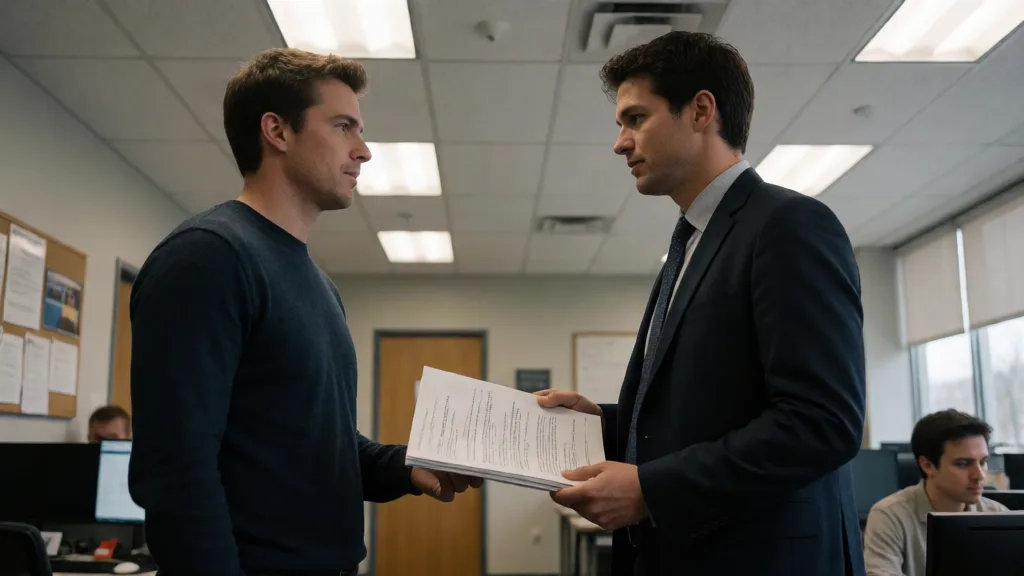
The first day of the semester always felt like a hostage situation, just with worse coffee and fluorescent lights that made everyone look like they were being interrogated. I’d been doing this long enough to know the rhythm of it, the particular brand of chaos that came with a new batch of students who couldn’t find the right building, couldn’t read the syllabus, couldn’t stop asking if the final was cumulative when it said, in bold, on page one, that yes, the final was cumulative.
I was three hours into office hours. My back ached from leaning forward in a chair that had probably been purchased during the Reagan administration, and I’d already given directions to the humanities building nine times. Nine. I’d started keeping count just to have something to do.
My TA, Marcus, had abandoned me thirty minutes ago for what he called a “coffee emergency,” which I suspected was actually a “I can’t watch another freshman cry about a prerequisite” emergency. Fair enough. I’d been there.
The door was open. I could see the hallway, the same beige walls and flickering light fixture that had been doing its dying dance since before I was a grad student. A kid walked past with a skateboard under his arm. A girl in a sundress was crying into her phone near the water fountain. Normal. Predictable. Boring.
Then he stepped into the doorway.
And the whole world tilted.
He was tall, lean, with dark hair that fell across his forehead in that careless way I’d spent the whole summer memorizing. He wore a gray t-shirt that fit him like it knew exactly what it was doing, and he was holding a syllabus, the same one I’d spent three weeks perfecting, the one with my name at the top in twelve-point Times New Roman.
Professor Derek Chen. Introduction to Literary Analysis. Tuesdays and Thursdays, 10:00 AM.
He looked at me. I looked at him. The fluorescent light hummed between us like it was holding its breath.
“Hey,” he said. His voice was low, familiar, the same voice that had whispered my name against my neck in a dark bar bathroom three weeks ago. “I think I’m in your class.”
I didn’t say anything. I couldn’t. My brain had short-circuited somewhere between *oh fuck* and *this can’t be happening* and *why is he smiling like that, why is he smiling like he knows exactly what he’s doing to me.*
He stepped into the office. Closed the door behind him. The click of the latch was loud, final, like a door slamming on a version of my life that had made any kind of sense.
“You’re in my class,” I repeated. My voice came out flat, which was better than the alternative, which was a high-pitched squeak of pure panic.
“Looks like it.” He held up the syllabus. His fingers were long, elegant, the same fingers that had traced the line of my jaw, that had gripped my hip, that had done things I’d been thinking about every night for the past three weeks. “Introduction to Literary Analysis. Section 4. You’re Professor Chen.”
“You didn’t know.”
It wasn’t a question. I knew he didn’t know. If he’d known, he wouldn’t have spent the summer making out with me in the back of a dive bar, wouldn’t have let me buy him drinks, wouldn’t have pressed me against the wall outside and kissed me like he was trying to memorize the shape of my mouth.
He shook his head. “I just moved here. I registered late. The name didn’t click until I saw the classroom number.”
“The name didn’t click.” I stared at him. “My name is on the syllabus. You’ve heard my name.”
“Derek,” he said. “I’ve heard Derek. I didn’t know you were a professor. You never said.”
“You never asked.”
It came out sharper than I meant. He flinched, just a little, and I saw something flicker in his eyes. Not guilt. Not shame. Something closer to stubbornness, that same look he’d worn the first night we talked, when I’d tried to buy him a drink and he’d insisted on paying for his own.
“I’m not here to make this hard,” he said. “I just wanted to confirm my schedule. I didn’t know it was going to be you.”
“And now you know.”
“And now I know.” He paused. “What happens now?”
I leaned back in my chair. The springs groaned. I could feel the sweat starting to gather at the base of my spine, could feel my heart hammering against my ribs like it was trying to break out. This was bad. This was so bad. The university had policies about this, whole sections of the faculty handbook dedicated to exactly this situation, and none of them ended with “and then they lived happily ever after.”
“You go to class,” I said. “You do the work. You don’t talk to me outside of office hours.”
“That’s it?”
“That’s it.”
He looked at me for a long moment. His eyes were dark, almost black in the bad light, and I remembered how they’d looked in the dim glow of the bar, how they’d gone soft and hungry at the same time, how he’d looked at me like I was something he wanted to take apart and put back together.
“Okay,” he said. “I can do that.”
He turned toward the door. His hand was on the handle when I spoke again, the words coming out before I could stop them.
“What’s your name?”
He looked back at me. A slow smile spread across his face, the kind of smile that said he knew exactly what I was doing, that he understood the game we were playing and was already two moves ahead.
“Jamie,” he said. “Jamie Torres.”
Then he was gone, and the door was open, and the fluorescent light was still humming, and I was sitting in my office with my hands shaking and my head full of everything I shouldn’t be thinking about.
---
The first class was a blur.
I stood at the front of the room and went through the motions, the same speech I’d given a dozen times, the same jokes, the same warnings about plagiarism and late work and the importance of showing up. My voice sounded steady. My hands didn’t shake. I was good at this, had been good at it for years, and that was the problem.
Because I could feel him watching me.
He sat in the back row, near the window, where the afternoon light caught his face and made him look like something out of a painting. He was taking notes. He was nodding at the right moments. He was doing everything a good student was supposed to do, and all I could think about was the way his mouth had felt against mine, the way he’d gasped when I’d bitten his lip, the way he’d said my name like a prayer.
After class, three students came up to ask questions. I answered them. I smiled. I pretended I wasn’t watching the door, waiting for him to leave, waiting for the moment when I could breathe again.
He didn’t linger. He packed his bag, slipped out the side door, and disappeared into the hallway like he’d never been there at all.
I told myself it was fine. I told myself I could handle this. I’d been a professor for six years, had dealt with all kinds of complications, had never once crossed a line that mattered.
But I’d never met anyone like Jamie before.
---
The summer had started simple.
I’d been at a bar downtown, the kind of place with sticky floors and a jukebox that only played songs from the nineties. I’d been there with a friend from the department, someone who’d just gone through a divorce and needed to get drunk and complain about his ex-wife. I’d been playing the role of supportive colleague, nodding at the right moments, buying rounds, pretending I was having a good time.
Then Jamie had walked in.
He’d been with a group of friends, laughing at something, his head thrown back, his whole body loose and easy in a way that made me want to watch him forever. He’d been wearing a black t-shirt and jeans that fit him perfectly, and he’d looked around the bar like he owned it, like he knew exactly how good he looked and didn’t care who noticed.
I’d noticed.
He’d caught me looking. Of course he had. And instead of looking away, instead of pretending he hadn’t seen, he’d smiled. A slow, knowing smile that had made my stomach drop and my pulse spike and every rational thought in my head evaporate.
The rest of the night had been a blur of stolen glances and accidental brushes, of standing too close at the bar, of his hand on my arm when he leaned in to say something over the music. We’d talked for hours. I’d learned his name was Jamie, that he’d just moved to town, that he was starting school in the fall and didn’t know anyone yet. He’d learned I was a professor, but not where, and I’d let him assume I taught at the community college across town.
I hadn’t corrected him. I hadn’t wanted to.
At the end of the night, he’d kissed me. Hard and hungry and full of promise, his hands in my hair, his body pressed against mine, the whole world缩小ing down to the heat of his mouth and the smell of his skin.
He’d given me his number. I’d texted him the next day. We’d met up again, and again, and again.
Three weeks. We’d had three weeks of perfect, anonymous, consequence-free passion. And now he was sitting in my classroom, taking notes on my lecture, calling me Professor Chen.
---
The second week was worse.
He started coming to office hours.
Not for anything important. Not for help with the reading or questions about the syllabus. He’d show up with a smile and a question he could have answered himself, and he’d sit in the chair across from my desk and look at me with those dark eyes, and I’d feel my resolve crumbling like a sandcastle in a rising tide.
“I don’t understand the symbolism in the Yeats poem,” he said on Tuesday, holding up his copy of “The Second Coming” like it was a shield.
“You don’t understand the symbolism,” I repeated.
“It’s complicated.”
“It’s Yeats. He’s not exactly subtle.”
Jamie shrugged, that infuriating smile playing at the corners of his mouth. “Maybe I’m just not as smart as you think I am.”
“I don’t think you’re smart at all.”
“Liar.”
The word hung in the air between us. I could feel the heat rising to my face, could feel the tension coiling in my chest like a spring. I wanted to tell him to leave. I wanted to tell him to stay. I wanted to cross the room and kiss him until neither of us could remember why we were supposed to stop.
“Jamie,” I said, and my voice came out rougher than I meant. “You can’t keep doing this.”
“Doing what?”
“Coming here. Looking at me like that.”
“Like what?”
“Like you know exactly what you’re doing.”
He leaned forward, his elbows on my desk, his face inches from mine. I could smell his cologne, something clean and sharp, could see the flecks of gold in his irises, could count the tiny scar above his left eyebrow that I’d kissed a dozen times in the dark.
“I don’t know what you mean,” he said. “I’m just a student with a question about Yeats.”
“You’re not just anything.”
The words slipped out before I could stop them. I saw something shift in his expression, a flicker of surprise, of satisfaction, of something deeper that I didn’t want to name.
“Neither are you,” he said quietly.
And then he stood up, gathered his things, and walked out of my office without another word.
I sat there for a long time after he left, staring at the empty doorway, my heart pounding, my hands shaking, my whole body aching with want.
---
The third week, I caved.
It was late. The library was empty, the stacks quiet, the only light coming from the emergency exits and the glow of my phone screen. I’d been grading papers for hours, my eyes blurry, my back stiff, my brain full of commentary on comma splices and thesis statements and the same tired arguments I’d been reading for six years.
I heard footsteps. Soft, deliberate, coming closer.
I looked up, and there he was.
He was wearing a hoodie, the hood pulled up, his hands shoved in his pockets. He looked younger in the dim light, softer, like a version of himself that hadn’t learned how to be dangerous yet.
“What are you doing here?” I asked.
“Couldn’t sleep.”
“The library closes at midnight.”
“I know the security guard.”
I should have told him to leave. I should have packed up my things and walked past him and pretended I hadn’t seen him at all. But I didn’t. I just sat there, watching him, waiting.
He walked toward me. Slow. Careful. Like he was approaching a wild animal that might spook at any moment.
“Derek,” he said, and the sound of my name in his mouth made my chest ache.
“Jamie, we can’t.”
“I know.”
“This is against every rule in the book.”
“I know.”
“I could lose my job.”
“I know.” He stopped in front of me, close enough that I could feel the heat coming off his body. “But I don’t care.”
And then he leaned down and kissed me.
It was soft at first. Gentle. A question more than an answer. But then I made a sound, something between a sigh and a groan, and his hands were in my hair and my hands were on his waist and we were kissing like we’d been holding our breath for three weeks and finally, finally, we could breathe.
He pulled back. His eyes were dark, his lips swollen, his breath coming fast.
“Office hours,” he said. “Tomorrow. Three o’clock.”
“Jamie.”
“Just this once.”
I wanted to say no. I wanted to be responsible, to be professional, to be the kind of person who didn’t put everything on the line for a pair of dark eyes and a crooked smile.
But I’d never been that person. Not really.
“Three o’clock,” I said.
He smiled, that slow, knowing smile that had ruined me from the first moment I saw it.
Then he was gone, and I was alone in the dark, my heart pounding, my lips still tingling, my whole world tilting on its axis.
---
Office hours became something else after that.
The door stayed open during the day, of course. There were other students, real students, with real questions about deadlines and readings and whether they could get an extension on the midterm. I answered them. I smiled. I played the role of Professor Chen, the competent, professional academic who had never done anything reckless in his life.
But at three o’clock, when the last student left, when the hallway went quiet and the light through the window shifted to gold, he would come.
He would knock. Two quick raps, the signal we’d worked out, the one that meant *it’s me*. I would say come in. He would close the door. And for the next hour, the world outside would cease to exist.
We didn’t talk about the future. We didn’t talk about consequences. We didn’t talk about what would happen when the semester ended, when the grades were due, when there was no more reason to pretend we were just professor and student.
We just touched.
His hands on my chest, pushing me back against the desk. My mouth on his throat, tasting salt and skin and the faint trace of his cologne. The sound he made when I bit down, a sharp intake of breath that turned into a moan that I swallowed with my lips.
“We should stop,” I said, my forehead pressed against his, my hands gripping his hips.
“We should,” he agreed.
Neither of us moved.
“This is insane,” I said.
“Completely.”
“I could get fired.”
“I know.”
He kissed me again, and I forgot why I was supposed to care.
---
The sex was good.
No, that’s not right. The sex was *devastating*. The kind of sex that rearranged your molecules, that made you forget your own name, that left you lying in the dark afterward wondering if you’d ever be able to go back to the way things were before.
We did it in my office, with the door locked and the lights off, my desk chair pushed against the wall, my textbooks scattered on the floor. We did it in his apartment, a tiny studio near campus with a mattress on the floor and a view of the parking lot. We did it in my car, once, in the faculty parking lot, steam fogging the windows, his laughter muffled against my shoulder.
Every time felt like the first time. Every time felt like the last.
He was loud in bed. That was the first thing I noticed. Not performative loud, not the kind of noise that was meant to be heard, but the kind that couldn’t be helped, the sounds that escaped when he was too far gone to hold them back. I loved it. I loved the way he gasped when I touched him, the way he moaned when I moved inside him, the way he said my name like a prayer and a curse and a confession all at once.
“Derek,” he breathed, his hands in my hair, his legs wrapped around my waist. “Derek, please.”
“Please what?”
“Please don’t stop.”
I didn’t. I never did.
---
The fourth week, I saw him in the hallway between classes.
He was with a group of friends, laughing at something, his head thrown back, his whole body loose and easy. He looked young. He looked happy. He looked like he belonged in a way that I never had, not even when I’d been his age, not even when the world had still seemed full of possibility.
I was walking the other way, a stack of papers under my arm, my head down, trying to be invisible.
He saw me anyway.
Our eyes met across the crowd. For a second, just a second, the world stopped. I saw his smile flicker, saw something private and knowing pass between us, saw his friends turn to follow his gaze.
I looked away first. I kept walking. I told myself it was the right thing to do, the smart thing, the only thing.
But I could feel his eyes on my back all the way down the hall.
---
That night, he was quiet.
We were in my bed, the sheets tangled around our legs, the room dark except for the streetlight filtering through the blinds. He was lying on his side, facing me, his hand on my chest, his thumb tracing lazy circles over my heart.
“What are we doing?” he asked.
The question hung in the air between us, heavy and inevitable.
“I don’t know,” I said.
“That’s not an answer.”
“It’s the only one I have.”
He was quiet for a long moment. I could feel his heartbeat through his palm, steady and strong, a counterpoint to my own racing pulse.
“I don’t like being a secret,” he said finally.
“You’re not a secret.”
“Yes, I am. That’s exactly what I am.” He lifted his head, looked at me in the dim light. “Your friends don’t know about me. Your colleagues don’t know about me. If someone saw us together, you’d pretend I was just a student.”
“That’s not true.”
“Isn’t it?”
I wanted to argue. I wanted to tell him he was wrong, that I would never pretend he didn’t matter, that I would shout his name from the rooftops if I could.
But I couldn’t. Because he was right.
“It’s complicated,” I said.
“It’s not complicated. It’s simple.” He sat up, the sheet falling away from his chest. “You’re my professor. I’m your student. If anyone finds out, you lose your job. That’s not complicated. That’s a fact.”
“Then why are you here?”
He looked at me. His eyes were dark, unreadable, full of something I couldn’t name.
“Because I can’t stay away,” he said. “Because every time I tell myself I’m done, I find myself walking back to your office. Because you make me feel things I’ve never felt before, and I don’t know how to stop.”
He leaned down, kissed me, soft and slow and full of everything we couldn’t say.
“But that doesn’t mean I’m okay with it.”
---
The fifth week, I nearly got caught.
It was late afternoon. Office hours were over, but I’d stayed late to finish grading, and Jamie had shown up with coffee and that look that meant he wanted more than caffeine. We’d ended up on my desk, papers scattering, his shirt on the floor, my hands in his hair.
The knock came out of nowhere.
“Professor Chen?”
Jamie froze. I froze. The world stopped.
“Professor Chen, are you in there?”
It was Marcus. My TA. The one who had a key to my office. The one who could walk in at any moment and see exactly what we were doing.
“One second,” I called out, my voice steady despite the panic clawing at my throat. “I’m on the phone.”
Jamie scrambled off the desk, grabbing his shirt, his shoes, his dignity. I watched him disappear behind the filing cabinet, crouched in the corner like a criminal, and I felt a cold wave of shame wash over me.
“I’ll come back,” Marcus said through the door. “It’s not urgent.”
“Thanks.”
I waited until his footsteps faded. Then I let out a breath I didn’t know I’d been holding.
Jamie emerged from behind the filing cabinet, his shirt on backwards, his face flushed, his eyes hard.
“This is what I mean,” he said.
“I know.”
“We can’t keep doing this.”
“I know.”
He looked at me for a long moment. Then he turned and walked out the door without another word.
---
The sixth week, I told him I loved him.
We were in his apartment, the windows open, a cool breeze carrying the smell of rain. We were lying on his mattress, naked and tangled, the sheets kicked to the floor. His head was on my chest, his fingers tracing patterns on my skin.
“I love you,” I said.
The words came out before I could stop them. I felt him go still, felt his breath catch, felt the weight of what I’d said settle between us like a stone dropped in still water.
He lifted his head. Looked at me. His eyes were wet.
“Don’t,” he said.
“It’s true.”
“Don’t say that. It makes this harder.”
“It’s already hard. It’s been hard from the beginning.”
He was quiet for a long moment. Then he kissed me, soft and slow, and I felt the tears on his cheeks, tasted the salt of them on his lips.
“I love you too,” he whispered. “And that’s the worst part.”
---
The seventh week, I started thinking about leaving.
Not leaving him. Leaving the university. Leaving my job, my career, everything I’d spent the last six years building. I’d been a good professor. I’d been respected, admired, sought after for committees and panels and conferences. I’d had a path, a plan, a future.
And now I was willing to burn it all down for a boy with dark eyes and a crooked smile.
I didn’t tell him. Not yet. I wanted to have a plan first, something concrete, something that didn’t sound like a midlife crisis dressed up as romance. I started looking at other universities, other cities, other lives. I started imagining what it would be like to wake up next to him every morning, to hold his hand in public, to be something more than a secret.
But the semester wasn’t over. And every day, I walked into that classroom, and I saw him sitting in the back row, and I pretended he was just another student.
---
The eighth week, he stopped coming to office hours.
I waited for him. Three o’clock came and went. Four o’clock. Five. I sat in my office, staring at the door, my heart pounding, my hands shaking.
He didn’t come.
I texted him that night: *You okay?*
He didn’t reply.
I called him. It went to voicemail.
I lay awake all night, staring at the ceiling, trying to convince myself that this was for the best, that he was doing the right thing, that I should let him go.
But I couldn’t. I couldn’t let him go.
The next day, I found him in the library. He was sitting at a table in the corner, headphones on, a book open in front of him. He looked up when I sat down across from him. His eyes were red-rimmed, his face drawn.
“You can’t be here,” he said.
“I needed to see you.”
“This is exactly what I’m talking about. You can’t just show up wherever you want. Someone could see us.”
“Then let them see us.”
He stared at me. “What?”
“Let them see us. Let the whole damn university see us. I don’t care anymore.”
“Derek.”
“I’m serious.” I leaned forward, my voice low, my heart pounding. “I’ve been looking at other jobs. Other universities. I’m willing to leave. I’m willing to start over. I’m willing to do whatever it takes to be with you.”
He was quiet for a long moment. Then he pulled off his headphones, closed his book, and looked at me with those dark, unreadable eyes.
“You don’t mean that,” he said.
“I do.”
“You don’t. You’re just saying it because you’re scared of losing me.”
“I am scared of losing you. But I’m not saying it because of that. I’m saying it because it’s true.”
He shook his head. “You don’t know what you’re asking for. You don’t know what it would mean. You’d lose everything. Your career, your reputation, your friends. Everything.”
“I know.”
“And you’d do that for me?”
“Yes.”
He looked at me. His eyes were wet again, and I could see the war happening behind them, the fight between what he wanted and what he thought he deserved.
“I don’t know if I’m worth that,” he said quietly.
“You are.”
“You don’t know that.”
“I do.”
He was quiet for a long time. The library hummed around us, the sound of pages turning, of keyboards clicking, of lives being lived in parallel to our own.
“I need time,” he said finally. “I need to think.”
“Take all the time you need.”
He nodded. Then he stood up, gathered his things, and walked away without looking back.
I sat there for a long time after he left, staring at the empty chair, my heart pounding, my hands shaking, my whole world hanging in the balance.
---
The ninth week, he came back.
He showed up at my office at three o’clock, two quick raps on the door. I said come in. He closed the door behind him.
He looked different. Lighter. Like he’d made a decision and finally found some peace with it.
“I thought about what you said,” he said.
“And?”
“And I think you’re an idiot.”
I blinked. “That’s not exactly what I was hoping to hear.”
He smiled, that slow, knowing smile that had ruined me from the first moment I saw it. “You’re an idiot,” he repeated, “because you’re willing to throw away everything for someone you’ve only known for a few months. You’re an idiot because you think I’m worth that. And you’re an idiot because you actually made me believe it.”
He stepped closer. His hand came up to my face, his thumb tracing the line of my jaw.
“So I’m going to make you a deal,” he said. “You finish the semester. You give me a grade. You don’t do anything stupid until the last day of finals. And then, when it’s over, you can be as stupid as you want.”
“Jamie.”
“I’m not going to be the reason you lose your job. I’m not going to be the scandal that follows you around for the rest of your career. If you want to be with me, if you really want to be with me, then you’re going to do it right. You’re going to wait until it’s safe. And then you’re going to come find me.”
He kissed me. Soft and slow and full of promise.
“Deal?” he asked.
I looked at him. This beautiful, impossible, infuriating person who had turned my whole world upside down.
“Deal,” I said.
---
The tenth week, I sat in my classroom and watched him take notes.
He was in the back row, near the window, the afternoon light catching his face. He looked up once, caught my eye, and smiled. A small, private smile that no one else would have noticed.
I smiled back.
And I counted the days until finals.
Disclaimer
This is a work of fiction, assisted by artificial intelligence. Any names or characters, businesses or places, events or incidents, are fictitious. Any resemblance to actual persons, living or dead, or actual events is purely coincidental.
Content Removal Policy
- Users may report content that may be illegal or violates our Standards.
- All reported complaints will be reviewed and resolved within seven business days.
- Review Process: Our team will assess the reported content against our guidelines.
- Appeals: If you disagree with a decision, you may appeal within 14 days of notification.
- Potential outcomes include: content removal, account warning, or no action if no violation is found.
To report content, email us at [email protected]