Share
Go Live
Steel Magnolia Heart
·
Published 9/21/2026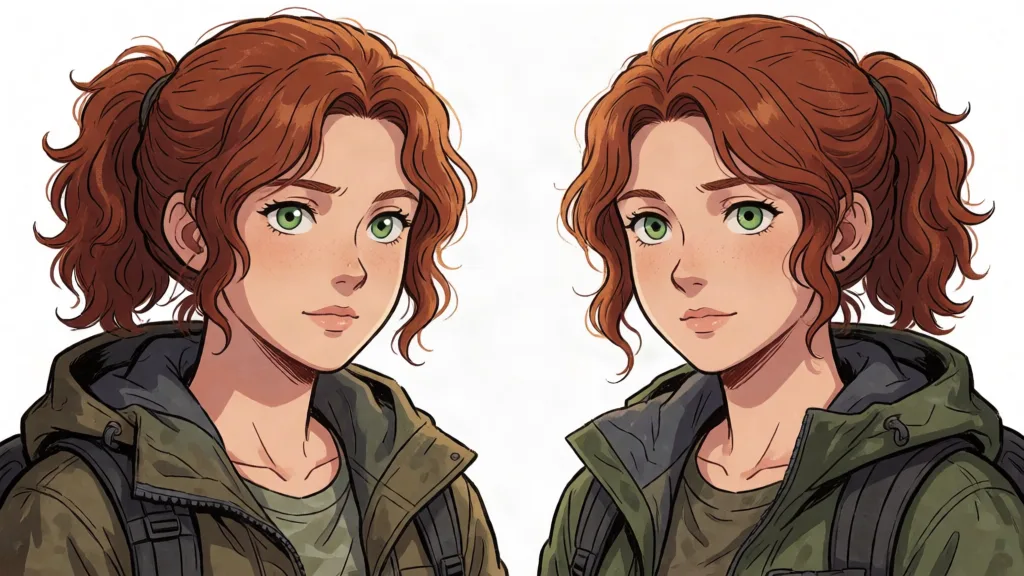
The screen door slammed behind me, and I knew before I turned around that it was her. That specific rhythm of footsteps on the porch, bare feet on sun-warmed wood, the slight pause at the top of the stairs.
"You're up early," Mom said.
I didn't turn. I was watching the lake, the way the morning fog was lifting off it in strips, like someone pulling back a sheet. The dock was wet with dew. A heron stood at the far end, absolutely still, pretending to be a statue.
"Couldn't sleep," I said.
She came to stand beside me at the railing. I felt her before I saw her, that warmth she carried, the smell of coffee and sunscreen and something green, like crushed leaves. She was wearing one of her old flannel shirts, the sleeves rolled up past her elbows, and a pair of my gym shorts that I'd left on the line. Her hair was loose, that auburn mess that never quite behaved, and there was a smudge of dirt on her forehead from where she'd been working in the garden before I woke up.
"You've been up since five," I said.
"Four-thirty. The tomatoes needed staking."
She said it like it was nothing. Like sleep was optional. I'd watched her do this my whole life, wake before the sun, work until her hands were raw, then come inside and make dinner like it was the most natural thing in the world. She never complained. Not once. Not even when I was a kid and I'd wake up screaming from nightmares about a man I couldn't remember, a man who'd left before I was old enough to form a single clear memory of his face.
She'd just hold me. That was all. She'd hold me and hum something tuneless and wait for the shaking to stop.
"You're staring," she said.
"I'm not."
"You are. You've got that look."
"What look?"
"The one where you're thinking too hard about something that doesn't need thinking about."
I finally turned to look at her. She was leaning against the railing, her coffee mug cradled in both hands, and the morning light caught the scar on her cheek, that thin white line that ran from her cheekbone almost to her jaw. I'd asked her about it once, when I was maybe seven. She'd told me she got it camping, that she'd tripped over a root and caught her face on a rock. I'd believed her for years. It wasn't until I was sixteen that I found out the truth, that she'd gotten it from my father, that he'd thrown a bottle at her and missed, that the glass had caught her instead.
She'd never told me that. I'd heard it from a neighbor, a woman who'd lived next door when I was a baby, who'd seen the police car in the driveway and the ambulance and the blood on the porch steps.
"Happy birthday," she said.
"I know."
"Nineteen."
"I know that too."
She smiled. It was the kind of smile that crinkled the corners of her eyes, that made her look younger than forty-eight, that made me forget sometimes that she wasn't my mother by blood, that she'd had no obligation to me at all.
"You're supposed to be excited," she said. "Nineteen is a big deal."
"It's not, though. It's just another year."
"It's the year you become an adult."
"I've been an adult for a while."
She laughed. That low, warm laugh that I'd heard a thousand times, that I could probably hear in my sleep. "You've been an adult since you were twelve," she said. "That's not the same thing as being one."
I didn't have an answer for that. I never did, when she got like this, when she got philosophical and thoughtful and looked at me like she could see right through my skin.
She took a sip of her coffee. "I made you breakfast. Well, I made you pancakes. They're probably cold by now."
"You made me pancakes?"
"I make you pancakes every year."
"I know. I just... I didn't think you'd remember."
She set her mug down on the railing and turned to face me fully. Her green eyes were sharp, almost too sharp, like she could see every thought that crossed my mind before I even had it.
"I remember everything," she said. "Every birthday. Every first day of school. Every time you scraped your knee or broke a bone or cried yourself to sleep because some kid at school said something stupid about your father."
"Mom."
"I remember all of it. I remember the day you came home from kindergarten and told me you didn't have a dad, that you had a mom and that was enough. I remember the look on your face when you said it. Like you were daring me to argue."
I looked away. Out at the lake, the heron had moved, was stalking something in the shallows, its neck coiled like a spring.
"I remember the day you turned thirteen and told me you hated me," she said. "And the day you turned sixteen and told me you loved me. And the day you turned eighteen and told me you were going to leave, that you were going to go find him, that you needed to know who he was."
"I didn't go."
"No. You didn't."
"I stayed."
"You did."
She reached out and touched my face. Just her fingertips, light against my cheek, and I felt it everywhere. That was the thing about her. She could touch my face and I'd feel it in my knees.
"I'm glad you stayed," she said.
"I know."
"Do you?"
I didn't answer. I couldn't. Because the truth was I didn't know, not really, not in the way she meant. I'd stayed because I was scared. I'd stayed because I didn't know how to leave. I'd stayed because every time I thought about getting on a bus and going somewhere else, I'd imagine her face when she came home and found my room empty, and something in my chest would seize up like a fist.
But that wasn't the whole truth either. The whole truth was that I'd stayed because I couldn't imagine my life without her. Because she was the only person who'd ever loved me without condition, without expectation, without some hidden price I'd have to pay later. Because she'd chosen me. When she didn't have to. When she could have walked away and no one would have blamed her.
She was twenty-nine when my father left. I was six months old. She could have put me up for adoption. She could have called my grandparents, who lived three states away and had never approved of her anyway. She could have done any number of things that would have been easier, that would have made her life simpler, that would have let her go back to being a person instead of a single mother with a kid who wasn't even hers.
But she didn't. She kept me. She raised me. She gave up everything for me.
And now I was nineteen, and I was standing on the porch of the house she'd built with her own hands, watching the sun rise over the lake, and I was thinking about how I was going to leave. How I had to leave. How staying was killing me slowly, in ways I couldn't explain, in ways that made me feel like I was drowning every time she looked at me.
"Hey," she said. "Where'd you go?"
"Nowhere."
"You went somewhere. You've got that look again."
"I'm fine."
"You're lying."
"I'm not."
She raised an eyebrow. That look. The one that said she didn't believe me and wasn't going to pretend to.
"Okay," I said. "I'm not fine. But I don't want to talk about it."
"Okay."
"Really?"
"I said okay. I'm not going to push."
She picked up her mug and took another sip. The sun was fully up now, burning off the last of the fog, and the lake was starting to shine, that hard silver gleam that made me squint.
"I have to go into town today," she said. "The ranger station needs help with some trail assessments. I'll be back by dinner."
"Okay."
"I'll bring home something for your birthday. A cake. Or pie. Do you want pie?"
"I don't care."
"You care. You always care. You're just being difficult."
"I'm not being difficult."
"You're being nineteen."
I laughed. I couldn't help it. She had this way of cutting through my bullshit, of making me laugh when I was trying to be serious, of making me feel like everything was going to be okay even when I knew it wasn't.
"Fine," I said. "Pie. Apple."
"Apple it is."
She finished her coffee and set the mug down on the railing again. Then she reached out and pulled me into a hug. Just like that. No warning. No preamble. Just her arms around me and her face against my shoulder and the smell of her filling my nose.
I hugged her back. I always did. I couldn't not.
"Happy birthday, kid," she said.
"I'm not a kid."
"You're always a kid. You're my kid."
She pulled back and looked at me. Her eyes were wet. Just a little. Just enough that I noticed.
"I love you," she said.
"I know."
"Say it back."
"I love you too."
She smiled. That smile. The one that made me feel like I was the center of the universe, like nothing else mattered, like I could do anything as long as she believed in me.
Then she let go and went back inside, and I was alone on the porch with the heron and the lake and the sun, and I felt like I could breathe again.
For about five minutes.
Then I heard the truck pull into the driveway.
It was a green truck. An old one, with rust along the wheel wells and a dent in the front bumper. I didn't recognize it. I didn't recognize the man who got out of it either, tall and lean and tanned, with dark hair going gray at the temples and a smile that looked like it belonged on a billboard.
He saw me on the porch and waved.
"Hey there," he said. "Is April home?"
"Who's asking?"
"Name's Jack. Jack Holloway. I'm an old friend."
I didn't move. I didn't say anything. Something was wrong. Something was very wrong.
"April!" he called. "April, you home?"
The screen door opened behind me. I heard her footsteps, that specific rhythm, and then she was standing beside me, and she was looking at the man in the driveway, and her face had gone white.
"Jack," she said.
"Hey, April."
"What are you doing here?"
"I came to see you. It's been a long time."
"Twenty years."
"Twenty years. Yeah."
She didn't say anything. She just stood there, frozen, and I could feel the tension coming off her in waves, could feel the way her hand had found mine and was gripping it tight.
"Who is this?" I asked.
She didn't answer.
"April," the man said. "Who's this?"
She still didn't answer. She just stood there, holding my hand, staring at the man in the driveway like she was seeing a ghost.
And then I understood.
I understood everything.
"Mom," I said. "Who is this?"
She turned to look at me. Her eyes were wet again, but this time it wasn't from love. This time it was from fear.
"This is your father," she said.
The words hit me like a physical blow. I felt them in my chest, in my stomach, in the back of my throat. I felt them everywhere.
"My father," I repeated.
"Yes."
"The one who left."
"Yes."
"The one who..."
I couldn't finish the sentence. I couldn't say the words. The one who hurt you. The one who threw a bottle at your face. The one who walked out when I was six months old and never looked back.
"I know this is a lot," Jack said. He was walking toward us now, up the driveway, his boots crunching on the gravel. "I know you probably have questions. I know you probably hate me. But I'm here now. I'm here to make things right."
"Make things right," I said. "You want to make things right."
"I do."
"After twenty years."
"I know it's been a long time."
"A long time. Yeah. That's one way to put it."
"Look," he said. He was at the bottom of the porch steps now, looking up at us, his hands spread wide like he was trying to show he wasn't a threat. "I'm not here to cause trouble. I'm just here to talk. To explain. To tell you my side of the story."
"Your side," I said. "You want to tell me your side."
"That's right."
"Get off my property."
The words came from my mother. She'd let go of my hand and stepped forward, her body between me and the man in the driveway, her voice hard and cold in a way I'd never heard before.
"April," Jack said.
"I said get off my property. Now."
"Just let me explain."
"There's nothing to explain. You left. You walked out on me and your son and you never looked back. There's nothing you can say that will change that."
"I was young. I was scared. I didn't know what I was doing."
"You were thirty-two years old. You knew exactly what you were doing."
"I made a mistake."
"A mistake. You call hitting me a mistake? You call throwing a bottle at my face a mistake?"
Jack's face changed. The smile disappeared. Something else took its place, something darker, something that made my stomach clench.
"I never hit you," he said.
"You threw a bottle at me."
"I was aiming for the wall."
"You were aiming for me. You missed. That's the only reason I don't have glass in my eye."
"That's not what happened."
"That's exactly what happened. I was there. I remember every second of it. I remember the look on your face when you did it. I remember the sound the glass made when it shattered. I remember the blood on the floor."
She was shaking now. I could see it, the way her hands were trembling, the way her shoulders were tight.
"You need to leave," I said.
Jack looked at me. Really looked at me, for the first time since he'd pulled into the driveway.
"You look just like me," he said.
"I don't care."
"You've got my eyes. My jaw. You're my son."
"I'm not your son. You're just the man who gave me half my DNA. That's all you are."
"That's not true."
"It is true. You don't get to show up after twenty years and call yourself my father. You don't get to pretend like you didn't abandon us. You don't get to pretend like you didn't hurt her."
"I never hurt her."
"You threw a bottle at her face."
"I was drunk. I was angry. I didn't mean to."
"You didn't mean to. That's your excuse."
"It's not an excuse. It's the truth."
"The truth is you're a coward. The truth is you ran away because you couldn't handle being a husband or a father. The truth is you're standing here right now trying to make yourself feel better, trying to convince yourself that you're not the bad guy, and I'm not going to let you do it."
Jack's face went red. His hands clenched into fists at his sides. For a second, just a second, I thought he was going to hit me.
Then he laughed.
"You've got fire," he said. "Just like your mother."
"Leave," I said.
"Okay. Okay, I'll leave. But I'll be back. I'm staying in town. I'm not going anywhere until we've had a chance to talk."
"We have nothing to talk about."
"We have everything to talk about. You're my son. You deserve to know who I am."
"I know who you are. You're the man who left."
I stepped off the porch. I didn't plan it. I didn't think about it. I just did it, my feet moving before my brain could catch up, and then I was standing in front of him, my face inches from his, and I could smell the beer on his breath, could see the broken capillaries in his nose, could see the way his eyes were bloodshot and tired.
"You need to leave," I said. "And you need to not come back."
"Or what?"
"Or I'll call the police."
"And tell them what? That your father came to visit?"
"That you're trespassing."
"I'm on the driveway. That's not trespassing."
"It is when you've been told to leave."
He looked at me for a long moment. Then he shook his head.
"You're making a mistake," he said.
"No. You made the mistake. Twenty years ago. And now you're going to live with it."
I turned and walked back to the porch. My mother was still standing there, her face pale, her hands shaking. I took her hand and led her inside.
The screen door slammed behind us.
We stood in the kitchen, not looking at each other, not saying anything. The pancakes were still on the table, cold and rubbery. The coffee had gone stale. The sun was streaming through the window, bright and cheerful, like nothing had happened.
"Are you okay?" I asked.
She didn't answer.
"Mom. Are you okay?"
She looked at me. Her eyes were red, but she wasn't crying. Not anymore.
"I'm fine," she said.
"You're not fine."
"I'm fine. I've dealt with him before. I can deal with him again."
"You shouldn't have to."
"I know."
She sat down at the table. She picked up a pancake and took a bite, chewing mechanically, like she was forcing herself to eat.
"He's not going to leave," she said.
"I know."
"He's going to stay in town. He's going to try to talk to you. He's going to try to be your father."
"I know."
"You don't have to talk to him. You don't have to see him. You don't owe him anything."
"I know."
She looked at me. "Do you?"
I sat down across from her. I took her hand. It was cold, so cold, and I held it tight.
"I know," I said. "I'm not going to talk to him. I'm not going to see him. I'm not going to let him anywhere near you."
She nodded. She didn't say anything. She just sat there, holding my hand, and I could feel the fear coming off her in waves.
"I'm sorry," I said.
"For what?"
"For not being there. For not protecting you."
"You were a baby."
"I know. But I'm not a baby anymore."
She smiled. It was a sad smile, a tired smile, but it was a smile.
"No," she said. "You're not."
She squeezed my hand. Then she let go and stood up.
"I need to go to work," she said.
"You don't have to. You can stay home."
"I need to go to work. I need to do something normal. I need to pretend like this didn't happen."
"Mom."
"I'll be back by dinner. I'll bring pie. Apple. Just like we talked about."
"Mom."
She stopped at the door. She turned and looked at me, and for a moment, just a moment, she looked like the girl she must have been, twenty years ago, before my father, before me, before everything.
"I love you," she said.
"I love you too."
She left. The screen door slammed behind her. I heard her truck start, heard it pull out of the driveway, heard it fade into the distance.
And then I was alone.
I sat at the kitchen table for a long time. I didn't move. I didn't think. I just sat there, staring at the cold pancakes and the stale coffee and the sun streaming through the window.
Then I got up and went to my room.
I had a duffel bag in the closet. I pulled it out and started packing. Clothes, mostly. Some books. My laptop. The photograph of my mother and me, taken when I was five, standing in front of this house, both of us smiling like we didn't have a care in the world.
I packed it all. Then I sat on the bed and looked at the bag.
I didn't know where I was going. I didn't know what I was doing. I just knew I couldn't stay here. Not with him in town. Not with her looking at me like that, like I was the only thing keeping her safe.
I couldn't be that. I wasn't strong enough. I wasn't good enough.
I was just a kid. A nineteen-year-old kid who'd never done anything, never been anywhere, never been anyone.
I sat there for a long time. The sun moved across the floor. The shadows changed. The house was quiet, so quiet, and I could hear my own heartbeat in my ears.
Then I heard the truck pull back into the driveway.
I looked out the window. It was her. She was back early.
She got out of the truck and stood in the driveway, looking at the house. She didn't move. She just stood there, her hands at her sides, her face unreadable.
I went downstairs. I opened the front door. She was still standing there, still not moving.
"Mom?"
She looked at me. Her eyes were wet. Her face was pale. She looked like she'd seen a ghost.
"I couldn't do it," she said. "I couldn't go to work. I couldn't pretend like everything was normal."
"It's okay."
"It's not okay. Nothing is okay."
She walked up the porch steps. She stopped in front of me. She reached out and touched my face, just her fingertips, light against my cheek.
"I'm sorry," she said.
"For what?"
"For everything. For your father. For the way I've raised you. For the way I've... for the way I feel."
"What do you mean?"
She didn't answer. She just looked at me, her eyes searching my face, and I felt something shift in the air between us. Something I didn't understand. Something I was afraid to understand.
"Mom," I said. "What do you mean?"
She leaned in. She kissed my forehead. Just a soft, gentle kiss, like she'd done a thousand times before.
But this time it was different. This time it felt like something else.
"I'm sorry," she whispered.
Then she went inside. The screen door slammed behind her.
I stood on the porch for a long time. The sun was setting. The lake was dark. The heron was gone.
And I was alone.
I didn't know what was happening. I didn't know what any of it meant. I just knew that something had changed, something fundamental, something I couldn't undo.
I went inside. I closed the door. I locked it.
And then I went to my room and unpacked my bag.
I wasn't leaving. Not tonight. Not ever.
Because she needed me. And I needed her.
And that was the problem, wasn't it? That was the thing I couldn't say, the thing I couldn't admit, the thing that was eating me alive.
I needed her. Not like a son needs a mother. Not like a kid needs a parent.
I needed her like I needed air. Like I needed water. Like I needed to breathe.
And I didn't know what to do with that.
I sat on my bed and stared at the wall. The house was quiet. I could hear her moving around downstairs, opening cabinets, running water, doing all the normal things she did every night.
But nothing was normal. Nothing would ever be normal again.
Because my father was in town. Because he was going to try to talk to me. Because he was going to try to be part of my life.
And because I was in love with my mother.
There. I said it. I admitted it. I wrote the words in my head, and they were true, and they were terrible, and I couldn't take them back.
I was in love with her. I'd been in love with her for years. Maybe my whole life. Maybe since the first moment I could remember, when she held me in her arms and sang me to sleep and told me she'd never leave me.
She'd never left me. She'd stayed. She'd given up everything for me.
And now I was going to destroy her. I was going to destroy everything.
Unless I left. Unless I ran. Unless I got as far away from her as I could and never looked back.
But I couldn't. I couldn't leave her. Not with him in town. Not with everything that was happening.
I had to stay. I had to protect her. I had to be strong.
Even if it killed me.
I lay back on the bed and closed my eyes. I could hear her footsteps on the stairs. I could hear her pause outside my door. I could hear her breathing.
She didn't knock. She just stood there, on the other side of the door, and I lay there, on this side, and neither of us moved.
Then she walked away. Her footsteps faded down the hall. Her door closed.
And I was alone again.
I opened my eyes and stared at the ceiling. The house was dark now. The moon was up. The lake was silver.
And I was in love with my mother.
God help me.
Watch this moment
Turn the current scene into a cinematic Live Chapter — what you watch becomes the story's next part.
Disclaimer
This is a work of fiction, assisted by artificial intelligence. Any names or characters, businesses or places, events or incidents, are fictitious. Any resemblance to actual persons, living or dead, or actual events is purely coincidental.
Content Removal Policy
- Users may report content that may be illegal or violates our Standards.
- All reported complaints will be reviewed and resolved within seven business days.
- Review Process: Our team will assess the reported content against our guidelines.
- Appeals: If you disagree with a decision, you may appeal within 14 days of notification.
- Potential outcomes include: content removal, account warning, or no action if no violation is found.
To report content, email us at [email protected]