Share
Go Live
Chrono Vincolo
·
Published 9/30/2026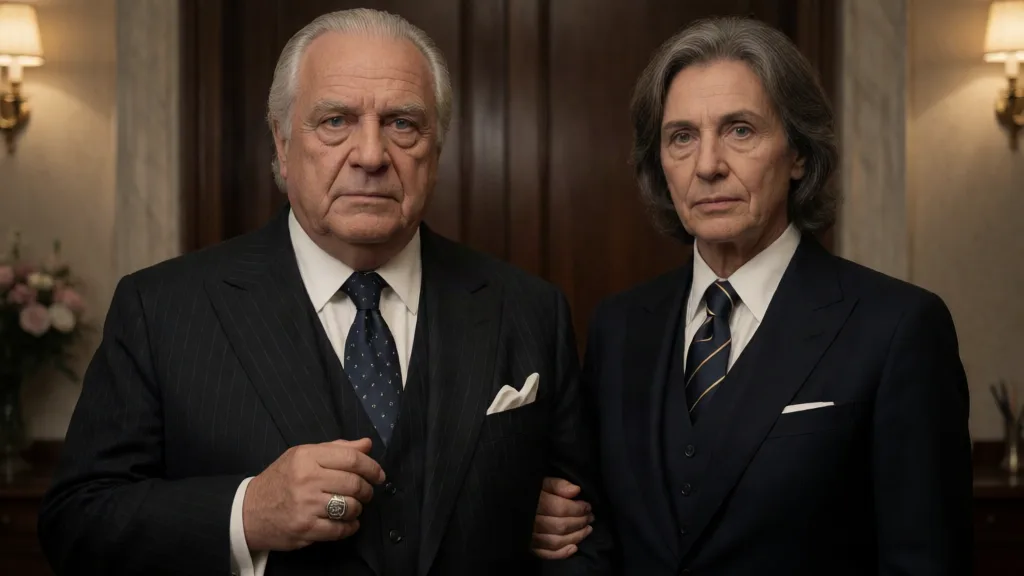
The graduation party was still going when Danny pulled Marissa through the side gate of the house on Beacon Street. Her heels clicked on the flagstones, a staccato rhythm that matched the pulse in her throat. Behind them, someone had put on "Mr. Brightside" for the third time, and the bass thumped through the fence like a second heartbeat. The June air was thick with jasmine and spilled beer. She stumbled on a crack in the path and grabbed his forearm.
"Easy," he said. "I've got you."
She looked up at him. The porch light caught the edge of his jaw, the soft brown of his eyes. He was wearing the blue button-down she'd bought him for his birthday, sleeves rolled to the elbow, and he smelled like cedar and the cheap vodka someone had been pouring into red Solo cups all night. She wanted to bite his shoulder. She wanted to press her face into his chest and stay there.
"I'm not even that drunk," she said, which was a lie so obvious he laughed.
"Okay."
"I'm serious. I had like three."
"You had seven. I counted."
"You counted?" She let go of his arm and walked backward toward his car, arms out for balance. The world tilted pleasantly, like a boat on a slow wave. "That's so romantic. My boyfriend, the accountant of my liver."
Danny caught her by the waist before she could trip over the curb. His hands were warm through the thin fabric of her dress. "You're going to break your ankle."
"Worth it."
He opened the passenger door of his Honda and she slid in, the leather seat hot against the backs of her thighs. The car smelled like him, like the pine tree air freshener he refused to throw away even though it had lost its scent months ago. She watched him walk around the front, watched the way he checked his phone once before getting in, a habit she'd noticed but never mentioned. Probably his mom. Probably nothing.
He started the engine and the radio came on low, some indie station he liked that she pretended to like too. She kicked off her heels and put her feet on the dashboard. He didn't tell her to move them.
"You're quiet," she said.
"Just tired."
"Liar."
He glanced at her, and there it was, that half-smile that had made her fall for him in the first place, back in October, at a party not unlike this one. She'd been standing by the keg, arguing with some guy about whether Die Hard was a Christmas movie, and Danny had walked up and said, "It's a Christmas movie if you're not a coward," and that was that. Three months later they'd said I love you. Six months later she still got a flutter every time he looked at her like that.
"I'm not lying," he said. "I'm just. Thinking."
"About what?"
He pulled onto Commonwealth Avenue and didn't answer. The streetlights slid across the windshield in amber arcs. Marissa let her head fall back against the seat and closed her eyes. The motion of the car was soothing, the hum of the engine, the distant sound of the radio. She felt loose and warm and good. She felt like she could say anything.
"I want to have sex tonight," she said.
The car didn't swerve, but she felt him tense. She opened her eyes and looked at him. His hands were tight on the wheel, knuckles pale.
"Riss."
"What? I'm just saying."
"You're drunk."
"So? You're not."
"That's not the point."
She turned in her seat to face him, tucking one leg under her. The seatbelt cut across her chest. "Then what's the point?"
He was quiet for a long moment. They passed a 7-Eleven, a Dunkin', a row of brownstones with their lights on, people living their lives inside, unaware of this conversation happening in a Honda Civic on a Tuesday night in June. Marissa watched his profile. The slight bump in his nose from a childhood fall. The way his hair curled at the nape of his neck. She wanted to crawl into his lap and stay there.
"The point," he said finally, "is that I don't want your first time to be something you regret."
"I won't regret it."
"You don't know that."
"I know I want you."
He pulled into the parking lot of her apartment building and killed the engine. For a moment neither of them moved. The silence was thick, charged, like the air before a storm. Marissa could hear her own breathing, could feel the heat pooling low in her belly. She'd been thinking about this for weeks, months, since the first time they'd made out on his couch and he'd stopped things before they went too far. She was tired of stopping.
"Danny."
"Marissa."
"I'm not a kid. I'm eighteen. I graduated today. I can make my own decisions."
He turned to look at her then, really look at her, and she saw something in his eyes that she couldn't quite name. Want, yes. But something else too. Something that looked almost like fear.
"I know you can," he said. "That's not what I'm worried about."
"Then what?"
He reached out and tucked a strand of hair behind her ear. His fingers lingered on her cheek, warm and rough. "I'm worried that you'll wake up tomorrow and wish you hadn't. And I don't want to be the guy who took advantage of you when you were too drunk to know better."
"You wouldn't be taking advantage. I'm telling you what I want."
"You're telling me what you want right now. Tomorrow you might feel different."
She wanted to argue, but the words caught in her throat. Because he wasn't wrong. She'd seen it happen to friends, girls who'd hooked up with guys at parties and spent the next morning crying in the bathroom, not because anything bad had happened, but because it hadn't been what they'd imagined. She didn't want that. She wanted this to be good. She wanted to remember it.
But she also wanted him. Right now. So badly it ached.
"Okay," she said. "I'll wait. But you have to promise me something."
"What?"
"That you won't make me wait forever."
He laughed, a soft exhale that broke the tension. "I promise."
She leaned over and kissed him, tasting the faint bitterness of beer on his lips. He kissed her back, gentle at first, then deeper, his hand sliding into her hair. She made a small sound against his mouth and he pulled away, breathing hard.
"We should go inside," he said.
"Okay."
They walked up the three flights to her apartment in silence, her heels dangling from her fingers, his hand on the small of her back. The hallway smelled like someone had burned toast, and the carpet was the same ugly brown it had been since she moved in freshman year. She fumbled with her keys, dropped them once, laughed, picked them up. Danny watched her with that same unreadable expression.
Inside, she kicked the door shut and turned to face him. The apartment was small, a studio with a kitchenette and a futon that doubled as a couch. Her roommate had gone home for the summer, so it was just them. Just the two of them and the hum of the refrigerator and the distant sound of a siren somewhere in the city.
"I'm going to take a shower," she said. "Sober up a little."
"Okay."
She walked toward the bathroom, then stopped and looked back at him. He was standing by the futon, hands in his pockets, looking like he didn't know what to do with himself.
"Wait for me?"
"Always."
She smiled and closed the bathroom door. The water was cold at first, then warm, and she stood under the spray with her eyes closed, letting it wash away the sweat and the beer and the lingering fog of the party. She thought about Danny's face in the car, the way he'd looked at her. She thought about what he'd said. I don't want to be the guy who took advantage of you. She thought about how much she loved him, how much she wanted him, how much she hated waiting.
When she got out, she wrapped herself in a towel and wiped the steam from the mirror. Her reflection looked back at her, flushed and bright-eyed. She looked older than she had this morning. She looked like someone who knew what she wanted.
She opened the door and walked out into the living room.
Danny was sitting on the futon, scrolling through his phone. He looked up when she came in, and his eyes went wide. She was still in just the towel, her hair wet and dripping onto her shoulders. She watched his throat move as he swallowed.
"Riss."
"Don't," she said. "Don't tell me to wait. Don't tell me I'm drunk. I'm not. I'm sober now. And I want this. I want you."
He set his phone down. "Are you sure?"
She walked toward him, let the towel fall. "I've never been more sure of anything in my life."
---
Vincent Moretti was eating a cannoli when the phone rang. He was sitting in the back booth of a restaurant in the North End, a place that had been in his family for three generations, and he did not appreciate the interruption. The cannoli was from Modern Pastry, the shell crisp and the ricotta smooth, and he had been savoring it in the way that a man savors the small pleasures when the large ones have become complicated.
He wiped his fingers on a napkin and picked up the phone.
"Speak."
"It's done."
Vincent closed his eyes. He had been waiting for this call for three days, and now that it had come, he felt nothing but a dull, familiar weariness. Another problem solved. Another mess cleaned up. Another young man who had thought he could take what wasn't his and had learned otherwise.
"Clean?"
"Clean."
"Good. Come see me tomorrow. We'll discuss the next steps."
He hung up and finished his cannoli. The restaurant was empty except for the staff, who knew better than to bother him when he was in the back booth. He looked at his watch, a gold Rolex that had belonged to his father, and thought about the meeting he had scheduled for later that evening. A sit-down with a man from the Irish mob, a man who had been making noise about expanding into Vincent's territory. Vincent had no intention of letting that happen, but he was also a man who believed in hearing people out before he made his decision. It was cheaper than violence, and cleaner, and it left fewer bodies to explain.
He paid his bill, left a generous tip, and walked out into the night. The street was quiet, the tourists gone home, the locals inside their apartments. He walked to his car, a black Cadillac parked in a reserved spot, and slid behind the wheel. The engine purred to life. He drove through the city with the windows down, the summer air warm on his face, and thought about his wife, who had been dead for twelve years, and his daughter, who lived in California and called him once a month, and the young man he had just ordered killed, who had been twenty-three years old and stupid and now was neither.
He did not feel guilt. He had stopped feeling guilt a long time ago. But he felt something. A heaviness in his chest, a sense of the world pressing down on him. He was fifty-eight years old and he was tired. He had been in this business since he was a teenager, had killed his first man at nineteen, had risen through the ranks with a combination of patience and ruthlessness that had made him valuable to the family. He had money. He had respect. He had a reputation that preceded him wherever he went.
And he was alone.
He parked in front of his house, a modest colonial in the suburbs, and sat in the car for a moment, listening to the engine tick as it cooled. His phone buzzed. A text from his daughter, a picture of her dog, a golden retriever with a cone around its neck. He smiled, typed back a response, and went inside.
The house was dark and quiet. He poured himself a glass of scotch and sat in his study, surrounded by books he had never read, and thought about the meeting he had scheduled for later that evening. The Irishman was named Sean, and he was young, maybe thirty, with a reputation for being reckless. Vincent had done his homework. He knew about Sean's wife, his two children, his gambling debts. He knew about the affair Sean was having with a woman in South Boston, a woman who was not his wife. He knew about the money Sean owed to a bookie in Dorchester, money he had been borrowing against his future earnings, money he could not repay.
Vincent sipped his scotch and thought about how he would use this information. He would not threaten Sean directly. That was crude. Instead, he would offer him a deal, a way out of his debts, a way to save his family from the shame of his mistakes. He would make Sean an offer that he could not refuse, and in doing so, he would bring him into the fold. He would make him loyal. He would make him useful.
This was how Vincent operated. He did not use violence when he could use leverage. He did not make enemies when he could make allies. He was patient. He was meticulous. He was, in his own way, a kind of artist.
He finished his scotch and looked at the clock. It was almost midnight. The meeting was in an hour. He stood up, straightened his tie, and checked his reflection in the mirror. His hair was still thick, though it had gone silver years ago. His eyes were sharp and pale blue, the color of ice on a winter lake. He looked like what he was: a man who had survived.
He walked out to his car and drove to the meeting, a warehouse in South Boston, a place where the family had conducted business for decades. The night was warm and still, and the city lights glittered in the distance like a promise. Vincent thought about his daughter, about the life she had built for herself, so far from the world he inhabited. He thought about his wife, about the way she had looked at him when they first met, before she knew what he did for a living, before she learned to look at him with something other than love.
He parked the car and walked into the warehouse.
Sean was already there, sitting at a table in the middle of the empty space, flanked by two of his men. Vincent's men were stationed around the perimeter, invisible in the shadows. He had brought three of them, just in case. He was a man who believed in being prepared.
"Sean," he said, sitting down across from him. "Thank you for coming."
"Vincent." Sean nodded, trying to look confident. He was a big man, broad-shouldered, with a thick neck and a face that had been broken a few times. He was wearing a suit that didn't fit him well, and Vincent noticed the way he kept glancing at his men, as if seeking reassurance.
"I hear you've been having some trouble," Vincent said. "Money trouble."
Sean's jaw tightened. "I don't know what you're talking about."
"Of course you do. You owe fifty grand to a bookie in Dorchester. You've been borrowing against your future earnings, which is a dangerous game. And your wife, she doesn't know, does she? About the money, or about the woman in South Boston."
Sean's face went pale. "You've been following me."
"I've been paying attention. There's a difference." Vincent leaned back in his chair. "I'm not here to threaten you, Sean. I'm here to offer you a way out."
"What kind of way out?"
"I'll pay off your debts. I'll make sure your wife never finds out about the woman. In exchange, you'll work for me. Not for your boss, not for the Irish, for me. You'll be my eyes and ears in your organization. You'll tell me what I need to know, when I need to know it. And in return, you'll have my protection. You'll have my resources. You'll have a future."
Sean stared at him. "You want me to betray my family."
"I want you to be smart. Your family is going down, Sean. Your boss is old, and he's not thinking clearly. He's been making mistakes, and the feds are closing in. You can go down with him, or you can save yourself. It's your choice."
Sean was silent for a long moment. Vincent watched him, patient, waiting. He knew what the answer would be. He had seen it a hundred times before. The choice between loyalty and survival was not really a choice at all.
"Alright," Sean said finally. "Alright. I'll do it."
Vincent smiled, a thin, cold smile that did not reach his eyes. "Good. I'll be in touch."
He stood up and walked out of the warehouse, his men falling in behind him. The night air was cool on his face, and he felt a sense of satisfaction that he had not felt in weeks. He had solved a problem. He had gained an asset. He had done what he did best.
He drove home and went to bed, and if he dreamed, he did not remember it in the morning.
---
Elias was in a coffee shop in 1995 when the shift came. He had been sitting at a table by the window, nursing a cup of black coffee, watching the rain fall on the street outside. He had been in this era for three days, which was longer than usual, and he had begun to hope that maybe this time, he would stay. He had even started to think about getting a job, finding an apartment, building something that resembled a life.
And then the shift came.
It started as a tingling in his fingers, a numbness that spread up his arms. He looked at his hands and saw them flicker, like a television with a bad signal. He closed his eyes and tried to hold on, tried to stay in this moment, this place, but it was no use. The world around him dissolved into a blur of colors and sounds, and he felt himself being pulled, stretched, torn apart and reassembled.
When he opened his eyes, he was standing in a park in 1972.
He knew the year because he had been here before. He knew the park, too, the way the trees were arranged, the way the pond reflected the sky. He had been here in 1972, and he had been here in 2003, and he had been here in 1889. Time was not a line for Elias. It was a tangled knot, a labyrinth with no exit.
He sat down on a bench and put his head in his hands. The pocket watch in his coat was ticking erratically, as it always did, a broken clock that could not keep time. He had been carrying it for as long as he could remember, though he could not remember where he had gotten it, or why. He only knew that it was connected to his curse, that it was the reason he could not stay in one place, one time, one life.
He had been a scientist once, a physicist, brilliant and ambitious. He had been working on a project, a secret project, something that was supposed to change the world. And then something had gone wrong, catastrophically wrong, and he had been thrown out of time, unstuck from the normal flow of reality. He had been wandering ever since, through centuries and decades, through wars and peace, through moments of history that he had witnessed and could not change.
He was tired. He was so tired.
He looked up at the sky, at the clouds drifting by, and thought about the woman he had loved, a woman who had lived in the 1940s, a woman who had died before he could find a way to save her. He thought about the life he could have had, the life he had lost. He thought about the future, if there was a future, if there was any hope of finding a way back to the present, to the time he had come from, to the person he had been.
And then he saw her.
She was walking through the park, a young woman with dark hair and a bright smile, and she was looking at him. She was looking at him like she knew him, like she had been waiting for him, like she had been searching for him her whole life.
Elias stood up. His heart was pounding. The pocket watch in his coat was ticking faster now, a frantic rhythm that matched the pulse in his throat.
"Do I know you?" he asked.
The woman smiled. "Not yet," she said. "But you will."
---
Marissa woke to sunlight streaming through the blinds and the smell of coffee. She was in her bed, under the covers, wearing a t-shirt that wasn't hers. She sat up, her head pounding, her mouth dry, and looked around the room. Danny was sitting at the kitchenette, a cup of coffee in his hands, watching her.
"Morning," he said.
"Morning." She rubbed her eyes. "What time is it?"
"Almost noon."
"Shit." She threw off the covers and swung her legs out of bed. She was wearing his t-shirt, the blue one, and nothing else. She looked at him, at the way he was looking at her, and felt a flush of heat spread through her body. "Did we..."
"No." He set down his coffee and walked over to the bed. "We didn't. You fell asleep. I carried you to bed and slept on the futon."
She looked at him, at the tiredness in his eyes, the slight smile on his lips. "You stayed."
"Of course I stayed."
She reached out and took his hand, pulled him down onto the bed beside her. He lay on his back, staring at the ceiling, and she curled up against his side, her head on his chest. She could hear his heartbeat, steady and strong.
"I'm sorry," she said.
"For what?"
"For last night. For being so pushy. For being drunk."
He laughed, a low rumble in his chest. "You don't have to apologize. You were honest. That's more than most people are."
"I meant what I said, though. I do want you."
He was quiet for a moment. Then he said, "I know. And I want you too. But I want it to be right. I want it to be something we both remember."
She lifted her head and looked at him. "What if I don't want to wait?"
He met her eyes. "Then we don't wait. But we do it sober. We do it when we're both clear-headed and we both know what we're doing. Okay?"
She nodded. "Okay."
He kissed her forehead, then her nose, then her lips. She kissed him back, slow and deep, and felt the heat building between them again. She wanted him. She wanted him so much it hurt. But she also understood what he was saying. She wanted this to be good. She wanted to remember every moment.
"Tonight," she said. "Tonight, after dinner. I'll cook. We'll have wine. And then we'll..."
"And then we'll see," he said.
She smiled. "And then we'll see."
---
Vincent was in his office when the call came. He had been reviewing the books for the gambling operation, a tedious but necessary task, and he was grateful for the interruption. He picked up the phone.
"Speak."
"It's about the girl."
Vincent frowned. "What girl?"
"The one your son has been seeing. The one from the party."
Vincent's son, Michael, had been dead for five years. He had been killed in a car accident, a drunk driver, a senseless tragedy that had left Vincent hollow and cold. He had no other children. He had no one.
"I don't have a son," he said.
There was a pause on the other end of the line. "I'm sorry, sir. I must have been mistaken."
"Who is this?"
"It's Sean, sir. Sean from the meeting."
Vincent closed his eyes. Sean. The Irishman. The one he had recruited. He had been drinking, probably, or he was nervous, or he was just stupid. Vincent had made a mistake, trusting him.
"What are you talking about, Sean?"
"There's a girl. Marissa. She's been seeing a man named Danny. But Danny isn't his real name. His real name is Michael. Michael Moretti. Your son."
Vincent felt the blood drain from his face. "That's impossible."
"I saw him, sir. I saw him at the party. He looks just like you. He has your eyes."
Vincent set the phone down. His hands were shaking. He had buried his son. He had stood at the grave and watched the coffin lowered into the ground. He had mourned him for five years. And now Sean was telling him that Michael was alive, that he had been living in Boston, that he had been seeing a girl, that he had been at a graduation party.
It couldn't be true. It had to be a mistake. But Vincent had not survived this long by ignoring his instincts. Something was wrong. Something was very, very wrong.
He picked up the phone again. "Sean. I want you to find out everything you can about this Danny. Everything. Where he lives, where he works, who his friends are. And I want you to find out about the girl. Marissa. Who she is, where she comes from, what she wants."
"Yes, sir."
"And Sean?"
"Yes?"
"Don't tell anyone about this. Not yet. Not until I know what we're dealing with."
"Of course, sir."
Vincent hung up and sat in his chair, staring at the wall. His heart was pounding. His mind was racing. He thought about his son, about the boy he had raised, about the man he had become. He thought about the accident, about the closed casket, about the way the funeral had been a blur of black suits and whispered condolences.
He had not cried at the funeral. He had not cried at all. He had been strong, for his wife, for his family, for the business. He had buried his grief deep inside and had never let it out. And now, he felt it rising up, a wave of emotion that he could not control.
He reached into his desk drawer and pulled out a photograph. It was a picture of Michael, taken when he was eighteen, the same age as the girl at the party. He was smiling, his eyes bright, his future ahead of him. Vincent had been so proud of him. He had been so sure that Michael would be the one to carry on the family legacy, to take over the business when Vincent retired.
And then he had died. And Vincent had been left alone.
He looked at the photograph for a long time. Then he put it back in the drawer and stood up. He had work to do. He had questions to answer. And he had a son to find.
---
Marissa spent the afternoon cleaning her apartment, a nervous energy driving her to scrub the counters, vacuum the rug, organize the bookshelf. She wanted everything to be perfect. She wanted tonight to be perfect. She thought about Danny, about the way he had looked at her this morning, about the promise in his eyes. She thought about what they would do tonight, and her stomach fluttered with anticipation.
She went to the grocery store and bought ingredients for pasta, a bottle of red wine, a loaf of fresh bread. She bought candles, too, and a new set of sheets, because she wanted everything to be new, everything to be special. She was nervous. She was excited. She was ready.
She texted Danny: What time?
He texted back: Seven.
She spent the rest of the afternoon getting ready. She showered, shaved her legs, put on makeup, did her hair. She tried on three different outfits before settling on a simple dress, blue, the color of his eyes. She looked at herself in the mirror and saw a woman who was about to take a step into the unknown. She was scared. But she was also certain. She had never been more certain of anything in her life.
At seven o'clock, there was a knock on the door.
She opened it and found Danny standing there, holding a bouquet of flowers, wearing a suit that she had never seen before. He looked nervous, too, his hands shaking slightly as he handed her the flowers.
"You look beautiful," he said.
"You look... different."
He laughed. "I wanted to dress up. For tonight."
She took the flowers and set them on the counter. Then she took his hand and led him inside. The apartment was lit by candles, the table set for two, the wine breathing on the counter. She had worked hard to make it perfect, and she could see in his eyes that he appreciated it.
"I made pasta," she said. "And there's wine. And bread."
"It smells amazing."
They ate dinner and talked about nothing and everything. They talked about the graduation party, about their plans for the summer, about the future. They talked about their families, their hopes, their fears. They talked until the candles burned low and the wine bottle was empty. And then they sat on the futon, close together, and looked at each other.
"I'm ready," she said.
He took her hand. "Are you sure?"
"I've never been more sure of anything."
He leaned in and kissed her, soft and slow, and she felt the world fall away. There was only him. There was only this. She led him to the bedroom, and they lay down on the new sheets, and they touched each other in the candlelight. She was nervous, but she was also calm, because she knew that this was right. This was what she wanted. This was what she had been waiting for.
And when it was over, when they lay tangled together in the sheets, breathing hard, she felt a sense of peace that she had never felt before. She felt like she had crossed a threshold, like she had become someone new. She looked at Danny, at his face in the dim light, and she smiled.
"Thank you," she said.
He laughed. "For what?"
"For waiting. For making it good."
He kissed her forehead. "I told you. I wanted it to be right."
She closed her eyes and let herself drift, her body warm and satisfied, her mind quiet for the first time in weeks. She thought about the future, about all the nights they would have together, about all the moments they would share. She thought about love, about what it meant, about how it could change everything.
She was almost asleep when she heard him say something, a whisper so soft she wasn't sure if she had imagined it.
"I'm sorry," he said.
She opened her eyes. "For what?"
But he was already asleep, his breathing slow and steady, his face peaceful in the darkness. She watched him for a moment, then closed her eyes and let sleep take her.
She did not know what he was sorry for. She did not know that he had been keeping secrets, that his name was not Danny, that his father was a man who had been looking for him for five years. She did not know that her life was about to change in ways she could not imagine.
She only knew that she was happy. And for now, that was enough.
Watch this moment
Turn the current scene into a cinematic Live Chapter — what you watch becomes the story's next part.
Disclaimer
This is a work of fiction, assisted by artificial intelligence. Any names or characters, businesses or places, events or incidents, are fictitious. Any resemblance to actual persons, living or dead, or actual events is purely coincidental.
Content Removal Policy
- Users may report content that may be illegal or violates our Standards.
- All reported complaints will be reviewed and resolved within seven business days.
- Review Process: Our team will assess the reported content against our guidelines.
- Appeals: If you disagree with a decision, you may appeal within 14 days of notification.
- Potential outcomes include: content removal, account warning, or no action if no violation is found.
To report content, email us at [email protected]