Share
Go Live
Borrowed Gravity
·
Published 8/22/2026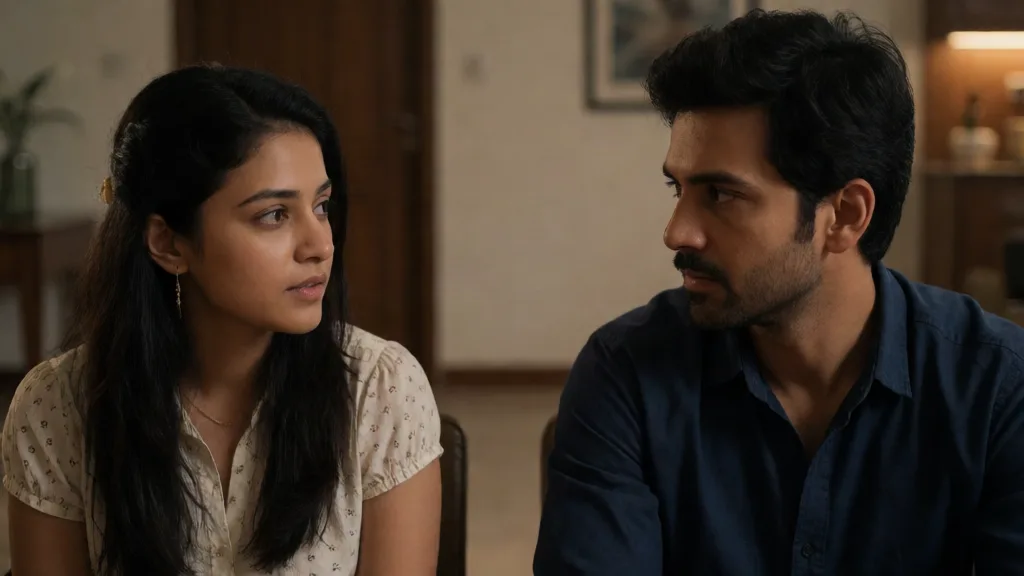
The first time I saw him after two years, he was a ghost wearing his father’s funeral clothes.
The airport arrival gate smelled like jet fuel and old sweat. Families were colliding into each other, mothers crying, fathers patting backs, children getting lifted off the ground by grandparents they hadn’t seen in years. I stood there with my arms crossed, watching the automatic doors slide open and shut, open and shut, like the whole terminal was breathing.
He came through sideways. Not walking straight. More like he was being pushed by the crowd behind him, letting their momentum carry him forward while his body lagged behind. He had one bag. A duffel that looked half empty. The kind of bag you pack when you don’t own anything worth keeping.
I almost didn’t recognize him.
His shoulders were different. They curved inward now, like he was trying to make himself smaller. His face had these hollows under the cheekbones that weren’t there before. And his eyes. I remember his eyes used to be this warm brown, the kind of brown that caught light and held it. Now they were flat. Like someone had drained the color out.
He spotted me and stopped moving.
I raised my hand. A small wave. Stupid gesture. What do you do when the person you love comes back to you broken? You wave. You smile. You pretend the cracks aren’t visible from across the room.
“You look like shit,” I said when he got close enough.
He almost smiled. Almost. The corner of his mouth twitched and then gave up.
“Missed you too, Nitya.”
His voice was the same. That was the worst part. His voice still had that low, slow quality that used to make me press my thighs together when we were eighteen and stupid. But now it came out tired. Like even speaking cost him something.
I took his bag. He let me. That should have been my first real sign.
Arjun never let anyone carry his things. He was the kind of guy who held doors, who walked on the outside of the sidewalk, who insisted on paying even when he had nothing. When we were in college, he’d walk me home at three in the morning after I’d drunk too much cheap whiskey, and he’d carry my heels because I couldn’t walk in them anymore. He’d carry my bag, my jacket, my dignity. He’d carry anything so I didn’t have to.
Now he let me take his duffel. His hands stayed in his pockets.
We walked to the parking lot in silence. The Mumbai heat hit us like a wall, that wet, suffocating kind of heat that makes you feel like you’re breathing through a towel. He didn’t react. He just kept walking, his eyes on the ground, following my feet.
The car was a mess. I’d been living out of it for three days because the AC in my apartment broke and the landlord refused to fix it. There were empty coffee cups in the passenger seat, a bra hanging off the rearview mirror, three library books on the back seat that were two months overdue. I grabbed the bra and shoved it into my bag without looking at him.
“Sorry,” I said. “I forgot it was there.”
He didn’t say anything. He just climbed into the passenger seat and stared out the window.
I drove. I didn’t know where we were going. His parents were dead. His mother had died when he was in his second year of grad school, and his father had followed six months later. Heart attack, they said. But everyone knew it was grief. His parents were the kind of couple who finished each other’s sentences, who held hands at the dinner table, who looked at each other like they were still discovering something new. When his mother went, his father just stopped eating. Stopped sleeping. Stopped fighting.
Arjun had been in America for four years. He’d gone there to study, to build a life, to escape. And now he was back with one bag and no will to work and a face that looked like it hadn’t seen the sun in months.
“You can stay with me,” I said. “I have a couch. It’s lumpy. But it’s a couch.”
He turned his head. Looked at me. For a second, I saw him. The old him. The guy who used to steal my chai and argue about Bollywood movies and kiss me in the rain like we had all the time in the world.
“You don’t have to do this,” he said.
“I know.”
“I’m not good company.”
“I know.”
“I don’t know how to be around people anymore.”
I pulled the car over. We were on the highway, cars screaming past us, the city lights blurring into streaks of orange and white. I turned off the engine and twisted in my seat to face him.
“Arjun. Listen to me. I don’t want anything from you. I don’t expect you to be funny or charming or whatever the hell you think you’re supposed to be. I just want you to exist in my space. That’s it. Can you do that?”
He stared at me. His eyes were wet. He didn’t let them spill.
“Yeah,” he said. “I can do that.”
I started the car again.
The apartment was small. One bedroom, a kitchen that opened into the living room, a bathroom with a shower that only ran hot if you let it run for five minutes. I’d cleared out the closet in the hallway and put a mattress on the floor. I told myself I was being practical. That he needed his own space. That it wasn’t because I was afraid to share a bed with him.
He dropped his duffel on the mattress. Sat down. Looked around the room like he was trying to remember where he was.
“You painted the walls,” he said.
“Two years ago. That burgundy you hated.”
“I didn’t hate it.”
“You said it looked like a brothel.”
He laughed. A real laugh. Short and surprised, like it had escaped without his permission. It was the most beautiful sound I’d heard in years.
“It does look like a brothel,” he said.
“Then you’ll feel right at home.”
He looked at me. That look. The one that used to make my knees weak. It wasn’t quite there yet, but it was close. A flicker. A ghost of something.
I turned away before I could want things I wasn’t supposed to want.
That was two weeks ago.
Now I’m sitting on the bathroom floor at three in the morning, and he’s in the shower. I can hear the water running. I can hear him breathing. I can hear the sound of his palm against the tiles, steadying himself.
He hasn’t eaten in two days. He says he’s not hungry. He says his stomach hurts. He says he’ll eat tomorrow. Tomorrow never comes.
I should be angry. I should be frustrated. I should be exhausted by the weight of carrying someone who won’t carry themselves.
But when he came out of the bathroom last night, wearing nothing but a towel, his hair dripping down his chest, his ribs visible through his skin, I didn’t feel anger. I felt something else. Something hungry and desperate and wrong.
He caught me looking. He didn’t say anything. He just stood there, water beading on his shoulders, and let me watch.
“I’m not good for you,” he said.
“I know.”
“I don’t have anything to give.”
“I know.”
“Why do you keep saying that?”
I stood up. Walked toward him. Stopped when I was close enough to feel the cold coming off his skin.
“Because I don’t need you to give me anything. I just need you to stay.”
He looked at me. His eyes were flat again. But there was something underneath. A crack. A fissure. A place where light could get in.
“I don’t know how to stay,” he said.
“I’ll teach you.”
I reached out. Touched his chest. His skin was cold and wet and I could feel his heartbeat, slow and steady, like a drum that hadn’t stopped playing even when the music ended.
He didn’t move away.
He didn’t move toward me either.
But he didn’t move away.
That was enough. For now.
Watch this moment
Turn the current scene into a cinematic Live Chapter — what you watch becomes the story's next part.
Disclaimer
This is a work of fiction, assisted by artificial intelligence. Any names or characters, businesses or places, events or incidents, are fictitious. Any resemblance to actual persons, living or dead, or actual events is purely coincidental.
Content Removal Policy
- Users may report content that may be illegal or violates our Standards.
- All reported complaints will be reviewed and resolved within seven business days.
- Review Process: Our team will assess the reported content against our guidelines.
- Appeals: If you disagree with a decision, you may appeal within 14 days of notification.
- Potential outcomes include: content removal, account warning, or no action if no violation is found.
To report content, email us at [email protected]