Share
Go Live
Silent Reunion
·
Published 11/20/2026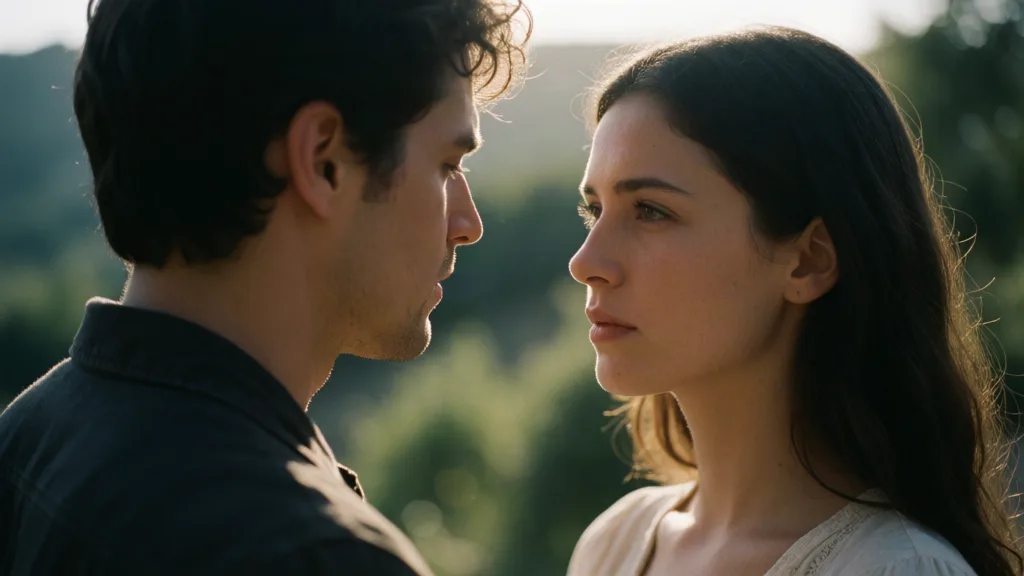
The fig tree had swallowed the gate. That was the first thing I noticed, before the heat, before the smell of dust and diesel rolling off the road, before the dog that watched me from the shade of a rusted truck with the indifference of something that had seen too many strangers arrive and leave. The iron bars I remembered, the ones my father painted every spring until the year he died, had disappeared inside the trunk of a tree that must have been a sapling when I left. Now it was a monument. Roots like knuckles gripped the concrete posts. Branches pressed against the stucco wall of the house as if trying to push it over.
I stood there with my suitcase handle cutting into my palm and did the math again. Thirty-five years. The number felt abstract, like a date on a headstone, until I looked at that tree and understood that a thing I could have wrapped my hands around had grown into something that could kill me if it fell.
The dog didn't bark. That bothered me more than it should have.
I could have called ahead. My sister had offered, three times, in that voice she used when she was trying to manage me from four thousand miles away. I told her no. I told her I wanted to see it the way I remembered it, which was a lie, because I didn't remember it at all. I remembered a version of it. The version a seventeen-year-old boy carries out of a town like a stolen coin, smooth from rubbing, worth more than it should be.
The gate wouldn't open. I set down the suitcase and put both hands on the fig trunk, testing. The bark was rough and warm. Somewhere behind the house a chicken was complaining about something. The sound was so ordinary it made my chest ache.
"Nobody uses that gate anymore."
The voice came from my left, from the road, and it was a woman's voice, low and unhurried, the kind that didn't need volume to carry. I turned.
She was standing at the edge of the road with a plastic bag of groceries against her hip. Gray hair pulled back. A man's watch on her wrist, too big, the band worn. She was wearing sandals and a faded dress the color of the hills in August, and she was looking at me the way you look at a dog you're not sure about.
Then her face changed. Not much. A tightening around the mouth. A stillness that hadn't been there a second before.
I knew her before I knew I knew her. That's the thing about a face you've spent years forgetting on purpose. It comes back all at once, like a room when the lights go on, and you see everything you left in it.
"Mikel," she said.
Not a question. She said it the way you'd say a word in a language you used to speak, testing whether you still could.
"Elena."
She didn't smile. She shifted the bag of groceries to her other hip and looked past me at the house, at the tree, at the suitcase sitting in the dirt like something I'd abandoned rather than brought.
"You came for the funeral," she said.
"I came for the house."
"The funeral's tomorrow. Ten o'clock. They moved it to the church in San Pedro because the one here doesn't have a roof anymore." She paused. "Your mother would have hated that."
I laughed. It came out wrong, too loud, and the dog finally lifted its head. "She would have hated a lot of things."
Elena looked at me then, really looked, and I felt the years come off me like a coat. I was seventeen again, standing outside her father's workshop with my heart in my throat and a letter in my pocket that I never gave her. The letter was still somewhere. In a box. In another country. In a life I'd built on top of the one I'd left.
"The back door's open," she said. "It's been open since Tuesday. Your sister asked me to air it out."
"You've been in the house."
"Someone had to."
There it was. The friction, small and sharp, like a pebble in a shoe. She'd been in my mother's house. She'd opened the windows and let the air move through rooms I hadn't seen in three and a half decades. She'd touched the curtains. She'd stood in the kitchen where my mother used to make me drink warm milk before bed, and she'd done it because my sister asked her to, because my sister still lived in this world where Elena and I were just two people from the same town, not two people who had once been something else entirely.
I picked up the suitcase. "I'll go around."
"I'll walk with you."
"I know the way."
"I know you do." She started walking anyway, down the road, past the fig tree and the rusted truck, and the dog got up and followed her because that's what dogs do when they've decided something. I stood there for a moment, watching her back, the way the dress moved, the way she didn't look back to see if I was coming.
She knew I would. That was the thing. She knew.
I followed her because the alternative was standing alone in front of a house that had been eaten by a tree, holding a suitcase full of clothes for a funeral I didn't want to attend, in a town where the only person who'd ever really seen me was walking ten feet ahead and not saying a word.
The road curved. The sun was brutal. Somewhere a radio was playing a song I almost recognized, and I thought about the letter, and about the fact that Elena had been in my mother's house for days, and about how a person can spend thirty-five years becoming someone else and still, in the space of a single sentence, turn back into the boy who left.
We passed the church with no roof. We passed the plaza where the fountain had been replaced by a concrete slab. We passed the corner where her father's workshop used to be, now a pharmacy with a plastic sign, and she didn't slow down, didn't look, and I understood that whatever had happened to her in this town, she had learned to walk past it.
The back door was open. Just like she said.
Elena stopped at the threshold and finally turned. Her face was unreadable, but her hands weren't. They were gripping the grocery bag so hard the plastic had stretched white at the seams.
"Your mother kept something for you," she said. "In the armoire. She told me where it was two weeks before she died. She made me promise to give it to you myself."
The chicken complained again. The dog lay down in the shade of the porch.
"What is it?" I asked.
Elena looked at me for a long moment, and I saw something move behind her eyes, something old and careful and still deciding.
"You should eat first," she said. "You look like you haven't eaten since you got on the plane."
She stepped inside, into the dark of the house, and I stood at the door with my suitcase and the heat and the thirty-five years, and I didn't know yet whether I was walking into my mother's house or into something else entirely.
Watch this moment
Turn the current scene into a cinematic Live Chapter — what you watch becomes the story's next part.
Disclaimer
This is a work of fiction, assisted by artificial intelligence. Any names or characters, businesses or places, events or incidents, are fictitious. Any resemblance to actual persons, living or dead, or actual events is purely coincidental.
Content Removal Policy
- Users may report content that may be illegal or violates our Standards.
- All reported complaints will be reviewed and resolved within seven business days.
- Review Process: Our team will assess the reported content against our guidelines.
- Appeals: If you disagree with a decision, you may appeal within 14 days of notification.
- Potential outcomes include: content removal, account warning, or no action if no violation is found.
To report content, email us at [email protected]