Share
Go Live
The Last Licks
·
Published 10/3/2026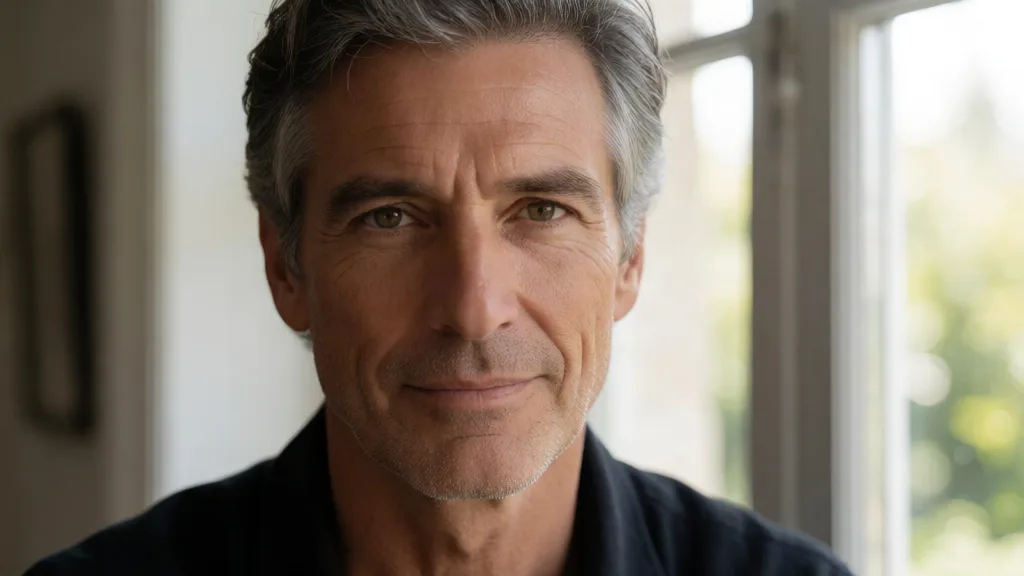
The trouble with being a man who thinks too much is that you notice the precise moment your wife's attention leaves you. It doesn't slam a door. It drifts, like smoke from a candle you forgot to snuff.
Jasmine was at the piano. Not playing anything. Just running her fingers over the keys without pressing hard enough to make a sound, which is a thing she does when she's somewhere else. Her hair was still damp from the shower and she'd put on that green cotton dress, the one that makes her look like she just stepped out of a garden. Fifty-two years old and she still moved through a room like weather.
"You're staring," she said, not looking up.
"I'm admiring."
"Same thing." She hit a key then, one low note, and let it hang there. "You want coffee?"
"I want to know what you're thinking about."
That got me a glance. Quick. A little too quick. "Chord progressions," she said.
Which was a lie, and we both knew it, and the fact that she'd bothered to lie at all was the first small stone dropped into still water.
---
We'd been married eighteen years. I could map her moods the way I map a building site, reading the soil before I ever draw a line. Something had shifted in the last few months. Nothing I could point to and say *there, that's the thing*. Just a hum underneath everything, a frequency only I seemed to hear. She laughed a little more. She hummed a little more. She went to bed a little later and woke up a little earlier, and when I asked her what was new, she said, "Nothing, love. Same old me."
Same old me. She'd never said that before in her life. Jasmine didn't do *same old*. Jasmine did spontaneous road trips and pottery classes she quit after two weeks and a brief, alarming flirtation with raising chickens.
So when she told me Thursday night that Bill's band was playing at the Riverside Tap and she wanted to go, I said sure. And when she said Marcus would be there too, I said sure again, and I watched her face for the thing I was looking for and didn't find it, which somehow made it worse.
Marcus.
He was a cellist. Fifty-something, silver at the temples, hands like a surgeon's. He and Jasmine had played together in a little folk quartet for two years now, Friday afternoons in his converted garage, and I'd been to their shows, shook his hand, bought him a beer. A quiet man. Thoughtful. The kind of man who listens to you like your sentence is the only one in the room.
I liked him. That was the problem. I couldn't even work up a proper suspicion of him. I could only work up suspicion of *myself*, of the way I'd started counting the minutes she spent at those Friday rehearsals, of the way I'd started noticing how she talked about him. Not too much. Just enough.
---
The Tap was loud and low-ceilinged, sawdust on the floor, a dartboard with a missing bullseye. Bill was onstage with his guitar, doing his usual thing, telling a story about a truck he'd once owned in El Paso that everyone had heard three times and nobody minded hearing again.
Jasmine found us a table near the front. She wore a rust-colored wrap dress and the silver hoops I'd given her for our tenth anniversary, and she was lit up in a way I hadn't seen in a while. Not for the room. For something inside her own head.
Marcus came in late and slid into the chair beside her like it had been waiting for him.
"You made it," she said.
"Wouldn't miss it." He set his cello case against the wall. "Fred. Good to see you."
"You too." And I meant it, and I hated that I meant it.
Bill finished his story and launched into a song about a woman who left him in Amarillo, and Marcus leaned toward Jasmine to say something under the noise, and she laughed, and her hand went to his forearm for half a second. Half a second. That's all. But I saw it, and I saw that she saw me see it, and something passed across her face that wasn't guilt exactly. It was closer to relief. Like she'd been holding a door shut and had just decided to let it swing.
---
We walked home through the cool October dark. She hooked her arm through mine and I let her, and for three blocks neither of us said anything.
"You're quiet," she said finally.
"I'm always quiet."
"Not like this."
I looked at the sidewalk. Cracked. Weeds in the cracks. I thought about how I'd fix it, if it were mine, and then I thought about how that's what I always do. Retreat into the blueprint. Find the load-bearing wall and lean on it.
"Marcus seems good," I said.
"He is."
"His playing's gotten better."
"He's been practicing." A pause. "We both have."
There it was. The door swinging open another inch.
We got home. She poured two fingers of whiskey and handed me the glass and sat down on the arm of the couch, which is a thing she does when she wants to be at eye level with me. Her knee touched my shoulder. I could smell her shampoo, the lavender one.
"I need to tell you something," she said.
My stomach did the thing. The drop. The one you feel on a plane when the wheels leave the ground.
"Okay."
"It's not what you think." She said it fast, which meant it probably was. "Marcus and I. We've been talking. A lot. More than talking, I mean. Not physically. Nothing's happened. But I'd be lying if I said it was nothing."
I set the glass down on the floor because my hand had gone unsteady and I didn't want her to see.
"How long," I said.
"Since the spring."
The spring. Six months. Six months of Friday rehearsals and laughing at his jokes and coming home to me and kissing me goodnight like a woman who had somewhere else to be.
"Say something," she said.
I'm a man who can spend four hours deciding on a hinge for a cabinet door. I've lost sleep over whether to paint a hallway eggshell or satin. And here was my wife telling me she was in love with another man, and all I could feel was a strange, cold clarity, like the moment before a building comes down, when the charges are set and the countdown's started and there's nothing to do but watch.
"I'm not angry," I said. Which surprised me. It was true.
She blinked. "You're not?"
"I'm something. Not angry." I picked the glass back up. Drank. The whiskey burned the right way. "Do you want him?"
She didn't answer for a long time. Her knee was still against my shoulder. I could feel her pulse through the fabric of her dress.
"Yes," she said.
---
I don't know why I said it. Or maybe I do. Maybe it was the only way I could think of to stay in the room. To not retreat into the blueprint. To be a man standing in the wreckage instead of an architect drawing around it.
"Then do it," I said.
She went very still.
"What?"
"Do it. I'm not going to pretend I like it. But I'd rather know than spend the next six months watching you drift." I looked up at her. Her eyes were wet. "One condition."
"That's not fair, Fred. You can't just—"
"One condition," I said again. "If you're going to do it, I want to be there. I want to watch. And then I want to be the last one in the room."
The words sat between us like a third person. She stared at me. I stared back. Somewhere down the street a dog barked and a car door slammed and the ordinary world kept right on going, indifferent.
"You're serious," she said.
"I'm always serious. You know that."
"That's the problem." But she was smiling when she said it, and crying at the same time, and I couldn't tell which one was winning.
She slid off the arm of the couch and onto the floor, between my knees, and put her head against my chest. I held her. I held her and I thought about Marcus's hands, and about the countdown, and about the fact that I'd just handed my wife a key to a door I couldn't walk back through.
"I need to think," she said into my shirt.
"Take your time."
She laughed, wet and small. "That's your answer to everything."
"It's a good answer."
She lifted her head and looked at me, and for a second I saw the woman I married, the one who ran barefoot through a rainstorm on our honeymoon and laughed like the sky owed her nothing. Then she stood up and went to the piano and started to play, something slow and minor, and I sat on the floor with my whiskey and listened, and neither of us said another word.
She'd tell me her answer when she was ready. I'd wait. That's what I do.
But somewhere in the dark, in a converted garage across town, a cellist was probably awake too, running his fingers over strings without pressing hard enough to make a sound, and I had just made him a promise he didn't know about yet.
Watch this moment
Turn the current scene into a cinematic Live Chapter — what you watch becomes the story's next part.
Disclaimer
This is a work of fiction, assisted by artificial intelligence. Any names or characters, businesses or places, events or incidents, are fictitious. Any resemblance to actual persons, living or dead, or actual events is purely coincidental.
Content Removal Policy
- Users may report content that may be illegal or violates our Standards.
- All reported complaints will be reviewed and resolved within seven business days.
- Review Process: Our team will assess the reported content against our guidelines.
- Appeals: If you disagree with a decision, you may appeal within 14 days of notification.
- Potential outcomes include: content removal, account warning, or no action if no violation is found.
To report content, email us at [email protected]