Share
Go Live
The Still Point
·
Published 9/29/2026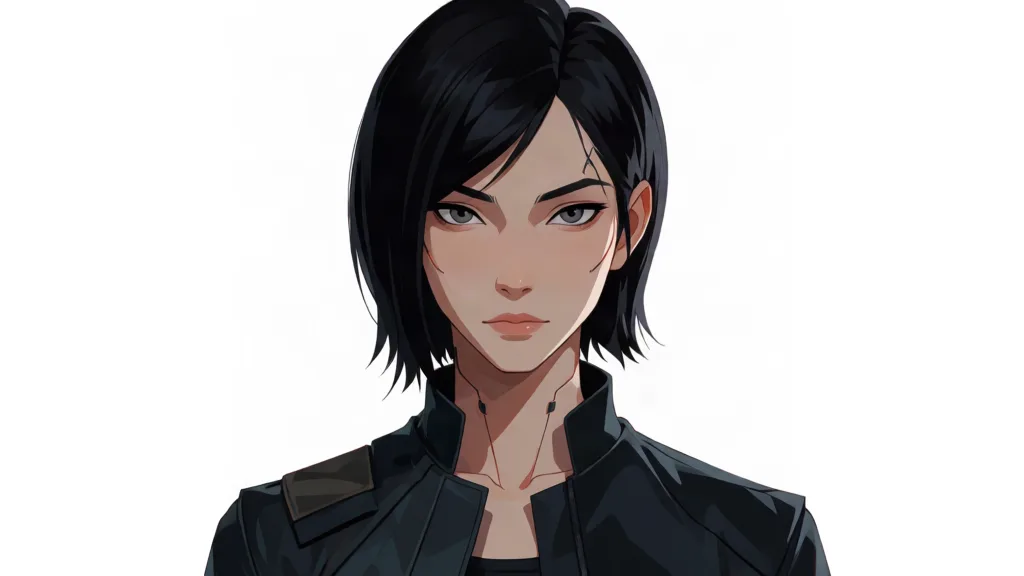
The rain in this city doesn't fall so much as it seeps. It's a greasy, persistent mist that clings to everything, refracting the neon signs of the pleasure district into a million shattered promises on the wet pavement. I stood under the awning of a shuttered noodle shop, watching a puddle reflect a holographic advertisement for a memory-editing service. "Forget the pain. Embrace the possible." The woman in the ad had a smile that cost more than my first implant.
My name is Nam. And I was waiting for a ghost.
The contact lens in my right eye fed me a constant stream of data: ambient temperature (12 degrees Celsius), air quality (toxic, but what else is new), and the biometric signature of every person who passed within ten meters. Most were unremarkable. Servers, hustlers, tourists with more credits than sense. None of them were him.
I pulled the collar of my tactical jacket higher, the subtle tech woven into the fabric warming my neck. The scar above my eyebrow throbbed, a familiar ache that always preceded a storm. Or trouble. In this city, they were often the same thing.
He was late. That was the first thing. Quân was never late.
My fingers drummed a silent rhythm against my thigh. Patience was a tool I'd honed to a fine edge over years of extracting secrets from people who didn't want to give them. But tonight, patience felt like a cheap coat against a cold wind. Something was wrong. The city hummed with a low, anxious frequency, a vibration I felt in my teeth. Or maybe that was just the subsonic emitters from the club across the street, pumping out a bassline that could liquefy your internal organs.
I was about to peel myself off the wall and disappear into the crowd when I saw him.
He emerged from the steam of a street vendor's cart, a specter in olive drab. Quân. His vintage film camera, a relic from a world that no longer existed, hung from his neck like a holy relic. He looked older than the last time I'd seen him, the gray in his ponytail more pronounced, the lines around his eyes deeper. He moved with the weary gait of a man who had seen too much and was tired of looking.
He didn't see me at first. His gaze was fixed on something across the street, a woman haggling with a vendor over the price of synth-fish. His expression was distant, almost wistful. He was always looking at things like that, like he was trying to frame a shot, to capture a moment of humanity in a city that had sold its soul for a new pair of eyes.
I stepped out from under the awning. The rain immediately found the seams of my jacket, a cold, wet kiss on my skin.
"Quân."
My voice was low, barely a whisper, but it cut through the noise of the street like a blade. He turned, his dark eyes finding mine. For a second, his face was a blank slate. Then, a flicker of something. Recognition? Relief? It was gone before I could name it.
"Nam." His voice was a gravelly rasp, worn smooth by years of silence and cheap liquor. "You're a hard woman to find."
"I wasn't hiding." A lie. A comfortable one. "You're late."
He glanced at the camera around his neck, a nervous habit. "I got held up. The transit lines are a mess tonight."
"Transit lines are always a mess." I closed the distance between us, my boots splashing in the shallow puddles. "You said you had something for me. Something important."
He nodded, his gaze dropping to the ground. "Not here. Too many eyes."
He was right. The pleasure district was a panopticon of gossip and surveillance. Every whisper was a commodity, every glance a potential transaction. I jerked my head toward a narrow alley wedged between a pawn shop and a body-modification parlor. "This way."
The alley was a throat of darkness, swallowing the neon and spitting out shadows. The smell of decay and ozone was overwhelming. I led him past overflowing dumpsters and the skeletal remains of a discarded android, its single optical sensor flickering with a dying, blue light. We stopped beneath a flickering holographic sign for a "Live Nude Girls" club, the only source of illumination.
I turned to face him. The rain had plastered his hair to his skull, making his face look sharper, more gaunt. "Talk."
He reached into the inner pocket of his jacket and pulled out a small, matte-black data chip. It was unmarked, a void in the palm of his hand. "This is it."
"What is it?"
"I don't know. Not exactly." He hesitated, his thumb rubbing the smooth surface of the chip. "It's a key. A very old one. It unlocks a file that's been buried in the city's central archive for over fifty years."
My interest was piqued. The central archive was a fortress, a digital mausoleum of the city's history, both official and forbidden. "Buried by who?"
"The government. The military. The old corporations. Take your pick. It's a sealed record. No one's been able to crack it."
"And you think I can?"
He looked at me then, his weary eyes holding a glimmer of something I hadn't seen in a long time. Hope. It looked wrong on him. "I know you can. You're the best, Nam. That's why I came to you."
Flattery. It was a cheap tool, but I respected the attempt. "What's in it for me?"
"The usual. Credits. Enough to keep you in synth-whiskey and tactical jackets for a year."
"I have a generous expense account." I crossed my arms, the rain dripping from my chin. "What else?"
He was silent for a long moment, the only sound the drumming of the rain on the metal roof above us. "Redemption," he said finally, the word almost lost in the downpour.
I almost laughed. "Redemption is a myth for people who can afford to feel guilty. I deal in facts. What's in the file, Quân?"
He shook his head. "I don't know. But I know who it's about."
"Who?"
"My unit. The 7th Recon. The ones who didn't come back from the Khe Sanh sector."
The name hit me like a physical blow. The Khe Sanh sector. A failed military campaign from a war that had officially ended before I was born. A black mark on the city's history, a wound that had never properly healed. The official reports were sanitized, full of patriotic rhetoric and heroic sacrifices. The unofficial ones, the whispers in the underworld, spoke of something else entirely. Atrocities. Betrayal. A secret so dark it had been erased from memory.
I looked at the chip in his hand. It was no longer just a piece of data. It was a ghost. A key to a past that a lot of powerful people wanted to stay buried.
"Why you?" I asked, my voice softer than I intended.
He looked away, his jaw tight. "Because I was there. I was the only one who came back. And I've been running from it ever since."
The rain intensified, a sudden, violent downpour that turned the alley into a waterfall. It was a fitting backdrop for a confession. I understood running. I'd been doing it my whole life. But I'd never been very good at it.
"Alright," I said, reaching out and taking the chip from his hand. It was cold, a tiny shard of ice against my palm. "I'll see what I can do."
A flicker of relief crossed his face, so raw it was almost painful to witness. "Thank you, Nam."
"Don't thank me yet." I slipped the chip into a secure pocket inside my jacket. "This is a job. Nothing more. I don't do lost causes."
Another lie. The biggest one of the night. He knew it, too. I could see it in the sad, knowing curve of his mouth. He knew about my hidden sentimental streak. It was a flaw I'd never been able to fully excise.
"I need to see the file's physical location," I said, changing the subject. "The archive is too big to brute-force. I need a terminal. A hardline."
"I know a place," he said. "An old data haven in the port district. It's not pretty, but it's off the grid."
"Lead the way."
We left the alley, stepping back into the chaotic river of the street. The rain had thinned to a drizzle, but the air was still thick with moisture and the smell of wet garbage. Quân walked beside me, his presence a quiet, solid weight. He didn't try to make conversation. He just walked, his camera a silent witness to our passage.
The port district was a different world. The neon of the pleasure district gave way to the harsh, utilitarian glare of sodium lamps. The air smelled of salt, diesel, and rotting seaweed. We walked past towering stacks of shipping containers, their metal sides slick with rain. The only sounds were the distant clang of a buoy and the mournful cry of a foghorn.
The data haven was a converted warehouse, its exterior covered in a sprawling, chaotic mural of circuit boards and mythical creatures. A single, unblinking camera eye tracked our approach. Quân pressed a buzzer. A moment later, a slot in the door slid open, revealing a pair of suspicious eyes.
"Password?" a voice grunted.
"Fidelis ad mortem," Quân replied.
The eyes narrowed. "That's a new one."
"Open the door, Bảo."
The door creaked open, revealing a short, stocky man with a grease-stained shirt and a cybernetic arm that looked like it had been salvaged from a junkyard. He looked from Quân to me, his expression unreadable.
"Quân. You brought a friend." His gaze lingered on me, assessing. "She's got the look."
"What look?" I asked.
"The look of someone who's about to cause a lot of trouble."
"She's with me," Quân said, his voice firm. "She's here to work."
Bảo grunted, stepping aside. "Fine. But if she breaks anything, you're paying for it."
The interior of the warehouse was a labyrinth of server racks and tangled cables. The air was cold and dry, a stark contrast to the humid misery outside. The only light came from the blinking LEDs of the machines, a thousand tiny, electronic stars. It was a cathedral of data, a monument to the city's collective memory.
Bảo led us to a small, cluttered office in the back. A single terminal sat on a metal desk, its screen a blank, grey void. "This is the hardline. Direct connection to the city's backbone. Untraceable, if you know what you're doing."
"I know what I'm doing," I said, sliding into the chair. The chair was uncomfortable, a relic from a pre-ergonomic era. I ignored it. I pulled out the data chip and inserted it into a port on the terminal.
The screen flickered to life, a cascade of code scrolling past faster than any human eye could follow. My own implants kicked in, my right eye overlaying the data stream with my own decryption protocols. The chip was a key, as Quân had said. A very old, very complex key. It was designed to bypass the archive's primary security layers, to slip past the firewalls like a ghost.
But it wasn't enough.
"It's a two-part lock," I muttered, my fingers flying across the keyboard. "The chip gets me to the door, but I need a second key to open it."
"What kind of key?" Quân asked, leaning over my shoulder.
"A biometric one. A specific genetic sequence. A voice print. A retinal scan. Something unique to the person who sealed the file."
Quân was silent for a moment. "I know who sealed it."
I looked up at him. His face was pale, his eyes haunted. "Who?"
"General Lê Văn Hùng. The commander of the Khe Sanh operation."
The name was a legend in the city, a specter from a darker time. Hùng was a hero to some, a monster to others. He had died a decade ago, a recluse in a fortified estate on the outskirts of the city. His secrets were supposed to have died with him.
"I can't get a biometric from a dead man," I said, frustration creeping into my voice.
"You don't have to." Quân reached into his jacket again, this time pulling out a small, worn leather case. He opened it, revealing a single, old-fashioned photograph. It was a picture of a group of soldiers, their faces young and grim, their uniforms stained with mud. In the center, a younger, prouder Quân stood next to a tall, imposing man with a stern face and eyes like chips of flint. General Hùng.
"This was taken a week before the mission," Quân said, his voice barely a whisper. "He gave me this. He said it was to remember what we were fighting for. I think he was lying. I think it was a message."
I took the photograph. It was a physical object, a relic of a time before digital memory. It felt heavy in my hand. "What kind of message?"
Quân pointed to the general's hand. In the photo, it was resting on the shoulder of another soldier, a young man with a kind face and a gentle smile. "That's Thảo's brother. He was the unit's medic. He was the only one who could talk Hùng down when he got... agitated."
"Thảo?"
"Thảo. She runs an apothecary in the old quarter. She's the only family he had left."
I looked at the photograph, at the young medic's face. He had the same warm, dark eyes I'd seen in a hundred other faces in this city. The eyes of someone who hadn't yet learned to be cruel.
"You think she has the key," I said. It wasn't a question.
"I think she has a part of it," Quân replied. "A voice print. A phrase. Something. Hùng was paranoid. He wouldn't have trusted a single person with the whole key. He would have split it."
I leaned back in the chair, the pieces clicking into place. A dead general. A sealed file. A lost brother. A sister who ran an apothecary. It was a tangled web, a story with too many ghosts. It was exactly the kind of lost cause I was supposed to avoid.
"Where can I find her?" I asked.
"The old quarter. Near the river. Her shop is called 'The Green Remedy.' It's hard to miss."
I ejected the data chip and slipped it back into my pocket. I stood up, my body stiff from the uncomfortable chair. "I'll go see her tomorrow."
"I'll come with you," Quân said.
"No." My voice was sharp, final. "She doesn't know you're back. If she sees you, she'll run. Or worse. I need to approach her alone."
He looked like he wanted to argue, but he didn't. He just nodded, his shoulders slumping in defeat. "Be careful, Nam. She's not like us. She's... good."
"I'm not going to hurt her, Quân. I'm just going to ask her a few questions."
Famous last words. In my line of work, questions were just another kind of weapon. And I was an expert at using them.
I left the data haven, stepping back out into the rain. The city was a blur of light and shadow, a beautiful, terrible dream. I had a name. A place. A purpose. It was more than I'd had in a long time.
The old quarter was a world away from the chrome and glass of the city center. It was a place of narrow, winding streets and ancient, moss-covered buildings. The air smelled of woodsmoke, spices, and the river. It was the one part of the city that had resisted the relentless tide of progress, a stubborn, green heart in a body of steel.
I found "The Green Remedy" tucked away at the end of a quiet alley. It was a small, unassuming storefront with a faded wooden sign and a window full of dried herbs and strange, bubbling concoctions. A bell chimed as I pushed open the door.
The interior was a sensory overload. Bundles of dried flowers hung from the ceiling, their fragrances mingling with the earthy scent of roots and bark. Jars of every size and shape lined the walls, filled with powders, leaves, and liquids of every color imaginable. A small, black cat slept on a burlap sack in the corner.
And there, behind a worn wooden counter, was Thảo.
She was exactly as Quân had described her. Petite, with long, straight black hair tied back with a simple ribbon. She wore a faded green tunic, and her skin was sun-kissed, as if she spent her days in a garden rather than a shop. Her eyes were dark and warm, and they held a quiet intelligence that was immediately disarming.
She was also beautiful. Not in the manufactured, surgical way of the city's elite, but in a way that felt real. Grounded. Her beauty was in the gentle curve of her smile, the calm grace of her movements, the way she looked at me like I was a person, not a threat.
"Can I help you?" Her voice was soft, melodic. It was the kind of voice that could soothe a fever or calm a frightened animal.
I realized I had been staring. I blinked, forcing my professional mask back into place. "I'm looking for something for a headache," I said, the first lie that came to mind.
She smiled, a knowing glint in her eye. "Just a headache? Or the kind of headache that comes from too many late nights and too much synth-whiskey?"
I felt a flush creep up my neck. "The second one."
She laughed, a sound like wind chimes. "I have just the thing." She turned and began to mix a concoction from various jars, her movements practiced and precise. "You're not from around here," she said, not looking at me.
"What makes you say that?"
"Your jacket. It's tactical. Military-grade. And your eyes... they're always moving. Scanning. You're a cop. Or a soldier. Or something else entirely."
"Something else entirely," I admitted.
She turned back, holding a small, brown bottle. "This should help. A few drops in hot water. It won't cure what's really bothering you, but it will help you sleep."
I took the bottle, my fingers brushing against hers. Her skin was warm, soft. A jolt, unexpected and unwelcome, shot up my arm. I pulled my hand back, perhaps too quickly.
"How much?" I asked, my voice a little too gruff.
She named a price. It was reasonable. I paid her with a credit chip, my movements stiff.
"Thank you," I said, turning to leave.
"Wait."
I stopped, my hand on the door. I didn't turn around.
"You're looking for something else," she said. Her voice was quiet, but it carried a certainty that made my blood run cold. "Something you won't find on any shelf."
I turned slowly. Her dark eyes were fixed on me, and in them, I saw no fear. Only a deep, abiding sadness. It was the same sadness I saw in Quân's eyes, but different. His was a wound. Hers was a scar.
"I don't know what you're talking about," I said.
"Yes, you do." She took a step closer. The black cat stirred, its yellow eyes watching me with lazy suspicion. "You have the same look as the others. The ones who come asking about my brother."
The air in the shop grew thick, heavy with the scent of secrets. The bell above the door was silent. The only sound was the gentle bubbling of a potion on a small burner.
"I'm not here about your brother," I lied. "I'm here about a file. A sealed record from the Khe Sanh campaign."
Her face didn't change. The sadness in her eyes only deepened, a well of grief that had no bottom. "That was a long time ago."
"Some ghosts don't stay buried."
She was silent for a long moment, her gaze unwavering. She was assessing me, I realized. Not as a threat, but as a person. She was trying to see past the tactical jacket and the scanning eyes, to the woman underneath. It was a disconcerting feeling, being seen.
"Who sent you?" she asked, her voice barely a whisper.
"A man named Quân."
The name hung in the air between us. For the first time, a flicker of emotion crossed her face. Pain. And something else. Something that looked a lot like anger.
"Quân," she repeated, the name a curse on her lips. "He's back."
"You know him."
"I knew him." Her voice was cold now, the warmth gone. "He was my brother's best friend. He was there when my brother died. He came back. My brother didn't."
The accusation was clear, a blade of ice. I understood then. The grief. The anger. The lost cause. This wasn't just about a file. This was about a debt. A debt of blood.
"I'm sorry," I said, and I meant it. It was a stupid thing to say, a useless platitude, but it was all I had.
"Don't be." She turned away, her back to me. "Just tell me what you want and leave."
"I need a key. A biometric key. Something that belonged to General Hùng. Something he gave to your brother."
She didn't move. Her shoulders were rigid, her hands clenched at her sides. "Why should I help you? Why should I help him?"
"Because whatever is in that file, it's the truth. The truth about what happened to your brother. Don't you want to know?"
She spun around, her eyes blazing. "I know what happened! He died in a jungle for a war that wasn't ours, for a general who was a monster, for a city that didn't care! I don't need a file to tell me that!"
Her voice cracked on the last word, a raw, bleeding sound. The cat jumped off its sack and disappeared into the back room. The potion on the burner bubbled over, hissing as it hit the hot metal.
I stood my ground. I had faced down assassins, corporate enforcers, and men who could kill with a single word. But nothing had prepared me for the raw, unfiltered pain of this woman. It was a force of nature, a hurricane of grief.
"I'm not here to hurt you," I said, my voice soft. "I'm just trying to find the truth. The same truth you've been living with for fifty years."
She stared at me, her chest heaving. Tears glistened in her eyes, but she didn't let them fall. She was stronger than that. She was a survivor.
"The key," she said, her voice a ragged whisper. "It's a song. A lullaby. Our mother used to sing it to us when we were children. Hùng knew it. He said it was the only thing that could calm my brother down when he was scared. He told my brother to use it as a code. A key to a lock that only he could open."
"A song," I repeated.
She nodded, a single, weary nod. "I haven't sung it in fifty years."
She turned and walked to the back of the shop, disappearing through a beaded curtain. I stood there, alone in the fragrant, cluttered silence. The rain had started again, a soft, steady drumming on the roof. I felt a strange, unfamiliar ache in my chest. It wasn't the headache. It was something else. Something that felt a lot like guilt.
When she returned, her face was composed, a mask of calm. But her eyes were red-rimmed. She held a small, tarnished silver locket in her hand.
"This was my brother's," she said, her voice steady. "He gave it to me before he left. He said it would keep me safe."
She opened the locket. Inside was a tiny, faded photograph of a young man with a kind face and a gentle smile. The same man from Quân's photograph. Her brother.
"The song," I prompted, gently.
She looked at me, her dark eyes holding mine. And then, she began to sing. Her voice was soft, a little shaky at first, but it grew stronger, clearer. It was a simple melody, a haunting, minor-key lullaby that spoke of loss and longing and a home that no longer existed.
The words were in a language I didn't understand, an old, almost forgotten dialect from the mountains. But the meaning was universal. It was a song for a child. A song for a ghost. A song for a lost cause.
When she finished, the silence in the shop was absolute. The rain had stopped. The only sound was the faint, distant cry of a foghorn from the river.
"That's it," she said. "That's the key."
I committed the melody to memory, my implants recording every note, every inflection. It was a beautiful, terrible thing. A weapon made of grief.
"Thank you," I said.
She closed the locket, her fingers lingering on the cool metal. "Don't thank me. Just find the truth. And when you do, tell Quân... tell him I don't blame him. Not anymore."
It was a lie. I could see it in her eyes. But it was a lie she needed to tell. A lie she needed to believe.
I left the apothecary, stepping back into the damp, grey afternoon. The old quarter was quiet, the streets empty. I felt like I had just walked through a dream, or a memory. I had the key. I had the truth within my grasp. But the cost was already too high.
I pulled out my comm unit and sent a message to Quân. It was a single line of text.
"I have it. Meet me at the data haven."
I didn't wait for a reply. I just started walking, my boots echoing on the wet cobblestones. The city was waiting for me, a neon-drenched beast with a million secrets. And I was about to unlock one of its darkest.
The rain began to fall again, a soft, cold caress on my face. I didn't bother to pull up my collar. I just let it wash over me, a baptism of sorts. I was no longer just Nam, the information broker. I was Nam, the keeper of ghosts. And I had a feeling that this was only the beginning.
The data haven was quiet, the only sound the hum of the servers and the distant drip of water. Bảo was nowhere to be seen. Quân was already there, waiting for me in the small office. He looked up as I entered, his weary eyes full of questions.
"Well?" he asked.
I sat down at the terminal and inserted the data chip. The screen flickered to life. I began to type, my fingers moving with a certainty I didn't feel. I entered the melody of the lullaby, transcribing the notes into a digital sequence. It was a strange, discordant string of code, but it was the final piece of the puzzle.
The screen went black. For a moment, I thought I had failed. Then, a single line of text appeared, glowing in the dark.
"Access Granted."
The file opened. It was a video log, grainy and distorted, from a camera mounted on a soldier's helmet. The audio was a mess of static and gunfire. But the images were clear enough. I saw the jungle, the mud, the rain. I saw young men with terrified eyes. I saw General Hùng, his face a mask of cold fury.
And then I saw the village. The burning huts. The bodies. The screams.
Quân made a sound, a choked sob. He turned away from the screen, his body shaking. I forced myself to watch. I owed it to Thảo. I owed it to her brother. I owed it to the truth.
The video log ended. The screen went dark. The silence in the room was deafening.
"It wasn't a battle," I said, my voice hollow. "It was a massacre. And Hùng ordered it. He blamed the villagers for harboring the enemy. He said it was a necessary sacrifice."
Quân didn't respond. He just stood there, his back to me, his shoulders heaving. I had seen a lot of terrible things in my life. I had done a lot of terrible things. But this... this was different. This was a wound that had been festering for fifty years, a poison that had seeped into the soul of the city.
I ejected the chip and slipped it into my pocket. I stood up, my legs feeling weak.
"I have to go," I said.
Quân turned, his face streaked with tears. "Where?"
"To see Thảo. She needs to know."
He nodded, a slow, sad nod. "I'll come with you."
"No. This is something I have to do alone."
I left him there, in the cold, dark room, surrounded by the ghosts of the past. I walked out of the data haven, back into the rain. The city was a blur of light and shadow, a beautiful, terrible dream. I had the truth. But the truth was a weapon, and I was about to use it.
I found Thảo in her garden, a small, hidden patch of green behind the apothecary. She was kneeling in the dirt, tending to a row of herbs, her hands covered in soil. She looked up as I approached, her dark eyes calm.
"You found it," she said. It wasn't a question.
I nodded. I didn't know what to say. The truth was too big, too ugly for words.
She stood up, wiping her hands on her tunic. "Was it worth it?"
"I don't know," I admitted. "I don't know if the truth is ever worth the pain."
She looked at me, her gaze unwavering. "My brother believed in the truth. He believed that if people knew what really happened, they would change. He was a fool."
"A hopeful fool," I said.
A small, sad smile touched her lips. "Yes. He was that."
She reached out and took my hand. Her skin was warm, her grip firm. "Thank you, Nam. For bringing him back to me."
I looked down at our joined hands, at the dirt on her fingers, the faint scar on my own. We were two women, scarred by different wars, bound by a shared grief. It was a strange, unexpected intimacy. A connection forged in the fire of a terrible truth.
"I'm sorry," I said, the words feeling inadequate. "For everything."
She squeezed my hand. "Don't be sorry. Just... stay. For a little while."
I stayed. We sat in her garden, surrounded by the scent of herbs and the sound of the rain. We didn't talk. We just sat, two ghosts in a city of ghosts, sharing a moment of quiet, profound understanding.
And in that moment, I felt something I hadn't felt in a long, long time. I felt a flicker of hope. It was a small, fragile thing, a tiny flame in a vast, dark city. But it was there.
And for now, that was enough.
Watch this moment
Turn the current scene into a cinematic Live Chapter — what you watch becomes the story's next part.
Disclaimer
This is a work of fiction, assisted by artificial intelligence. Any names or characters, businesses or places, events or incidents, are fictitious. Any resemblance to actual persons, living or dead, or actual events is purely coincidental.
Content Removal Policy
- Users may report content that may be illegal or violates our Standards.
- All reported complaints will be reviewed and resolved within seven business days.
- Review Process: Our team will assess the reported content against our guidelines.
- Appeals: If you disagree with a decision, you may appeal within 14 days of notification.
- Potential outcomes include: content removal, account warning, or no action if no violation is found.
To report content, email us at [email protected]