Share
Go Live
Silent Frequency
·
Published 10/6/2026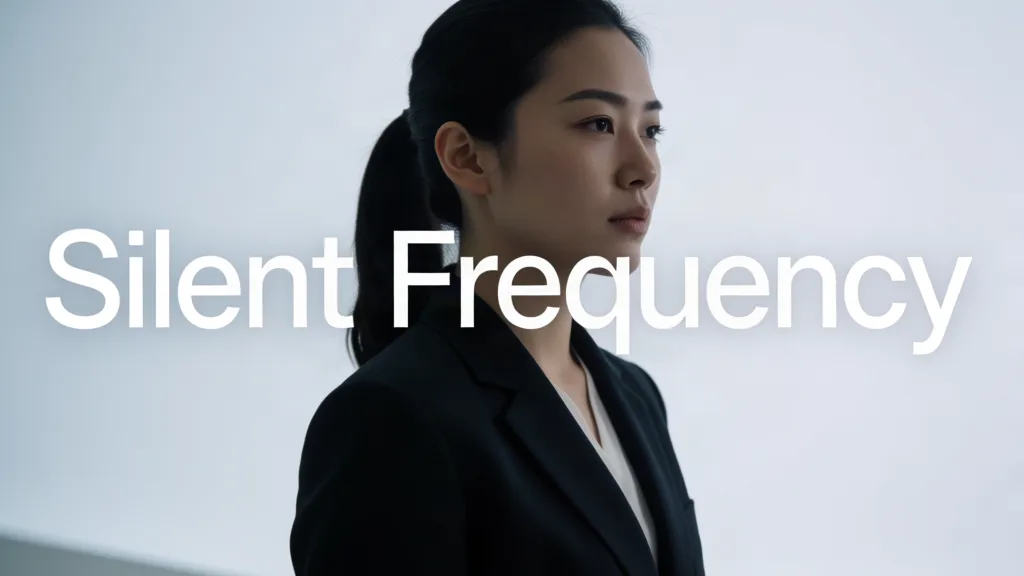
The first thing I ever stole was a loaf of bread, and I ate it behind the dumpster of the Sunbeam Grocery while a rat watched me from the rim of a trash can. I was nine. The bread was stale enough that my jaw ached by the time I finished, but I ate every crumb, licked the salt from my fingers, and told myself I wasn't hungry anymore. That was the first lie I remember telling. Not to my mother. Not to the cashier who hadn't even looked up from her magazine. To myself.
I got better at it.
By fourteen I could walk into any store on Mission Avenue and walk out with something in my pocket, my face blank as a Sunday morning. It wasn't about the food anymore. We had food by then. Mama worked doubles at the laundry on Fifth, and my brother Deuce had started running numbers for a man named Sorrow, which is a real name, I swear to you, and the money came in steady enough that we ate rice and beans every night and sometimes chicken on Fridays. So the stealing wasn't for eating. It was for the feeling. That little electric hum in my chest when my fingers closed around something that wasn't mine, the way the world got sharp and bright and quiet all at once, like someone had turned up the contrast on everything.
I'm telling you this so you understand what kind of person I was before the fire. Before the man in the gray coat. Before everything I knew about my family turned out to be a story somebody else had written.
My name is Neveah Ortiz. Most people called me Nev. My mother called me mija when she was happy and Neveah Marie when she wasn't. Deuce called me Little Bit, which I hated, and which he knew I hated, and which he kept calling me until the day he died.
But I'm getting ahead of myself.
The fire happened on a Tuesday in October, which is a detail I hold onto because Tuesdays are supposed to be nothing days. They're the leftover day, the day after Monday's promise and before Wednesday's slump. Nobody expects anything from a Tuesday. That's probably why nobody was ready.
I was fifteen. I remember because I'd just gotten my learner's permit that morning, and Mama had let me drive the Buick around the block twice before work, her hand hovering near the emergency brake the whole time, her mouth set in that tight line she got when she was scared but didn't want to show it. The Buick smelled like cigarettes and lavender air freshener and the vinyl seats had cracks in them that pinched the backs of my thighs in summer. I loved that car. I loved the way Mama looked at me when I parallel parked without hitting the curb, like I'd done something impossible.
That was the last time I saw her look at me like that.
The fire started around eleven that night. I know because I was awake, lying on my bed with my headphones on, listening to a mixtape Deuce had made me for my birthday. He had terrible taste in music. All bass and yelling. But I listened to it anyway because he'd made it, because he'd sat there with a dual cassette deck and pressed record every time a song came on the radio that he thought I'd like, and the songs he thought I'd like were all songs about girls and cars and running away.
The smoke alarm went off first. That high-pitched shriek that sounds like a bird being murdered. I thought it was a false alarm. Ours went off every time Mama burned tortillas, which was often, because she always set the flame too high and then walked away to fold laundry. So I didn't move. I just lay there, staring at the ceiling, waiting for someone to wave a dish towel at the detector and make it stop.
Then I smelled it. Not tortillas. Something chemical and thick, like burning plastic and gasoline and hair. The kind of smell that gets into your throat and stays there.
I sat up. My door was closed, and when I touched the knob it was warm. Not hot. Warm. Like a cup of coffee that's been sitting for ten minutes. I opened it and the hallway was full of gray smoke, rolling along the ceiling like water, and at the end of the hall, where the stairs went down to the front door, there was a light that didn't make any sense. Orange and flickering and alive.
Deuce was yelling my name. I could hear him, but the smoke made it sound like he was underwater, or maybe I was. I dropped to my knees because I'd seen that in a movie once, and I crawled toward his voice with my eyes stinging and my lungs closing up like fists.
I found him at the top of the stairs. He was trying to get to Mama's room, but the fire was already there, already eating the doorframe, already making that sound that fire makes, that roar that isn't a roar, that's more like a breath, like something enormous inhaling.
He grabbed my arm. His hand was so hot it hurt.
"Go," he said. "Go out the window. The fire escape."
"What about Mama?"
He looked at me. Just for a second. But I saw it in his face, the thing he knew and I didn't, the thing he'd been carrying for years maybe, and I understood that he wasn't going to come with me, that he was going to go through that door, and that whatever was on the other side of it was something he'd already decided to face.
"I'll meet you outside," he said. Another lie. The second one I remember.
I went out the window. The fire escape was rusted and shook under my weight, and I climbed down three stories with my heart slamming against my ribs and my hands slick with sweat, and when I hit the ground I ran to the front of the building and stood there in my bare feet and watched our apartment burn.
The neighbors came out. Someone called 911. Someone put a blanket around my shoulders. I stood there and watched the flames come through the roof, and I thought about the mixtape Deuce had made me, still sitting on my bed, melting into a puddle of black plastic and magnetic tape.
Mama didn't make it out. Deuce didn't either. The fire marshal said it started in the basement, in the laundry room, something about a faulty dryer vent. An accident. That's what they told me. An accident.
I lived with my aunt Consuelo after that. She had a one-bedroom in the projects on the south side, and she smoked menthols and watched soap operas and didn't ask me any questions, which I appreciated. I slept on her couch for six months. I didn't steal anything. I didn't do much of anything. I went to school and came home and lay on that couch and stared at the ceiling and tried to remember what my mother's laugh sounded like.
I couldn't. That's the thing nobody tells you about grief. It doesn't just take the person. It takes the details. The sound of their voice. The way they smelled. The exact shade of their eyes. You think you'll remember forever, and then one day you reach for it and it's gone, and you're left with a shape, a silhouette, a feeling of warmth that might be a memory or might just be your own blood moving under your skin.
Six months after the fire, a man in a gray coat came to my aunt's door.
He was tall and thin and pale, the kind of pale that looks like it's never seen the sun, and he had a briefcase that was older than I was, scuffed leather with brass clasps. He said his name was Mr. Ash, which I didn't believe, and he said he was a lawyer, which I also didn't believe, and he said he had some information about my mother that I might want to hear.
Aunt Consuelo told him to go to hell. She said it in Spanish, which made it sound better.
But I was already standing up from the couch. I was already walking toward the door. Because I'd spent six months trying to remember my mother's laugh, and here was a man who said he knew something about her, and I didn't care if he was a liar or a con man or something worse. I wanted to hear it. I wanted to hear anything.
He looked at me with those pale eyes and smiled, and it wasn't a nice smile. It was the smile of someone who knows exactly what you're going to do before you do it.
"You look just like her," he said. "Except for the eyes. Those are your father's."
I didn't know I had a father. That's the thing. I'd asked Mama once, when I was seven, and she'd looked at me for a long time and then said, "Some questions don't have answers, mija. Some questions are just doors you shouldn't open."
But I was fifteen now. And I'd already watched one door burn.
Watch this moment
Turn the current scene into a cinematic Live Chapter — what you watch becomes the story's next part.
Disclaimer
This is a work of fiction, assisted by artificial intelligence. Any names or characters, businesses or places, events or incidents, are fictitious. Any resemblance to actual persons, living or dead, or actual events is purely coincidental.
Content Removal Policy
- Users may report content that may be illegal or violates our Standards.
- All reported complaints will be reviewed and resolved within seven business days.
- Review Process: Our team will assess the reported content against our guidelines.
- Appeals: If you disagree with a decision, you may appeal within 14 days of notification.
- Potential outcomes include: content removal, account warning, or no action if no violation is found.
To report content, email us at [email protected]