Share
Go Live
The Graveyard of Hope
·
Published 8/15/2026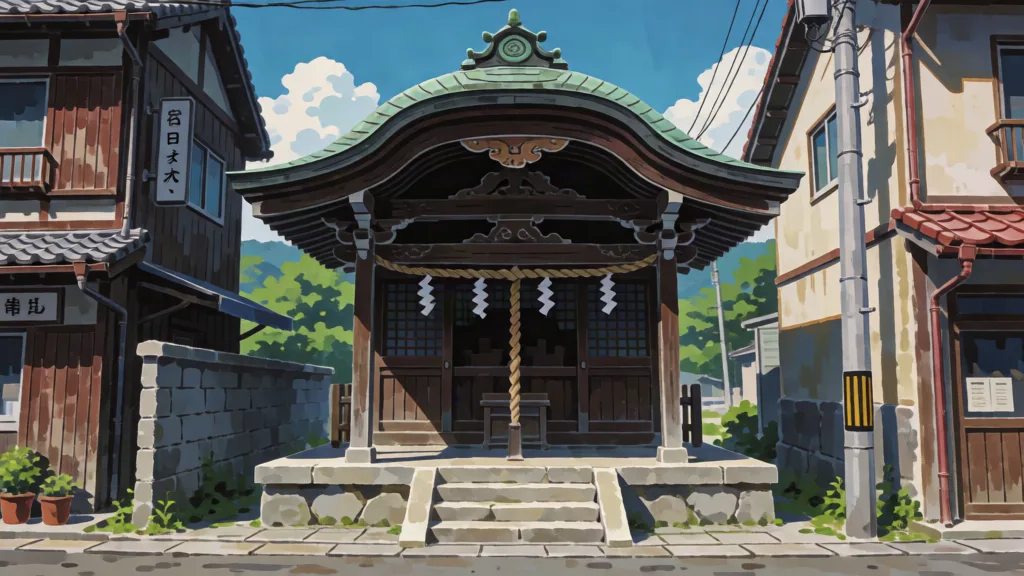
The bells woke me. Not a memory of bells, not some dream about them. Real bells, metal on metal, ringing out over a town that hadn’t made that sound in fifteen years.
I sat up so fast my head hit the ceiling beam. The clock on my nightstand said 4:47 AM. Outside my window, the street was still dark, the kind of dark that settles into a place and decides to stay. But the sound kept coming. Three chimes. Then four. Then a full peal that rolled down the mountain and through the valley like a wave.
No one in Shiroyama rang bells. The shrine had been closed since before I got here. Its torii gate leaned sideways, half-swallowed by bamboo. The rope on the bell had rotted through. I knew because I’d checked, my first week, when I still had enough curiosity to wonder about the place.
Now I just wanted to sleep.
I pulled on my jacket and stepped outside. The air had that cold, wet feeling that comes before dawn. My neighbor’s dog didn’t bark. Nothing moved. The street lamps flickered the way they always did, casting pools of yellow light that seemed to shrink back from the darkness instead of pushing into it.
The shrine sat at the top of a stone staircase, two hundred and forty-three steps that I’d counted exactly once and never again. Moss grew between every crack. The lanterns along the path hadn’t been lit in years. But this morning, someone had left a pair of shoes at the bottom step.
Not abandoned shoes. Placed shoes. Neatly, side by side, toes pointing toward the stairs. The kind of shoes a teenager would wear. Black canvas sneakers with white soles, clean enough to be new.
I looked up the staircase. Nothing but darkness and the faint outline of the shrine’s roof against the sky. The bells had stopped.
“You’re up early.”
I didn’t jump. You learn not to jump in Shiroyama, or you spend your whole life jumping. Yamada stood behind me, hands in his pockets, cigarette burning between his fingers. He was sixty-three and looked eighty, with a face that had given up on expressing anything except tiredness. The town’s unofficial watchman, which meant he sat on his porch all night and watched nothing happen.
“Someone rang the bell,” I said.
“No they didn’t.”
“I heard it.”
“You heard something.” He took a long drag. “Bell’s been broken since ’09. Rope’s gone. Clapper’s rusted solid. You can’t ring what doesn’t move.”
I pointed at the shoes. “Then explain those.”
He looked at them. Looked at me. Took another drag. “Kids play tricks.”
“What kids? There are eight teenagers in this town and they all hate each other.”
“Then a traveler.”
“Travelers don’t leave their shoes and climb barefoot up two hundred stone steps in the dark.”
Yamada shrugged. It was his only move. Shrug, smoke, stare at something far away. “Could be worse. Could be interesting.”
That was the thing about Shiroyama. Nothing was ever interesting. Not the cold cases that filled the station’s basement, stacked in boxes that nobody opened. Not the officers who drank themselves to sleep every night, exiled here for failures they couldn’t outrun. Not the families who stayed because they had nowhere else to go.
This town was the end of the line. The place where careers came to die. The graveyard, they called it in the files. Official designation: Cold Case Archive Facility, Regional Division 7. Unofficial designation: punishment.
I’d been here three years. Three years of sorting papers that would never be read. Three years of watching the same faces at the same convenience store buying the same beer. Three years of hearing nothing that mattered.
Until bells.
I climbed the stairs. Yamada didn’t stop me. He never stopped anyone. That was his job. Watch, don’t interfere.
The steps were slick with dew. My shoes made soft sounds against the stone. By the time I reached the top, my legs burned and my breath came short. The shrine sat in a clearing, its wooden walls gray with age, its roof sagging in the middle like an old horse’s back.
The bell hung from its frame, motionless. No wind. No movement. I walked up to it and touched the metal. Cold. Dry. The rope hung beside it, frayed and useless, exactly as I remembered.
But the clapper. The clapper had been cleaned. Someone had wiped away fifteen years of rust and grime. It gleamed in the dim light, a dull silver against the bell’s dark bronze.
I stood there, hand on the bell, and tried to make sense of it. A clean clapper meant someone had climbed up here with tools. Someone had worked on it. Someone had made it ring.
“You’re not supposed to be here.”
The voice came from behind me. Young. Female. Not scared, not challenging. Just stating a fact.
I turned around.
She stood at the edge of the clearing, barefoot on the wet grass. Maybe seventeen. Black hair cut short, uneven, like she’d done it herself with dull scissors. She wore a white shirt and dark pants, both wrinkled, both too big for her. No jacket. No bag. No shoes.
“You left your sneakers at the bottom,” I said.
“I know.”
“You rang the bell.”
“I did.”
“Why?”
She looked at me like I’d asked something stupid. “Because it needed to be rung.”
I waited for more. She didn’t give it. Kids her age, they usually talked too much or not at all. She was the second kind, the kind who made you work for every word.
“This shrine is closed,” I said. “Has been for years.”
“It’s a shrine. It doesn’t close.” She walked past me, toward the bell, and ran her fingers along the clapper. “It just waits.”
“Waits for what?”
“Someone who knows what to do with it.”
I should have called Yamada. Or the station. Or anyone. A stranger in town, especially a young one, meant paperwork. Meant questions. Meant something that broke the routine, and routine was the only thing that kept people sane in this place.
But I didn’t call anyone.
“Where are you staying?” I asked.
“Here.”
“You can’t stay here. It’s not safe. The roof’s about to collapse.”
“It held tonight.”
“That’s not a plan.”
She turned to face me. Her eyes were dark, almost black, and they didn’t blink. “I’m not here by accident. I’m here because this is where I’m supposed to be.”
I laughed. Couldn’t help it. “Everyone in this town thinks they’re supposed to be somewhere else. You’re the first one who thinks they’re supposed to be here.”
“That’s because I’m the first one who’s right.”
She said it so flat, so matter-of-fact, that the laugh died in my throat. This wasn’t a runaway. This wasn’t a lost kid looking for shelter. This was something else.
“What’s your name?” I asked.
“Sato.”
“First name?”
“Sato’s enough.”
“Sato what? Sato like the surname, or Sato like-”
“Sato like the shrine.” She pointed at the wooden plaque above the door, weathered and cracked. The characters were barely readable. Sato Shrine. “My family built this place. My great-grandfather was the last priest. I’m here to reopen it.”
The air went cold. Not the cold of morning, but the cold of something clicking into place that shouldn’t have clicked.
“You can’t just reopen a shrine,” I said. “There are procedures. Permits. You need authorization from the religious affairs office, the local government, the-”
“I have them.”
She reached into her pocket and pulled out a folded envelope. Handed it to me. Inside were papers, official-looking, stamped with seals I recognized. The religious affairs office. The city planning department. The prefectural government. All of them signed, all of them dated, all of them authorizing the reopening of Sato Shrine under the supervision of Sato Yuki, age seventeen.
“You’re a theology student,” I said, reading the papers again.
“I’m a priest. Trainee, technically. But the shrine doesn’t care about technicalities.”
I looked at her. Looked at the shrine. Looked at the papers in my hand. None of it made sense. A seventeen-year-old theology student, sent to a dead town to reopen a dead shrine, with authorization from every level of government. This wasn’t a coincidence. This wasn’t a whim.
This was an assignment.
“Who sent you?” I asked.
“No one sends me anywhere. I go where I’m needed.”
“And you’re needed here?”
She didn’t answer. She walked to the bell, took the frayed rope in both hands, and pulled. The clapper swung. The bell rang. The sound crashed through the valley, louder than before, louder than anything I’d heard in three years.
Down below, lights started turning on. Windows opened. People stepped onto their porches, squinting into the dark.
Sato let the rope go and turned to me.
“This town has forgotten how to listen,” she said. “I’m here to remind it.”
She walked past me, down the stairs, barefoot, without looking back. I stood there, papers in hand, bell still vibrating in my chest, and realized I hadn’t asked the one question that mattered.
Why now?
Why, after fifteen years of silence, did someone finally come to ring the bell?
And why did the papers in my hand list my name as the official liaison for the shrine’s reopening?
I hadn’t applied for that role. Nobody had asked me. But there it was, typed in black ink, next to a seal I’d never seen before.
*Liaison Officer: Tanaka Kenji, Cold Case Archive Facility, Regional Division 7.*
I folded the papers and put them in my pocket. The sky was starting to lighten, gray and weak, like it couldn’t quite commit to being morning.
Down at the bottom of the stairs, Sato had put her sneakers back on. She stood at the base, looking up at me.
“You coming?” she asked.
I didn’t answer. But I started walking.
Watch this moment
Turn the current scene into a cinematic Live Chapter — what you watch becomes the story's next part.
Disclaimer
This is a work of fiction, assisted by artificial intelligence. Any names or characters, businesses or places, events or incidents, are fictitious. Any resemblance to actual persons, living or dead, or actual events is purely coincidental.
Content Removal Policy
- Users may report content that may be illegal or violates our Standards.
- All reported complaints will be reviewed and resolved within seven business days.
- Review Process: Our team will assess the reported content against our guidelines.
- Appeals: If you disagree with a decision, you may appeal within 14 days of notification.
- Potential outcomes include: content removal, account warning, or no action if no violation is found.
To report content, email us at [email protected]