Share
Go Live
Caged By Vows
·
Published 9/26/2026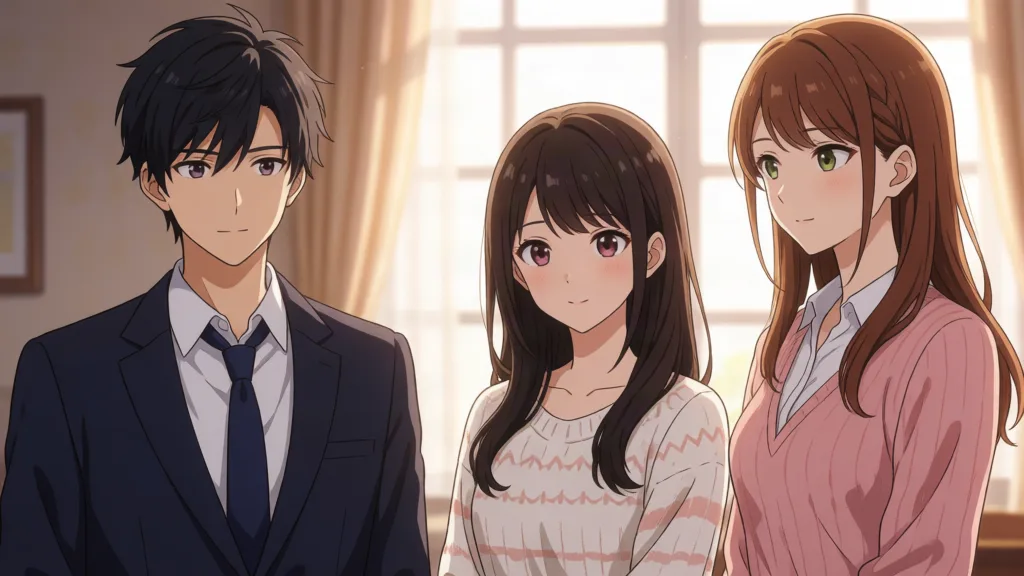
The first time Dev Malik told me he would never marry me, we were seven years old and he said it with a mouth full of my birthday cake.
He'd come with his parents to our house in Sector 15, the one with the gulmohar tree that dropped orange flowers all over my mother's Ambassador car, and he'd eaten three pieces of cake without asking. He had frosting on his chin. He looked at me across the table, at my new pink frock, at the ribbon my mother had tied too tight, and he said it loud enough for both our mothers to hear. Then he went back for a fourth piece.
Our mothers laughed. They actually laughed. "Bachpan ki baatein," they said. Childhood talk. They were already planning the wedding.
That was the problem with growing up in a colony like ours. Everyone knew everyone. Everyone's grandfather had played cards with everyone else's grandfather at the Club. The Maliks and the Sharmas had been friends for three generations, which meant that by the time Dev and I were born, our futures had already been decided in some drawing room conversation we weren't invited to. Two families, one son, one daughter, same caste, same community, same everything. A match made in paperwork.
I'm Ananya Sharma. Twenty-three now. Still living in the same house, still watching the same gulmohar tree drop its flowers, still being told what a good girl I am.
Good. That word has followed me my whole life like a stray dog I never asked to feed.
Dev is twenty-five. Tall, broad-shouldered, the kind of face that makes aunties stop mid-sentence at weddings. He works at his father's construction business. Drives a black Fortuner that he washes himself every Sunday morning, shirtless, in their driveway, where every unmarried girl in the colony has accidentally walked past at least once. I know this because I've heard them giggle about it at the market. I've never walked past. I take the other road.
Last week, his mother called mine. I was in the kitchen, cutting onions, and I could hear the phone conversation through the door because my mother has never learned to lower her voice.
"Bhai, it's time," Mrs. Malik said. "The kids are grown. Let's do the roka in December. Before the wedding season gets too crowded."
My mother's response came quick. "I'll talk to Ananya's father."
Talk to him. As if I wasn't standing right there, as if I wasn't the one who'd have to spend the rest of my life in that house with that man.
I put down the knife. My hands smelled like onion and something else, something metallic I couldn't name. I walked out the back door and sat on the steps and watched the gulmohar flowers fall, one by one, onto the Ambassador's dusty bonnet. My mother didn't come looking for me. She knew where I was. She just didn't think there was anything to discuss.
That's the thing about being the good girl. Nobody asks you anything. They just tell you what you already want.
Dev came by on Sunday. His mother sent him with a box of mithai, the fancy kind from that shop in Karol Bagh, and he handed it to my mother at the door with a smile so polite it could've been painted on. "Aunty, Mummy sent these. She says you'll like the kaju ones especially."
My mother beamed. "Arre, Dev, come in, come in. Ananya is in the living room."
I wasn't in the living room. I was on the stairs, half-hidden behind the landing wall, watching him take off his shoes at the door. He knew I was there. He didn't look up.
When I finally came down, because my mother called my name three times in that voice that means come-here-right-now, he was sitting on the sofa with his legs crossed, drinking the chai my mother had made him without asking if he wanted any. He looked at me the way you look at a chair you're about to sit on. Not with dislike, exactly. With something worse. With ownership.
"Ananya," he said. Just my name. No greeting, no smile. His eyes went from my face to my kurta to my feet and back up again, and something in them flickered, something that might have been approval if it hadn't felt so much like inspection.
"Dev." I sat down on the opposite sofa. My mother hovered in the doorway, pretending to fold a dupatta, watching us like a hawk watches a field mouse.
For ten minutes, we made conversation. He asked about my job at the school, I asked about his father's health, we both said the right things in the right tone. My mother's shoulders relaxed with every word. This was working. This was going well. This was exactly what she'd wanted.
Then she left to take a phone call, and the moment her footsteps faded down the hallway, Dev leaned forward and put his cup down on the glass table with a click that sounded like a lock turning.
"You know this is happening, right?" he said. Quiet. Almost gentle.
I looked at him. At the face I'd known since before I knew my own name. At the mouth that had told me he'd never marry me, twenty years ago, with frosting on his chin.
"I know," I said.
"Good." He sat back. "Then stop making that face."
"What face?"
"The one you're making now. Like someone's forcing you." He smiled, and it wasn't the smile from the door. This one had teeth. "Nobody's forcing you, Ananya. You're just doing what you've always done. What everyone expects. That's not force. That's you."
I wanted to say something. I had a hundred things in my throat, all of them sharp. But my mother's footsteps were coming back down the hallway, and Dev's face had already rearranged itself into that polite mask, and I sat there with my hands folded in my lap like a good girl, like I'd been taught, and I said nothing at all.
That night, I lay in bed and listened to the ceiling fan creak. The gulmohar tree threw shadows on my wall, branches like fingers, reaching for something they couldn't quite touch.
December. The roka was in December. Four months away.
I thought about Dev's face when he'd said it. That smile. The way he'd looked at me like I was already his, like the paperwork was just a formality. I thought about my mother's voice on the phone, so quick to agree. I thought about the mithai box on the kitchen counter, still half-full, the kaju pieces sitting there like little white teeth.
And I thought about the fact that I'd said nothing. Again. Like always.
The fan creaked. The shadows moved. Somewhere down the street, a dog barked at nothing, and I made a decision. Not a big one. Not yet. Just a small thing, a pebble in my pocket, something to hold onto.
Tomorrow, I would go to the school and I would talk to Mrs. Kapoor, the principal, about the transfer posting she'd mentioned last month. The one in Jaipur. The one I'd pretended not to hear.
I didn't know if I'd take it. I didn't know if I could. But I knew one thing for certain, lying there in the dark with the fan creaking above me and the gulmohar tree scratching at my window like it wanted in.
I wasn't going to make this easy for him.
Not this time.
Watch this moment
Turn the current scene into a cinematic Live Chapter — what you watch becomes the story's next part.
Disclaimer
This is a work of fiction, assisted by artificial intelligence. Any names or characters, businesses or places, events or incidents, are fictitious. Any resemblance to actual persons, living or dead, or actual events is purely coincidental.
Content Removal Policy
- Users may report content that may be illegal or violates our Standards.
- All reported complaints will be reviewed and resolved within seven business days.
- Review Process: Our team will assess the reported content against our guidelines.
- Appeals: If you disagree with a decision, you may appeal within 14 days of notification.
- Potential outcomes include: content removal, account warning, or no action if no violation is found.
To report content, email us at [email protected]