Share
Go Live
Bitter Sweet Victory
·
Published 9/26/2026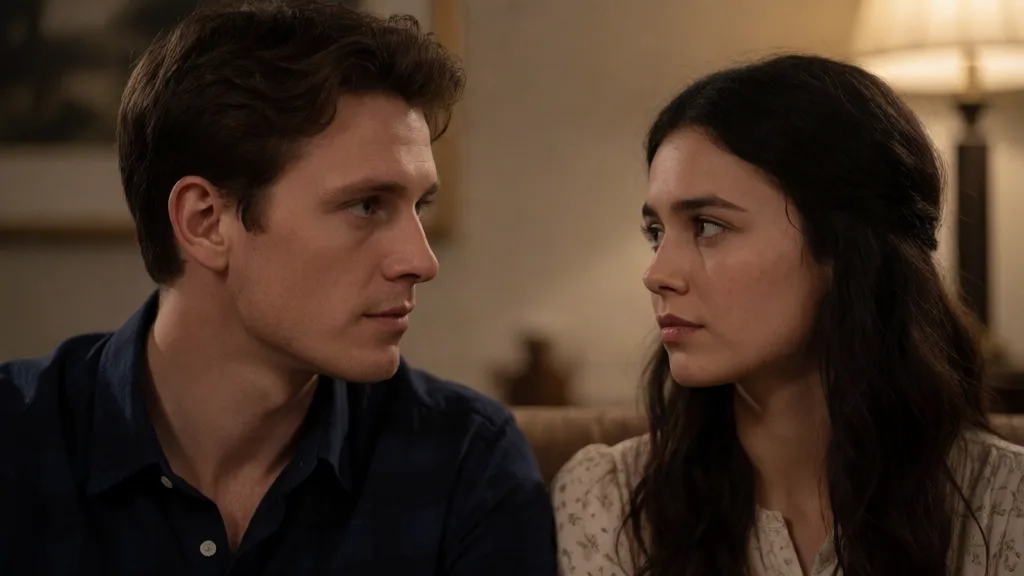
There were exactly three hundred and forty-two steps from the elevator to the door of conference room B. I knew this because I’d counted them every Tuesday and Thursday for the past eight months, ever since the merger had saddled my department with the kind of oversight that made a colonoscopy seem like a day at the spa. The carpet was a uniform, soul-crushing gray. The fluorescent lights hummed a low, constant note of existential dread. It was a place where ambition came to die a slow, fluorescent death.
Today, the air tasted different. It was sharper. Colder. Like someone had left a window open in a blizzard.
I knew why.
The email had arrived at 6:47 AM, its subject line a simple, brutal command: *Q3 Strategy Review*. No pleasantries. No “hope you had a good weekend.” Just the name of the sender, a name that had been a thorn in my side since the day I’d first laid eyes on his smug, perfectly-tailored silhouette.
Julian Vance.
He was the new Senior VP of Operations, a title that sounded important but was really just a fancy way of saying “corporate hatchet man.” He’d been brought in to streamline, to optimize, to cut the fat. And in his eyes, I was the fattest, most inefficient piece of meat in the entire building. My team, the creative marketing division, was a “cost center,” a “liability,” a “soft-skills luxury” that the company could no longer afford. His words, not mine. He’d used them in a memo that had leaked to the entire office, a memo that had made me the laughingstock of the water cooler and the subject of a dozen passive-aggressive Slack messages.
I hated him. It was a pure, clean, uncomplicated hatred. The kind of hatred that got you out of bed in the morning and put a little pep in your step. It was the fuel that powered my passive-aggressive email sign-offs and the reason I’d started wearing my sharpest, most uncomfortable heels to work. He was a spreadsheet with a heartbeat, a man who probably scheduled his own orgasms for maximum efficiency. And now, I had to sit in a room with him and pretend to care about his “synergistic realignment strategies.”
I pushed open the glass door to the conference room. It was already occupied.
He was there, of course. Julian. He sat at the head of the long, mahogany table, his back to the floor-to-ceiling window that showcased the city’s skyline. The morning sun was behind him, turning him into a dark, imposing silhouette, a high-contrast god of corporate order. He was typing on a sleek, silver laptop, his fingers moving with a precise, rhythmic click that grated on my nerves like a dentist’s drill.
He didn’t look up when I entered.
“You’re late,” he said, his voice a low, smooth baritone that always sounded like it was coming from the bottom of a well. Or a grave.
“I’m on time,” I shot back, dropping my leather portfolio onto the table with a satisfying thud. “The meeting starts at nine. It’s 8:59. You’re just pathologically early.”
He finally lifted his gaze. His eyes were the color of a winter sky, a pale, piercing gray that seemed to see right through my carefully constructed armor of professional indifference. They swept over me, a quick, clinical assessment, and I felt a familiar prickle of heat crawl up my neck. It was the same look he’d given me the first day we met, when he’d looked at my team’s quarterly projections and asked, “Is this a joke?”
“Punctuality is a sign of respect, Ms. Thorne,” he said, his lips curving into a smile that didn’t reach his eyes. “For the company’s time, if not for mine.”
“And condescension is a sign of a tiny dick,” I said, pulling out the chair opposite him. “But we don’t always get what we want, do we?”
The smile vanished. A muscle in his jaw twitched. Good. I’d drawn blood. It was a small victory, but I’d take it.
The rest of the team filed in, a subdued, nervous parade. Sarah from analytics, who always smelled like lavender and anxiety. Mark from sales, a man whose entire personality was built around his golf handicap. And, of course, my own team: Chloe, my brilliant, perpetually frazzled art director, and Ben, my copywriter, who was currently trying to hide behind his laptop screen. They all took their seats, creating a buffer zone of empty chairs between me and Julian. The tension in the room was thick enough to spread on a bagel.
Julian cleared his throat, and the low murmur of nervous chatter died instantly. He was the conductor, and we were his reluctant, out-of-tune orchestra.
“Thank you all for coming,” he began, his voice devoid of any actual gratitude. “As you know, Q3 was… underwhelming. Our key performance indicators are down across the board. The creative campaigns, in particular, have failed to deliver a measurable return on investment.”
He clicked a button on his laptop, and a slide appeared on the large screen behind him. It was a graph. A big, red, plunging line that looked like the EKG of a dying man. It was titled: *Creative Marketing: ROI Analysis*.
My blood ran cold.
“As you can see,” Julian continued, his voice dripping with a kind of clinical satisfaction, “the ‘Think Outside the Box’ campaign, while critically well-received internally, generated a mere 0.02% increase in qualified leads. The cost per acquisition was, frankly, astronomical.”
He was talking about my campaign. The one I’d spent three months of my life on. The one I’d poured my heart and soul into. The one that had won an internal award for innovation. He was dismantling it, piece by piece, in front of my entire team, with the cold, detached precision of a surgeon removing a tumor.
“This isn’t just a failure of execution,” he said, his eyes locking onto mine. “It’s a failure of strategy. It’s a fundamental misunderstanding of what this company needs to survive. We are not an art house. We are a business. And businesses need to make money.”
I could feel Chloe’s eyes on me, wide with panic. Ben had stopped pretending to type and was just staring at his screen, his face pale. I wanted to scream. I wanted to flip the table. I wanted to tell him that his precious metrics couldn’t quantify a feeling, couldn’t measure the intangible value of brand loyalty, couldn’t put a number on the way a single, beautiful image could make a customer feel seen.
But I didn’t. I sat there, my hands clenched into fists under the table, my nails digging into my palms. I let him talk. I let him eviscerate my work, my team, my entire professional identity.
And then he said the words that changed everything.
“Effective immediately,” he said, his voice ringing with finality, “the creative marketing division will be restructured. It will be folded into the sales department, and its functions will be re-evaluated on a case-by-case basis. All non-essential personnel will be let go.”
The silence that followed was absolute. It was a living, breathing thing, a vacuum that sucked all the air out of the room. I could hear my own heartbeat, a frantic, trapped-animal rhythm in my chest. Non-essential personnel. He meant Chloe. He meant Ben. He meant me.
He was firing us. All of us. In a conference room, on a Tuesday morning, with a graph on a screen and a smile on his face.
I stood up. My chair scraped against the floor with a sound like a gunshot.
“You can’t do this,” I said, my voice a low, dangerous whisper.
Julian leaned back in his chair, a flicker of something unreadable in his pale eyes. Amusement? Curiosity? “I assure you, Ms. Thorne, I can. The paperwork is already filed. The decision is final.”
“This is a mistake,” I said, my voice rising. “You’re gutting the one department that actually gives this company a soul. You’re turning us into a machine. A boring, beige, profit-driven machine.”
“A profitable machine,” he corrected, his voice still maddeningly calm. “Which is more than you can say for your department.”
I wanted to hit him. I wanted to throw my lukewarm coffee in his perfect, chiseled face. I wanted to do something, anything, to wipe that smug, superior look off his face. But I was a professional. And I was, apparently, unemployed.
So I did the only thing I could. I grabbed my portfolio, turned on my heel, and walked out the door. I didn’t look back. I didn’t need to. I could feel his gaze on my back, a cold, heavy weight between my shoulder blades.
I got to the elevator and jabbed the button for the lobby. The doors slid shut, sealing me in a silent, mirrored box. I leaned against the wall, my breath coming in ragged gasps. The reflection that stared back at me was a stranger. A woman with flushed cheeks and wild eyes and a future that had just been ripped away from her.
The elevator dinged. The doors opened. And there, standing in the lobby, waiting for the next car, was Julian Vance.
He was holding a small, black umbrella, even though it wasn’t raining. He looked at me, and for a fraction of a second, the mask of corporate indifference slipped. He looked… tired. And something else. Something I couldn’t name.
“Ms. Thorne,” he said, his voice softer than I’d ever heard it.
I didn’t answer. I just walked past him, my shoulder brushing against his. A spark of static electricity jumped between us, a tiny, sharp shock. I felt it all the way down to my toes.
I pushed through the revolving door and out into the cold, gray morning. The city stretched out before me, a vast, indifferent grid of steel and concrete. I had no job. No plan. No idea what I was going to do next.
But as I walked away from the building, I felt a strange, unfamiliar thrill. It was the thrill of freefall. The terrifying, exhilarating knowledge that I had nothing left to lose. And that, perhaps, was the most dangerous thing of all.
Watch this moment
Turn the current scene into a cinematic Live Chapter — what you watch becomes the story's next part.
Disclaimer
This is a work of fiction, assisted by artificial intelligence. Any names or characters, businesses or places, events or incidents, are fictitious. Any resemblance to actual persons, living or dead, or actual events is purely coincidental.
Content Removal Policy
- Users may report content that may be illegal or violates our Standards.
- All reported complaints will be reviewed and resolved within seven business days.
- Review Process: Our team will assess the reported content against our guidelines.
- Appeals: If you disagree with a decision, you may appeal within 14 days of notification.
- Potential outcomes include: content removal, account warning, or no action if no violation is found.
To report content, email us at [email protected]