Choosing an AI Writing Tool for Short Stories: A Practical Checklist
A short story does not need the tool with the longest feature list. It needs a workflow that helps you make a few connected decisions, revise the parts that are weak, and stop when the story is finished.
Start by identifying the job you want help with: finding a premise, drafting scenes, or revising an existing story. Then compare tools on that job. A beautiful opening is not much use if every attempt to shorten the ending introduces another subplot.
This guide is published by DeepFiction. It offers an original selection checklist, with documented product examples checked September 17, 2026. It is not a hands-on ranking or a report of comparative test results.
Decide what you are trying to finish
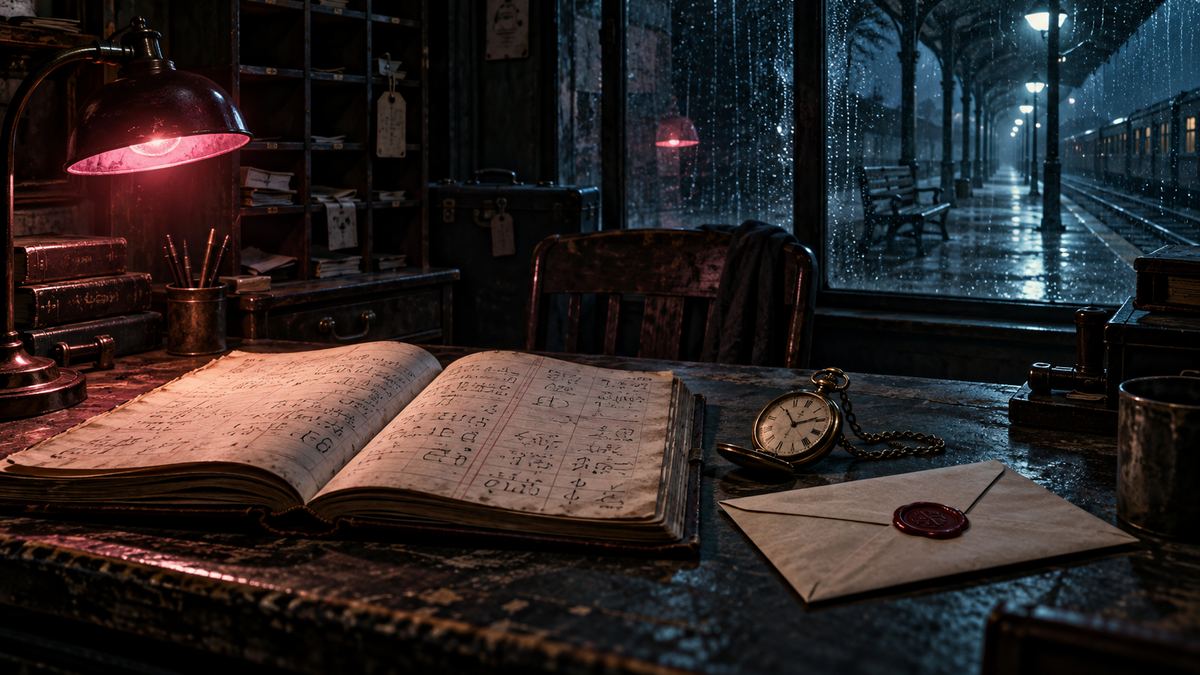
Write a one-sentence description of the finished piece before looking at subscriptions. For example: a 2,000-word story in which a railway clerk must decide whether to return an envelope before the last train leaves.
That description supplies a scale, a central decision, and a deadline. It also excludes several distractions. You probably do not need a family tree, a continent-sized map, or a cast of twenty characters to finish this particular story.
Now name the difficult part. Perhaps you already have the ending but cannot make the middle earn it. Perhaps the draft is complete but three scenes perform the same function. Those are different problems, and they call for different kinds of assistance.
| Your starting point | The job to compare | Evidence you should look for |
|---|---|---|
| An interesting situation | Developing a consequential choice | Suggestions that give the protagonist something specific to lose |
| A beginning and ending | Building the missing connection | A scene whose action causes the ending, rather than delaying it |
| A complete rough draft | Revising selectively | A useful change without damage to passages you want to keep |
| An overlong story | Cutting and combining | Fewer scenes with the essential decision still understandable |
If you actually want to inhabit a character and discover events through conversation, read our story generator versus roleplay guide first. A chat you enjoy and a short story you can revise are related, but not identical, outcomes.
Compare three working styles, not three promises
An editor-centered workflow keeps the manuscript in front of you while you request continuations or revise passages. A conversation-centered workflow lets you discuss alternatives and bring selected ideas back into your draft. A broader creative workspace may also support character exploration and visual development.
These categories overlap. Treat them as ways of working, not permanent labels for every product.
NovelAI's editor documentation describes direct writing, generated continuations, retries, and a branching edit history. Those are relevant controls if you want to work closely with prose. DeepFiction's story-writer page describes story creation and writing assistance, while its plans page also lists characters, images, and video. That broader scope matters if those outputs belong in your project.
Neither description proves that a tool can handle your ending well. Documentation tells you what to investigate. Your own draft tells you whether the workflow is useful.
For a focused two-product discussion, see NovelAI versus DeepFiction. Here, the question is narrower: what must a tool let you do to finish one short piece?
Choose the job before choosing the tool
What choice ends the story?
What must stay unchanged?
What can you remove?
If the ending keeps growing
Protect Mina's original decision. Ask for an ending that uses only established characters and facts. Compare whether each version resolves her choice or introduces another problem.
If every revision changes too much
Mark the paragraph you want changed and list what must remain. Keep an independent copy. If that workflow stays awkward, selective revision should weigh more heavily in your tool choice.
A decision aid for your own evaluation, not product test results.
Give ending control more weight than opening polish
Consider the railway story. Mina finds an envelope in the lost-property ledger. Its owner has boarded the last train. Returning it means admitting that Mina opened it, and that she now knows why the owner is leaving.
You could ask for several endings. Before comparing them, decide which facts cannot change. Mina opened the envelope. The owner is already aboard. The contents explain a personal departure, not a conspiracy. The ending must depend on Mina's choice.
A proposed ending that introduces a hidden detective might sound exciting while avoiding the problem you meant to write. A quieter ending could do the harder work: Mina returns the envelope and accepts that the owner may never forgive her intrusion.
Look for an ending you can trace back through the story. What earlier action makes it possible? What detail acquires a different meaning? Which question does it answer, and which uncertainty is deliberately left open?
This is a selection criterion, not an instruction to make every story neat. An unresolved relationship can be an ending. A story that keeps inventing reasons not to end is a different thing.
Check whether small edits stay small
Revision control becomes important as soon as you like part of a draft. You need a way to protect that work while changing something else.
Suppose Mina's opening paragraph has the right rhythm, but her explanation to the passenger is too explicit. Request a change to that exchange only. Preserve the setting, the envelope's contents, and the final line. Compare the revision against the original, not against your memory of it.
Useful questions include:
- Can you select or clearly identify the passage to revise?
- Can you inspect the earlier version after accepting a suggestion?
- Can you keep one sentence from an alternative without adopting the rest?
- Can you return to your own wording without rebuilding the scene?
If a tool lacks a particular control, an external document may cover the gap. Count that extra work honestly. A workflow can still be good without doing everything in one place.
Test compression before expanding the story
Short fiction often asks you to remove material you enjoyed writing. A tool that keeps adding atmosphere when you ask for a cut may create more work than it saves.
Try combining two scenes with the same purpose. Mina first discovers the envelope, then spends another scene learning which passenger owns it. Could one encounter accomplish both? What would disappear with the cut: necessary information, a change in her attitude, or merely repeated explanation?
Use a brief that makes the protected function explicit:
Revision job: combine these two scenes into one encounter.
Keep: Mina identifies the owner and chooses to conceal that she opened the envelope.
Remove: repeated descriptions of the empty platform.
Do not add: new characters, a second mystery, or an explanation of the ending.
Afterward: identify any story fact the revision removed or changed.
The final line asks for an explanation you can inspect. It does not make that explanation reliable by itself. Read the original and revised scenes, especially any fact that later events depend on.
Make a small requirements sheet
Separate necessities from conveniences. Otherwise, a feature you noticed five minutes ago can become a requirement simply because it looks impressive.
For this short story, necessities might be readable editing, recoverable earlier wording, and a practical way to keep your own copy. Conveniences might include character portraits or several alternative opening styles.
| Requirement | Why it matters here | What would rule a tool out? |
|---|---|---|
| Selective revision | The ending needs work; the opening does not | You cannot reliably preserve the material you have chosen |
| Clear version recovery | You want to compare two different decisions | Earlier drafts become difficult to find or reconstruct |
| Manageable input | The brief and manuscript must fit your workflow | You repeatedly omit essential material to make the tool usable |
| A usable copy outside the tool | The story should survive a change of service | You cannot obtain a practical independent copy |
| Understandable cost | Revision involves retries | The plan does not make your likely usage clear enough |
These are questions to check, not claims that every named product passes them. If privacy or a publisher's submission rules matter to your project, check the relevant current policies separately before uploading a manuscript.
Compare the price of the workflow you will actually use
On September 17, 2026, NovelAI's subscription documentation listed Tablet at $10, Scroll at $15, and Opus at $25 USD monthly. DeepFiction's pricing page showed regular monthly prices of $5, $20, and $75, alongside first-month promotional prices of $4, $16, and $60.
Those figures are a dated reference, not a checkout quote or a cost-per-finished-story comparison. Check renewal terms and allowances before buying. A lower headline price does not tell you how many revisions your project will take, and a larger plan is not evidence of better prose.
Write down the activities you expect: drafting, revising, character conversations, and optional image work. Keep the optional activities separate. You may discover that the writing workflow alone is enough for this project.
Make the decision after a complete small cycle
Do not spend your entire evaluation generating beginnings. Take one manageable piece through an ending, a cut, and a final read. Record what you kept, what you rewrote, and where the interface interrupted the work.
Use observations rather than a vague score. “I recovered the previous ending in one step” tells you more than “good usability.” “The shorter scene lost the reason she boarded the train” is more useful than “weak storytelling.”
If neither candidate helps, keep your draft and reconsider the task. You might need an outline, a human reader, or a clearer decision for the protagonist before another generation will be useful.
Frequently asked questions
Should I choose a tool built specifically for fiction?
It belongs on your shortlist, but the label is not the decision. Compare the revision and manuscript-handling work you actually need. A specialized interface is valuable when its controls remove repeated friction from that work.
Is a longer context window always better for a short story?
Enough room for relevant material matters. Beyond that, a capacity figure does not show whether the output preserves your intentions. Keep the brief focused, and inspect the actual result rather than treating capacity as a quality score.
Do I need images for a prose-only project?
No. They may help you explore a setting or share a concept, but you can finish a short story without them. Do not let an optional output become the reason the manuscript remains unfinished.
Pick one story decision you want help with, then try a scene in DeepFiction. Keep the useful material and judge the workflow by whether it helps you finish the piece.